crankshaft · 2026-06-19

Crankshaft Volvo Manufacturer China: Sourcing Guide

A crankshaft failure is expensive long before the part itself is counted. It can create bearing damage, comeback claims, lost workshop confidence and slow-moving inventory that cannot be sold into the intended application. That is why selecting a crankshaft Volvo manufacturer China partner should start with fitment control and process evidence—not a price line in a spreadsheet.

Volvo-fit crankshafts may cover passenger-car, light-commercial and heavy-duty engine families. Similar vehicle names can hide different engine codes, journal sizes, sensor interfaces or regional specifications. The safest sourcing path is to define the application, prove the production route, validate the first articles and then manage repeat batches with traceable records.

Driventus manufactures crankshafts and related powertrain components in Taizhou, Zhejiang for B2B customers in Europe, the UK, North America, Australia and Brazil. We supply aftermarket distributors, wholesalers, repair-chain procurement teams and OEM/Tier-1 sourcing departments. Driventus is an independent aftermarket manufacturer; brand names are referenced for fitment only. The guide below is written as a buyer’s working framework: what to send, what to audit, what can fail, and how to compare Chinese crankshaft suppliers without relying on assumptions.

Decision Gate 1: Lock the Fitment Before You Ask for Price

The first sourcing mistake is treating “Volvo crankshaft” as a complete specification. It is not. A single model range may use several engine families, and one engine family may have regional variations. If the RFQ is vague, suppliers fill the gaps themselves. That produces cheap quotes, mismatched samples and delays during approval.

Start the RFQ with application control. Confirm the engine family, engine code, displacement, fuel type, cylinder count, stroke count and target market. State whether the crankshaft is for aftermarket replacement, remanufacturing support, private-label distribution or an OEM/Tier-1 project. Where possible, include drawings, samples, measurement reports or OE part-number cross-references already used in your internal fitment database. Generic references such as OE 06A… or OE 11251… should only be used when your own catalog data supports them. Driventus does not claim vehicle-manufacturer approval or endorsement.

A useful RFQ file should include:

  • Engine code, displacement, fuel type, cylinder count and internal fitment table
  • Required material: forged steel, cast iron or ductile iron; state grade if known, such as 42CrMo4/4140-type steel or QT700-type ductile iron
  • Main journal and pin journal nominal diameters, with tolerance target; common aftermarket targets are often within ±0.005–0.010 mm after grinding, subject to drawing
  • Stroke, total length, flange pattern, keyway, timing interface and sensor-wheel requirements
  • Heat-treatment requirement, such as induction-hardened journals, nitriding where specified, hardness range and case-depth requirement
  • Bearing and thrust-face specification, including thrust width and face finish
  • Oil-hole position, chamfer radius, cross-drilling, plug type and cleanliness requirements
  • Balance requirement: unbalanced, semi-finished, or dynamic-balanced with residual unbalance value agreed per drawing
  • Annual volume forecast, first-order quantity and expected release schedule by quarter
  • Packaging requirement for sea freight, air freight or mixed-container loading, including carton size, pallet weight limit and corrosion-protection period
  • Target market compliance requirements, including REACH (EC) No 1907/2006 where applicable

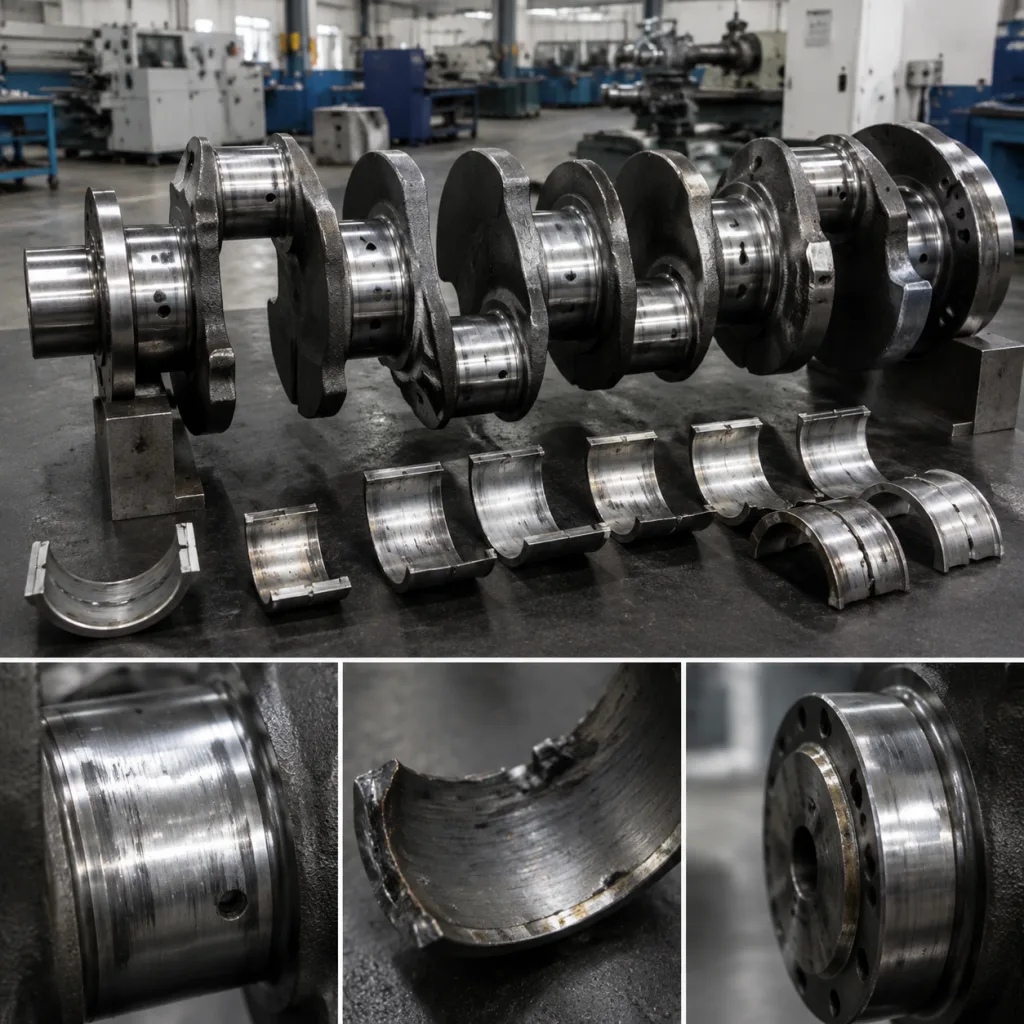
If a drawing is available, include the datum scheme. If no drawing exists, send one unused sample and, when possible, one failed or used sample. The used part often shows thrust wear, oil-hole issues, bearing distress or installation-sensitive surfaces that a clean sample cannot reveal.

This gate decides whether suppliers are quoting the same product. Buyers can review related categories in our catalog or the dedicated engine components section before submitting technical data.

Spec Deep-Dive: Where Crankshaft Manufacturing Risk Actually Sits

A crankshaft is not difficult because it looks complex. It is difficult because small deviations in the wrong place become engine problems. Journal roundness, taper, fillet condition, oil-hole cleanliness and hardness consistency matter more than cosmetic finish.

A reliable crankshaft supplier should control the critical stages internally or through qualified sub-suppliers with documented approval. The highest-risk steps are raw-material selection, forging or casting control, heat treatment, straightening, CNC machining, grinding, oil-hole processing, balancing and final inspection.

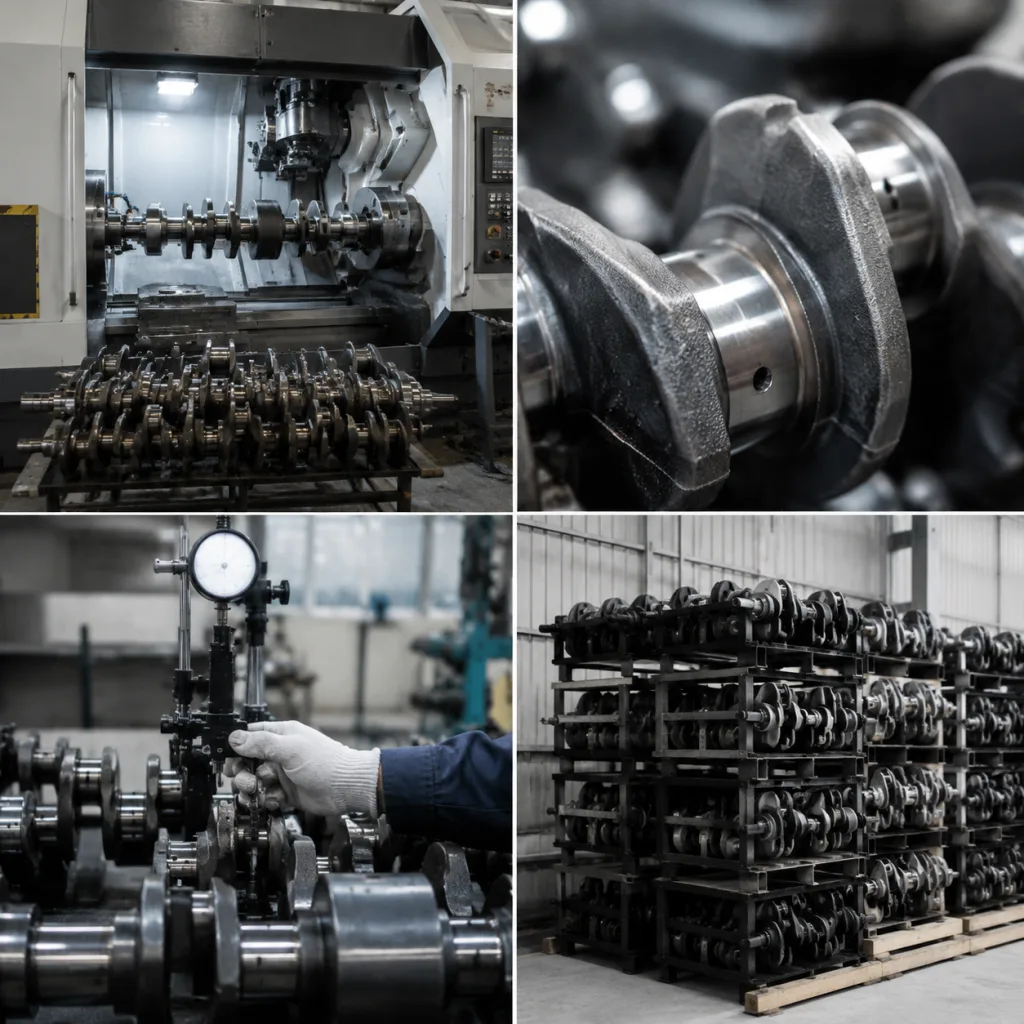
Driventus operates as a vertically integrated Chinese manufacturer of engine and powertrain components. For crankshaft programs, process control typically covers material traceability, batch identification, CNC turning, milling, grinding, polishing and dimensional inspection. The buyer’s audit should connect each process to an inspection record, not just to a workshop tour.

</tr></thead><tbody> </tbody></table>When shortlisting a crankshaft Volvo manufacturer China supplier, ask for batch-level inspection examples. A generic certificate tells you little. Batch records help with incoming inspection, warranty review and long-term supplier scoring.

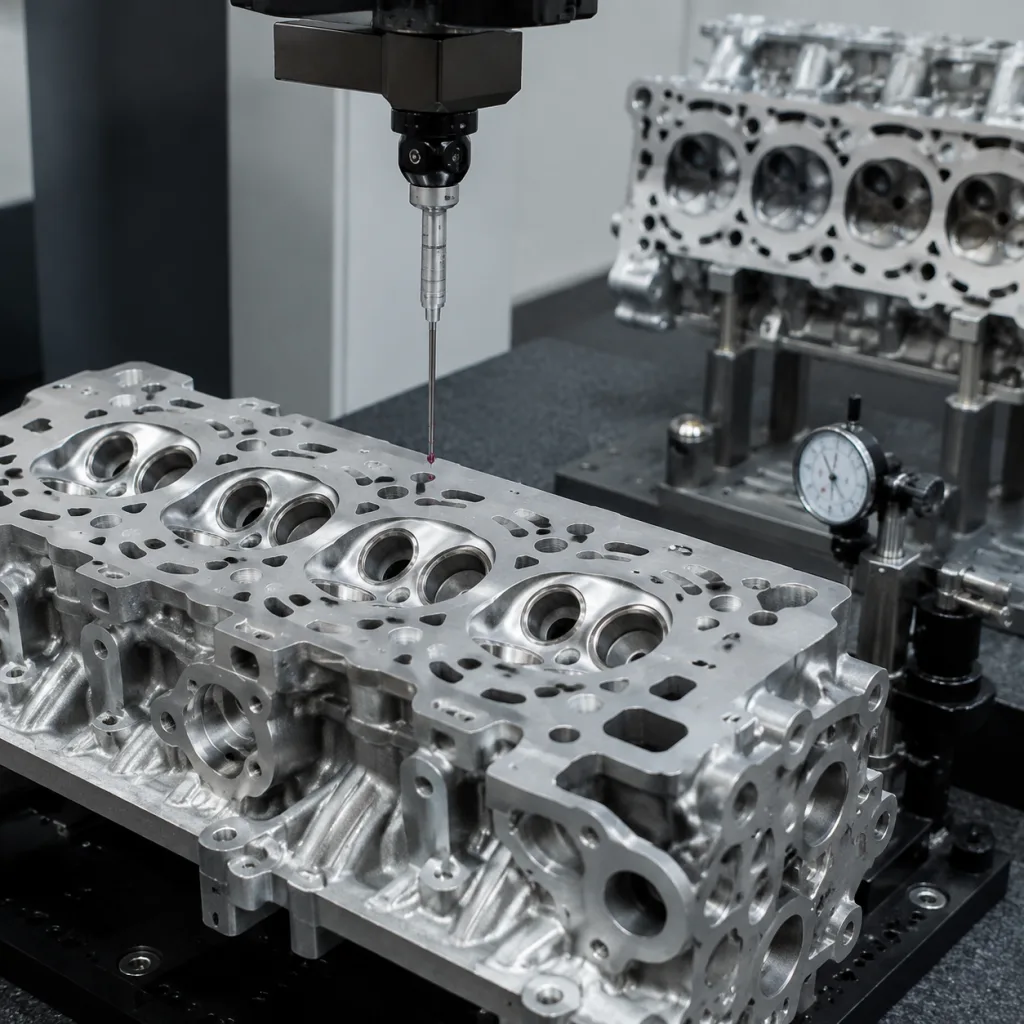
Also check measurement capability. Journal micrometers should read to 0.001 mm. Roughness testers should be calibrated. CMM programs should be revision-controlled for each part number. If the supplier cannot measure the feature reliably, it cannot control it reliably.

Audit Evidence That Separates a Factory From a Brochure

Certification helps with screening, but it does not prove that a specific crankshaft batch is controlled. Driventus operates under IATF 16949:2016 and ISO 9001:2015 quality-management frameworks. Buyers can review our quality system while preparing supplier qualification files.

For crankshaft procurement, the key question is simple: can the supplier link the management system to the part number, lot and carton label? Request evidence such as control plans, process flow diagrams, FMEA summaries, incoming-material records, heat-treatment reports, dimensional inspection reports, cleanliness checks and packaging specifications. Documents should connect to the shipped lot.

Factory audit checklist

For a first purchase or new supplier nomination, include these checkpoints:

  • Valid IATF 16949:2016 and ISO 9001:2015 certificates, issued by recognised certification bodies
  • Calibration status for 0–25 mm, 25–50 mm and larger micrometers, height gauges, CMM equipment, profilometers and hardness testers
  • Traceability from raw material heat number to semi-finished lot, machining lot and finished crankshaft carton label
  • Nonconforming-product segregation, red-tag process and corrective-action records with closure dates
  • In-process inspection frequency for main journals and pin journals; for high-volume repeat orders, buyers often require first-piece, patrol inspection every 20–50 pieces and final AQL sampling
  • Heat-treatment monitoring, hardness verification and retained records; define test points on journals, fillets or test coupons before production
  • Crack-detection method where required, such as magnetic-particle inspection after heat treatment or after grinding
  • Cleanliness controls for oil passages, including compressed-air flushing, washing and visual or borescope checks when specified
  • Packaging drop, corrosion and labelling controls for export shipments, including VCI paper/bag, anti-rust oil and desiccant requirements
  • Change-control procedure for tooling, material source, heat-treatment supplier, process route and inspection method
  • Final inspection release process before shipment or third-party inspection

For EU and UK buyers, REACH (EC) No 1907/2006 declarations may be requested for relevant materials, coatings, rust inhibitors or packaging substances. Emissions regulations such as ECE R-83 apply to vehicle systems rather than an individual crankshaft alone, so claims should stay limited to fitment and component quality unless full engine-system or vehicle validation is provided.

Audit Evidence That Separates a Factory From a Brochure

Commercial Planning Scenario: Existing Part, Slow Mover, or New Development?

MOQ and lead time depend less on negotiation style than on tooling status. Before pushing for a lower MOQ, identify which scenario you are in.

Scenario 1: existing aftermarket reference. The supplier has a controlled route, fixtures and packaging plan. Quotation is faster, and MOQ commonly falls around 50–200 pieces per reference depending on weight, value and packing format.

Scenario 2: heavy-duty or slow-moving crankshaft. Tooling may exist, but demand is lower. MOQ may be 20–80 pieces, with a higher unit price because setup, balancing and inspection time are spread across fewer parts.

Scenario 3: mixed-container distributor order. MOQ may be consolidated across several crankshaft and engine-component references. A 20 ft container may become weight-limited before it becomes cube-limited.

Scenario 4: new development item. The buyer and supplier need drawing review, sample review, tooling or fixture planning, first-article inspection and packaging validation. Pilot runs commonly range from 5–30 pieces after tooling confirmation.

Typical planning ranges:

  • Standard lead time for repeat production: often 45–75 days after order confirmation, depending on capacity, raw-material availability and heat-treatment schedule
  • New development lead time: commonly 60–120 days, depending on tooling, validation and sample approval; complex forged items may require longer die and trial timing
  • Price drivers: raw material weight, machining hours, heat treatment, balancing, scrap rate, inspection scope, packaging and order quantity
  • Added-cost items: special hardness requirements, 100% crack testing, extra documentation, third-party inspection or urgent production slots
  • Commercial terms: confirm payment, Incoterms and inspection terms before purchase order release; clarify EXW, FOB Ningbo/Shanghai, CIF or DAP assumptions

These ranges are planning references, not fixed commitments. Heavy-duty crankshafts, low-volume applications, special materials and urgent export schedules may require different arrangements. Buyers can use custom manufacturing for drawing-based development, private-label packaging or part-family rationalisation across several engine applications.

Forecast discipline reduces cost. If annual demand is fragmented, use quarterly blanket orders with scheduled releases. For example, hold 25% safety stock at distributor level and provide a 2–3 month rolling forecast to the factory. That helps the supplier plan steel billets or castings, machining slots, heat-treatment capacity, balancing time and packaging inventory.

If the target price is below the quote, ask for a costed alternative instead of a blind discount: larger release quantity, neutral packaging, combined references, longer lead time or reduced non-critical inspection documentation.

Failure Modes to Validate Before Repeat Orders

Crankshaft validation should be built around failure prevention. The goal is not to collect paperwork. It is to stop the common issues that turn into bearing noise, low oil pressure, vibration, seal leakage, installation rejection or warranty claims.

For standard aftermarket distribution, focus first on dimensional fitment, material conformity, hardness, surface finish and runout. For higher-duty applications, request additional fatigue, torsional or metallurgical checks where the program justifies the cost.

Process stage Buyer audit point Procurement relevance
Raw materialMill certificate, chemistry check, batch traceability by heat numberConfirms consistency across repeat orders
Forging or castingVisual checks, defect control, machining allowance, magnetic-particle or ultrasonic checks where specifiedReduces scrap and machining instability
Normalising/heat treatmentFurnace chart, quench records, hardness records, case-depth or core-hardness data where specifiedSupports fatigue and wear performance
StraighteningRunout check before finish machining; typical target agreed at datum journals, often ≤0.03–0.05 mm before grindingHelps maintain journal alignment and seal performance
CNC machiningFixture control, tool-life records, first-piece approval and in-process gaugesMaintains repeatability on journals, flange and timing features
Grinding and polishingRoundness, taper, cylindricity and Ra surface finish; many journal finishes target Ra 0.2–0.4 μm depending on bearing designDirect effect on bearing contact and oil-film stability
Oil-hole processingDeburring, chamfer consistency, passage flushing, plug security where relevantPrevents lubrication restriction and debris-related failure
BalancingBalance correction record when specified; acceptance value must be drawing-based, not assumedReduces vibration and warranty exposure
Final inspectionCMM, micrometers, height gauge, hardness tester, runout checks and packing auditConfirms shipment readiness

</tr></thead><tbody> </tbody></table>For warranty-sensitive programs, buyers may request PPAP-style documentation. PPAP is widely used in automotive supply chains, but the submission level should be agreed. A practical aftermarket file may include drawing, material certificate, dimensional report for 3–5 pieces, process flow, control plan, packaging specification and sample approval record. OEM or Tier-1 projects may require FMEA, MSA, SPC, capability data and stronger change-control documentation.

Do not use the wrong standard as a shortcut. SAE J2527 is a brake dynamometer test procedure, not a crankshaft performance standard.

Driventus can support dimensional reports and batch inspection documentation for agreed programs. Define inspection scope in the purchase agreement. For repeat orders, require written approval before any change affecting material grade, heat-treatment source, journal grinding process, oil-hole process, balancing method or anti-rust packaging.

Failure Modes to Validate Before Repeat Orders

Supplier Comparison: Questions That Expose the Real Landed Cost

A low unit price can be expensive once defects, packaging damage, missing records and slow claims handling are included. Compare suppliers on landed cost and risk, not on machining price alone.

Use these questions when evaluating a crankshaft Volvo manufacturer China shortlist:

  • Does the supplier manufacture crankshafts directly or trade from several factories?
  • Can it provide batch-level inspection reports for the ordered references, including journal diameter, runout, hardness and surface finish?
  • Are certificates current under IATF 16949:2016 and ISO 9001:2015?
  • Does the supplier understand crankshaft-specific controls such as journal geometry, fillet radius, oil-hole cleanliness, crack detection and balancing?
  • Is the supplier familiar with export packaging, fumigation rules where relevant and pallet weight limits? Many importers set pallet gross weight limits around 800–1,000 kg for safer warehouse handling.
  • Can it consolidate crankshafts with pistons, gaskets, water pumps or related engine components without mixed-SKU labelling errors?
  • Does it support private-label cartons, neutral packaging, barcode labels, QR labels and batch codes on both carton and pallet?
  • Are warranty handling, claims evidence and corrective-action timelines defined, including photo evidence, installation notes, oil-contamination checks and return-sample rules?
  • Does the quoted lead time include inspection, anti-rust treatment, export packing and booking time, or only machining completion?
  • Are spare samples retained from each lot for dispute review, and for how long?

For distributors, consolidation can reduce vendor count and improve container use. For OEM or Tier-1 sourcing teams, the deciding factors may be process audit results, drawing control, change notification and capacity planning.

Request a quotation table with MOQ breaks such as 50, 100 and 200 pieces. Ask suppliers to separate tooling or fixture charges, packaging cost, inspection-document cost, Incoterms and validity period. This shows whether a price gap comes from material, machining assumptions, documentation, packaging or freight basis.

One warning: do not approve a supplier on a sample if mass production will use a different material source, heat-treatment supplier, grinding fixture or inspection route. The sample must represent the production process.

Driventus is based in Taizhou, Zhejiang and exports to more than 60 countries. We supply B2B buyers only and support distributor, repair-chain and OEM/Tier-1 procurement workflows. Driventus is an independent aftermarket manufacturer; brand names are referenced for fitment only. To evaluate a crankshaft sourcing program, send drawings, samples or fitment data and request a quote.

Frequently asked questions

Provide engine code, application list, material requirement, journal dimensions, stroke, flange details, annual volume, packaging needs and any OE cross-reference already used in your fitment database. Drawings, samples or inspection reports improve quotation accuracy.

Yes. Driventus supports B2B private-label packaging, neutral cartons and consolidated shipments for agreed programs. Labelling, barcode format, carton strength, corrosion protection and pallet configuration should be confirmed before order release.

No. Driventus is an independent aftermarket manufacturer; brand names are referenced for fitment only. We do not claim approval, endorsement or authorisation by any vehicle manufacturer.

For drawings, sample review, MOQ planning or distributor supply discussions, contact Driventus with your crankshaft requirements. Start with a technical enquiry at /contact.html

Request a Quote
Failure risk Typical check Why it matters
Incorrect bearing clearanceJournal diameter measured by micrometer or CMM at multiple angular positionsControls oil pressure and bearing life
Uneven bearing loadRoundness and taper checks; tolerances are drawing-specific, often reviewed in the 0.003–0.010 mm range for finished journalsReduces local overheating and wear
Vibration or seal issuesRunout check by V-block and dial indicator or equivalent fixture at defined datum journalsSupports smooth rotation and seal performance
Break-in wearProfilometer check; typical journal Ra targets may sit around 0.2–0.4 μm unless the drawing states otherwiseProtects bearing surfaces during initial operation
Weak wear resistanceRockwell, Brinell or Vickers hardness test as specified; record test position and conversion methodConfirms heat-treatment result
Crack initiationFillet radius check by radius gauge, contour equipment or CMM profile checkReduces stress concentration
Oil starvationOil-hole deburring, flushing, borescope or cleanliness inspectionPrevents lubrication restriction and debris damage
Engine vibrationDynamic balance report when specified, with speed and residual-unbalance criterion statedControls vibration in assembled engines
Installation rejectionVisual inspection for crack, burr, corrosion, dent and handling damageReduces returns before assembly