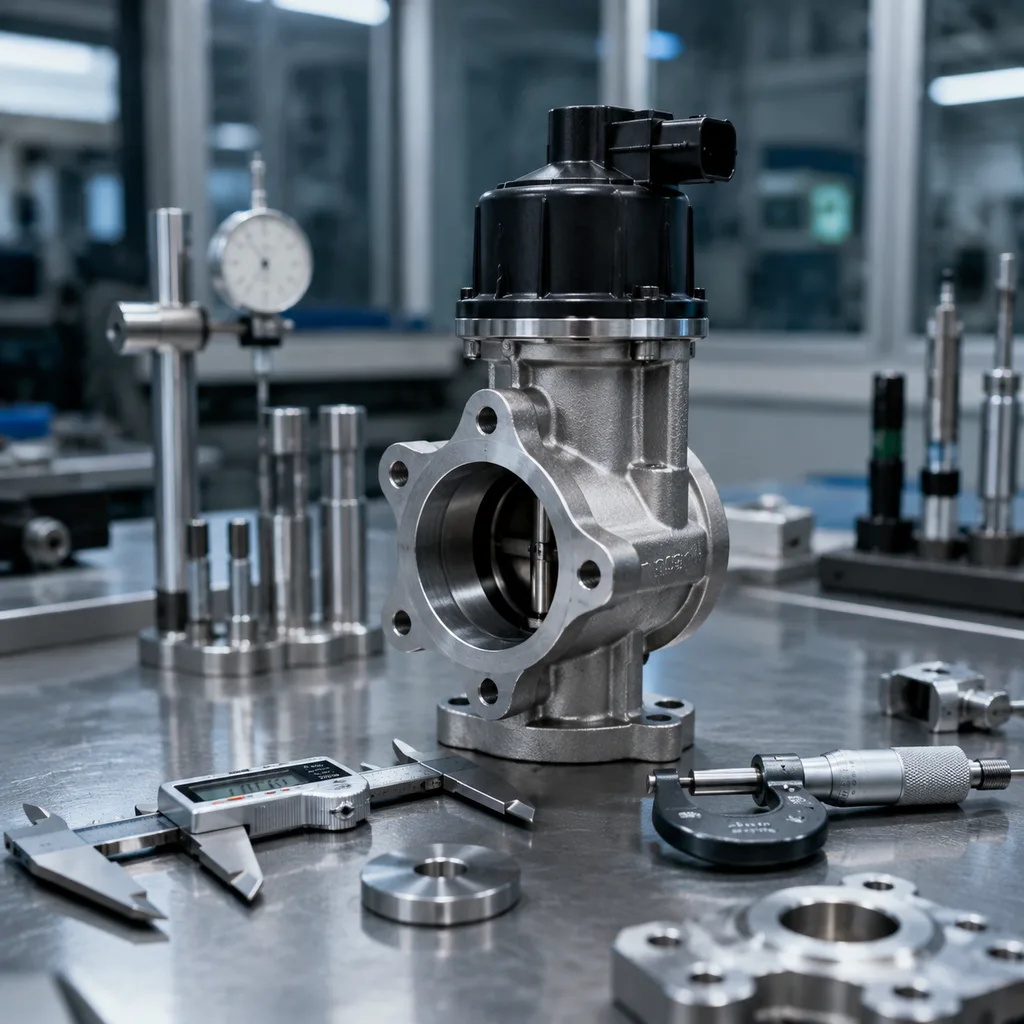
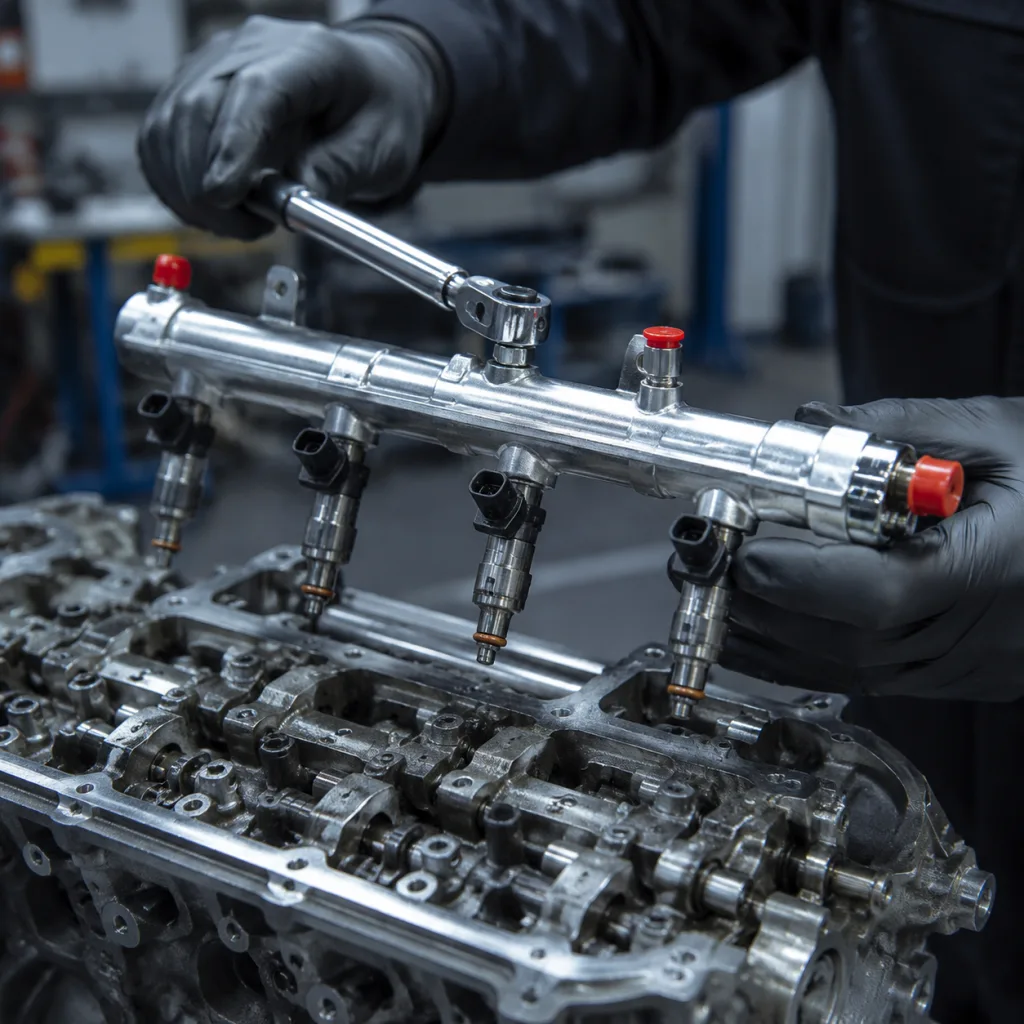
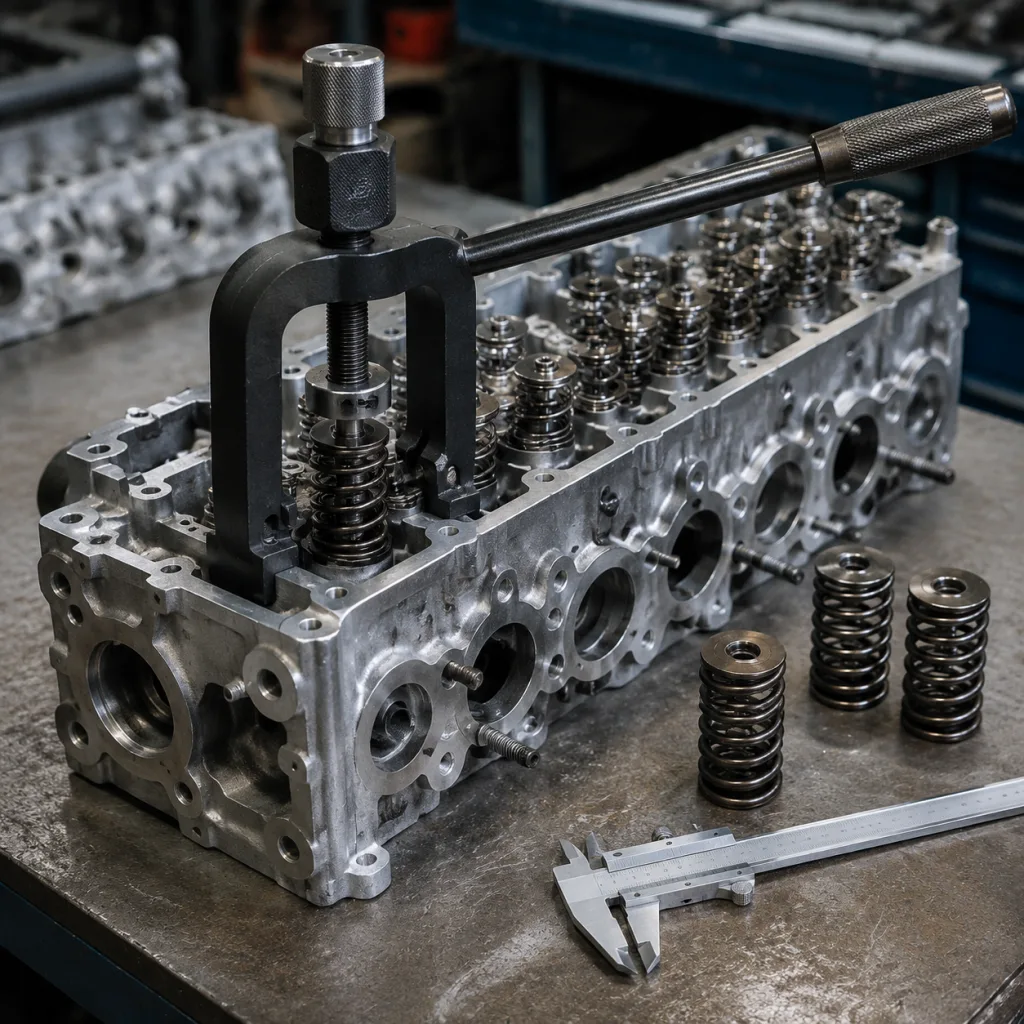
An EGR valve is a small part with an unfriendly job. Hot exhaust gas, soot, acidic condensate, vibration, intake oil mist, and electrical actuation all converge in one assembly. For procurement teams, the EGR valve material stack is not a minor drawing note. It affects warranty exposure, emissions-related performance, incoming inspection, and total landed cost.
The risk is rarely limited to the housing alloy. A sticky shaft, a seal with poor compression set, a bushing that loses clearance after heat cycling, or a connector plastic that softens near engine heat can create the same result: leakage, fault codes, returns, and customer claims. A useful sourcing specification therefore needs to define the full bill of materials, the critical surfaces, the validation conditions, and the end-of-line checks.
Do not compare suppliers only by fitment claim and unit price. Compare them by controlled material grades, leakage limits, actuator response, current draw, shaft clearance, coating evidence, condensate resistance, corrosion results, and post-ageing performance drift. Driventus manufactures engine and powertrain components in Taizhou, Zhejiang, under IATF 16949:2016 and ISO 9001:2015 systems. Driventus is an independent aftermarket manufacturer; vehicle brand names and OE references are used for fitment identification only.
Start with the duty cycle, not the alloy name
The right EGR valve material depends on where the valve lives in the engine system. A near-manifold valve exposed to high dry heat is a different sourcing problem from a cooled EGR valve that sees lower temperatures but more condensate and acidic deposits. If the RFQ begins with “aluminium or stainless,” it begins too late.
Build the material decision from these operating inputs:
Continuous gas temperature: many cooled EGR layouts operate around 120–450 °C, while hotter uncooled or near-manifold positions may reach 550–650 °C
Short peak exposure: define both temperature and dwell time, such as 700 °C for 10–30 minutes where regeneration or high-load conditions apply
Thermal shock: confirm the cycle between ambient or coolant-side temperature and hot gas exposure; development validation often uses 100–300 cycles
Condensate chemistry: water mixed with carbonic compounds, sulphur compounds, nitrogen oxides, and other acidic by-products; request test-fluid pH and exposure time
Soot loading: abrasive particles can change seat wear, shaft movement, bushing clearance, and actuator force
Oil mist exposure: intake vapour and exhaust deposits can combine into sticky residue on shafts, seats, and flaps
Vibration and mounting load: engine-mounted valves need robust connectors, fasteners, solder joints, actuator housings, and terminal retention
Actuator duty cycle: electrically actuated valves may need to maintain position control over 200,000–1,000,000 movements depending on programme risk
Leakage requirement: specify the pressure differential, temperature, valve position, and units, such as sccm or L/min at 20–100 kPa differential
This decision sequence protects buyers from false savings. A cheaper material substitution may pass fitment checks but fail after condensate exposure, soot ageing, or thermal cycling. Ask each supplier to connect the operating condition to the selected housing, shaft, pintle, bushing, seal, coating, fastener, terminal, and actuator material.
Driventus supports EGR and related engine components through our catalog, with part development managed through a documented quality system.
Material stack comparison: where each part usually fails
A controlled EGR valve material review should cover the entire assembly. The housing is important, but many field failures start in small secondary materials: the shaft finish, bushing interface, seal compound, terminal plating, or actuator cover.
Use the comparison below as a sourcing reference. Final choices must still be checked against valve architecture, engine platform, emissions package, packaging space, and customer validation requirements.
Component area
Common material options
Procurement risk if underspecified
Main housing
ADC12/A380 die-cast aluminium, stainless steel section, or cast iron for higher-temperature layouts
Porosity, pressure leakage, gasket-face distortion, heat damage, or corrosion in condensate-heavy locations
Valve pintle or flap
304, 316L, 309S, 430, 441, or equivalent stainless steel
Scaling, seat wear, dimensional drift, sticking, or poor resistance to acidic condensate
Shaft
304/316/430 stainless, sometimes nitrided, polished, or coated
Deposit build-up, high friction, poor straightness, corrosion, or excessive wear against the bushing
Bushing / bearing area
Sintered bronze/iron, stainless sleeve, PTFE-based coated bearing, or design-specific bearing system
Clearance loss, thermal expansion mismatch, wear debris, rising actuation force, or seizure after soot ageing
Seat area
Machined stainless insert, coated alloy surface, or cast/machined seat depending on design
Excessive leakage, erosion, poor concentricity, inconsistent contact width, or leakage drift after cycling
Seals and O-rings
FKM, FVMQ, silicone, or other high-temperature elastomers by location
PBT-GF30, PA66-GF30, PPS, aluminium cover, or mixed construction
Loss of connector retention, moisture sensitivity, heat distortion, cracked cover, or unstable dimensions
Connector terminals
Tin-plated, silver-plated, or gold-flash copper alloy depending on signal/current requirement
High contact resistance, fretting, weak insertion/retention force, or corrosion in salt/humidity exposure
Fasteners
Zinc-nickel plated steel, stainless steel, or customer-specified coated fasteners
Red rust, torque loss, thread failure, galvanic corrosion, or field-service removal problems
</tr></thead><tbody> </tbody></table>A quote that says only “aluminium housing, stainless shaft, rubber seal” is not a technical quote. It is a placeholder. A controlled quote should identify material grade or approved equivalent, coating, critical tolerance, validation evidence, annual volume assumption, MOQ, tooling status, and whether the unit price includes EOL testing, packaging, and documentation.
Compliance screening should match the sales market. For EU supply, material review commonly includes REACH (EC) No 1907/2006. Some programmes may also require RoHS status, IMDS entry, or a full substance declaration.
Manufacturing controls that decide whether the material performs
Even the correct alloy can fail if the process cannot hold the functional geometry. For EGR valves, material selection and manufacturing capability are inseparable.
Aluminium die casting is common where weight, machinability, and production efficiency matter. Stainless steel housings, stainless inserts, or stainless valve sections are used where temperature, corrosion, or seat erosion is more demanding. Cast iron appears in some heavy-duty or high-temperature applications, though it adds mass and may need additional corrosion protection.
Before tooling release, lock down these process and tolerance points:
Shaft bore and bushing bore tolerance: often controlled within 0.01–0.03 mm on precision features, depending on valve size and bearing design
Shaft straightness: define maximum runout, commonly 0.03–0.05 mm over the functional length for small automotive valves
Seat concentricity relative to the shaft datum: typically 0.03–0.08 mm where leakage sensitivity is high
Gasket-face flatness: often around 0.05–0.10 mm, with surface roughness commonly Ra 1.6–3.2 µm depending on gasket type
Shaft and bearing surface roughness: commonly Ra 0.2–0.8 µm for sliding interfaces, subject to coating and lubrication strategy
Casting porosity limits: define limits for pressure-retaining or machined sealing zones, verified by X-ray, dye penetrant, or section review during PPAP-style approval
Thread and insert strength: include thread depth, torque test limits, and destructive pull-out samples during launch where inserts are used
Connector pin position: check with a mating gauge, not only by visual inspection
Actuator gear backlash and stroke: define stroke range, response time, and sensor calibration window where applicable
Burr control: treat burrs around ports, seats, shafts, and connector interfaces as functional defects, not cosmetic issues
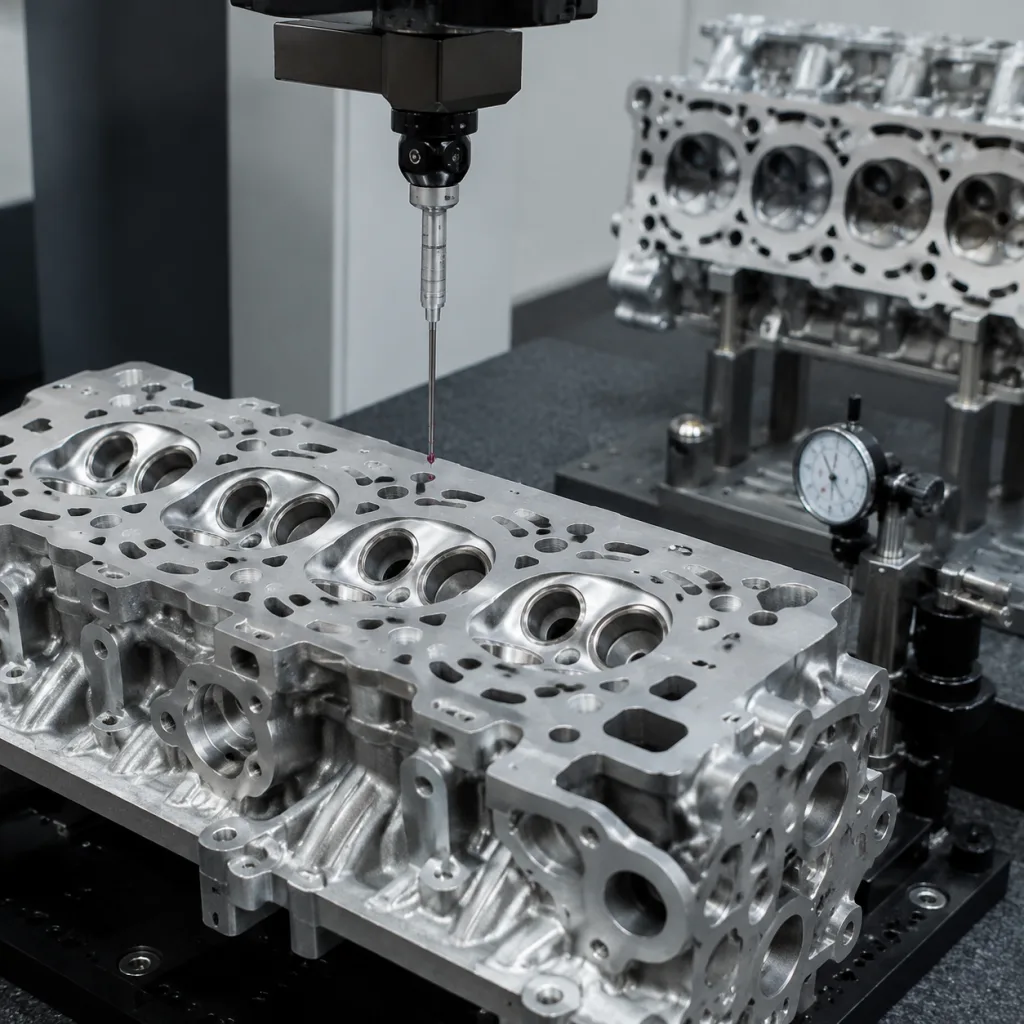
A practical inspection plan combines dimensional measurement, air-leak testing, electrical function testing, and visual criteria for cracks, plating defects, casting flaws, burrs, and contamination. Coordinate measuring equipment is useful for datum relationships such as shaft-to-seat geometry. Fixture gauges support high-volume checks on connector position and mounting points.
Launch control plans often use 100% end-of-line leakage and electrical testing. Critical dimensions should be checked at start-up, tool change, and defined production intervals. For aluminium castings, section analysis, X-ray inspection, pressure testing, or porosity evaluation may be required during development and process approval. For stainless valve parts, hardness, passivation condition, and surface roughness checks help verify wear and corrosion performance.
Do this early. Changing porosity limits, datum strategy, or leakage fixtures after first articles can add weeks to the launch schedule.
Surface treatments: the hidden difference between clean movement and sticking
Material grade is only half the decision. The surface has to survive soot, condensate, thermal cycling, vibration, and repeated movement. A good alloy with the wrong surface finish can still collect deposits, raise actuation force, or leak after ageing.
Focus first on the most sensitive zones: valve shaft, bushing contact area, seat, pintle or flap, fasteners, and connector terminals.
Common treatments include:
Passivation for stainless components: improves corrosion resistance and surface cleanliness; request process standard, bath control, and post-passivation corrosion result
Zinc-nickel plating on steel fasteners: provides better salt spray performance than basic zinc systems; typical coating thickness is often 8–12 µm, with 240–720 h neutral salt spray targets depending on customer requirement
Anti-friction coatings on shafts or bushings: useful where low actuation force and deposit tolerance are required; request coating thickness, adhesion, wear test, and maximum friction increase after ageing
Anodising or trivalent conversion coatings on aluminium: define whether the coating is cosmetic, corrosion-related, or functional
Terminal plating: selected for stable electrical contact resistance and fretting resistance; define plating material, thickness, mating cycles, and maximum contact resistance, often in the low milliohm range
Local hardening, polishing, or coating of wear surfaces: specify before/after roughness and any masking requirements
Salt spray testing is useful for external corrosion screening, but it is not enough for EGR valves. Internal exposure includes hot exhaust, soot, condensate, thermal shock, and chemical ageing. A stronger validation plan combines thermal cycling, humidity ageing, condensate exposure, vibration, actuator cycling, and leakage measurement after ageing.
For supplier comparison, force the same reporting sequence: initial leakage, initial actuation force or current, thermal cycling, condensate exposure, soot or deposit cycling where applicable, vibration, then final leakage and electrical response. This prevents a supplier from presenting a passing salt spray report while omitting the data that matters most: post-ageing leakage and sticking risk.
Where the valve is part of an emissions control strategy, system-level compliance requirements may reference regulations such as ECE R-83 for emissions type approval in applicable vehicle categories. The component supplier should provide evidence for the part and process it controls, and should not claim vehicle manufacturer approval unless formal approval exists.
What to ask before trusting a validation report
A validation file is only useful if it matches the part you intend to buy. Many suppliers can show test data. The buyer’s job is to find out whether that data belongs to the exact design, a related family, or a different configuration that shares only a housing shape.
Ask these questions before release:
Are the material certificates for the actual casting, machined parts, seals, terminals, and plated fasteners, with heat or batch numbers where traceability is required?
Does the bill of materials list controlled material grades, approved alternatives, and change-control rules?
Is IMDS or an equivalent material declaration available when required by the customer programme?
Are REACH (EC) No 1907/2006 and RoHS statements available where applicable to the sales market?
Does the dimensional report show actual measured values for critical features and datum relationships, not only pass/fail marks?
Is the leakage test method defined by pressure differential, test temperature, valve position, and acceptance limit, such as L/min or sccm at a defined kPa differential?
Are actuator response, stroke, current draw, PWM/control conditions, and position sensor calibration data included?
Does the thermal cycling report include pre-test and post-test leakage, number of cycles, temperature limits, dwell time, and acceptance criteria?
For engine-mounted valves, does the vibration report include axis, frequency range, acceleration, duration, and post-test function?
Are external corrosion results available for metal parts and plated fasteners, with red rust/white rust criteria and exposed hours?
Is condensate, humidity, or chemical-resistance testing reported with pH, temperature, exposure time, and post-test actuation result?
Is there a process control plan, end-of-line test flow, gauge list, reaction plan, and traceability method?
Family data can support early sourcing. It should not be the only release basis for a high-risk application. Release decisions should be based on the correct material stack, actuator type, connector, sealing design, and calibration window. For higher-risk projects, request 5–10 pre-production samples for fitment and bench checks before committing to production tooling or a container order.
Commercial validation matters too. Confirm sample lead time, tooling lead time, MOQ, price breakpoints, documentation charges, and whether low-volume mixed orders can be consolidated. Typical aftermarket projects may use 30–60 days for samples where tooling exists, 60–90 days where new machining fixtures or cast tooling are needed, and longer if customer-specific validation is required.
For Driventus programmes, project teams can support OE part-number cross-reference mapping when customers provide target applications, such as OE 06A… or OE 11251… style references. Cross-references are used for fitment identification only and do not imply endorsement by the vehicle manufacturer. For private label or modified material requirements, buyers can review our custom manufacturing process.
RFQ build-out: turn material requirements into comparable quotes
A good RFQ prevents the common argument later: the buyer expected one validation level, the supplier priced another. For EGR valves, do not stop at fitment and annual volume. Define the material system, inspection requirements, test standards, packaging, documentation, and market-specific compliance needs.
Use this structure when preparing the sourcing package:
RFQ item
What to specify
Why it matters
Application data
Engine code, fuel type, model year range, OE cross-reference if available, left/right-hand-drive differences if relevant
Prevents wrong actuator, connector, port geometry, gasket, or calibration range
Housing requirement
Aluminium, stainless, cast iron, or supplier-proposed equivalent; include temperature class and corrosion exposure
Reduces warehouse damage, misidentification, missing accessories, and distribution issues
Warranty and traceability
Batch code, date code, test record retention, claim analysis process, response time for 8D reports
Improves containment and root-cause analysis if field issues occur
</tr></thead><tbody> </tbody></table>Separate existing catalogue items from new or modified builds. Existing items can often support lower MOQs, especially when ordered with mixed part numbers. New tooling or private-label variants need minimum runs that cover casting, machining, actuator, seal, and packaging setup. Ask for price breaks such as 100, 300, 500, and 1,000 pieces per part number, plus annual blanket-order pricing if the forecast is stable.
For lead-time planning, confirm three dates: sample dispatch, production readiness, and mass-production shipment. Also confirm when the quoted lead time starts: after PO, deposit, drawing approval, label approval, or sample approval. This detail matters when a distributor is launching a new range or replacing a supplier with open backorders.
Driventus can quote standard catalogue items and application-specific builds for distributors, Tier-1 service channels, and repair chain supply programmes. To begin review, prepare the application list, annual demand, target markets, required documents, packaging preference, MOQ target, and any existing test plan, then request a quote.
Frequently asked questions
Many light-vehicle EGR housings use die-cast aluminium alloy such as ADC12 or A380 because it is light, machinable, and cost-efficient. Higher-temperature layouts may use stainless steel sections, stainless inserts, or cast iron depending on the engine design. The correct choice depends on gas temperature, condensate exposure, mounting location, leakage requirement, and validation limits.
FKM is common where oil and heat resistance are needed, while silicone, FVMQ, or other high-temperature elastomers may be used in specific locations. Procurement teams should request heat ageing, compression set, Shore hardness, and chemical compatibility data rather than accepting an unspecified rubber description.
Not always. A stronger alloy can add cost, mass, machining difficulty, longer lead time, or galvanic corrosion risk if it is not matched with the housing, fasteners, seals, and operating environment. Performance depends on the complete design: material grade, surface finish, clearances, actuator force, coatings, and validation testing after thermal and chemical ageing.
For EGR valve sourcing, send your application list, target markets, annual demand, MOQ target, packaging preference, and documentation requirements for a structured review. Driventus can respond with material options, validation scope, sample lead time, price-break logic, and commercial terms at /contact.html