Cylinder Sleeve Mini Wholesale Sourcing Guide
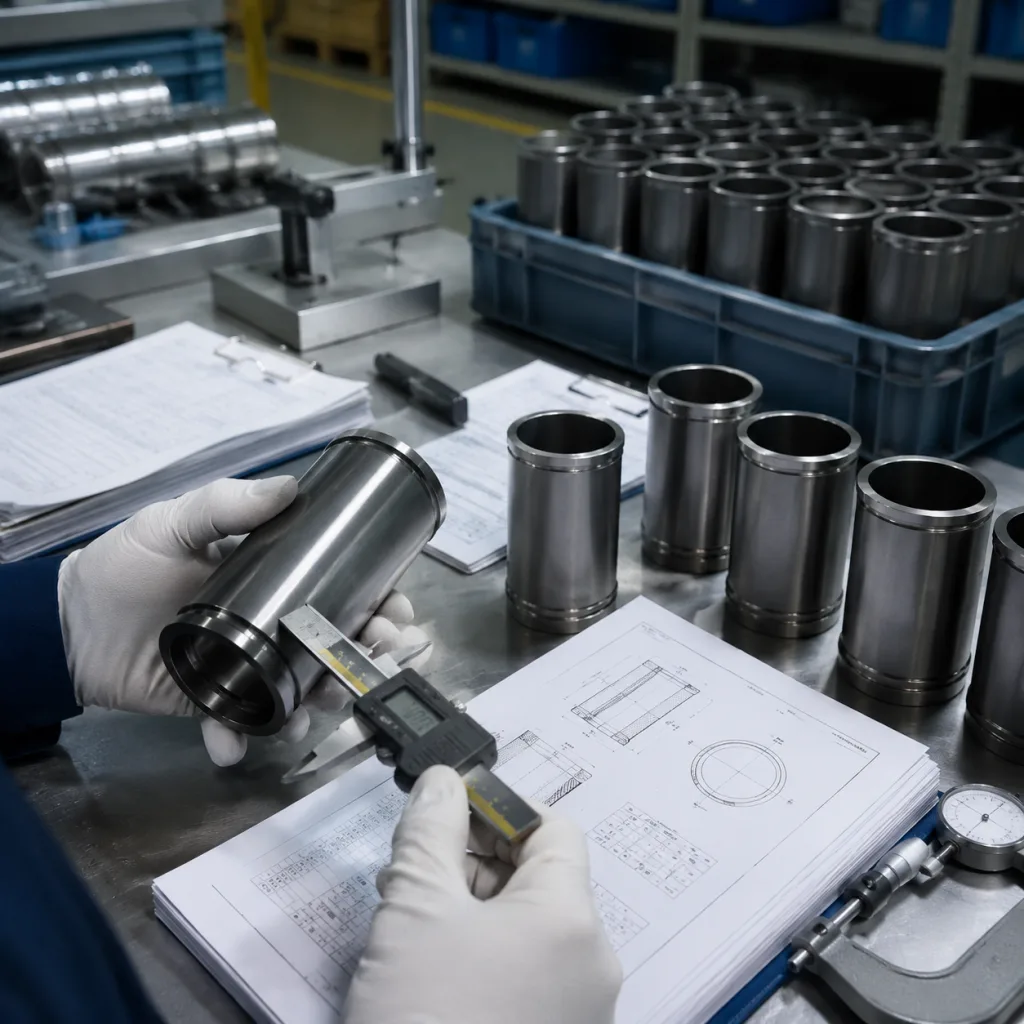
Cylinder sleeve mini wholesale buying goes wrong when it is treated as a line-item price check. A sleeve can look correct in a carton and still create installation drag, poor press fit, excess machining time, oil-control complaints, or warranty returns. The differences are often small: 0.02–0.05 mm on OD, flange height, bore size, wall thickness, or length can change how the part behaves in the block.
For distributors, engine rebuild suppliers, and repair-chain buyers, the stronger sourcing question is: can the supplier repeat the same sleeve geometry, material condition, inspection method, and packing standard across multiple lots?
Driventus manufactures cylinder sleeves and related engine components in Taizhou, Zhejiang, supplying export markets in more than 60 countries. We support B2B programmes that need batch consistency, private-label packing, traceable records, and practical response times. Driventus is an independent aftermarket manufacturer; Mini and other brand names are used only for fitment identification. This guide shows how to structure the RFQ, where sleeve projects usually fail, and what to verify before scaling from samples to wholesale orders.
Decision framework: what must be fixed before you ask for price
A useful RFQ does more than name a vehicle application. It tells the factory which dimensions are functional, which surfaces will be machined later, which documents must travel with the shipment, and how the sleeve will be sold or installed after arrival.
Start by separating the specification into four decisions.
1. Fitment and sleeve type
Confirm the target engine application, engine code if available, displacement range, and whether the part is for a standard repair or oversize rebuild. State whether you need a dry sleeve, wet sleeve, or semi-finished liner blank. For cylinder sleeve mini wholesale programmes covering several references, drawings or measured samples are especially important because market variants can look similar but require different press fit, flange seating, or machining allowance.
2. Machining state
Do not leave “bore” undefined. Specify rough, semi-finished, or finished bore. If the sleeve is finished, give the final bore size, piston-to-bore clearance target, taper, roundness, and surface finish requirement. If it is semi-finished, define the retained machining allowance so the rebuilder is not forced into extra cutting or scrap.
3. Key dimensions and tolerances
Include outside diameter, inside diameter, sleeve length, flange diameter, flange thickness, wall thickness, chamfer, radius, and any seating features. Many aftermarket sleeve projects define OD and flange-related features in the ±0.01–0.03 mm range, with length or non-critical features often in the ±0.05–0.10 mm range, subject to drawing approval. The exact tolerance should come from the buyer’s drawing, block condition, and machining route.
4. Commercial and receiving requirements
A technically correct sleeve can still fail a wholesale programme if it arrives with the wrong label or poor rust protection. State quantity per order and annual volume, such as 50–100 pcs for approval, 300–1,000 pcs for trial wholesale, or scheduled quarterly call-offs. Add packaging requirements: neutral carton, buyer brand, barcode label, kit packing, VCI bag, oiled paper, or bulk industrial pack. Include destination market and compliance needs, including REACH (EC) No 1907/2006 where relevant.
Your RFQ should request, at minimum:
- Material preference, such as pearlitic cast iron or alloy cast iron, with grade or hardness target
- Surface finish requirements, including turned OD, ground OD, semi-finished bore, or honed bore with Ra value if required
- Inspection documents, including dimensional report, hardness record, material statement, and packing photos
- Label files, carton marks, item numbers, barcode rules, and pallet limits
- Sample approval process and revision-control expectations
If no drawing exists, send one new sample plus one used block or sleeve reference where possible. Then agree which measurements are functional and which are only references. Driventus can support standard aftermarket sleeve supply as well as project-based development through custom manufacturing. Buyers reviewing adjacent engine parts can also check our catalog for coordinated sourcing across pistons, gaskets, crankshafts, water pumps, and related components.
Order-structure comparison: sample lot, trial wholesale, or scheduled call-off?
MOQ is not one fixed number. It changes with casting availability, machining cycle time, inspection workload, and packaging format. A common reference made from shared casting blanks may support a low trial quantity. A special alloy, uncommon dimension, or private-label carton may push MOQ higher because the foundry melt, fixture setup, carton printing, or inspection plan has its own minimum.
Use the order type to match the risk level.
| Order type | Typical use case | Commercial focus | Technical focus |
|---|---|---|---|
| Sample order | 2–20 pcs for dimensional validation and bench inspection | Higher unit handling cost; sample charge may apply | Drawing confirmation, material check, first-article inspection |
| Trial wholesale order | 50–300 pcs for market testing or repair-chain rollout | Stable carton configuration and landed-cost test | Batch consistency, fitment feedback, packing verification |
| Scheduled blanket order | 300–1,000+ pcs per call-off or quarterly replenishment | Price stability, freight planning, lower unit handling cost | Lot traceability, repeat inspection, controlled revision level |
| Custom sleeve project | Special engine rebuild, obsolete reference, or private specification | Tooling, engineering review, MOQ agreement | Material, heat treatment if applicable, machining route, gauge plan |
| Document | Purpose | Buyer value |
|---|---|---|
| Commercial invoice and packing list | Customs and receiving | Confirms quantity, net/gross weight, carton count, and pallet structure |
| Batch inspection report | Dimensional and visual results | Supports incoming QC sampling and customer claims review |
| Material statement | Confirms declared sleeve material | Reduces substitution risk between standard and alloy iron |
| Hardness test record | Verifies wear-related material control | Helps compare lots over time; include method and measurement locations |
| Drawing or specification revision | Confirms current engineering basis | Avoids obsolete dimensions after sample approval or revision changes |
| Packaging photos before shipment | Confirms labels, inner protection, cartons, and pallet format | Reduces warehouse receiving issues and private-label mistakes |
| Certificate of origin or trade documents if required | Import clearance and tariff review | Helps buyer prepare destination-market documentation |