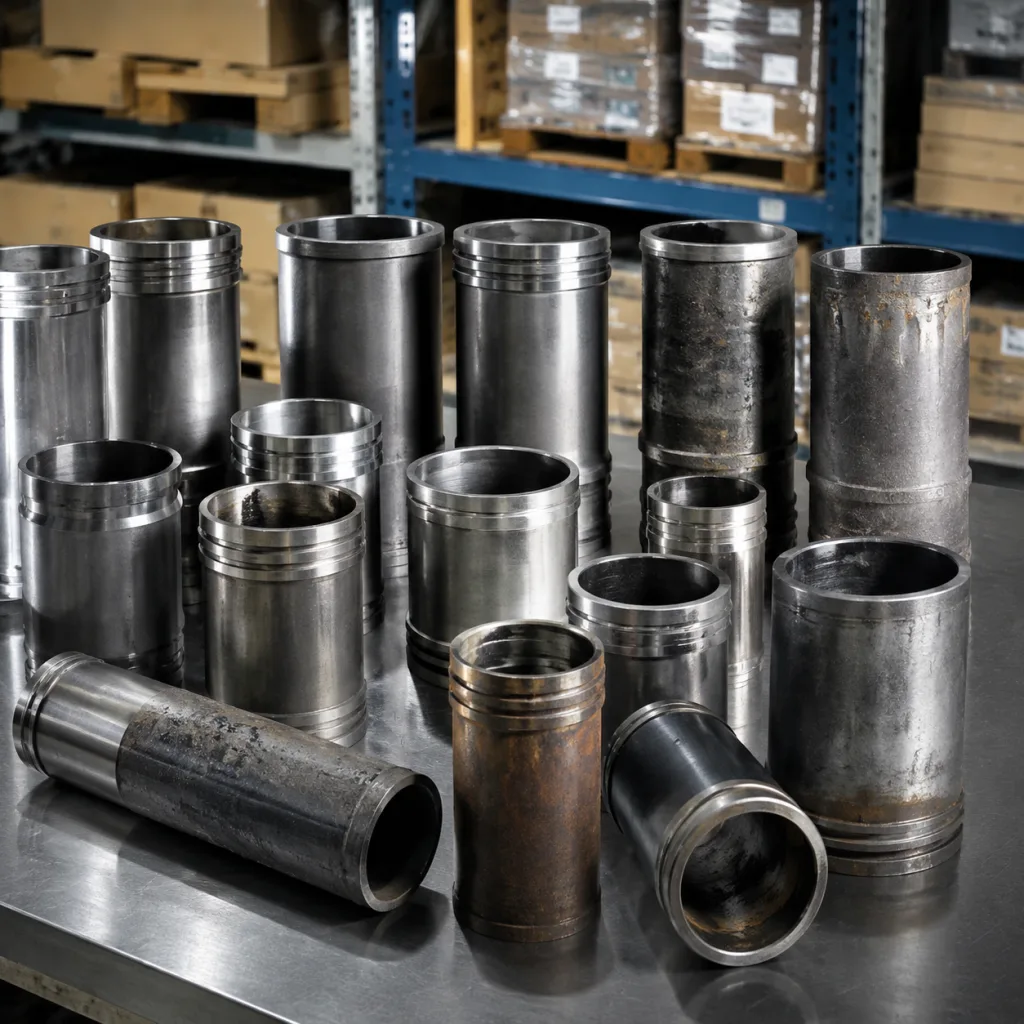
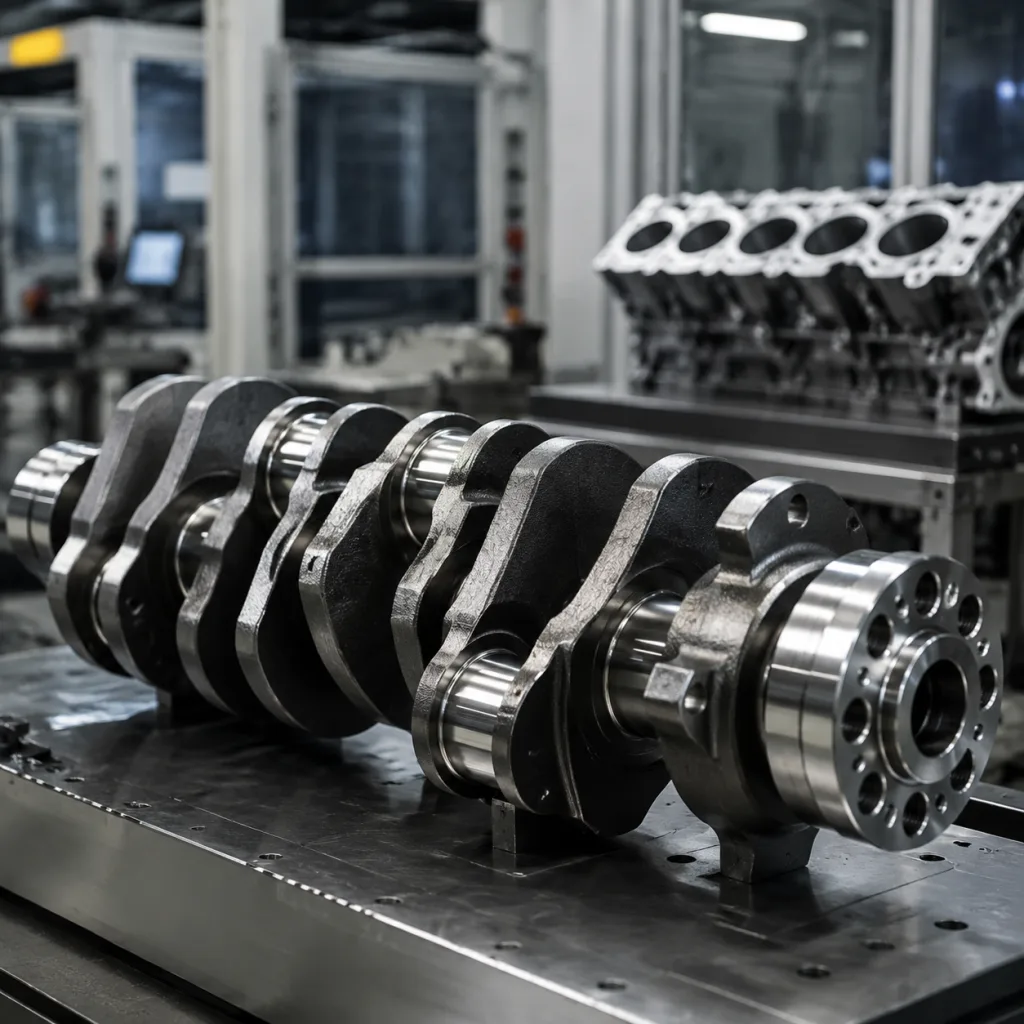
Cylinder liner Cadillac wholesale sourcing is a procurement decision, not a retail purchase. The priorities are dimensional control, material consistency, batch traceability, and dependable lead time. For distributors, repair chains, and importers, the part must match the target engine family, withstand the intended duty cycle, and arrive with documentation that supports incoming inspection.
Driventus supplies engine and powertrain components from Taizhou, Zhejiang, with production aligned to IATF 16949:2016 and ISO 9001:2015. Driventus is an independent aftermarket manufacturer; brand names are referenced for fitment only. For buyers comparing supply options, the key questions are straightforward: what material is used, what tolerances are held, what tests are performed, what minimum order quantity applies, and whether the supplier can support stable replenishment across regions. This article covers the main sourcing points for cylinder liners, including specification control, validation checks, packaging, quotation logic, and how to structure a wholesale enquiry.
Decision first: what must match before you buy
Start with the engine code, bore size, liner type, and installation method. The vehicle name is not enough, and it is often the fastest way to misbuy.
Confirm engine family and OE cross-reference, such as `OE 06A107065` where applicable
Ask for material grade, hardness range, and surface finish target
Require batch traceability, carton labeling, and lot code visibility
For catalogue review, use our catalog and, where relevant, engine components. If fitment is unclear, ask for the engine code, VIN range, and an original sample before placing a stock order.
Spec deep-dive: the dimensions that make or break fit
A liner can look correct and still fail in service if wall thickness, roundness, or protrusion misses the engine builder’s requirement. Wholesale buyers should ask for measured values, not only nominal sizes.
Spec item
What to confirm
Typical wholesale control target
Material
Alloy cast iron or ductile iron
Match to duty cycle and sealing design
Bore size
Nominal and finish diameter
Finish tolerance commonly held within ±0.01 to ±0.03 mm depending on drawing
OD and wall
Outer diameter, wall thickness, and press-fit allowance
Verify against block interference requirement, often controlled to 0.01 mm-level fit bands
Length
Overall length and flange height
Check against deck protrusion target, often within ±0.05 mm where specified
Roundness and cylindricity
Out-of-round and taper values
Request measurement on sample and production lots
Surface finish
Ra target if supplied
Hones are commonly specified around Ra 0.2–0.8 μm depending on ring package
Hardness
Brinell or equivalent range
Ask for test method and sample points; many cast-iron programs target HB 180–260
Coating / treatment
Phosphate, anti-rust oil, or other treatment
Confirm if corrosion protection is needed for ocean freight or storage
</tr></thead><tbody> </tbody></table>If the application needs a controlled adaptation, Driventus can support custom manufacturing for programme-specific dimensions and packaging. For launch programs, share a drawing with nominal size, tolerance stack, and expected annual volume so the factory can quote the correct process path.
Where wholesale supply fails: the common risk points
Most sourcing problems are not obvious at quotation stage. They show up later as noisy fitment claims, inconsistent assembly time, or corrosion during transit.
Watch for these failure modes:
Part numbers that are tied to the vehicle model instead of the engine family
Undisclosed tolerance drift between lots
Incomplete inspection data, especially for bore and OD measurements
Packaging that leaves machined surfaces exposed to moisture
MOQ terms that hide tooling, setup, or rework cost in the unit price
Samples that pass, but production lots that are built to a different control plan
A good supplier will explain how each lot is released, what gets measured, and what happens when a dimension trends out of spec. If the answers are vague, the risk usually is too.
Quality controls to ask for in the RFQ
Wholesale buyers should ask how the supplier controls incoming material, machining, inspection, and final packing. A credible cylinder liner programme normally includes calibrated dimensional checks, hardness verification, visual inspection for cracks or porosity, and traceable lot coding.
Driventus operates under an IATF 16949:2016 and ISO 9001:2015 quality framework. Our quality system covers process control, inspection records, and corrective action handling. For buyers in the EU and UK, material and packaging documentation should also support REACH (EC) No 1907/2006 awareness where relevant to downstream compliance.
A practical control plan for wholesale orders should include:
Incoming raw material certificate review before machining
First-piece dimensional approval for each production lot
In-process checks on bore, OD, length, and flange height
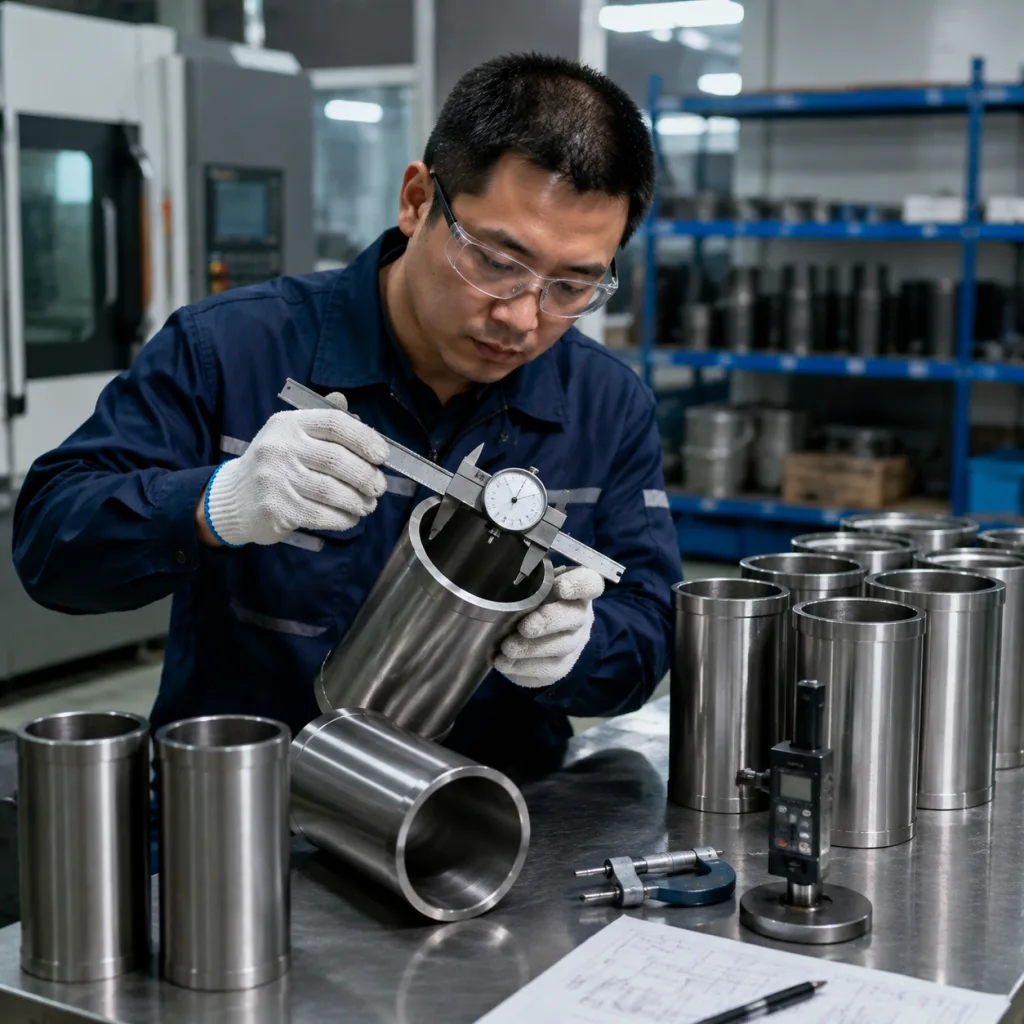
Final inspection with calibrated micrometers, bore gauges, and height gauges
Visual screening for porosity, scoring, chips, and machining burrs
An agreed AQL or full-inspection arrangement before shipment
Retained sample storage for future complaint analysis
If export documentation is needed for a programme, request it before order confirmation, not after shipment. Buyers should also confirm whether the supplier can provide inspection reports in English with measured values, not only pass/fail marks.
Lead time, MOQ, and pricing: compare the options before you commit
For cylinder liner wholesale purchases, supply risk often matters more than unit price. A low quote is not a win if replenishment is unstable or the supplier cannot repeat the same geometry on schedule.
Use these questions to compare suppliers:
What is the MOQ per part number or per engine family?
What is the normal production lead time after sample approval?
Can the supplier reserve raw material for repeat orders?
Is mixed-SKU packing available for distributor programmes?
Can the factory support audit visits and sample retention?
What is the replenishment lead time for repeat runs versus new tooling?
For many wholesale programmes, a practical MOQ starts around 200–500 pieces per SKU for standard stock parts and can rise to 1,000+ pieces for custom dimensions, special packaging, or dedicated raw material purchase. Lead time is often 15–30 days after order confirmation for repeat items and 30–45 days for first-time or customized runs, depending on drawing approval and capacity. Ask whether pricing changes at 500, 1,000, and 5,000 unit breaks, because the per-piece cost usually improves when the order absorbs setup, machining, and packaging spread.
For multi-country distribution, stable packing and carton marking matter as much as machining accuracy. Ask for pallet dimensions, outer carton counts, moisture protection, and whether barcode labels can be supplied to your warehouse format. If you need planned replenishment, request a forecast-based supply schedule and clarify whether the supplier can hold safety stock or only build to order.
Step by step: validate samples before a stock order
Before you commit to a warehouse buy, validate the liner against the target engine or a controlled reference assembly. Keep the process simple and documented.
Practical checklist
Measure bore, OD, length, and flange thickness on incoming samples
Confirm liner protrusion or flushness in the block and record the measurement at multiple points
Check finish quality at the top land, seating faces, and chamfers
Compare sample dimensions with the engineering drawing and note any deviation from nominal and tolerance band
Review packaging for corrosion prevention during sea freight and storage
Verify that part numbers, lot code, and carton marks match the purchase order
If your programme includes a replacement validation step, request at least 3–5 pilot samples and inspect them before releasing a bulk order. For production approval, many buyers use a simple acceptance rule: no critical dimension outside drawing tolerance, no visible surface defects, and no packaging damage after transit simulation. Where fatigue or wear resistance is part of the requirement, discuss test plans such as SAE J2527 if the buyer also needs surface durability evidence for related components. For emissions-related fitment programmes in certain markets, ECE R-83 may be relevant to the broader engine assembly context, but it is not a substitute for dimensional approval.
How to request a quotation without back-and-forth
A complete RFQ shortens revision cycles and reduces quotation errors. Include the OE reference, engine code, annual volume, target market, packaging requirement, and whether you need catalogue supply or programme-specific development. If the part must match an existing legacy application, attach photos, measurements, and any rejected sample data.
A useful RFQ for cylinder liner Cadillac wholesale supply should include:
Part number or OE cross-reference
Engine code and model year range
Drawing with nominal dimensions, tolerances, and material callout
Sample photos with measurement points marked
Annual forecast, first order quantity, and target call-off schedule
Packaging method, carton count, label format, and pallet preference
Destination country so lead time, freight, and documentation can be planned correctly
Driventus supports distributor, OEM, and Tier-1 sourcing with export supply from Taizhou, Zhejiang. If you need a quotation, send the drawing, sample, or cross-reference through request a quote. For faster pricing, state whether you need sample cost only, pilot lot pricing, or full production pricing, since each stage can reflect different setup and inspection effort.
Q&A: quick checks buyers ask most often
What details are needed for a cylinder liner enquiry? Engine code, OE reference, dimensions, material expectation, order quantity, target market, and required tolerance range. Photos and a sample are helpful when the application is legacy or mixed.
Can wholesale buyers request custom dimensions? Yes. Custom dimensions, surface finish, and packaging can be supported when the programme volume and technical data justify it. Start with a drawing or reference sample, and specify the acceptance tolerance for bore, OD, length, and flange height.
What MOQ and lead time should buyers expect? For standard wholesale runs, MOQ is often 200–500 pieces per SKU and lead time is commonly 15–30 days after approval. Custom projects, special coatings, or dedicated packaging can require 1,000+ pieces and 30–45 days, depending on the drawing and production slot.
Does Driventus sell only under OE approval? No. Driventus is an independent aftermarket manufacturer; brand names are referenced for fitment only. Parts are supplied for replacement and distribution channels, not as manufacturer-endorsed goods.
Frequently asked questions
Engine code, OE reference, dimensions, material expectation, order quantity, target market, and required tolerance range. Photos and a sample are helpful when the application is legacy or mixed.
Yes. Custom dimensions, surface finish, and packaging can be supported when the programme volume and technical data justify it. Start with a drawing or reference sample, and specify the acceptance tolerance for bore, OD, length, and flange height.
For standard wholesale runs, MOQ is often 200–500 pieces per SKU and lead time is commonly 15–30 days after approval. Custom projects, special coatings, or dedicated packaging can require 1,000+ pieces and 30–45 days, depending on the drawing and production slot.
No. Driventus is an independent aftermarket manufacturer; brand names are referenced for fitment only. Parts are supplied for replacement and distribution channels, not as manufacturer-endorsed goods.
If you are sourcing cylinder liner Cadillac wholesale supply, share your part number, drawing, or sample and we will review the fitment data with you. Start at /contact.html.