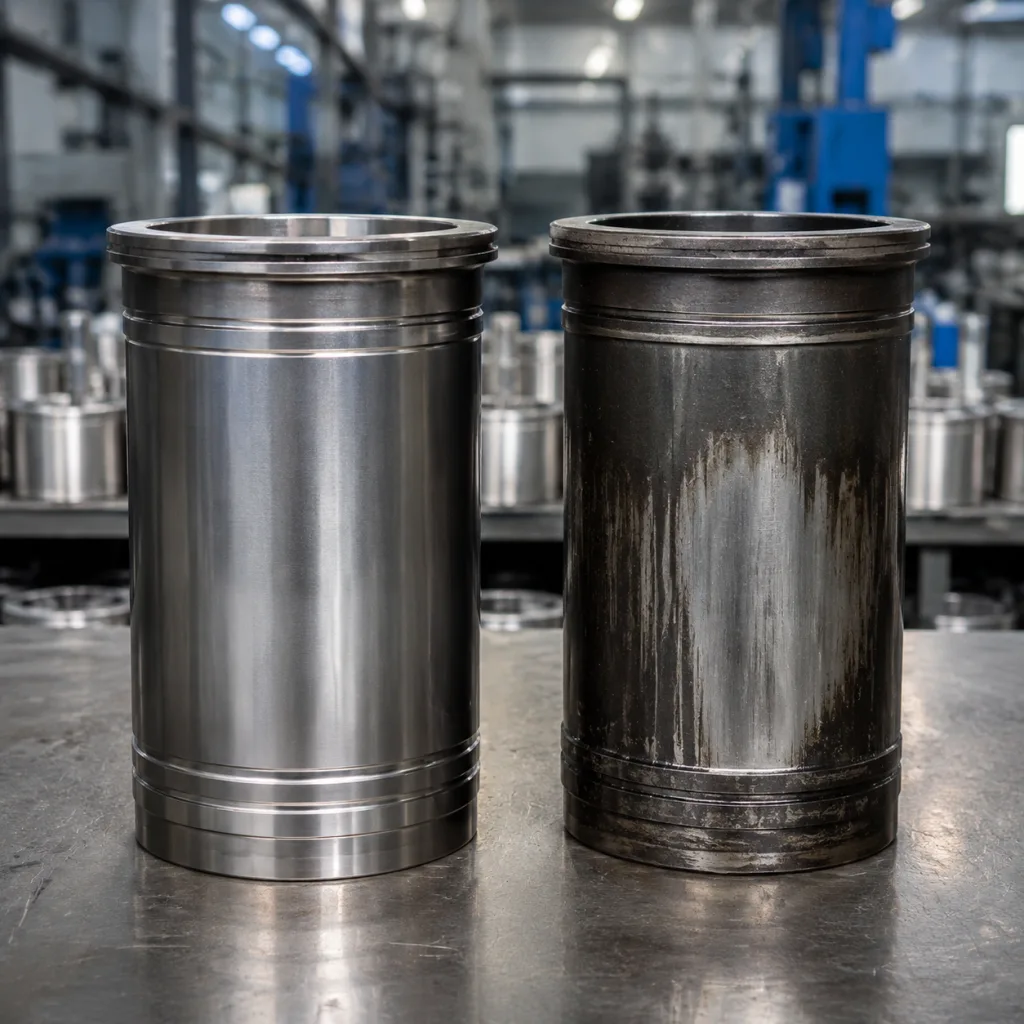
If you are shortlisting a cylinder liner Alfa Romeo OEM supplier, start with the decision that matters most: can the supplier repeatedly match the engine family’s geometry, material spec, and inspection standard at the volume you need? Fitment alone is not enough. A liner must also hold tolerances across batches, protect sealing performance, and arrive with documentation your team can audit.
Driventus is an independent aftermarket manufacturer; brand names are referenced for fitment only. We supply B2B buyers from Taizhou, Zhejiang, with IATF 16949:2016 and ISO 9001:2015 quality controls, and we export to 60+ countries. The sections below break the sourcing decision into practical checks: what to verify first, how to compare suppliers, where failures usually happen, and how to write an RFQ that gets a usable quote.
Start with the fitment decision
Before comparing price, confirm whether the application needs a wet liner or a dry liner, and then lock the engine code, bore size, flange geometry, and installation method. For Alfa Romeo programmes, that technical identification matters more than appearance.
Use the drawing or sample to confirm these inputs first:
Engine code and cylinder count
Liner type: wet or dry
Finished bore diameter and oversize or undersize requirement
Outer diameter, flange OD, flange height, and seated length
Wall thickness range and counterbore depth
Surface roughness target on the finished bore
Chamfer angle, top land relief, and installation orientation
If any one of those items is vague, the quote will be vague too. A supplier can only price a part accurately when the critical dimensions and acceptance method are clear. For production sourcing, ask for the nominal value, tolerance band, and measurement method for every critical feature.
As a rule of thumb, buyers should expect tighter control on critical diameters than on general visual defects. A small deviation on bore size or flange height can create sealing issues, heat-transfer problems, or early wear. If OE cross-references are used, record them exactly and still require a dimensioned sample report before PO release.
Compare suppliers on capability, not unit price
The fastest way to misread a cylinder liner quote is to compare only the ex-factory price. For a cylinder liner Alfa Romeo OEM supplier, the real comparison is capability versus repeatability.
Sourcing factor
What to confirm
Buyer action
Why it matters
Certification
IATF 16949:2016, ISO 9001:2015
Request valid certificates and scope
Indicates controlled production and traceability
Material control
Cast iron grade, chemistry, hardness
Ask for heat-number traceability and limits
Affects wear resistance and distortion
Dimensional control
Bore, OD, length, flange, roundness
Request nominal, tolerance, and method
Prevents installation and sealing defects
Inspection data
CMM, gauges, hardness reports
Require first-article and batch reports
Verifies batch consistency
Lead time
Sample, pilot, and mass production
Confirm calendar days by stage
Supports inventory planning
MOQ
Trial and repeat thresholds
Negotiate launch MOQ separately
Helps align with forecast
Packaging
Rust prevention and separators
Approve pack spec and transit standard
Reduces corrosion and damage
Price logic
Tiered pricing by volume
Ask for price breaks at 100/500/1,000+ units
Avoids landed-cost surprises
</tr></thead><tbody> </tbody></table>A useful supplier response should separate sample pricing, pilot pricing, and mass-production pricing. That structure tells you more than a single headline number. It shows whether the supplier understands launch risk and whether they can support reorder economics over time.
Driventus supports buyer audits and can provide documentation aligned to B2B sourcing requirements. If you need a broader part range, see our catalog and our engine component overview.
Where cylinder liner programs fail
Most sourcing problems do not begin with a broken part. They begin with an incomplete specification, a weak inspection plan, or a supplier that measures the wrong feature.
Typical failure modes include:
Bore size confirmed, but outer diameter tolerance never defined
Flange height quoted, but not tied to assembly stack-up
Sample looks correct, but batch variation is not monitored
Hardness is listed, but heat treatment traceability is missing
Packaging is assumed, but corrosion protection is not specified
OE reference is copied, but the actual drawing revision is not controlled
These failures are expensive because they hide until installation or field use. If the liner is off by even a small amount on a critical dimension, the result can be poor sealing, thermal inconsistency, or premature wear. That is why the RFQ must define the measurement plan, not just the part name.
A simple internal rule helps: if a supplier cannot explain where a dimension is measured, what gauge is used, and how often it is checked, the quote is not ready for purchase.
Check the spec like an engineer
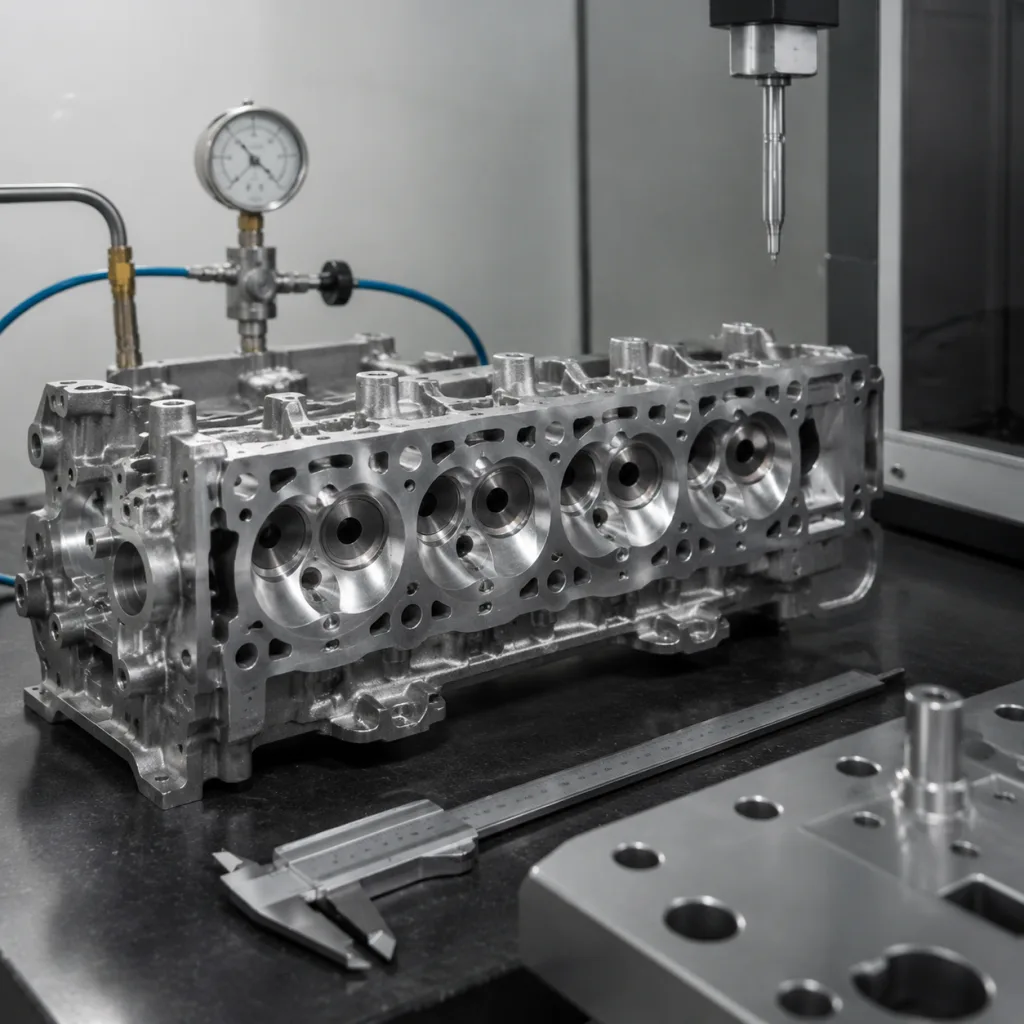
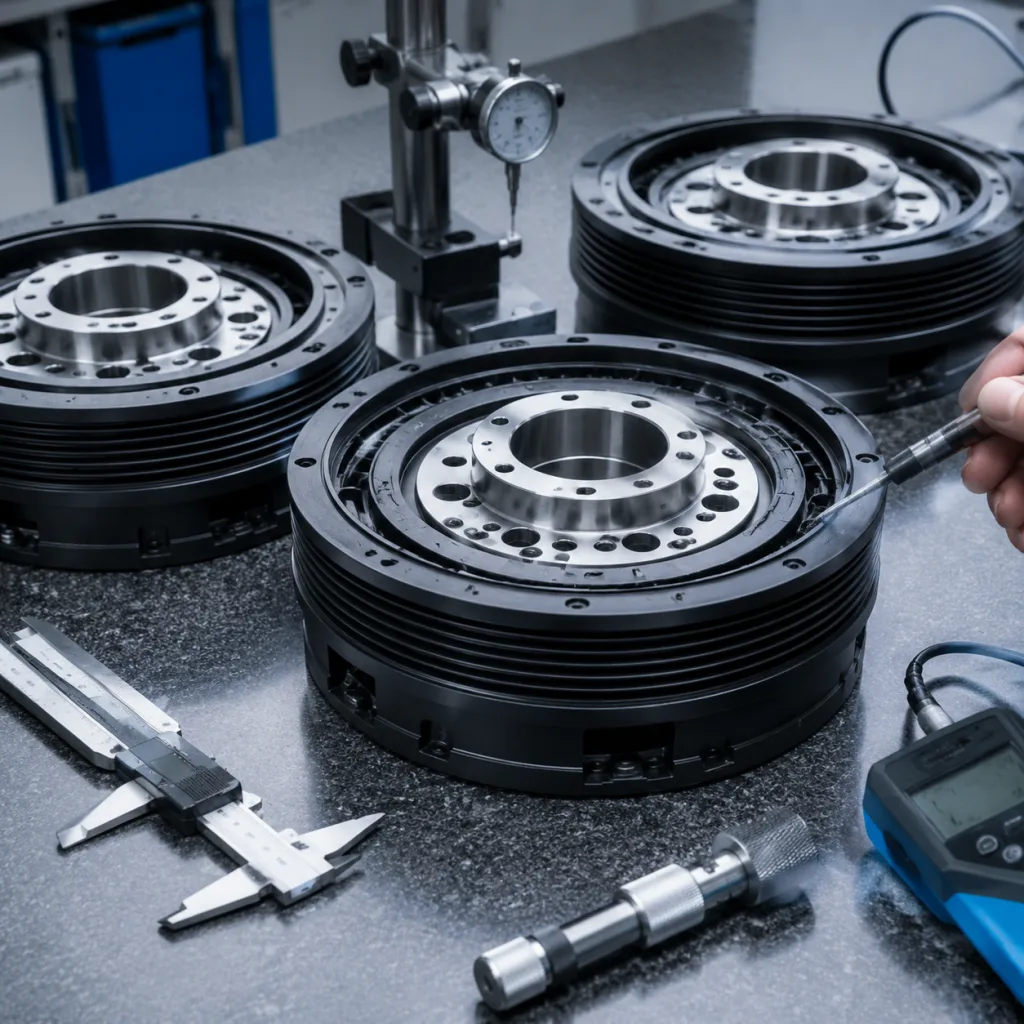
A buyer-ready specification should translate the part into measurable controls. That means clear dimensions, clear inspection points, and clear acceptance limits.
Typical inspection points
Inner diameter after finish honing
Outer diameter at multiple heights
Flange thickness and face flatness
Overall length and squareness
Surface roughness and taper
Hardness and microstructure, where specified
Concentricity between bore and outer diameter
Honing cross-hatch angle and oil-retention finish
For quotation alignment, ask for the actual control point, gauge type, sampling frequency, and acceptance limit for each feature. For example, a supplier may use 100% visual inspection, first-piece full-dimensional inspection, and in-process sampling every 2 to 4 hours depending on process stability.
A practical tolerance request often looks like this:
Bore size: nominal with ±0.01 mm to ±0.03 mm depending on engine family
Outer diameter: nominal with ±0.01 mm to ±0.02 mm for press-fit features
Flange height: ±0.02 mm to ±0.05 mm when stack-up is sensitive
Roundness and cylindricity: specified separately, often in 0.01 mm to 0.02 mm target bands
Surface roughness: Ra stated explicitly, commonly in the low single-micron range after honing
Quality standards still matter, but only when they are converted into measurable requirements. IATF 16949:2016 and ISO 9001:2015 define the management framework. REACH (EC) No 1907/2006 may apply depending on destination and assembly scope. If the liner is part of an emissions-related engine package, the buyer may also need documentation aligned to the programme’s regulatory or durability expectations. The point is simple: turn standards into RFQ checks, not marketing language.
Plan the launch and replenishment path
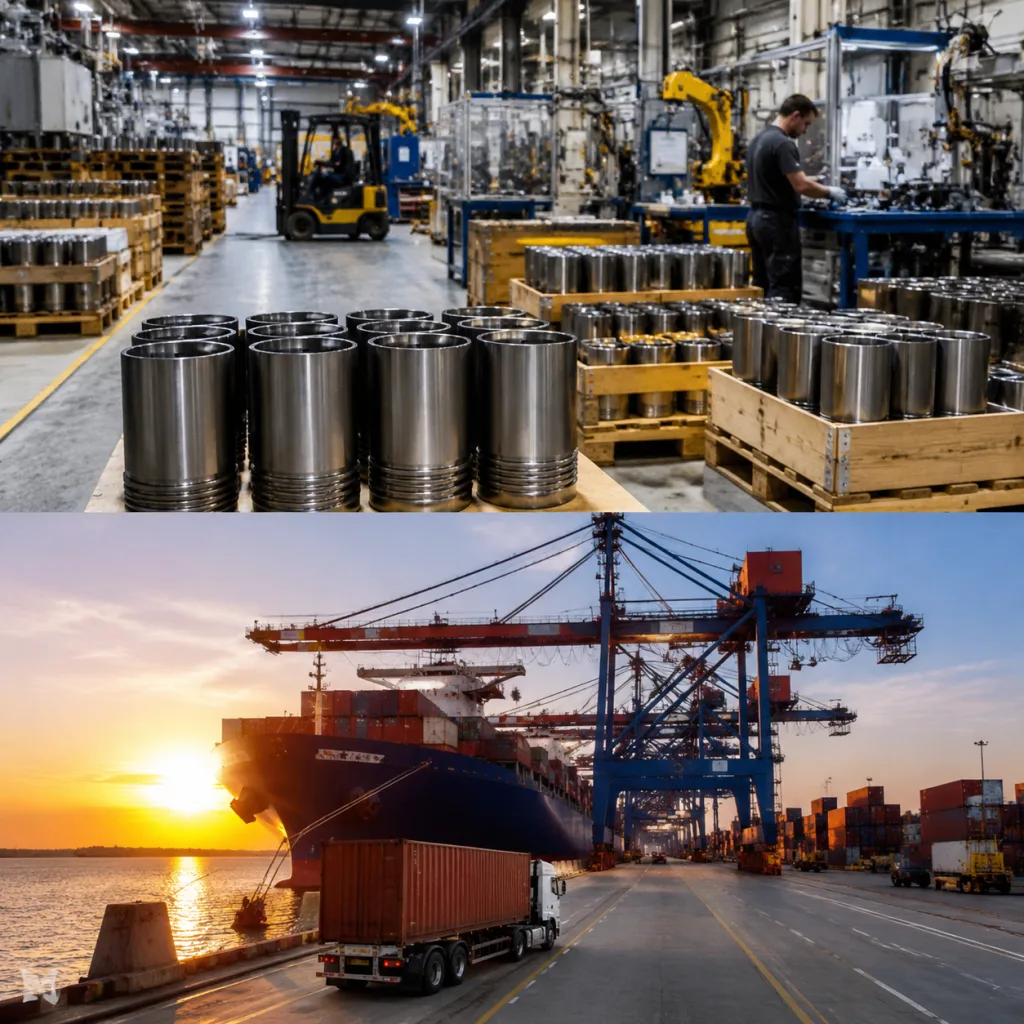
Delivery stability is as important as part quality. For cylinder liners, the buyer should ask how the supplier handles samples, pilot runs, repeat production, and export packing before placing an order.
A practical B2B checklist:
Confirm sample approval path and dimensional report format
Agree annual forecast, call-off quantity, and MOQ
Set packaging requirements for rust prevention and transit protection
Define Incoterms, palletisation, and carton labels
Confirm document pack: invoice, packing list, and certificate of conformity if required
Ask for production lead time by order size, not a single headline number
Separate first-order sample timing from repeat-order replenishment timing
Typical commercial logic for this part category is:
Sample or prototype: 7 to 15 working days after drawing confirmation
Pilot order: 15 to 30 working days depending on quantity and inspection scope
Repeat production: 20 to 35 working days for standard runs, longer for special coatings or new tooling
MOQ: often negotiable for launch, but repeat orders usually price best at 100 to 300 units or higher per part number
Price breaks: request volume tiers at 100, 500, 1,000, and 5,000 pieces to model landed cost
Packaging deserves the same discipline as machining. A useful pack spec should call out anti-rust oil or VCI protection, individual separators, carton drop resistance, and master-carton labeling with part number, batch code, quantity, and country of origin. For OEM and Tier-1 programmes, stable lead time, traceability, and change-control notice usually matter more than one-off spot pricing. If your team needs a controlled development route, review custom manufacturing before moving from drawing to pilot order.
Why Driventus fits B2B sourcing
Driventus is a vertically integrated manufacturer based in Taizhou, Zhejiang, with engine and powertrain component production for export markets. We supply cylinder-related components alongside pistons, crankshafts, gaskets, water pumps, turbochargers, and related parts. That integration helps buyers reduce supplier count and align quality data across assemblies.
Our B2B fitment model is designed for:
Aftermarket distributors and wholesalers
OEM and Tier-1 supply chains
Multi-location repair and remanufacturing networks
The practical value is not just production capacity. It is the ability to support a controlled launch: review drawings, confirm OE reference matching, define inspection checkpoints, and prepare export documentation before the first shipment. On repeat programmes, that also means keeping part revisions, batch records, and packaging instructions stable so reorder quality stays consistent.
Buyers evaluating a cylinder liner Alfa Romeo OEM supplier usually need a partner who can maintain technical discipline across repeat orders, not just a factory that can make a sample. For quality documentation, see our quality system.
Build a clean RFQ
A clean RFQ shortens the sampling cycle and cuts revision loops. It also tells the supplier exactly what kind of quote you want.
Include the following:
Part name and application
OE reference or equivalent if known
Engine code, cylinder count, and liner type
Material grade, heat treatment, and finish requirements
Critical dimensions with nominal values and tolerances
Target annual volume, first order quantity, and forecast by quarter
Required inspection report format and sampling plan
Delivery terms, destination country, and preferred packing spec
If you need a trial run, PPAP-style documentation, or only commercial sample approval, state that clearly. If demand will vary, ask for separate pricing at prototype, pilot, and production quantities so your team can compare MOQ impact and reorder economics cleanly.
If you are still defining the part, Driventus can help align the drawing to a manufacturable specification before quotation. Driventus is an independent aftermarket manufacturer; brand names are referenced for fitment only.
Frequently asked questions
Yes. We supply independent aftermarket parts matched by application, dimensions, and technical reference. Brand names are used for fitment only, and we do not claim manufacturer approval or endorsement.
We can provide batch traceability, inspection records, material-related documentation where specified, and export paperwork. The exact pack depends on the part number, drawing, and destination market.
Send the engine code, OE reference if available, annual volume, target lead time, and any drawing or sample. That lets us confirm feasibility, MOQ, and the right inspection plan before quotation.
If you need a quoted supply path for cylinder liners or related engine parts, send your drawing or OE reference and we will review it promptly. Use /contact.html to request a quote.