For procurement teams evaluating a cylinder head Toyota OEM supplier, the real risk is not price alone. Dimensional drift, casting porosity, inconsistent machining, and weak batch traceability can turn a competitive quote into a costly return cycle. Driventus supplies cylinder heads for engine programmes through controlled manufacturing in Taizhou, Zhejiang, with process discipline aligned to IATF 16949:2016 and ISO 9001:2015. Driventus is an independent aftermarket manufacturer; brand names are referenced for fitment only. Buyers usually need three things before qualification: OE cross-reference confidence, repeatable inspection data, and a supplier that can support volume planning without quality variation. This article focuses on how to decide, what can fail, and what evidence actually separates a qualified source from a brochure claim across the EU, UK, US, Canada, Australia, and Brazil.
How to qualify a Toyota cylinder head supplier
Before you compare price, lock down fitment and evidence. A cylinder head is not a generic casting; it is a dimensional assembly that has to match the engine family, gasket interface, valve train layout, and machining standard. If the supplier cannot anchor the part to the right engine code, the rest of the discussion is premature.
Start with these checks
Engine code and displacement
SOHC or DOHC layout
Number of valves per cylinder
Combustion chamber volume target, typically within ±1.0 cc of the approved sample for repeat orders
Valve seat and guide material specification
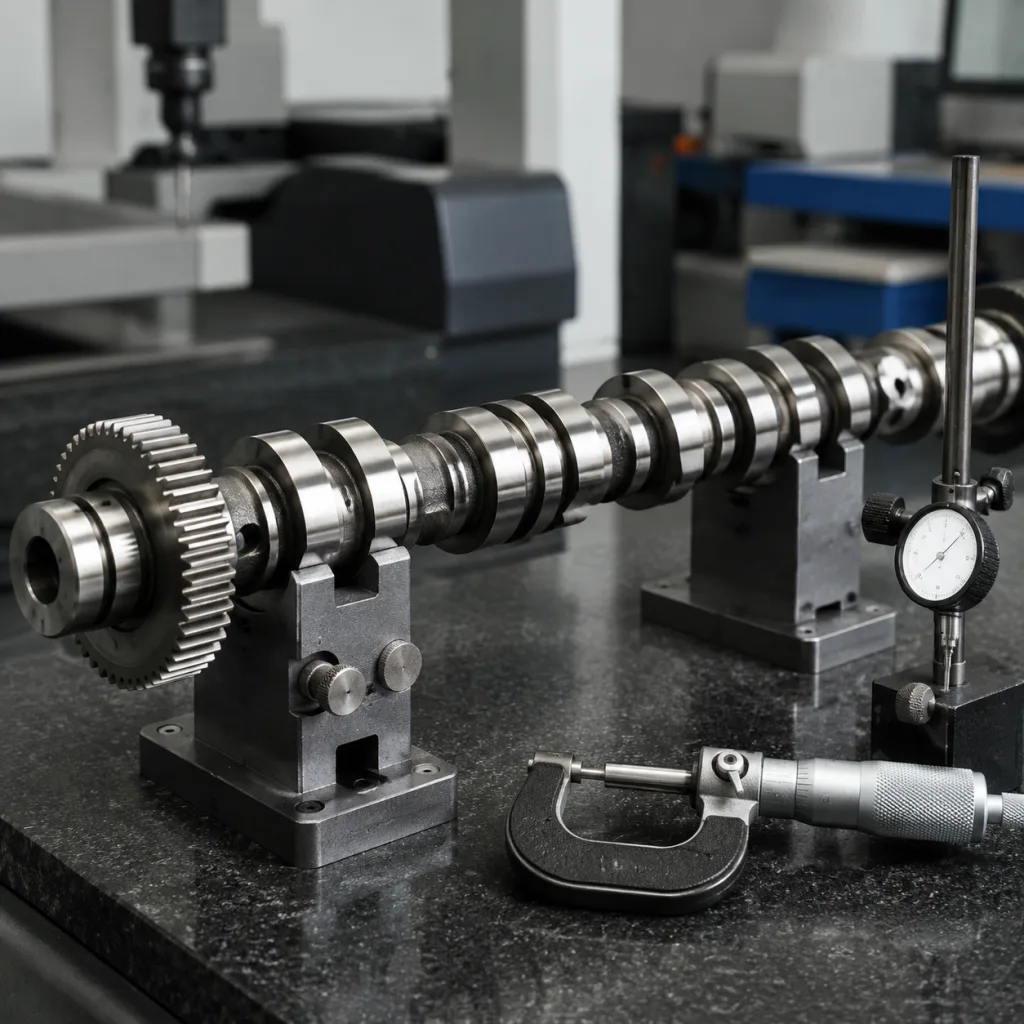
Cam journal bore and deck flatness requirements, usually controlled to 0.05 mm or better across the sealing face unless your drawing states tighter limits
Surface finish target for gasket sealing, commonly Ra 1.6–3.2 μm depending on gasket type
Pressure test and crack inspection method, including test medium, pressure, and hold time
Ask for the production drawing, inspection report, and packaging specification with the RFQ. Include annual volume, first-order quantity, target warehouse date, and whether sample approval is required before mass release. If traceability is vague, qualification should stop there.
Where cylinder head projects fail in practice
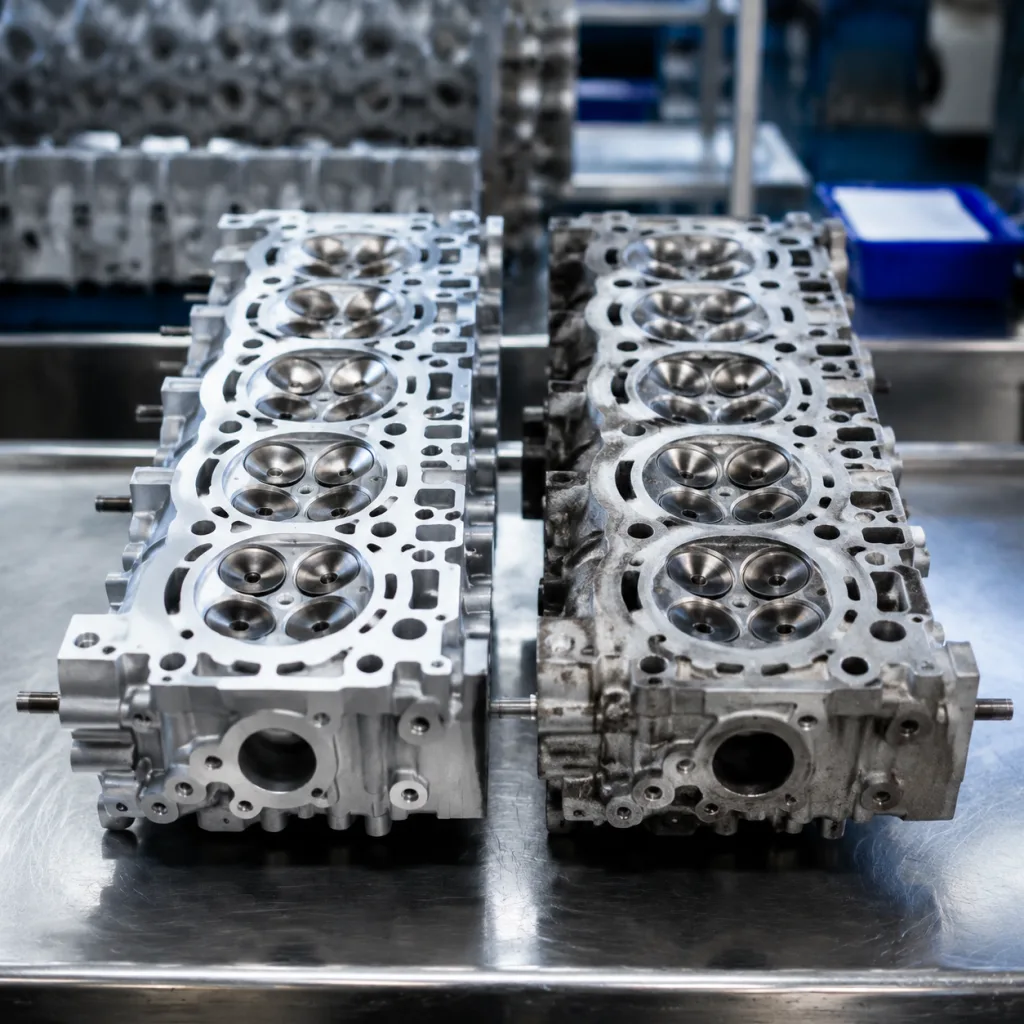
Most sourcing problems show up after the first shipment, not before it. The common failure modes are predictable: porosity that opens under heat cycles, seat or guide work that drifts outside tolerance, and deck faces that look fine until the gasket fails in service. Price rarely causes the return; process variation does.
Failure mode
What to check
Why it matters
Deck distortion
Measure across the full sealing face, often 0.05 mm max for aftermarket release unless the OE drawing is tighter
Protects head gasket sealing
Guide misalignment
Verify diameter and alignment after installation, commonly within ±0.01–0.02 mm on guide ID
Controls valve stem movement
Seat runout
Confirm after seat cutting, commonly within 0.03 mm TIR
Helps preserve compression
Internal leakage
Pressure test coolant and oil passages at 1.0–1.5 bar for 2–5 minutes, depending on part family
Catches hidden porosity or cracks
Poor surface finish
Check gasket face, typically Ra 1.6–3.2 μm
Improves sealing consistency
Material inconsistency
Verify alloy and heat number where available
Affects heat transfer and crack resistance
</tr></thead><tbody> </tbody></table>If the failure history on your side is warped deck faces, the answer is not a cheaper vendor. It is tighter release criteria, documented measurement, and repeatable machining control.
Spec details that separate a reliable head from a risky one
Cylinder head durability depends on a small set of specs that are easy to overlook in a sales conversation. Geometry matters, but so does cleanliness, thermal stability, and how the part is tested before packing. A good supplier can explain each critical characteristic without hand-waving.
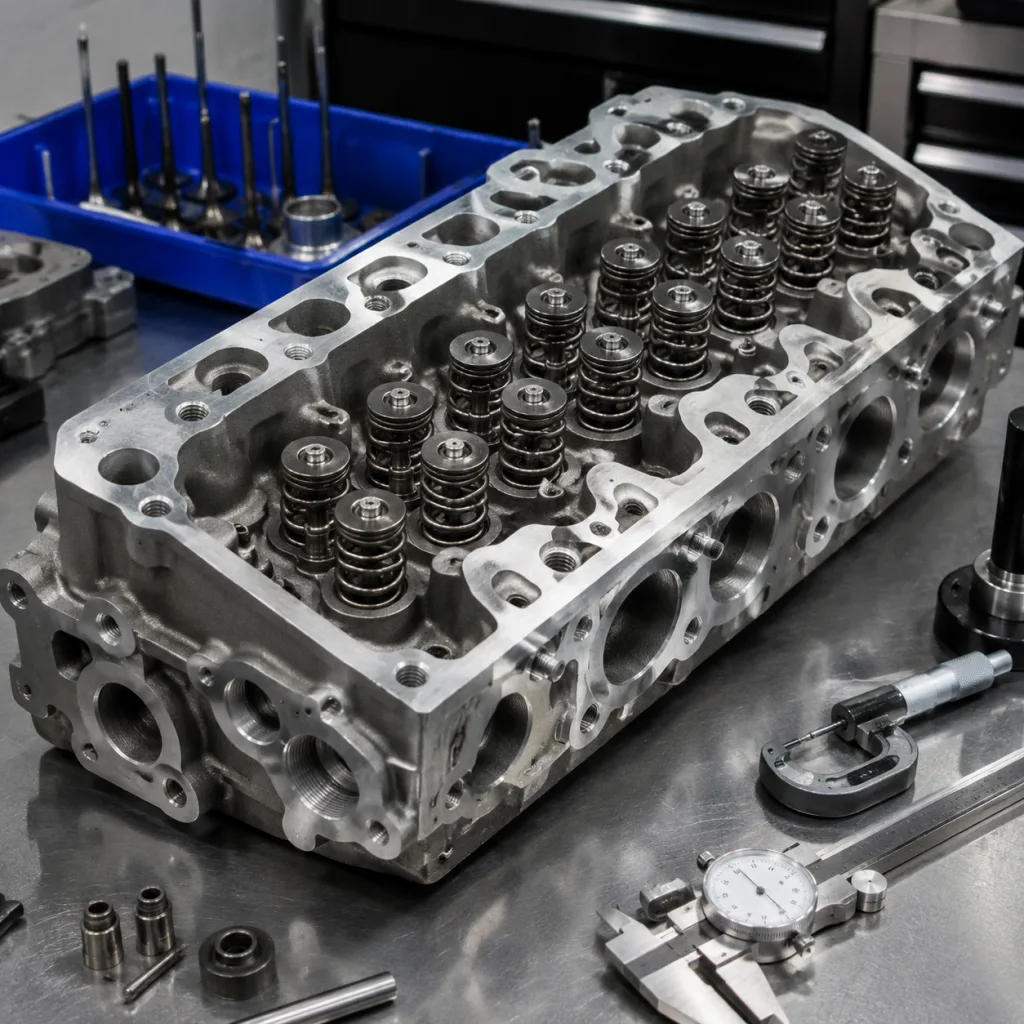
Driventus can align these checks to customer drawings and sample approval requirements. For programmes with stricter release control, buyers can compare the technical scope with our catalog and the broader engine components range. If your engineering team needs it, specify whether the part is supplied bare, with valves and springs installed, or as a complete assembled head, because that changes inspection scope, packaging risk, and cost.
Control point
Typical procurement check
Why it matters
Deck flatness
Measured across the full sealing face
Protects gasket sealing
Valve guide bore
Checked for diameter and alignment
Supports valve stem control
Seat concentricity
Measured after seat cutting
Reduces compression loss
Pressure test
Coolant and oil passages tested
Detects internal leakage
Surface finish
Verified on gasket face
Improves sealing consistency
Material state
Cast aluminium or equivalent alloy verified
Affects heat transfer and crack resistance
</tr></thead><tbody> </tbody></table>
What a credible quality system should prove
Certificates alone do not qualify a supplier. A strong factory shows how it controls incoming material, machining, inspection, and release. Driventus works under IATF 16949:2016 and ISO 9001:2015 processes, with batch traceability supporting order-level review.
Request process evidence, not just a logo on a PDF: control plan, PFMEA summary, inspection instructions, gauge calibration status, and the latest dimensional report for a production lot. For high-risk launches, ask for PPAP-style evidence such as sample approval records, material certificates, and measurement data from at least 5 parts per critical characteristic. If the part is for a recurring programme, define AQL or sampling size in advance rather than assuming the factory will use your standard.
Compliance also matters for trade and aftermarket distribution. Depending on destination market and customer requirements, material declarations and restricted substance controls may be needed under REACH (EC) No 1907/2006. For emissions-related engine assemblies, buyers should not assume blanket vehicle approval; instead, verify the application scope against the target engine family and local regulations such as ECE R-83 where relevant to the end use.
You can review our quality system for the control points we use during production and release. Driventus is an independent aftermarket manufacturer; brand names are referenced for fitment only.
How to structure the commercial conversation
Once the technical fit is clear, the commercial discussion should focus on supply continuity, not just unit price. For cylinder heads, the practical questions are MOQ, lead time, packing standard, and response time for engineering queries. A small MOQ may suit distributors testing a new SKU, while larger consolidated orders may suit importers planning seasonal coverage.
Commercial points to confirm
MOQ by part number or engine family, commonly 30–50 units for stocked programmes and 100+ units for made-to-order lines, depending on machining setup
Standard lead time and peak-season lead time, often 20–35 days for regular production and 35–60 days when casting or machining capacity is constrained
Sample availability for first article checks, including whether samples are free, paid, or credited against the first PO
Pallet and carton packing specification, such as 1 unit per inner carton or 2–4 units per master carton with foam or molded protection for the deck face and ports
Label format for warehouse intake, including part number, engine code, lot number, country of origin, and quantity
Warranty claim process and evidence required, such as photos, failure description, mileage, and return authorization before replacement
Spare machining capacity for repeat orders, plus whether reruns keep the same fixture, tool path, and inspection method
Ask for price breaks at 1x MOQ, 3x MOQ, and container-load quantities so you can compare landed cost rather than only unit ex-works price. For stable replenishment programmes, ask whether the supplier can hold safety stock or support forecast-based scheduling. If a part needs customer-specific packaging or documentation, custom manufacturing should be discussed before RFQ closure.
When factory validation beats brochure claims
A cylinder head can look correct and still fail in service if machining control, cleaning, or pressure testing are weak. That is why factory validation matters more than polished product photos. Procurement teams should request sample inspection reports, dimensional records, and photos of the actual test stations used.
A useful factory audit usually covers:
Alloy and casting input control, including melt traceability and incoming verification
CNC machining repeatability, with evidence of tool-life control and fixture maintenance
Valve seat and guide installation method, including press-fit or reaming sequence
Leak testing equipment and acceptance criteria, including pressure level, dwell time, and pass/fail limits
Final inspection sampling plan, with named dimensions and acceptance thresholds
Traceability from batch to finished carton, including heat number, lot code, and dispatch record
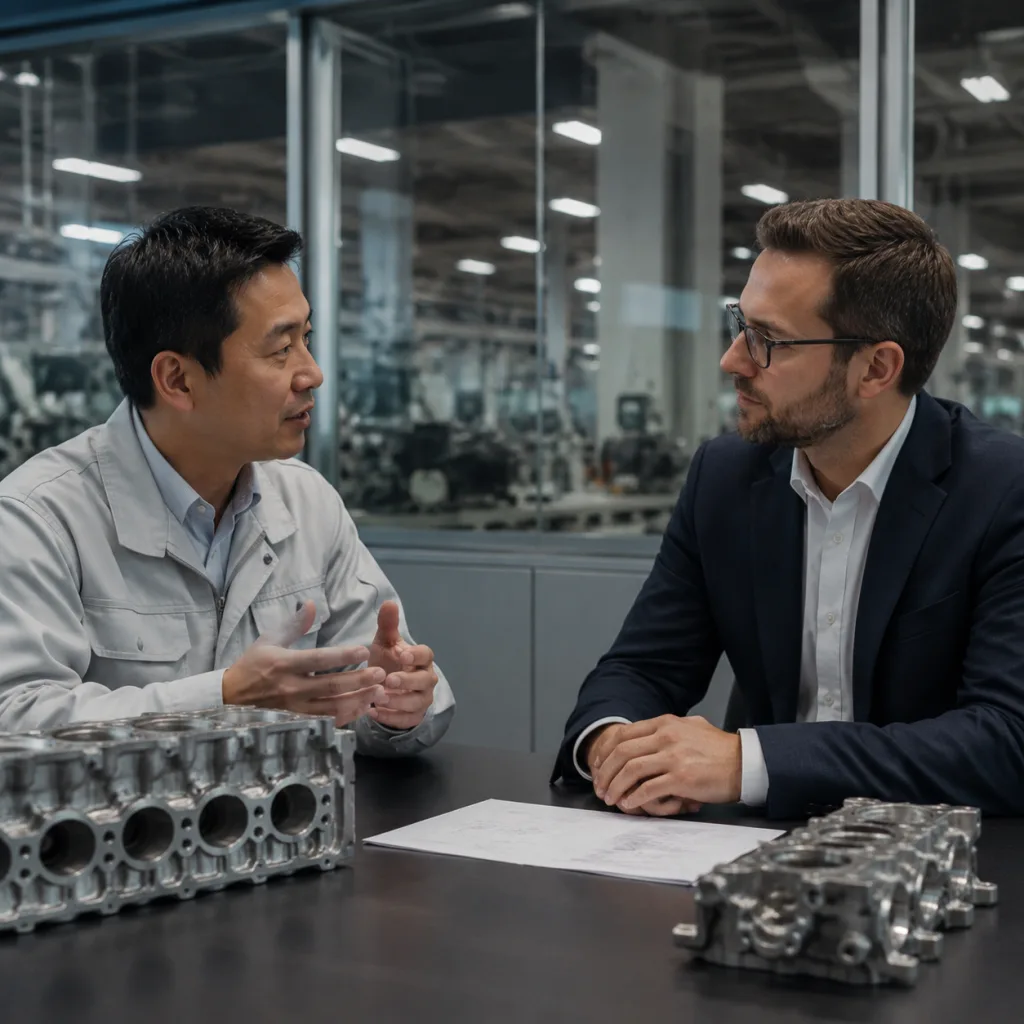
For high-volume supply, the best commercial outcome is a supplier that can show the same process on repeat visits. If the documentation is complete, negotiations become easier because quality expectations are defined before the purchase order is issued. To start a technical review or RFQ, use request a quote. If you are benchmarking alternatives, ask for a side-by-side comparison of dimensional reports, not only sales samples, because the real risk usually appears in the last 5% of variation.
What regional aftermarket buyers should expect
Regional buyers in the EU, UK, US, Canada, Australia, and Brazil often need the same cylinder head specification but different packing, labelling, and customs support. That means supplier selection has to balance technical equivalence with logistics discipline.
Typical channel requirements include:
English packing labels and part descriptions
HS code support for import entry
Consistent carton count for warehouse planning, usually fixed at the SKU level so replenishment math stays stable
Clear OE cross-reference formatting on invoices and labels
Documentation for material and compliance files
For multi-location repair chains and distributors, the preferred supplier is usually the one that can keep the same machining standard across repeated lots, not the one that offers the lowest first-quote price. In practice, buyers should evaluate landed cost by adding product price, inland freight, packing, inspection cost, duty, and expected defect allowance. That is the practical difference between a transactional vendor and a long-term sourcing partner.
Frequently asked questions
Start with engine code fitment, dimensional data, pressure test results, and traceability records. Then review sample parts against your gasket, valve train, and sealing requirements before placing volume orders. If possible, approve a pilot lot of 5–20 units and confirm that the supplier can repeat the same results on the next batch.
Ask for drawings, inspection reports, material declarations, packing details, and batch traceability. If your market needs it, request compliance support aligned to REACH (EC) No 1907/2006. For commercial control, also ask for MOQ, standard lead time, and the pricing ladder by order size so you can compare landed cost accurately.
Yes. Driventus supplies B2B customers through controlled manufacturing and can support standard or customer-specific requirements. Driventus is an independent aftermarket manufacturer; brand names are referenced for fitment only.
If you are benchmarking suppliers or need a technical RFQ, send your drawing or engine code and we will review fitment, packing, and lead time. Start here: /contact.html