Camshaft Ford Replacement: OE Match and Validation
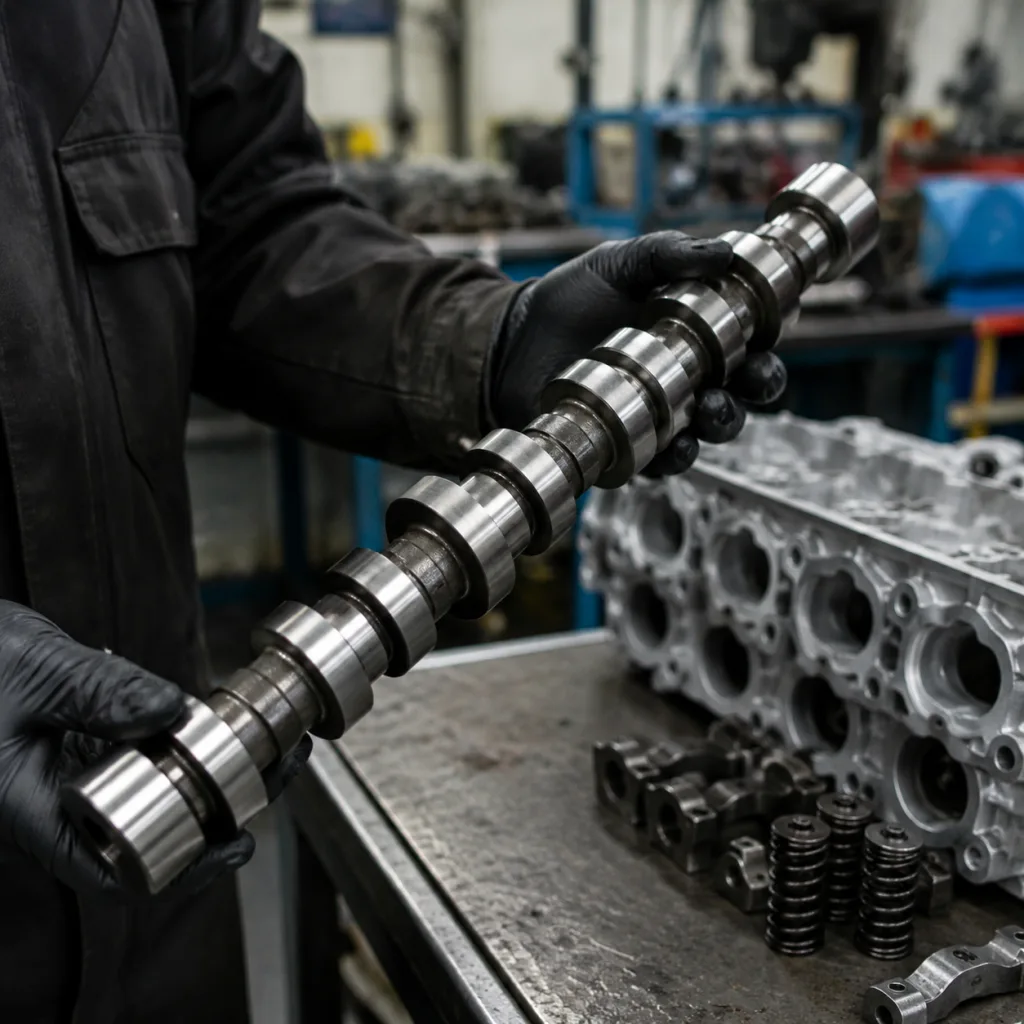
A camshaft Ford replacement fails more often on details than on fit. The big risks are not the carton label or the catalog photo; they are timing phasing, journal size, lobe geometry, trigger features, and heat-treatment consistency. Miss one of those, and you can buy an engine that idles poorly, trips emissions faults, or wears out the valvetrain early.
Driventus supplies camshafts for aftermarket, OEM, and Tier-1 channels from Taizhou, Zhejiang. We manufacture to controlled process specifications and verify parts under IATF 16949:2016 and ISO 9001:2015 systems. Driventus is an independent aftermarket manufacturer; brand names are referenced for fitment only. Use the guidance below to decide whether a reference is a true replacement, what to validate before release, and when a custom build is the safer sourcing path.
Camshaft Ford replacement: what must match first
Start with the engine, not the part photo. A camshaft Ford replacement has to match the engine family, valvetrain layout, drive type, sensor trigger arrangement, and the OE timing strategy. If those are off, the part may install but still fail in service.
For procurement review, check the hard points first:
OE cross-reference: verify the exact engine code and OE number format, such as `OE 06A107065` when applicable.
Critical dimensions: journal diameter, overall length, nose profile, thrust location, and end-play envelope. A typical passenger-car camshaft may hold journal diameter within ±0.01 mm to ±0.03 mm, while overall length and thrust features often require ±0.05 mm to ±0.10 mm depending on the platform.
Valve event targets: intake/exhaust timing, lobe separation, peak lift, and base-circle diameter. Even a 1° to 2° phasing shift can change idle quality or emissions behavior on a tightly calibrated engine.
Material route: chilled cast iron or forged steel, depending on duty cycle, oiling strategy, and expected RPM range.
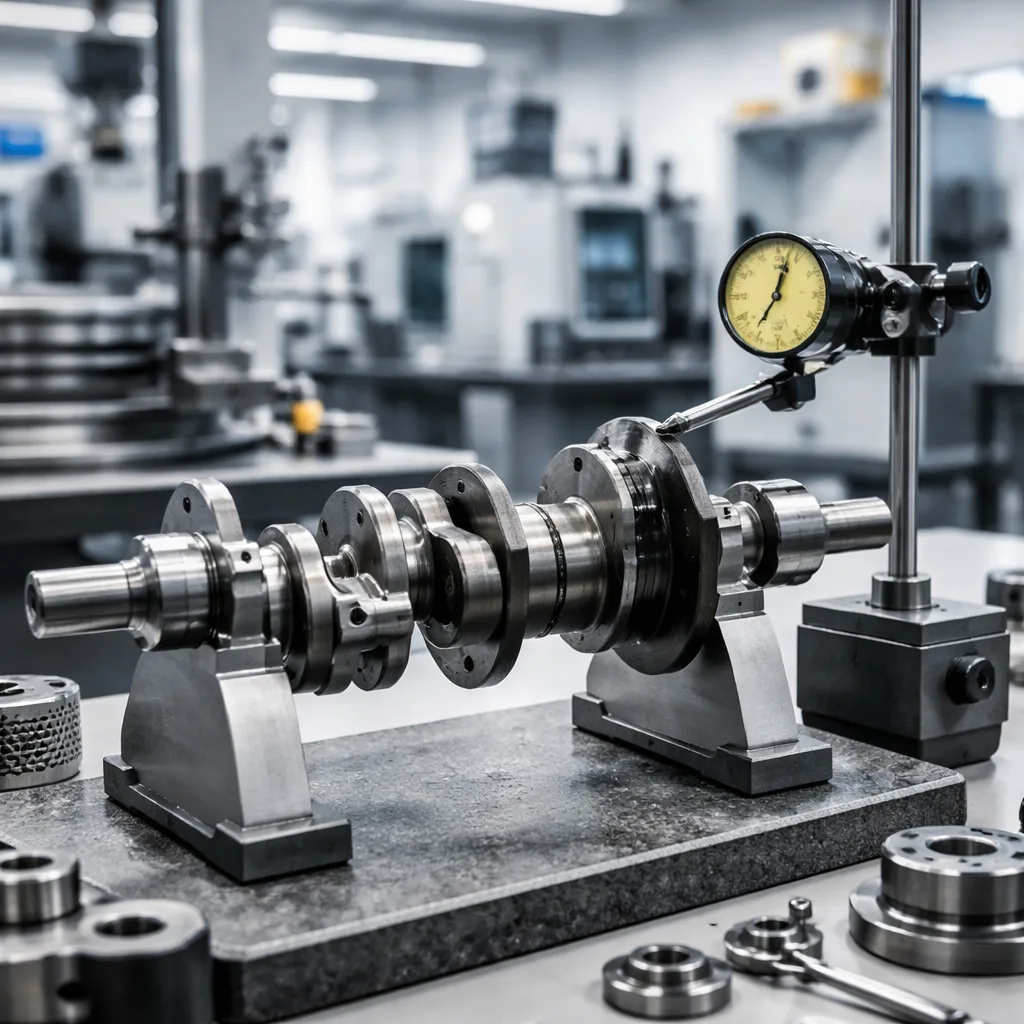
Finish and hardness: journal surface finish, post-heat-treatment hardness, and runout limits. Buyers commonly ask for journal finish at Ra 0.2 to 0.8 μm, hardness around 50 to 60 HRC for hardened steel profiles, and total indicated runout below 0.03 mm to 0.05 mm unless the OE drawing states otherwise.
If the family includes multiple variants, ask for drawing-level confirmation. Ford applications often share a visual layout while differing in sensor tabs, sprocket offsets, or thrust face width. That is enough to turn a physically compatible part into a noncompliant one.
Decision matrix: acceptable replacement or not?
Use a short decision gate before you release the order. If the part matches visually but misses timing, trigger geometry, or the control dimensions, it is not a safe replacement.
Check item
Why it matters
Typical verification method
Journal diameter
Bearing fit and oil-film control
Micrometer and CMM inspection
Lobe lift
Airflow and torque output
Lobe-height measurement
Runout
Valve train stability
Dial indicator test
Surface hardness
Wear resistance
Rockwell or equivalent test
Thrust control
Axial movement and noise
End-play measurement
Trigger features
Sensor signal accuracy
Functional fit check
Base circle
Lash setting and effective duration
Profile scan
Lobe phasing
Combustion timing and emissions
Comparison against drawing or OE sample
</tr></thead><tbody> </tbody></table>The practical rule is simple: if any of the critical checks are unknown, treat the part as unapproved. We also recommend batch traceability, material-certificate review, and sample approval before volume release. For sensitive applications, ask for validation data against the intended operating window. For volume programs, require the supplier to state inspection method, measurement resolution, and acceptance tolerance on the quote so the release criteria are fixed before production starts.
Failure modes that matter after install
Most sourcing mistakes do not show up at receipt. They show up after the engine runs.
The common failure modes are predictable:
Idle instability or misfire when lobe phasing shifts valve events outside the calibration window.
Premature bearing wear when journal diameter or finish drifts from the drawing.
Noise and clatter when thrust control or runout is out of spec.
Sensor faults when trigger tabs, windows, or offsets do not align with the ECU strategy.
Shortened service life when hardness, microstructure, or case depth is inconsistent.
That is why a visual match is not a release criterion. For Ford replacement work, a part can look identical and still create a drivability problem or an emissions failure. Buyers should insist on a dimensional report, material data, and a clear acceptance band before the PO is approved.
Validation plan before procurement release
Replacement approval should include both dimensional inspection and performance validation. Driventus can align test plans to customer requirements and internal control plans.
A practical release sequence looks like this:
1. Incoming dimensional audit against the drawing or OE sample, with a recorded sample size such as 5 pcs for PPAP-style review or 100% inspection for pilot lots. 2. Hardness and microstructure review after heat treatment, including case depth or core hardness where the design requires it. 3. Runout, straightness, and concentricity verification. Buyers often specify straightness within 0.02 mm to 0.05 mm and concentricity within 0.01 mm to 0.03 mm, depending on the engine family. 4. Surface finish and lobe profile inspection using a profile projector, CMM, or dedicated cam scanner. 5. Functional bench testing where the application requires it, including oil-flow confirmation, sensor signal checks, and break-in wear inspection after initial cycling.
Published standards often used in this category include IATF 16949:2016, ISO 9001:2015, REACH (EC) No 1907/2006 for substance compliance, and customer-specific validation requirements. For related vehicle systems, ECE R-83 is relevant where emissions compliance is part of the broader engine package. If the sourcing program includes durability screening, buyers may also specify procedures aligned with SAE J2527 for environmental exposure on associated components.
For commercial approval, tie the technical gate to a simple release rule: first article approval, then pilot lot approval, then volume release. A common process is 1 to 3 engineering samples, 20 to 50 pcs for pilot verification, and full release only after all critical dimensions and test results are within the agreed tolerance band.
Custom build or standard part: which route fits?
Standard replacement parts work when the engine family is stable and the OE reference is clear. Custom manufacturing is the better route when the customer needs a revised profile, a discontinued reference, regional variation, or a private-label program with controlled packaging and traceability.
Driventus supports custom development through our custom manufacturing program. Typical requests include:
profile adjustments for torque-band changes
alternate material or heat-treatment routes
special packaging for distributor networks
catalog consolidation across multiple OE references
modified phasing to support emission calibration or accessory-drive packaging
Commercially, custom work usually carries a one-time engineering or tooling charge, plus a higher unit price at low volume until the program stabilizes. Ask for both a prototype quote and a production quote. Prototype lots are often priced well above production, especially below 100 pcs, while pricing becomes more competitive once annual demand is forecast and repeat orders are established. If your program needs a new lobe profile or special packaging, request separate pricing for sample cost, setup cost, and recurring piece price so the total landed cost stays visible.
If you also source adjacent engine parts, our catalog and engine components pages help procurement teams map related items within one vendor base.
How Driventus supports sourcing teams
We supply camshafts to distributors, repair-chain buyers, and OEM or Tier-1 programs that need repeatable quality and documented release data. The control points are sample agreement, production traceability, and shipment-level inspection records.
Our quality system covers incoming material control, in-process checks, and final inspection before packing. Buyers can use this structure to support vendor onboarding, audit review, and part qualification.
The fastest quote response comes when you send the OE number, engine code, annual volume, target market, required release schedule, and any tolerance or test requirements. For example, a buyer can request 300 pcs pilot, 3,000 pcs annual forecast, AQL 1.0 or tighter on critical appearance defects, and PPAP-style documentation if the part is going into a controlled program. If the market is price-sensitive, ask for three breakpoints: sample quantity, pilot quantity, and annual volume. That makes MOQ, unit price, and lead time easier to compare across suppliers.
Typical sourcing logic is straightforward: low-volume replacement runs often carry a higher MOQ and longer lead time because setup and inspection are spread across fewer units; repeat volume usually reduces unit cost and improves delivery stability. Ask the supplier to state the minimum order quantity, standard lead time, and expedite option in the same quote. That lets procurement compare a 2-week premium path against a 4-to-6-week standard path before releasing the order.
If the required reference is not in the standard range, request a quote with the OE number, engine code, annual volume, target market, and any test requirements. That is the fastest way to confirm whether a direct replacement or a custom part is the lower-risk option.
Driventus is an independent aftermarket manufacturer; brand names are referenced for fitment only.
Frequently asked questions
Match the engine code, OE reference, journal dimensions, timing features, trigger-wheel geometry, and thrust position. A visual match is not enough for procurement release, and buyers should confirm the tolerance band on the drawing before approval.
Yes. Provide the OE reference, engine code, and sample if available. We check dimensional compatibility and confirm whether the reference is a standard or custom part. If the OE is supplied only as a cross-reference, we recommend verifying at least three hard points: journal diameter, lobe phasing, and drive feature location.
Typical documents include inspection records, material traceability, and compliance data tied to the agreed specification. Additional validation reports can be added for program approval, including dimensional reports, hardness records, and first-article samples for pilot release.
If you are comparing OE references or planning a volume program, send the part data and target market through our contact page. We will confirm the best sourcing path and next steps at /contact.html