Camshaft Vauxhall Replacement: OE Match and Validation
Choosing a camshaft Vauxhall replacement is less about the badge on the vehicle and more about whether the part will survive the engine’s timing, loading, and wear conditions. The fastest way to get it wrong is to buy from model name alone. The safer route is to verify geometry, material, and inspection data before release.
For procurement teams, that means checking base-circle diameter, overall length, journal spacing, lobe lift, and any sensor or phaser interface features against the OE reference or drawing. Driventus manufactures camshafts for aftermarket and B2B supply chains under IATF 16949:2016 and ISO 9001:2015 controlled processes. Driventus is an independent aftermarket manufacturer; brand names are referenced for fitment only. Use the decision points below to separate true OE-equivalent candidates from parts that only look close.
Start with the failure modes, not the catalog name
A camshaft Vauxhall replacement can look correct and still fail the job. The common problems are not dramatic at first; they show up as noise, incorrect timing, poor idle quality, or accelerated wear after installation.
The usual failure points are:
Wrong lobe profile, even when the shaft length matches
Journal spacing that is close but not exact
Incorrect drive-end detail, such as gear or tone wheel variation
Mismatch with hydraulic lifters, buckets, or rocker systems
Incorrect sensor trigger arrangement on later engines
Surface finish or hardness that does not hold up in service
That is why catalog matching should be treated as the first filter, not the final approval. If the OE number is available, cross-reference it first. If not, request a drawing or sample comparison before committing volume.
Decision checklist for OE-equivalent fit
Use the following checklist to decide whether a part is technically acceptable before you issue a purchase order:
Overall shaft length matches OE
Journal count and journal positions match OE
Journal diameter stays within drawing tolerance
Lobe lift and base-circle diameter match the target profile
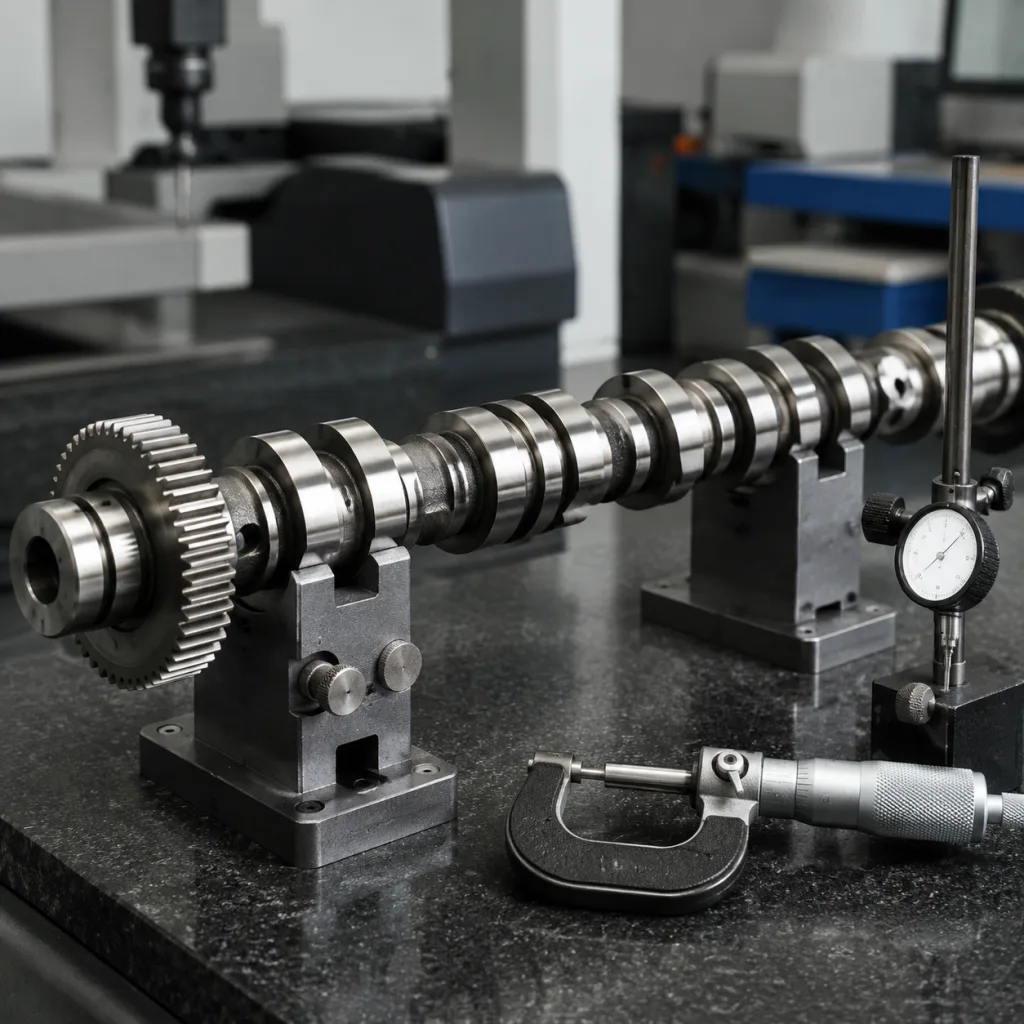
Drive-end configuration matches the engine family
Sensor features, if present, are identical
Compatibility with the valvetrain is confirmed
For sourcing teams, this is the simplest way to reduce claims on engines with overlapping model years or multiple power outputs. A correct-looking camshaft is not enough; the timing envelope has to be right as well.
Spec deep-dive: what matters in production
Camshafts are typically made from chilled cast iron, ductile iron, or alloy steel. The choice depends on duty cycle, cost target, and the OE design philosophy. For replacement supply, the material has to support the same wear resistance, surface hardness, and torsional stability as the original part.
Check item
Procurement target
Journal diameter
Match OE drawing within tolerance
Overall length
Exact fitment match
Lobe lift
Match OE profile
Surface hardness
Verify against process spec
Runout
Confirm within drawing limit
Surface finish
No scoring, burrs, or sharp edges
</tr></thead><tbody> </tbody></table>Driventus controls these characteristics through incoming material inspection, machining verification, and final dimensional audit. That matters most when you are buying across multiple Vauxhall engine families, where similar shaft layouts can hide small but costly differences.
Validation sequence before mass release
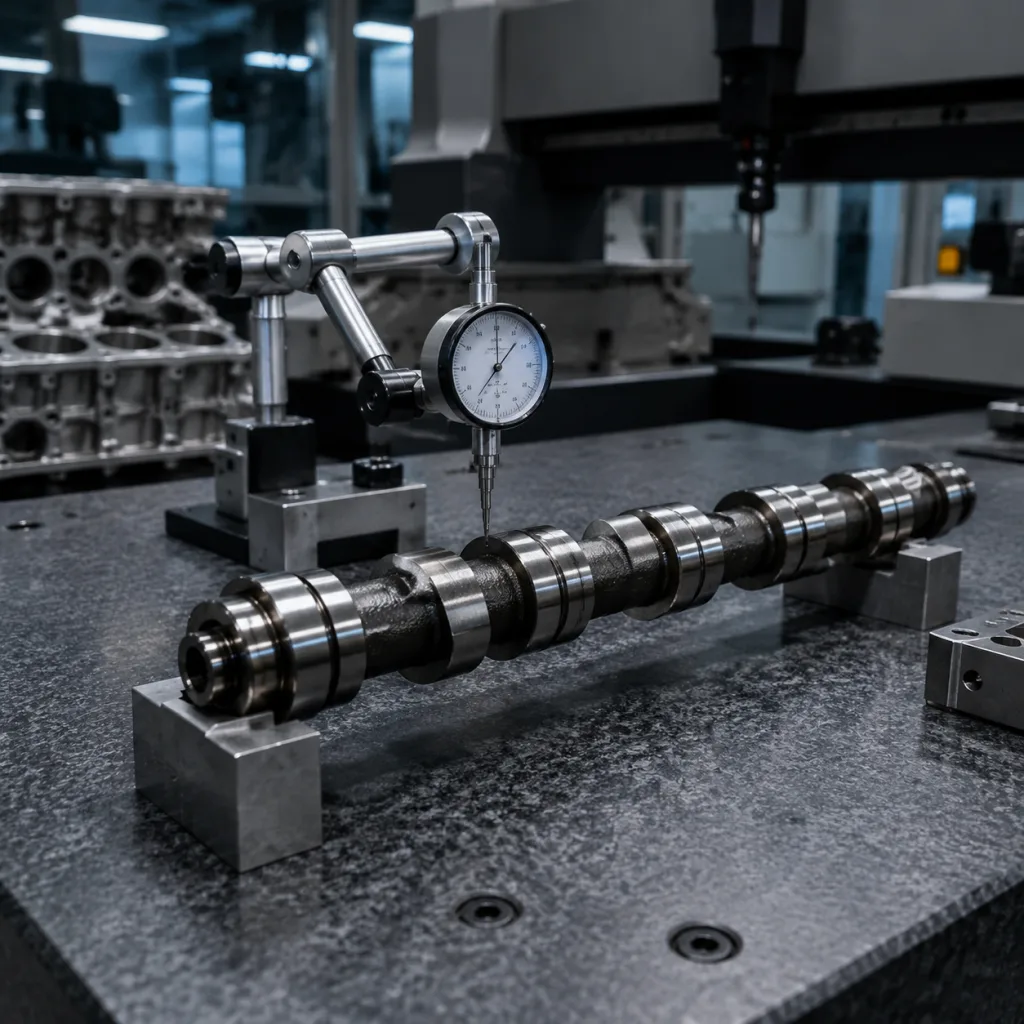
Do not treat camshaft validation as a paperwork exercise. A credible programme checks the part in stages, from raw material through finished geometry.
A practical sequence looks like this:
1. Confirm the drawing or OE reference 2. Inspect critical dimensions by gauge or coordinate measurement 3. Verify hardness against the material specification 4. Measure runout and profile accuracy 5. Review journal and lobe surface finish 6. Check fit with followers, lifters, and timing components 7. Confirm packaging and corrosion protection for shipment
If the application needs broader durability evidence, published methods such as SAE J2527 may be useful for correlated exposure testing. Final acceptance still belongs to the engine drawing and the buyer’s requirements. For emissions-related programs, confirm compatibility at the vehicle level with the calibration and any applicable regulatory constraints.
Why the RFQ needs engine data, not just a part request
The more complete the engine data, the faster a supplier can isolate the correct shaft. Missing details usually lead to the wrong lobe profile or the wrong revision.
Include these items in the RFQ:
Engine code and displacement
Model year range
Valve train type
OE number, if available
Sample part or drawing
Annual volume target
Packaging and labeling requirements
If you need a non-standard profile, Driventus can support custom manufacturing after technical review. For standard aftermarket supply, buyers can compare fitments across our catalog and the broader engine components range before shortlisting.
When supply chain control becomes the deciding factor
Even a correct part can create problems if the supply chain is inconsistent. B2B buyers usually need repeatable lead times, traceable batches, and clean documentation for incoming inspection and claims handling.
Driventus supports that with:
Controlled production under IATF 16949:2016 and ISO 9001:2015
Documented inbound and final inspection records
Packaging suited to sea freight and warehouse handling
Batch traceability for quality review
Sample approval before mass order release
Driventus is an independent aftermarket manufacturer; brand names are referenced for fitment only. If you want a plant-level overview of process control, review the quality system page, then move to request a quote with the OE reference, target volume, and delivery window.
Frequently asked questions
Match the OE reference first, then verify journal count, overall length, lobe lift, and drive-end features. If the reference is unclear, request a sample comparison before release.
Yes. At minimum, confirm hardness, runout, surface finish, and dimensional compliance against the drawing. Functional checks should match the target valve train and timing system.
Yes. If the application needs a non-standard profile, Driventus can review drawings, samples, and target volumes through the OEM services process.
If you are sourcing a camshaft Vauxhall replacement, send the OE reference, engine code, and annual demand for a technical review. Start here: /contact.html