Sourcing a cylinder head Lexus supplier is a procurement decision, not a simple parts lookup. The real issue is fitment control: engine code accuracy, alloy consistency, machining repeatability, and a supply chain that can hold volume without drifting on revision or quality. Driventus supplies cylinder heads for B2B customers that need documented process control, export packaging, and OE part-number cross-references for catalog matching. Driventus is an independent aftermarket manufacturer; brand names are referenced for fitment only. Our production and quality systems are built around IATF 16949:2016 and ISO 9001:2015, with material and process controls aligned to common export requirements in the EU, UK, North America, Australia, and Brazil. Before you place volume orders, the key questions are simple: can the supplier prove dimensional control, can they support audits, and can they keep lead time stable without changing the part definition?
Start with the failure modes
Most sourcing problems with cylinder heads start before the first sample ships. The common failure points are wrong engine-code matching, overlooked valve-train differences, inconsistent deck geometry, and packaging damage that shows up only after transit.
Use this checkpoint list before RFQ submission:
Confirm OE cross-reference, for example `OE 06A107065` when a catalog already uses that identifier
Verify casting material, usually aluminium alloy for modern passenger-car applications
Confirm valve count, cam layout, and sensor boss locations
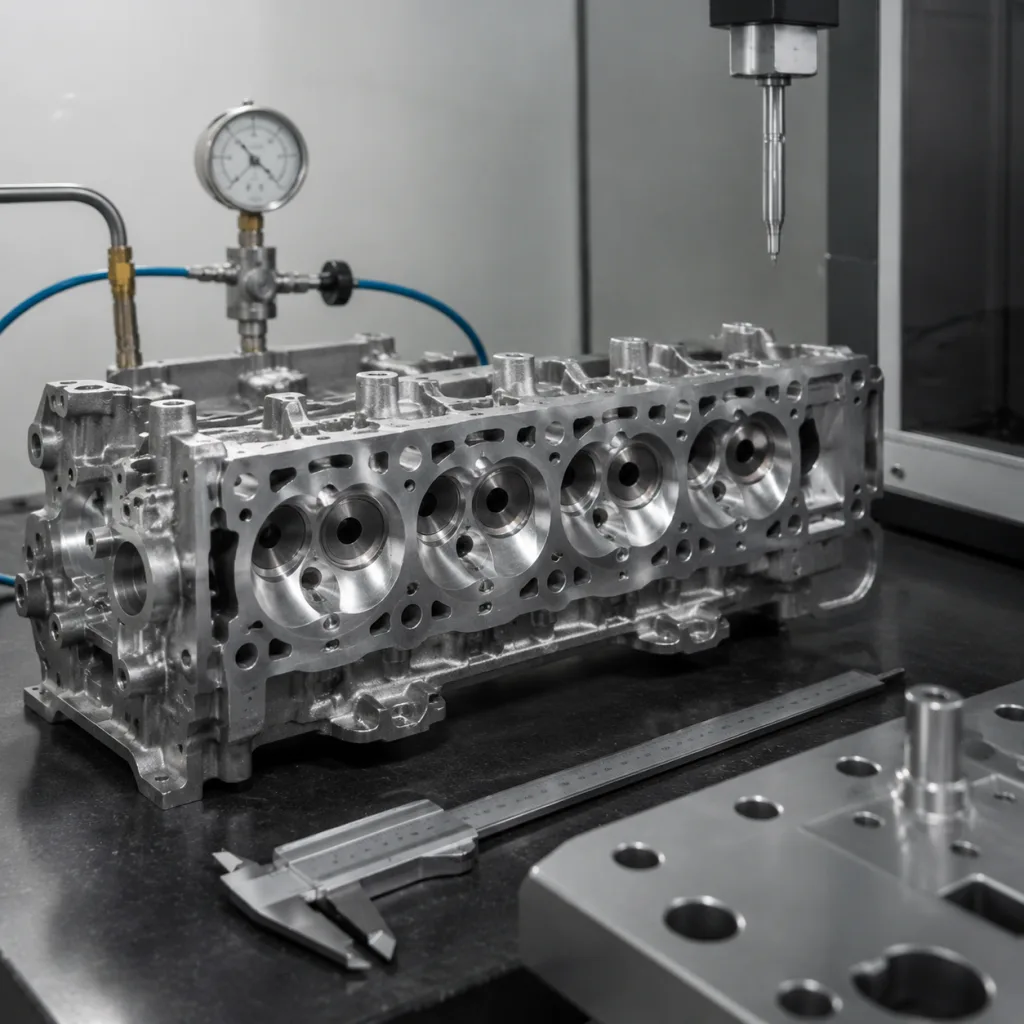
Request a dimensional report for critical faces and gasket seating surfaces
Ask for packaging and corrosion protection details for sea freight
Specify acceptable deck flatness, valve-seat runout, and bore concentricity limits before sampling
Typical buyer tolerances to define in the RFQ include deck flatness within `0.03-0.05 mm` across the gasket face, valve-seat concentricity within `0.02-0.04 mm`, and cam-bore alignment within `0.02-0.03 mm`, unless the OE drawing requires tighter control. For sealing surfaces, request the exact measurement method, datum points, and gauge resolution so sample approval is repeatable.
If the application is tied to a repair chain or distributor network, standardise by engine code and verified sample, not by vehicle name alone. One model can hide more than one head variant, and that is where mis-picks happen.
Compare supplier setups before you buy
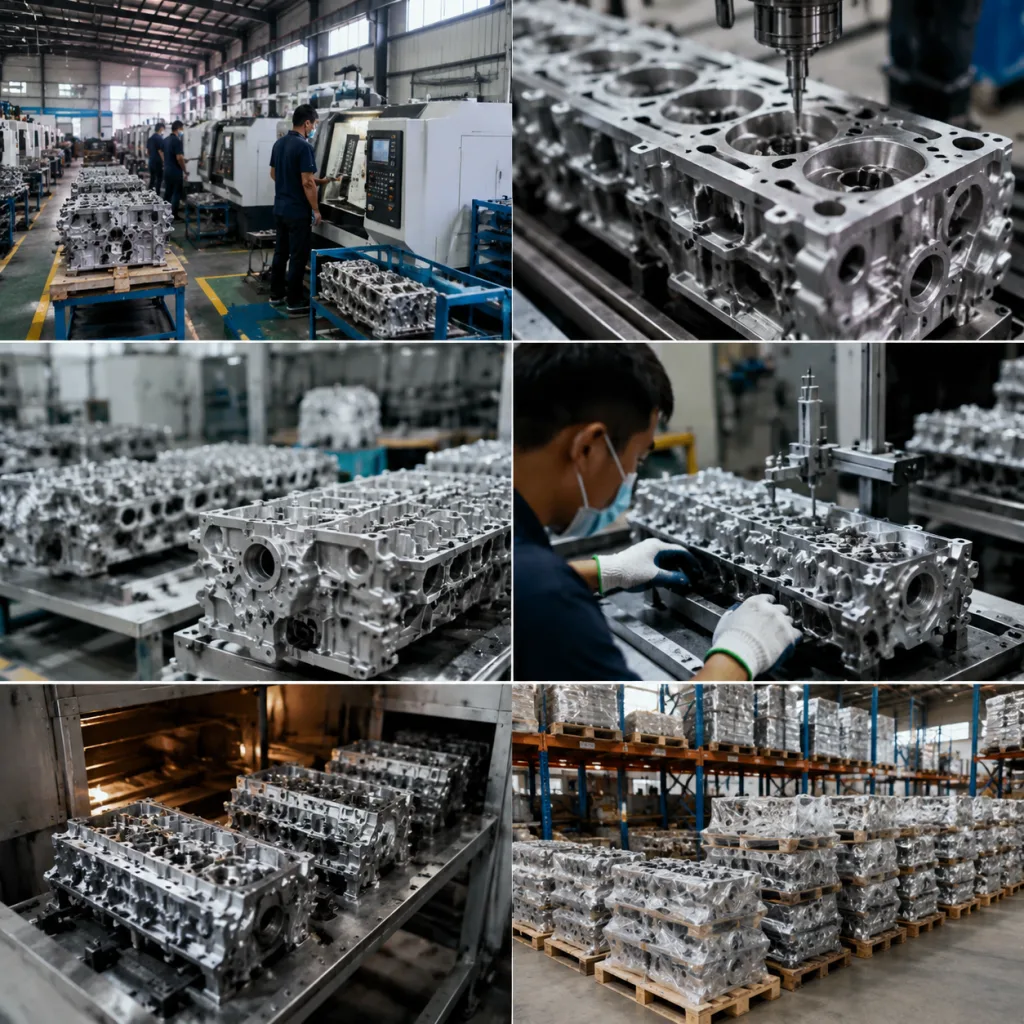
The fastest way to compare options is to separate a true manufacturer from a trading-only source. A manufacturer can usually explain casting, heat treatment, machining, cleaning, and inspection as one process chain. A fragmented supply chain often cannot.
Common sourcing checks
Item
What to request
Why it matters
Casting control
Alloy specification, melt records, and batch traceability
Helps manage porosity and repair returns
Machining
CNC fixture strategy, tool-life control, and in-process gauges
Protects deck, cam bore, and seat alignment
Inspection
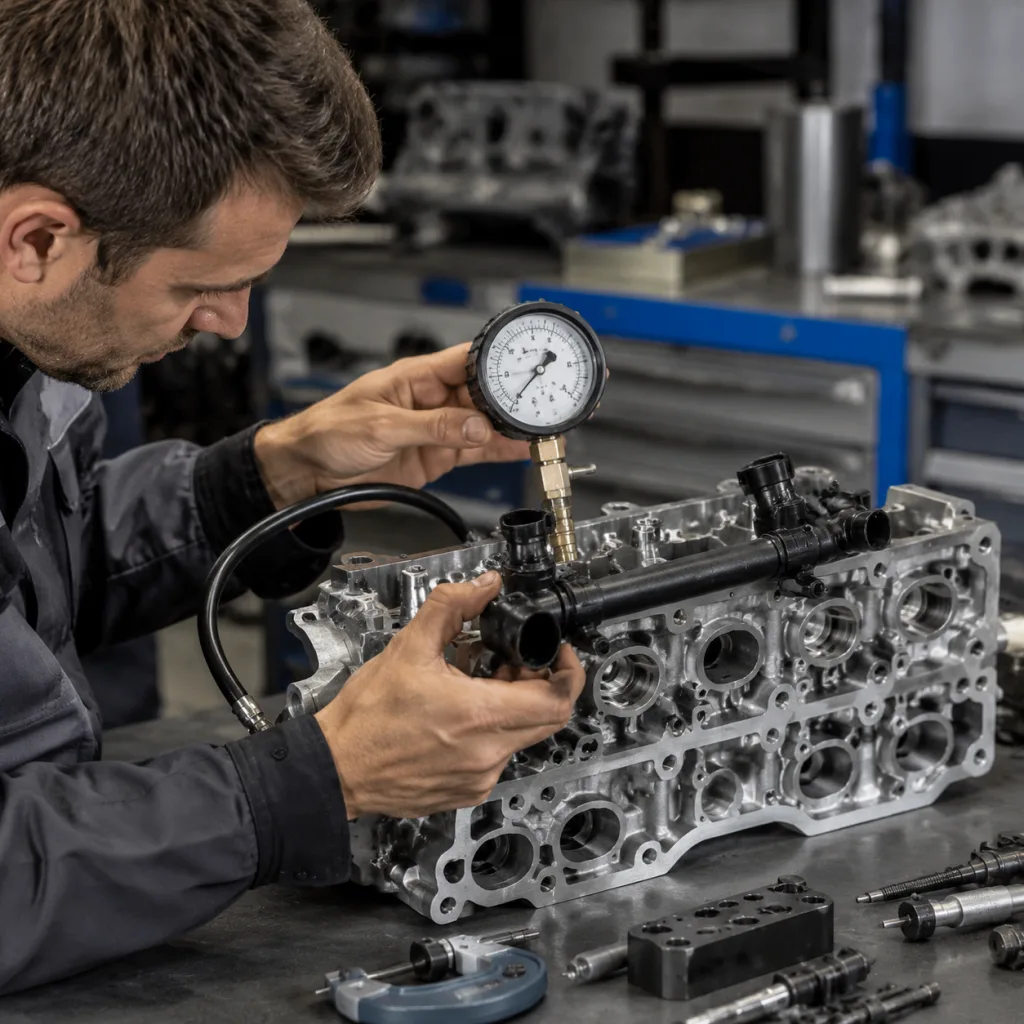
CMM report, leak test record, and pressure test method
Confirms dimensional and sealing integrity
Packaging
Rust prevention, corner protection, carton drop control
Reduces transit damage
Export paperwork
Commercial invoice, packing list, and country of origin
Avoids customs delays
</tr></thead><tbody> </tbody></table>A practical volume programme should also define process capability targets. Buyers can ask for `Cp/Cpk >= 1.33` on critical features such as gasket-face flatness, valve-guide position, and cam-bore location, with first-article records showing the gauge used, sampling size, and revision level. If the supplier cannot provide capability evidence, treat the sample as a prototype rather than an approved production part.
Driventus manufactures in Taizhou, Zhejiang, with vertically integrated production for engine and powertrain components. That helps buyers who need one source for cylinder heads and related parts such as gaskets, water pumps, or turbocharger assemblies. You can review related parts in our catalog and engine components.
Check the spec sheet, not just the part name
A cylinder head is defined by more than the headline fitment. Buyers should expect documentation that supports incoming inspection and supplier audits, because a missing datum or vague revision note can create avoidable risk in the warehouse or reman operation.
Minimum documents to request:
Material declaration and batch traceability
Dimensional inspection report for first article or sample approval
Leak or pressure test record where applicable
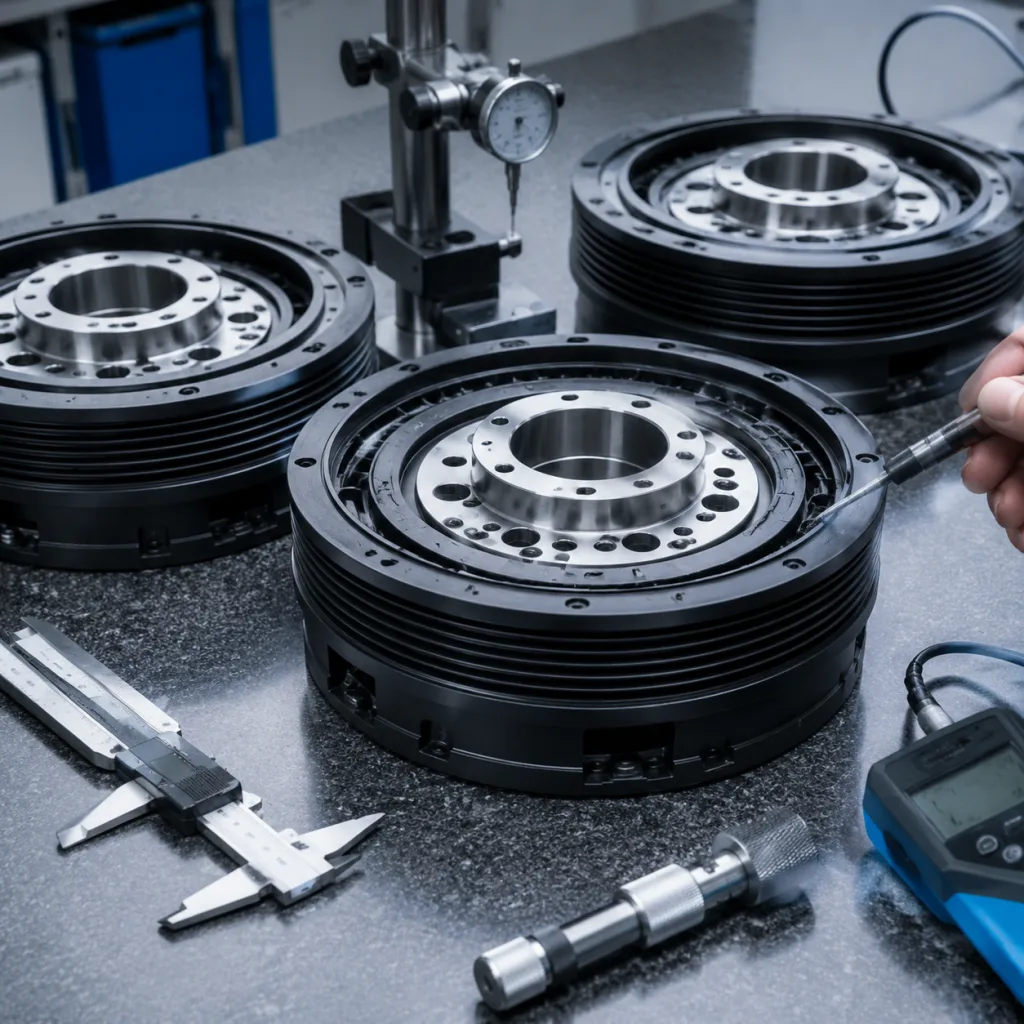
Surface roughness data for gasket and sealing faces
Process control summary aligned with IATF 16949:2016 and ISO 9001:2015
Revision history showing whether the sample is cast, machined, or production-equivalent
For cylinder heads, the buyer should also define inspection conditions. Ask whether measurements are taken at `20°C`, whether the head is fully cleaned and dried before metrology, and whether valve seats are checked after final wash or after packaging. Surface finish targets are often specified as `Ra 1.6-3.2 µm` for gasket surfaces and other sealing interfaces, but the exact requirement should follow the OE reference or the buyer’s internal engineering spec.
For EU-bound shipments, buyers may also ask about REACH (EC) No 1907/2006 declarations for restricted substances in coatings, sealants, or packaging-related materials. If the cylinder head is for a market with specific emissions or repair compliance rules, confirm whether the programme needs any additional local documentation. The supplier should state exactly what is included in scope, and what is not.
Build the ordering plan around lead time and MOQ
Cylinder head sourcing is usually more stable when orders are planned by engine family rather than one-off vehicle SKUs. That allows procurement teams to consolidate demand, reduce tooling changeovers, and improve availability.
Typical commercial points to clarify in the RFQ:
MOQ per part number or engine family
Sample lead time versus mass-production lead time
Tooling ownership and amortisation terms, if custom machining is required
Buffer stock options for fast-moving references
Reorder point based on monthly sell-through
A realistic commercial framework is to separate development and replenishment. Sample or validation units are often available in `7-15 days` when stock castings exist, while production lead time is commonly `30-45 days` for standard configurations and `45-60 days` when machining, packaging, or test fixtures must be adjusted. MOQ is usually lowest when the head is based on an existing casting and rises when a new core or machining programme is required; buyers should ask for MOQ by configuration, not a single blanket number.
For pricing, request a tiered quote tied to annual volume and shipment schedule. Compare landed cost at `1x`, `3x`, and `6x` monthly demand, and make the supplier show where price changes from machining setup, special packing, or testing. If your programme requires a proprietary port, chamber, or casting revision, custom manufacturing can align the part to your target spec without changing your internal catalogue structure. For commercial discussions, request a quote with engine code, photos, and any OE cross-reference you already use.
How Driventus handles supplier evaluation
Driventus is set up for procurement teams that need a documented aftermarket source, not an informal trading channel. We support catalogue matching, sample validation, and export-ready packing for B2B shipments.
What buyers can expect:
Independent aftermarket supply with brand references used for fitment only
Production aligned to IATF 16949:2016 and ISO 9001:2015
Cross-reference handling by engine code and OE number where available
Support for distributor, OEM, Tier-1, and repair-chain requirements
Technical discussion on machining, material, and packaging options
Sample review with dimensional checkpoints before volume release
In a typical buyer qualification flow, Driventus can start from the OE number or engine code, confirm visual and dimensional compatibility, submit sample photos and measurement data, then move to order planning after the buyer signs off fitment and packaging. That keeps approval separate from replenishment, which is useful for catalog teams that need predictable part naming and stable reorder logic.
If you are comparing suppliers, use the same benchmark for every candidate: dimensional report, lead time, MOQ, traceability, and export documentation. That gives procurement a clean basis for audit scoring and reduces surprises after the first shipment.
Frequently asked questions
Yes, when the catalogue already uses an OE cross-reference such as `OE 06A107065`. We match by engine code, measurements, and sample comparison. Brand names are referenced for fitment only.
Buyers can request material traceability, dimensional inspection data, leak or pressure test records, surface finish data, and process-control information aligned to IATF 16949:2016 and ISO 9001:2015.
Yes. Through [custom manufacturing](/oem-services.html), we can discuss machining changes, packaging requirements, sample approval steps, and catalogue-specific identification for B2B programmes.
If you are sourcing a cylinder head programme for distribution or fleet supply, share your engine code, target volume, and sample requirement. Start with [request a quote](/contact.html).