Cylinder Head Genesis Manufacturer China: Sourcing Guide
Sourcing a cylinder head for Genesis applications is less about finding a matching listing and more about deciding whether a supplier can hold the part within production limits. Buyers need to know if the casting is stable, the machining is repeatable, and the documentation is strong enough for procurement approval and aftermarket support. That means checking tolerances, flatness, valve-seat accuracy, heat-treatment consistency, and traceable inspection records before you commit to tooling or a bulk order. This applies whether you are working from an engine code, an OE cross-reference, or a sample part from a repair job. Driventus is an independent aftermarket manufacturer; brand names are referenced for fitment only. If you are evaluating a cylinder head genesis manufacturer china option, the sections below are organized to help you compare suppliers, spot failure modes, and decide how to qualify the part.
Start with the fitment risks
Before comparing prices, test whether the supplier can actually protect fitment. A cylinder head can look correct on paper and still fail in production use because of small machining or material issues.
Material: aluminium alloy grade, casting route, and heat-treatment method
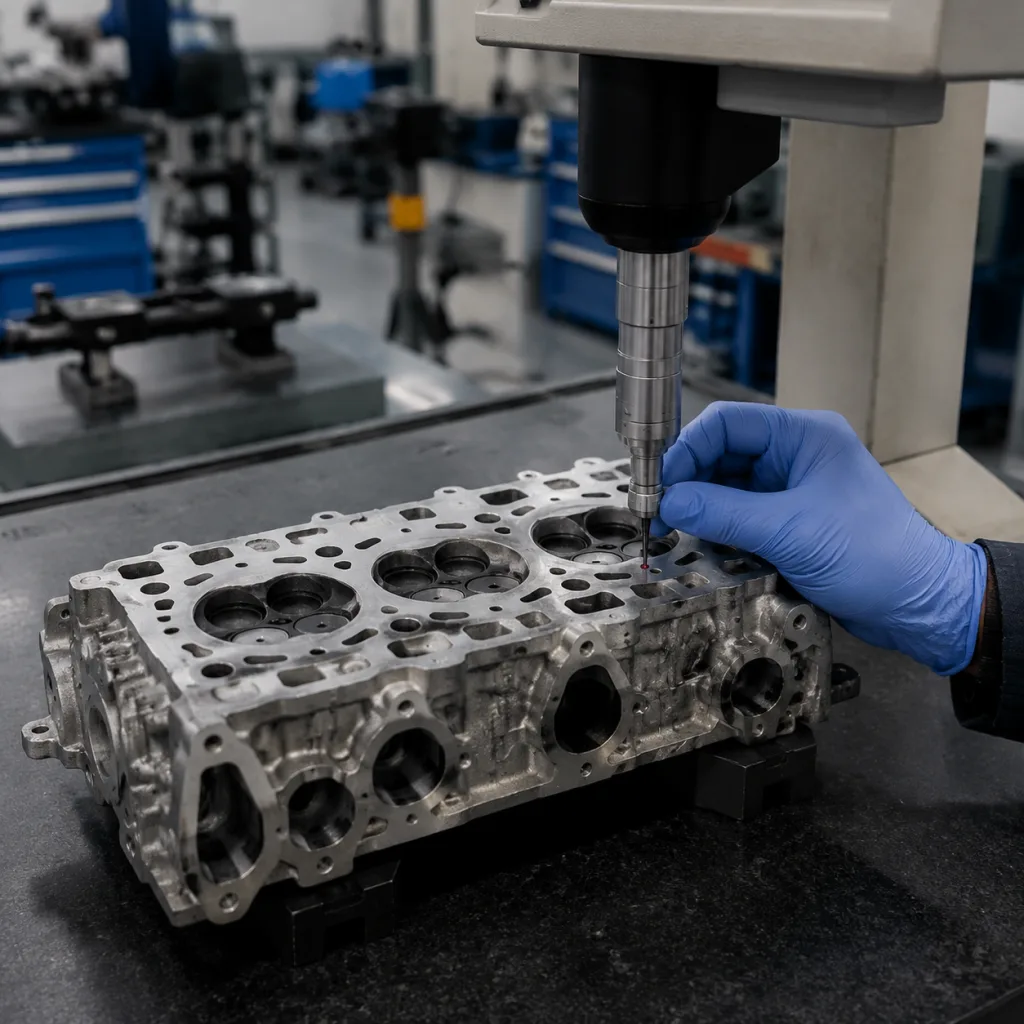
Machining: deck flatness, valve-seat concentricity, guide bore size, and port finish
Traceability: batch coding, material certificates, and inspection records
Packaging: corrosion protection, valve protection, and transit damage control
Supply terms: MOQ, sample lead time, production lead time, and buffer capacity
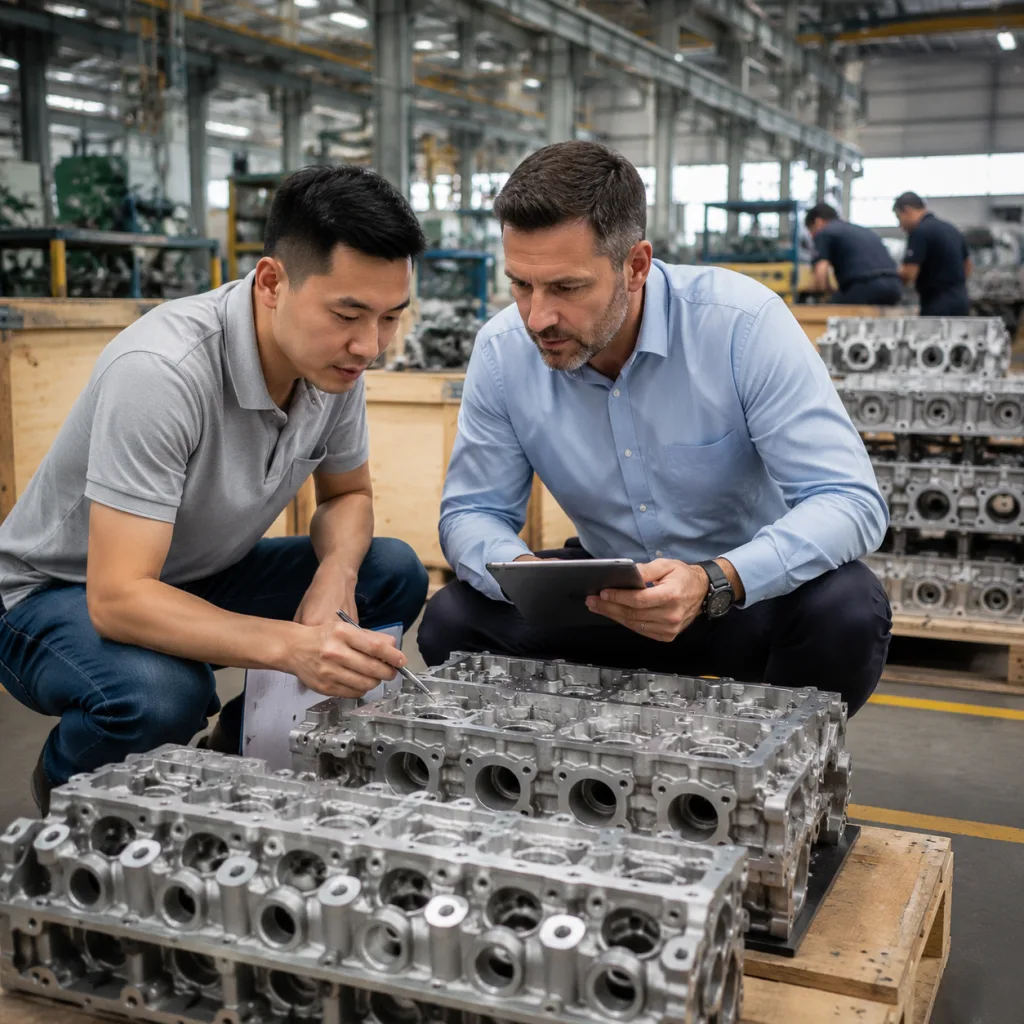
For Genesis applications, confirm the engine code, OE reference, and sample dimensions before approving a trial order. If the part will support a repair chain or distributor program, ask for photos of the raw casting, machined head, and pressure-test setup. Driventus can support this review through our catalog and request a quote.
What separates a capable supplier from a catalog seller
A serious cylinder head supplier shows process control, not just a list of part numbers. In B2B sourcing, the difference usually shows up in documentation and repeatability, not in the first sample.
Check item
What to ask for
Why it matters
System certification
Current certificates and scope
Shows quality management discipline
Incoming material control
Alloy specification and heat records
Reduces casting and cracking risk
In-process checks
Flatness, bore, and seat inspection data
Protects dimensional repeatability
Final testing
Pressure-test and leak-check method
Helps catch porosity and coolant-path defects
Nonconformance handling
Corrective-action process
Supports stable supply across lots
</tr></thead><tbody> </tbody></table>For EU and UK buyers, it is also standard to ask about REACH (EC) No 1907/2006 compliance where relevant to coatings, packaging, or chemical use. For North American and Australian programs, request written confirmation of traceability and test methods used on each lot. You can review our quality system before starting supplier qualification.
Spec deep-dive: the measurements that matter
Cylinder heads are unforgiving. Small deviations can change compression seal, coolant flow, valve clearance, and cam timing stability.
The most important control points are:
Deck flatness after final machining
Combustion chamber volume consistency
Valve guide internal diameter and guide protrusion
Seat angle and concentricity
Bolt-hole position and thread quality where applicable
Cam journal alignment on designs with integrated cam carriers
If the head is sold as an OE-equivalent replacement, request a dimensional report against the sample or OE reference. If the program is custom, the supplier should define the critical-to-quality characteristics before production starts. Driventus supports this kind of development through custom manufacturing when customers need part-family adaptation rather than a direct catalogue match.
Where sourcing programs usually fail
Most sourcing problems do not begin with the part number. They begin when the commercial plan is too loose for the technical risk.
Common failure modes include:
Approving a sample that matches visually but not dimensionally
Skipping pressure-test evidence because the price is attractive
Ignoring heat-treatment or alloy variance between batches
Buying too much inventory before fitment is validated on engines
Leaving warranty terms and replacement rules undefined
A better sequence is simple: review the sample, confirm fitment on engine hardware, check the inspection record, then scale volume only after the pilot lot passes. For a Genesis cylinder head program, that order reduces the chance of holding slow-moving inventory that cannot be installed without rework. If you need a pricing and supply proposal, use request a quote with the engine code, OE cross-reference, and annual demand estimate.
Lead time, MOQ, and buying scenario
Commercial fit matters just as much as the spec. A repair-chain order, a distributor replenishment order, and a private-label program usually need different supply models.
A practical discussion should cover:
MOQ by casting or finished part number
Sample lead time and approval sample quantity
Production lead time after order release
Forecast flexibility for seasonal demand
Packaging configuration by market or warehouse
Warranty claim support and replacement policy
Scenario: a regional distributor wants a Genesis cylinder head for fast-moving repair demand. The best path is often a pilot lot first, followed by a forecasted annual order after fitment is confirmed. That keeps machining consistency under review before inventory is committed. If your team needs pricing, send the engine code, OE cross-reference, and target volume through request a quote.
How Driventus approaches cylinder head sourcing
Driventus manufactures engine and powertrain components in Taizhou, Zhejiang, and exports to more than 60 countries. For cylinder heads, the focus is repeatable casting quality, controlled machining, and documentation that supports buyer approval.
What sourcing teams typically receive:
Part identification by engine family and OE cross-reference where provided by the buyer
Material and process documentation aligned to the production lot
Inspection records for key dimensions and pressure testing
Packaging suitable for export handling
Support for replacement, aftermarket, or private-label supply programs
We do not claim vehicle-manufacturer approval or endorsement. Driventus is an independent aftermarket manufacturer; brand names are referenced for fitment only. If your team is evaluating a Genesis application, we can compare the sample head, match the technical requirements, and advise whether a standard catalogue part or a custom run is more suitable.
Frequently asked questions
Yes, when the buyer provides the OE reference or a verified sample. We use that information for fitment and dimensional comparison only. Final confirmation should still include engine code, port layout, and critical measurements.
Ask for certification scope, inspection records, material traceability, pressure-test results, packaging details, and sample lead time. If the part is custom, request the control plan and critical dimensions before production.
Yes. Pilot orders are useful for fitment checks, leak testing, and market validation before larger commitments. They are also the best way to confirm lead time, packaging quality, and lot-to-lot consistency.
If you are qualifying a Genesis cylinder head source, send your engine code, sample photos, and target volume. We will review the fitment and respond with a supply proposal via /contact.html