Crankshaft Vauxhall OEM Supplier Sourcing Guide
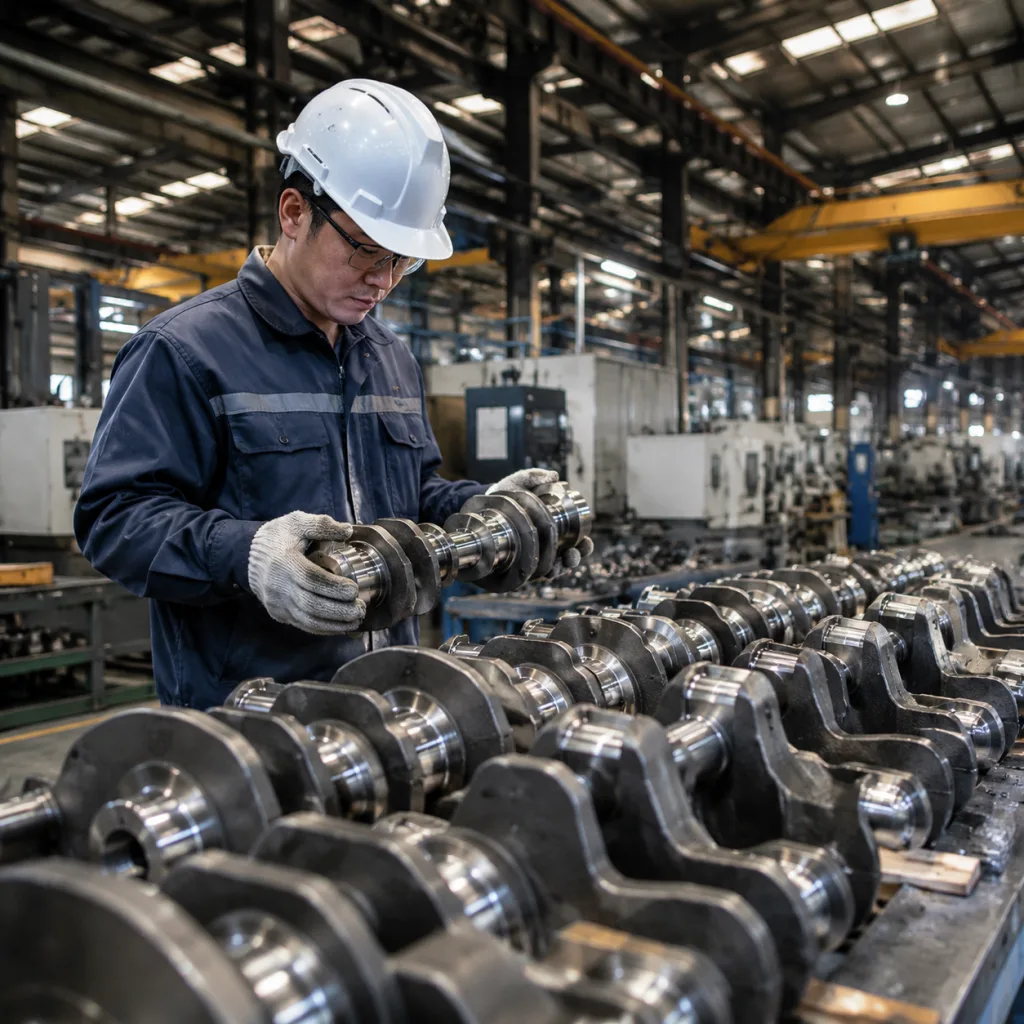
Finding a crankshaft Vauxhall OEM supplier is rarely about matching a part number alone. Buyers need the right material route, stable machining, controlled inspection, packaging that survives export, and a supplier that can repeat the same result on the next order. Driventus manufactures crankshafts and related engine components in Taizhou, Zhejiang for B2B aftermarket distributors, importers, repair-chain buying groups, and OEM/Tier-1 sourcing programmes. Typical projects cover forged steel or cast iron crankshafts for petrol and diesel applications, with samples validated before serial supply. Before pricing is settled, buyers normally define material route, journal tolerance class, runout limit, hardness range, surface finish, balancing requirement, corrosion-protection period, MOQ tier, and delivery schedule. We also support OE part-number cross-reference work where buyers provide their own data, including generic references such as OE 06A… or OE 11251… when relevant to the enquiry. Driventus is an independent aftermarket manufacturer; brand names are referenced for fitment only. This article focuses on the decisions, failure modes, process checks, and commercial trade-offs buyers should confirm before placing a Vauxhall-fit crankshaft order.
Start with the failure modes, not the price
The fastest way to misbuy a crankshaft is to treat it like a simple catalogue item. A few microns of error, poor heat treatment, unstable straightness, or a burr left in an oil hole can lead to bearing wear, vibration, oil starvation, or early engine failure. For Vauxhall-fit programmes, the first question is not “what is the unit price?” It is “what can go wrong, and how will the supplier prevent it?”
A good approval file should begin with fitment control. That means engine family, displacement, fuel type, stroke, main journal count, thrust position, pilot bore, flange pattern, keyway or timing interface, reluctor interface if applicable, and matching bearing information. If your team uses a proprietary interchange system, send only the data needed for quoting and validation. Driventus can review drawings, samples, or structured cross-reference files against our catalog and engine component range.
For supplier approval, procurement teams normally ask for:
- Business licence, export registration, and manufacturing scope
- IATF 16949:2016 and ISO 9001:2015 certificates where applicable
- Process flow diagram, control plan, inspection plan, and gauge list
- Material grade, heat-treatment route, hardness range, and mill-certificate format
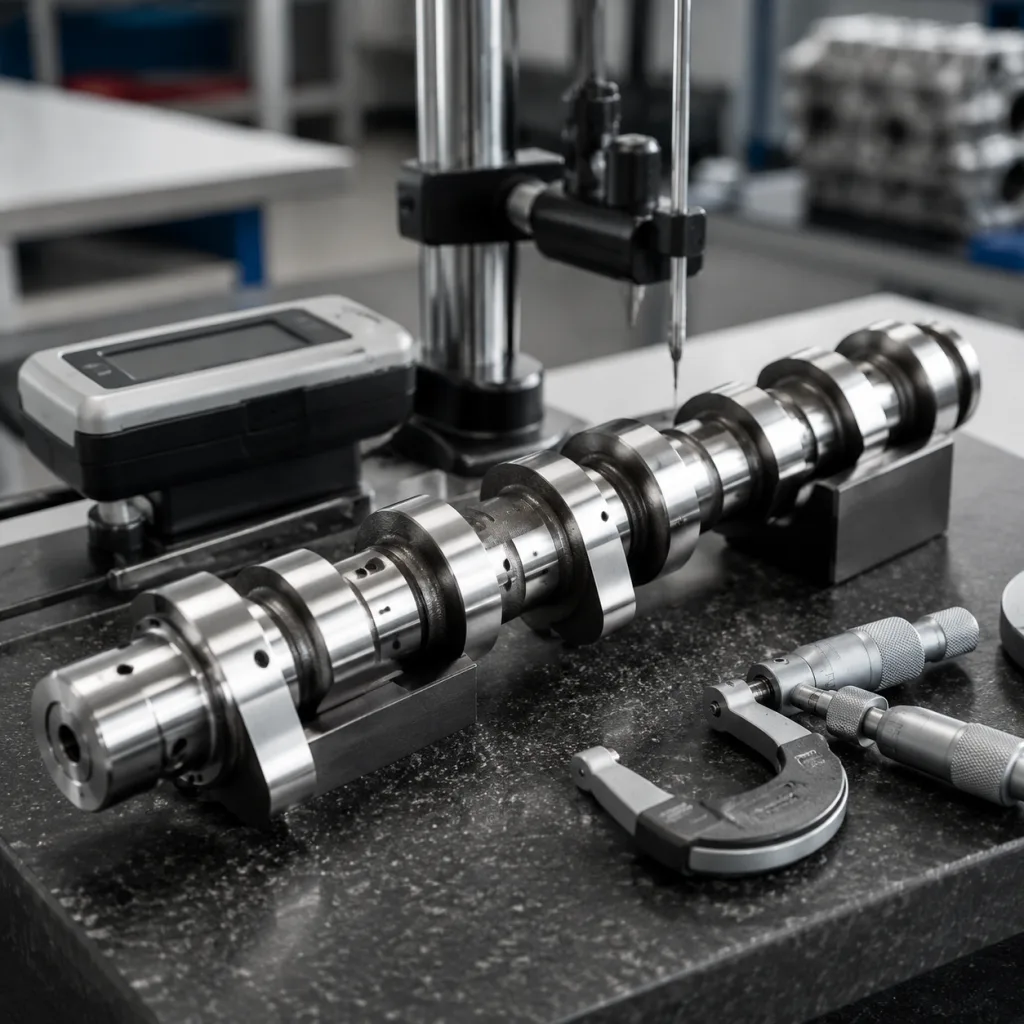
- Critical dimension report for main journals, rod journals, flange, keyway, oil holes, thread, pilot bore, and runout
- Surface-roughness target for journals, commonly Ra 0.2–0.4 µm where the drawing requires it
- Taper and ovality limits for main and rod journals, often 0.005–0.010 mm depending on design and buyer standard
- Packaging specification for sea freight and courier samples
- Traceability method by batch, heat number, production lot, or carton label
Do not approve a crankshaft vauxhall oem supplier from photos or a quote sheet alone. Ask for one measured sample report, the inspection equipment used, and the exact tolerances that will govern serial production. Driventus is an independent aftermarket manufacturer; brand names are referenced for fitment only.
What the spec sheet should actually say
Crankshaft quality lives in the details. The spec needs to describe the part in a way the factory can build, inspect, and repeat. If the request is vague, the result usually is too. Buyers should spell out the material route, journal geometry, balancing expectation, and acceptance limits before the first sample is cut.
Production may use forged steel or cast iron blanks, depending on duty cycle, target market, original design, and required fatigue margin. Forged steel is often selected where load margin matters; cast iron may be suitable where the original application, performance target, and cost structure allow it. Price should follow the engineering need, not the other way around.
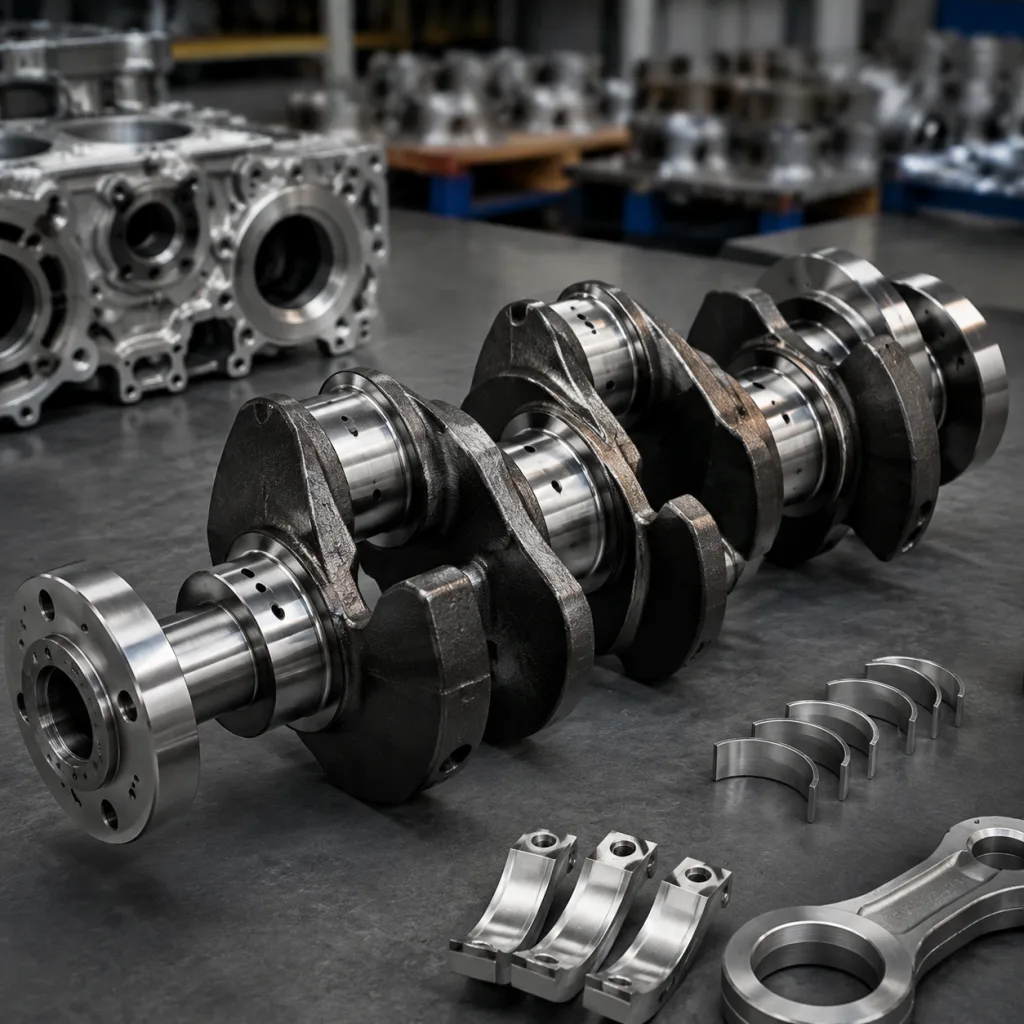
Typical process stages include incoming blank identification, visual and dimensional blank inspection, rough turning, heat treatment where specified, straightening control, semi-finish machining, finish turning, fillet rolling or radius control where required, oil-hole drilling, chamfering and deburring, journal grinding, dynamic balancing when specified, washing, anti-corrosion protection, final inspection, and packing. Each step should have a defined check point.
A useful spec deep-dive usually covers:
- Main and rod journal diameter, taper, and ovality
- Journal width, thrust width, flange face condition, and pilot bore
- Runout and straightness reference points
- Surface roughness on bearing journals
- Hardness range and test location
- Oil-hole finish, chamfer, and cleanliness requirement
- Crack detection method if needed
- Balance limit if the programme requires it
- Packing method, corrosion protection, and label format
Typical acceptance limits must follow the drawing or approved sample, but buyers commonly define main and rod journal tolerance bands in the 0.010–0.020 mm range, taper and ovality within 0.005–0.010 mm, journal roughness around Ra 0.2–0.4 µm, and runout controlled to 0.02–0.05 mm depending on reference points. If induction hardening, nitriding, fillet rolling, or magnetic particle inspection is required, those items must be named in the RFQ because they affect cost, cycle time, and MOQ.
Our quality system is built around documented production control, incoming inspection, in-process checks, final inspection, and corrective-action handling. Standards such as IATF 16949:2016 and ISO 9001:2015 help frame audit preparation and traceability, but they do not replace part-specific validation. The purchase agreement should still define inspection sampling, acceptance limits, gauge method, and reporting format.
Compare MOQ and lead time by order type
MOQ is not fixed for every crankshaft. It depends on whether the reference already exists, whether blanks are stocked, whether fixtures are ready, and how much setup the job requires. The same part can be easy to repeat and expensive to start.
For stocked or previously produced references, the practical MOQ may start lower, sometimes 20–50 pieces if blanks and fixtures are already in place. For new crankshaft families, MOQ is usually driven by blank production and tooling economics; buyers should expect a higher threshold, often 100–300 pieces per reference, or a combined family order when several similar references share tooling.
Lead time follows the same logic. The real question is not only how long the first batch takes, but whether that timing can repeat on the next purchase order. As a planning guide, catalogue or repeat references may need 25–45 days after deposit and technical release, while new development can require 60–90 days for blank preparation, sample machining, approval, and first production. Courier samples may move faster, but air freight does not remove the need for dimensional inspection.
A practical sourcing comparison should look at:
| Order type | What usually drives cost | What usually drives time |
|---|---|---|
| Stock reference | Packaging, inspection, and freight | Stock availability and release speed |
| Repeated catalogue part | Setup spread over more pieces | Machine queue and inspection load |
| New development | Tooling, fixtures, and validation | Blank prep, sample approval, and first-run checks |
| Family bundle | Shared tooling and shared packing | Coordination across multiple references |