Crankshaft Pulley Vauxhall Manufacturer China: Sourcing Guide
Buying a crankshaft pulley for Vauxhall applications is not a photo-match exercise. The part has to line up with OE dimensions, belt groove geometry, offset, bore fit, and, where applicable, damping performance. For procurement teams, the real questions are supplier traceability, material consistency, validation data, and whether the factory can support repeat orders without drift. Driventus manufactures engine and powertrain components in Taizhou, Zhejiang, and supplies B2B customers in more than 60 countries. We work to IATF 16949:2016 and ISO 9001:2015, and we support fitment-based sourcing for aftermarket, OEM, and repair-chain customers. Driventus is an independent aftermarket manufacturer; brand names are referenced for fitment only. This guide focuses on what to verify first, where sourcing failures usually happen, and how to separate a dependable supplier from a merely cheap one.
Start with fitment, not photos
If you are evaluating a crankshaft pulley Vauxhall manufacturer China option, begin with the fitment data that actually controls installation. Confirm OE reference numbers, engine codes, pulley diameter, groove count, offset, bore size, and any integrated damping or timing features before discussing price. A supplier that cannot map those basics cleanly is not ready for production. If you have a sample, ask for measurement against drawing data and critical dimensions, not just a visual comparison. Driventus can support part matching from customer samples, drawings, or OE references through our catalog and adjacent engine component range at `/products/engine-components.html`.
Where pulley designs diverge
Crankshaft pulleys sit on a spectrum from simple drive components to vibration-sensitive assemblies. Some applications need cast iron, others steel or aluminum, and some require a bonded harmonic damper structure to control torsional vibration. The right design depends on engine load, accessory drive requirements, and service conditions. That is why two pulleys that look similar can behave very differently on the vehicle. If you are developing a private-label variant or a new tooling path, review custom manufacturing and specify target material, finish, corrosion protection, and tolerance limits up front.
Failure modes that create claims
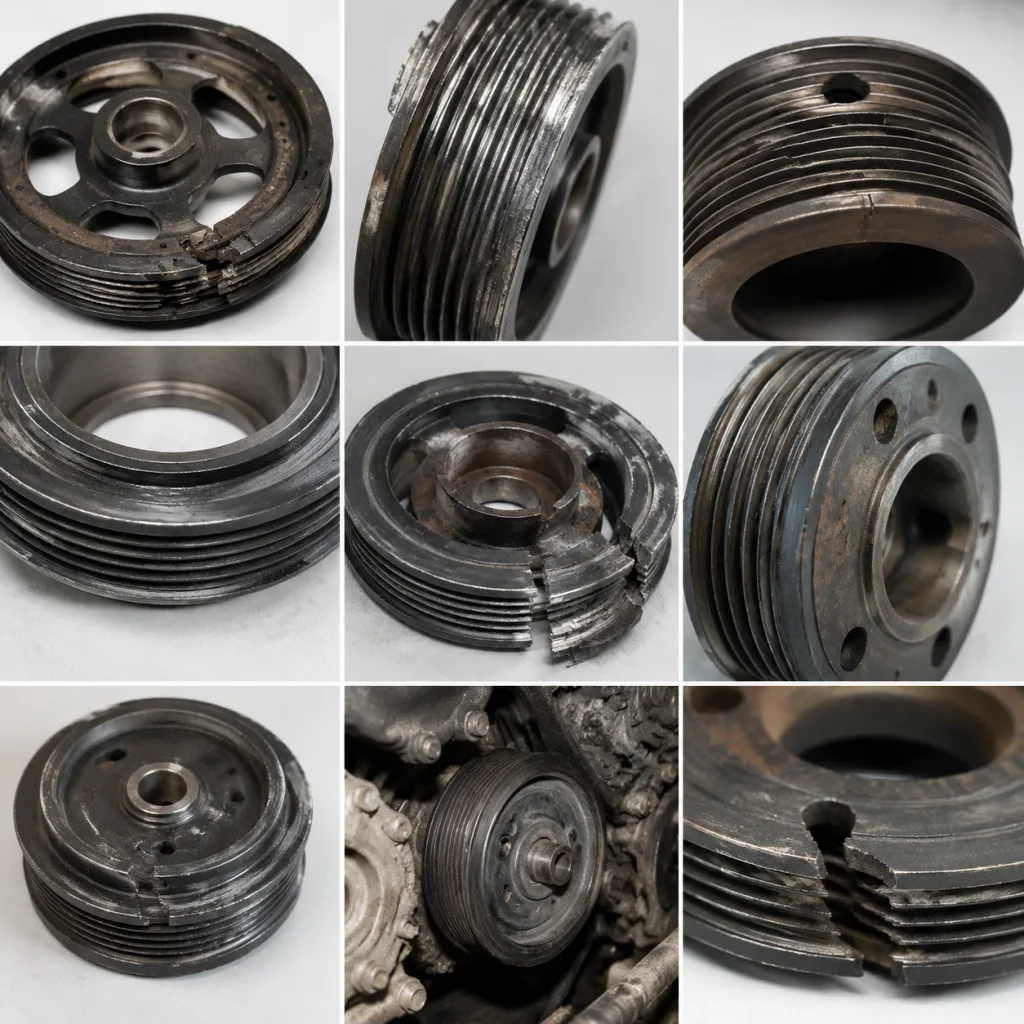
Most sourcing problems show up after the first shipment, not before it. Common failures include belt misalignment, wrong offset, bore mismatch, poor runout control, imbalance, coating wear, and damper degradation where the design includes one. Any of these can trigger noise, premature belt wear, or vibration complaints. Ask the supplier how those risks are controlled in-process, then verify the answer with records. For higher-volume programmes, request dimensional inspection reports, material certificates, lot traceability, and any runout, balance, hardness, or coating checks relevant to the design.
A practical supplier comparison
When you compare suppliers, treat commercial terms as part of the technical evaluation. Lead time, MOQ by variant, sample availability, packing standards, and revision control all affect whether the programme stays stable after launch. A low quote is less useful if the factory cannot hold the same specification across repeat orders. Cross-reference coverage matters too, especially when one aftermarket range spans multiple Vauxhall model years and engine families. Also confirm whether the factory can support private-label packaging, barcode labels, export documentation, and mixed-container shipments if your channels are split across distributors and service networks.
What a solid quality packet includes
A reliable supplier should show batch control, not just promise fit. At minimum, ask for dimensional drawings, material confirmation, inspection reports, traceability records, and any durability or coating validation tied to the application. If the part is safety- or vibration-sensitive, clarify whether PPAP-style documentation is available and whether incoming inspection, in-process checks, and final audits are used before shipment. For many buyers, the difference between a workable supplier and a risky one is simply how complete the quality packet is when the quotation arrives.
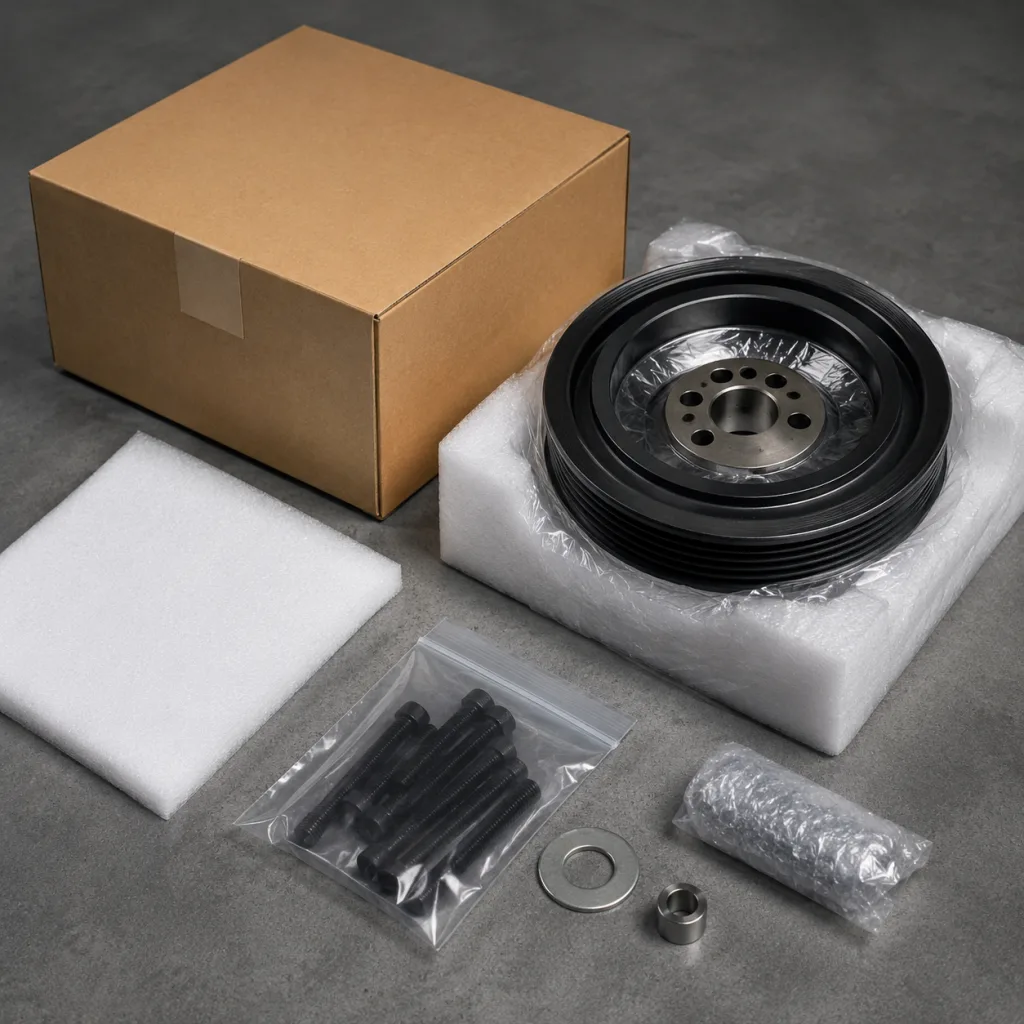
How Driventus supports fitment-based sourcing
Driventus works as an independent aftermarket partner for buyers who need fitment-based sourcing rather than brand-channel supply. We support sample comparison, drawing review, and quotation workflows designed to reduce OE mismatch risk before mass production starts. Our team can also align the pulley with related engine and powertrain components when a programme requires broader bill-of-material coordination. Driventus is an independent aftermarket manufacturer; brand names are referenced for fitment only.
Frequently asked questions
Yes. We work from OE reference, sample, or drawing data. We do not claim OEM approval, but we can match fitment requirements and confirm dimensions before production.
Request dimensional drawings, material confirmation, inspection reports, traceability details, and any durability or coating validation records relevant to the programme.
Yes. We support drawing-based and sample-based programmes, including packaging and labelling requirements, through our OEM and custom manufacturing workflow.
If you are sourcing a Vauxhall crankshaft pulley programme and need a fitment check, sample comparison, or quotation, contact the team at /contact.html.
Request a Quote