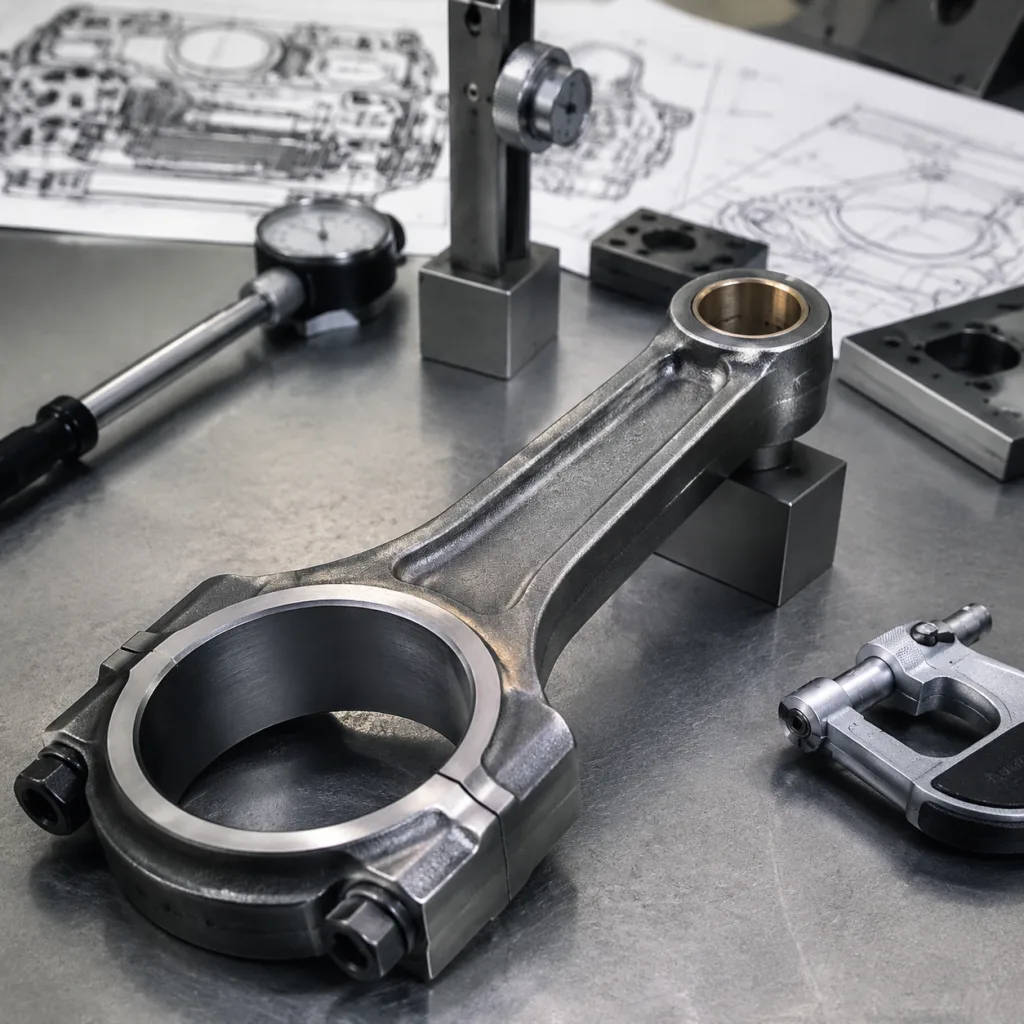
Connecting Rod for Honda Civic Aftermarket Replacement
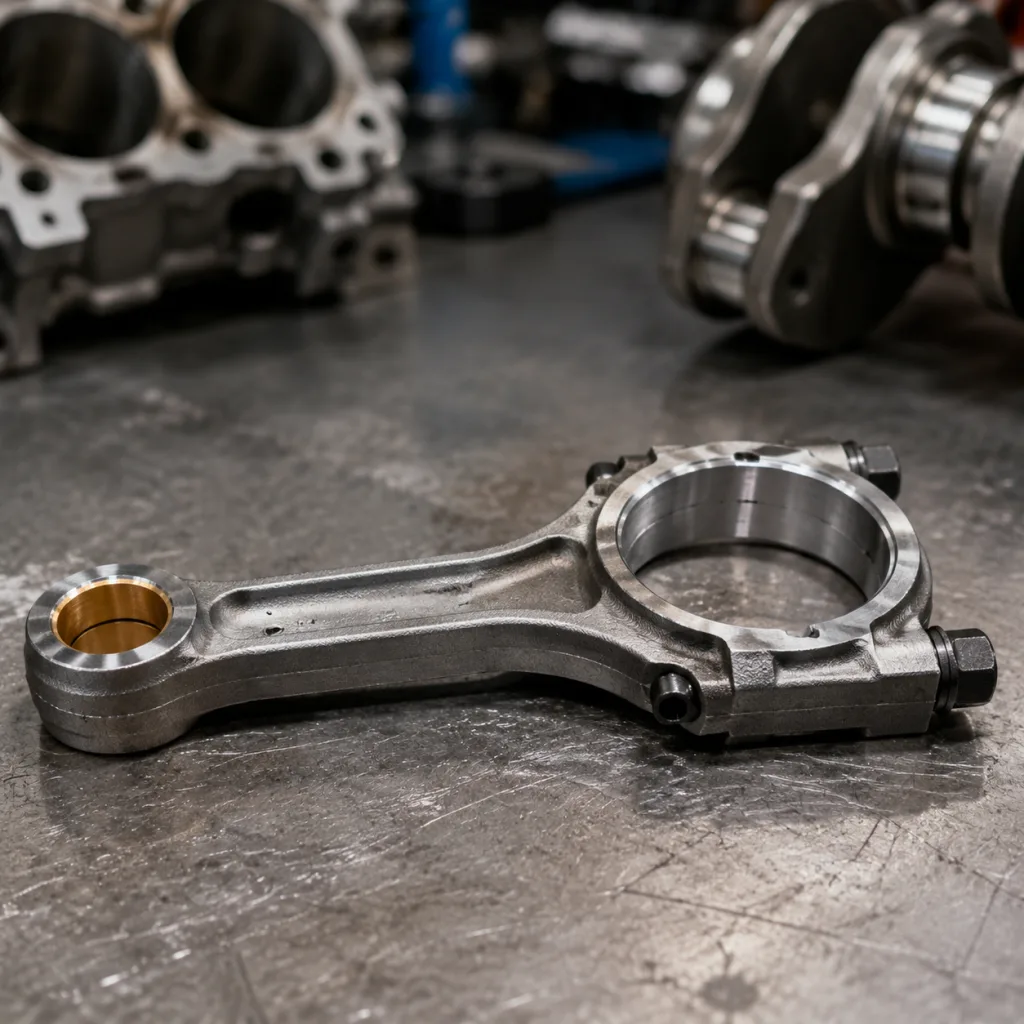
Sourcing a connecting rod for Honda Civic aftermarket replacement is a fitment-control exercise first and a purchasing decision second. The part must match the engine code, centre-to-centre length, big-end and small-end dimensions, bolt specification, and weight target before it is approved for production or stock release. That matters because most sourcing failures come from dimensional drift: the rod looks correct, but the journal width, pin bore, cap geometry, or fastener stretch is off. Driventus supplies engine components for B2B buyers who need stable dimensional control, batch traceability, and documented inspection. Driventus is an independent aftermarket manufacturer, and brand names are referenced for fitment only. Our production follows IATF 16949:2016 and ISO 9001:2015 processes, with material controls aligned to REACH (EC) No 1907/2006 where applicable. The most reliable sourcing sequence is simple: verify OE-equivalent fit first, then commercial terms, then lot release.
How to tell a correct rod from a close match
For replacement sourcing, start with the engine code and the exact rod application. Honda Civic platforms use different rods across displacement, aspiration, market, and model year, so a visual match is not enough.
Verify these points before ordering:
Centre-to-centre length, typically controlled within ±0.02 mm on production drawings
Big-end bore and width to match the bearing shell package
Small-end bore for the wrist pin, with final clearance defined by the pin supplier
Rod bolt type, thread, and torque or stretch method
Cap alignment, parting-face finish, and locating geometry
Weight matching within the rebuild programme target, commonly ±1.0 g for service sets and tighter for performance builds
Material, heat treatment, and hardness declaration
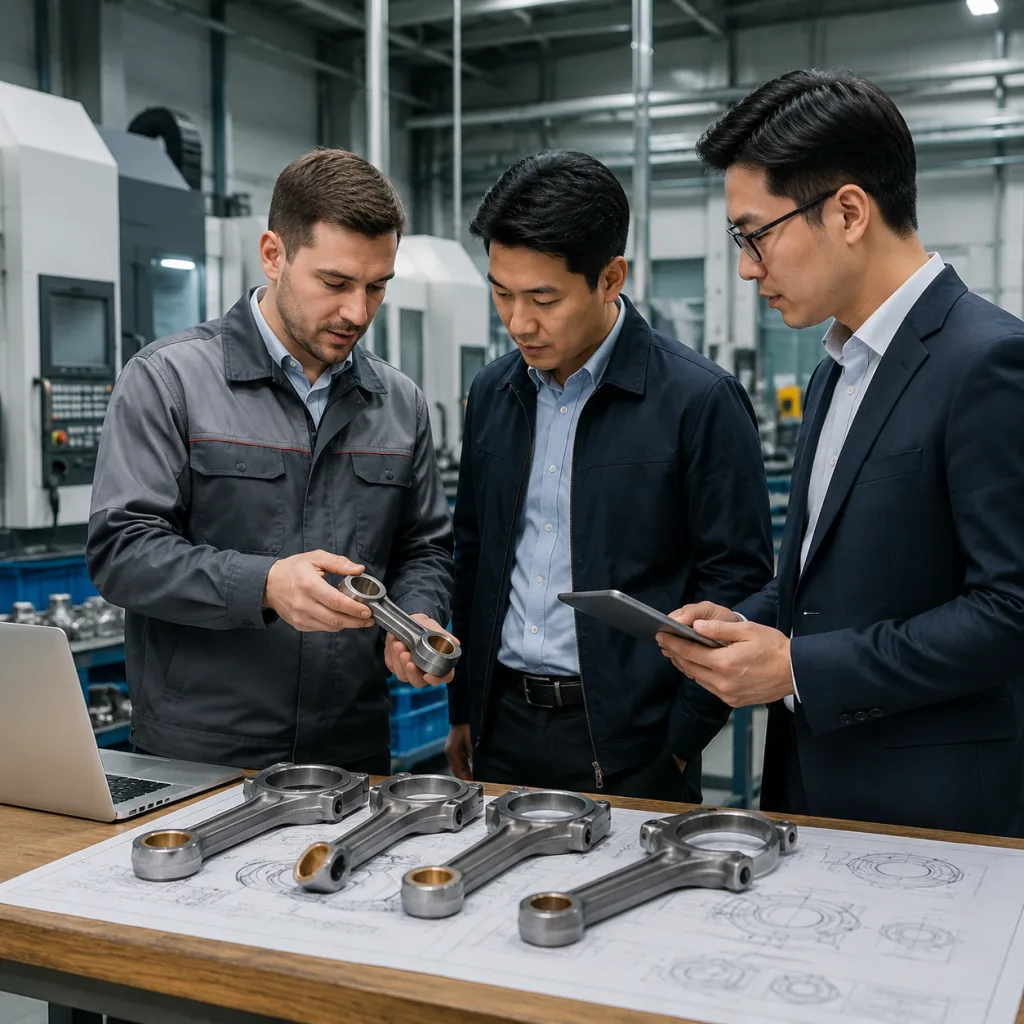
A buyer file should also retain the OE reference, engine code, sample approval photos, and incoming inspection criteria. For new programmes, ask for a first article sample lot against the target engine build rather than approving by catalogue description alone. If the application is sensitive, request gauge results for bore size, pin bore, and rod length before release.
Spec deep-dive: the dimensions that actually control fit
A reliable aftermarket rod is defined by dimensions, not by claims. For Honda Civic replacement programmes, the rod must match the engine’s original geometry and fit the intended crankshaft, piston pin, and bearing set without correction machining.
Control item
Typical buyer check
Why it matters
Centre-to-centre length
Match OE drawing, often within ±0.02 mm
Maintains compression height and deck position
Big-end bore
Match bearing shell set-up, usually held to micrometre-level control after honing
Protects oil clearance and bearing life
Big-end width
Match crank journal and side-clearance target
Prevents cap drag and thrust issues
Small-end bore
Match pin fit with defined running clearance
Prevents seizure or excessive pin play
Rod weight
Batch matched, commonly within 1.0 g per set
Reduces balance variation in rebuilds
Fastener spec
Verified by grade, thread, and stretch or torque method
Preserves clamp load under high rpm
Surface finish
Measured on critical faces and bores
Supports repeatable assembly
</tr></thead><tbody> </tbody></table>Typical aftermarket production uses forged steel, powder-forged steel, or powdered-metal variants, depending on engine programme and cost target. The right choice depends on duty cycle, rpm range, and whether the buyer is replacing a worn OE rod or supporting a higher-load rebuild. For fleet or distributor programmes, consistency across lots is usually more important than a single headline material property. Ask for hardness values, heat-treatment range, and the final machining tolerance stack, not just a material name.
Failure modes: where replacement programmes usually go wrong
Most rod complaints do not start with a broken part. They start with an avoidable mismatch.
Common failure modes include:
Wrong engine family cross-reference, especially across similar Civic displacements
Big-end width drift that changes side clearance at the crank journal
Small-end bore mismatch that causes pin noise, galling, or assembly difficulty
Bolt specification changes that alter clamp load and stretch behaviour
Weight spread across a batch that complicates balancing
Incomplete process control, where sample parts pass but production lots vary
Missing traceability, which slows claims handling when a workshop reports a fit issue
The practical fix is to require dimensional proof before the first order ships. A supplier should be able to link the OE reference, drawing, sample lot, and inspection data to a single approved application. If that chain breaks, the part may still be usable, but the sourcing risk rises fast. For B2B programmes, that risk usually shows up as returns, rework, or delayed shelf availability rather than an immediate field failure.
Validation and release: what evidence a buyer should ask for
Validation testing should confirm that the rod behaves like the OE part in the intended engine environment. For buyers, the minimum acceptable evidence is dimensional inspection plus process control records.
Useful validation items include:
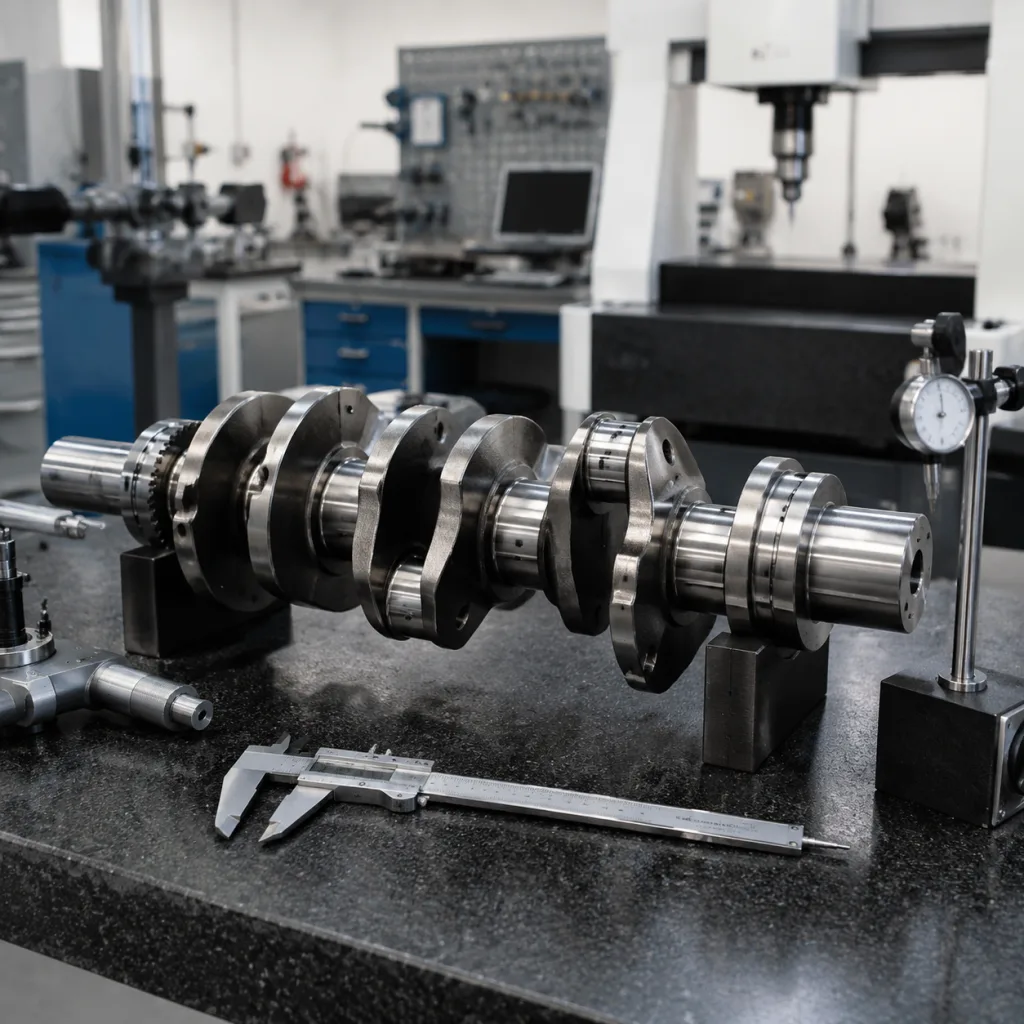
Coordinate measurement of centre length, big-end bore, small-end bore, and cap alignment
Hardness testing on the finished component, with a documented target range from the process sheet
Magnetic particle inspection or equivalent crack detection on the finished lot
Torque and stretch verification for rod bolts, including the approved tightening method
Fatigue or bench endurance testing on sample lots, ideally tied to the engine family being supplied
Material certificates linked to batch numbers and production dates
Surface finish records for the bearing faces and critical locating surfaces
When the target is a Honda Civic application used in mixed market channels, ask for inspection records by lot, not just a general specification sheet. That makes incoming QC faster and helps reduce returns from parts counters and workshops. For new supplier approval, many buyers also require a PPAP-style file or a controlled first-article report, especially when the rod is being cross-referenced from an OE part number.
How Driventus supports B2B sourcing
Driventus supports aftermarket buyers, OEM and Tier-1 supply chains, and multi-location repair networks with stable production and documented quality checks. For broader engine programme sourcing, see our catalog, our quality system, and custom manufacturing.
We manufacture engine and powertrain components in Taizhou, Zhejiang, with export experience across 60+ countries. Buyers can use us for catalogue replacement, private-label programmes, and controlled cross-reference projects when the target dimensions are already defined.
For procurement teams, the most useful engagement flow is: share the OE reference or drawing, confirm the application code, approve a sample set, review the dimensional report, and then release the order quantity. If you also source related parts, our engine components page can help align rods with pistons, gaskets, and water pump programmes. Driventus does not claim vehicle manufacturer approval or endorsement; brand names are referenced for fitment only.
Commercial checklist before you place the order
Replacement programmes are won or lost on continuity. Buyers should confirm MOQ, lead time, packaging, barcode needs, and the ability to hold repeat batches to the same inspection standard.
For import managers and category buyers, the most useful supplier data are:
MOQ by part number and by engine family
Standard lead time for stocked items versus made-to-order items
Sample approval method and sample charge policy
Carton quantity, inner pack count, and palletisation
Country-of-origin marking support and label format control
Document pack: commercial invoice, packing list, test report, and material declaration
Price break logic by volume band, tooling status, and repeat order frequency
In practice, buyers should separate three numbers before release: sample price, production MOQ, and reorder lead time. A small trial lot may cost more per unit because of setup and inspection time, while repeat batches usually improve with stable forecast and packaging standardisation. If your programme needs OE cross-reference control for a specific Civic application, ask for a controlled part-number match and a signed dimensional report before release. That reduces claims and protects fill-rate performance. For supply planning, many buyers also ask suppliers to quote both ex-works and landed-cost assumptions so they can compare true programme cost across regions.
Frequently asked questions
No. Civic engine families use different rod lengths, bores, bolt specifications, and weight targets by year and displacement. Confirm the engine code, OE reference, and pin size before release.
Yes. For B2B orders, we can supply inspection records for critical dimensions, batch traceability, and process documentation on request. We can also support first-article or lot-based reports for controlled releases.
Yes. Through our custom manufacturing service, we can build to customer drawings, approved samples, or controlled OE-equivalent specifications for defined applications, subject to drawing review and sample approval.
If you need a controlled connecting rod supply for Honda Civic replacement programmes, send the OE reference, target quantity, and required delivery window through our contact form: /contact.html