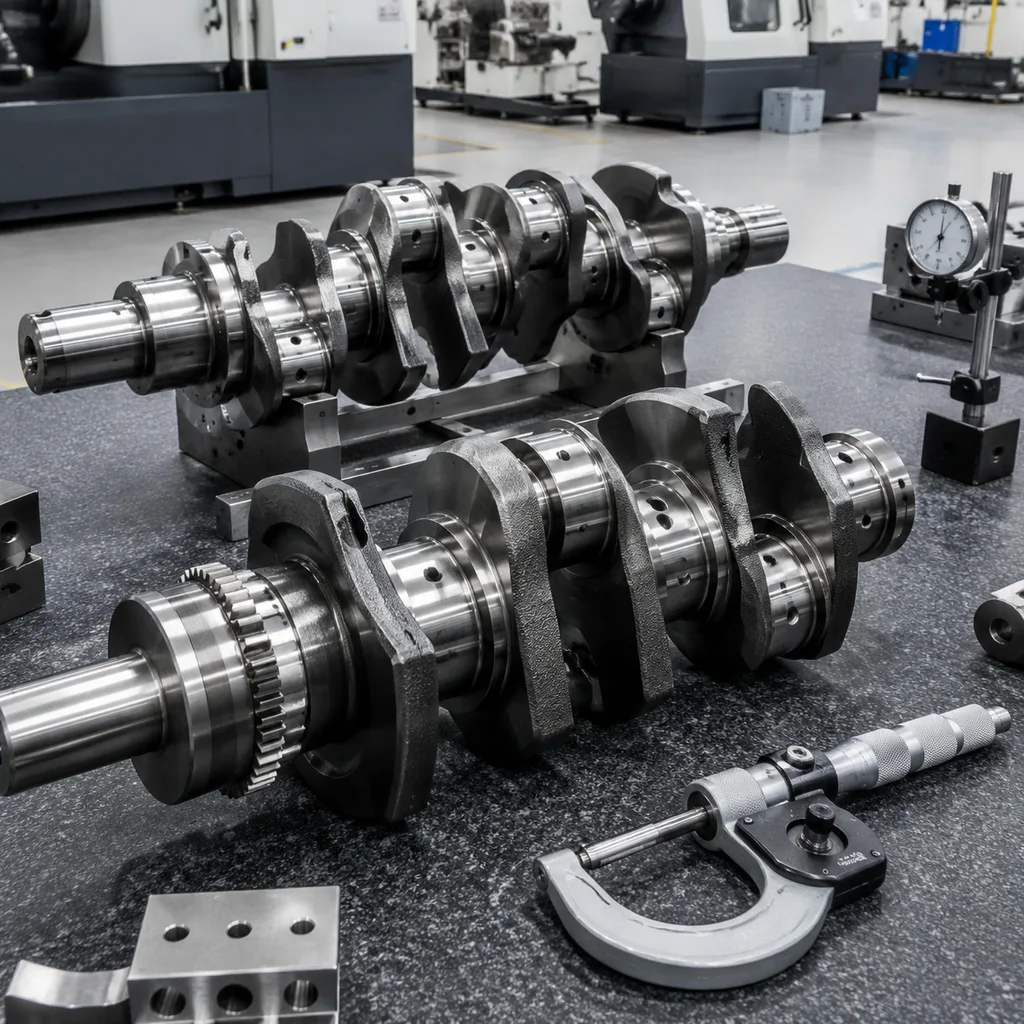
Crankshaft Pulley Mini Supplier for B2B Sourcing
A Mini crankshaft pulley looks like a small stock item until one dimension is wrong. Bore fit, groove geometry, rubber damping, bond strength, and hub concentricity all decide whether the belt drive runs quietly or turns into noise, vibration, returns, and warranty cost. That is why importers, repair-chain buyers, and aftermarket distributors should qualify a crankshaft pulley Mini supplier by evidence: drawings, inspection records, damping controls, traceability, packaging discipline, and export execution. Driventus manufactures engine and powertrain components in Taizhou, Zhejiang, and supplies export markets in more than 60 countries. Our range includes crankshaft pulleys, pistons, crankshafts, gaskets, water pumps, turbochargers, and related engine components for aftermarket and programme supply. This article gives procurement teams a sharper way to judge Mini pulley supply: where failures start, which specifications matter, what documents prove control, and how to structure RFQs before price comparisons become misleading. Driventus is an independent aftermarket manufacturer; brand names are referenced only for fitment identification.
Decision Framework: Approve the Process, Not Just the Part Number
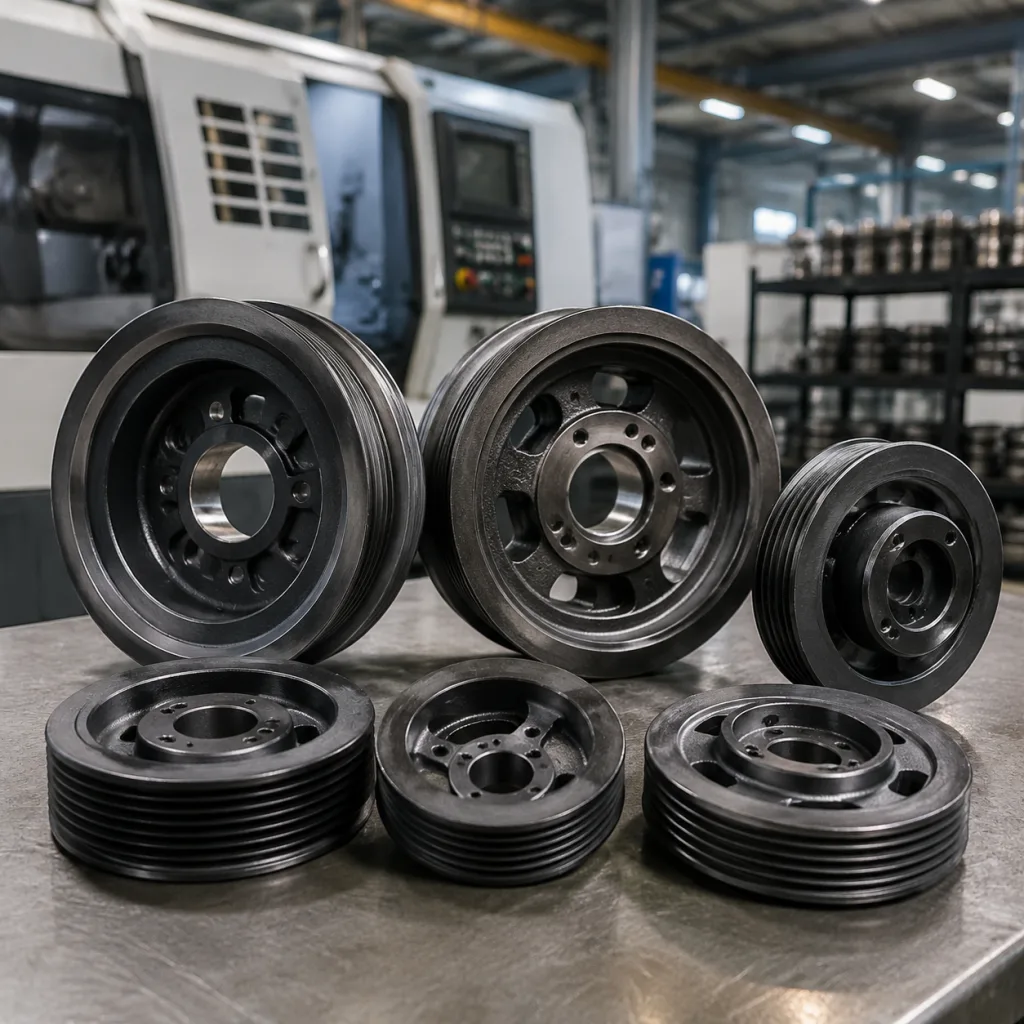
A Mini crankshaft pulley usually combines a metal hub, an outer pulley ring, and a bonded elastomer layer that works as a torsional vibration damper. It drives the accessory belt while reducing vibration at the crankshaft nose. The risk is that many samples look acceptable on a desk. They fail later because rubber compound, bonding, groove form, machining accuracy, or balance was not controlled lot after lot.
For B2B sourcing, treat the first conversation as a process audit. Catalogue coverage is useful, but it is not qualification. A distributor should confirm application coverage, OE-style dimensional matching, inspection frequency, batch traceability, and export packing before placing a stocking order. A sourcing engineer should also ask how the supplier handles sample approval, PPAP-style documentation when required, and corrective action after delivery.
Use this decision path before approving a crankshaft pulley Mini supplier:
- Confirm the application by engine code, model year, pulley type, and accessory-drive layout
- Check bore, keyway or locating features, groove profile, and runout against the drawing or approved sample
- Review rubber hardness, compression behavior, bond coverage, and damping consistency controls
- Require dynamic balance control where the drawing, buyer standard, or programme risk demands it
- Verify salt spray, coating, or storage corrosion checks for humid or long-transit markets
- Link each batch to material inputs, production date, inspection results, and shipment records
- Approve export packaging for sea freight, pallet handling, barcode scanning, and warehouse storage
Buyers can review broader engine product coverage in our catalog and the engine component range at /products/engine-components.html.
Spec Deep-Dive: The Dimensions and Materials That Decide Service Life
Exact pulley dimensions depend on the engine family, model year, accessory-drive layout, and damper design. Procurement drawings and sample confirmation are still essential. Driventus does not claim vehicle manufacturer approval or endorsement. Parts are developed for independent aftermarket fitment using controlled reverse engineering, customer drawings, physical samples, and agreed inspection plans.
A useful specification does more than name the part. It defines the features that create fit, belt stability, damping performance, corrosion resistance, and traceability.
| Parameter | Typical procurement requirement | Why it matters |
|---|---|---|
| Hub material | Cast iron, steel, or specified equivalent | Controls strength at the crankshaft interface |
| Outer ring | Machined ferrous alloy or equivalent | Maintains belt groove stability and alignment |
| Elastomer layer | Heat-, fatigue-, and oil-resistant rubber compound | Controls damping performance and separation risk |
| Bonding process | Controlled surface preparation, adhesive, curing, and inspection | Reduces rubber-to-metal delamination risk |
| Bore and locating features | Drawing-controlled tolerance | Prevents wobble, poor seating, and installation issues |
| Pulley groove profile | Matched to belt specification | Reduces belt noise, slip, and premature wear |
| Radial and axial runout | Inspection-plan controlled | Supports smooth accessory-drive operation |
| Dynamic balance | Specified by drawing or buyer standard where required | Helps reduce vibration in rotating operation |
| Surface protection | Phosphate, coating, or customer-specified finish | Reduces corrosion during storage and use |
| Marking | Batch or customer-agreed identification | Supports traceability, service tracking, and recall control |
| Evaluation area | Manufacturer with process control | Trading-only or weak-control source |
|---|---|---|
| Traceability | Batch records linked to materials, production, inspection, and shipment | Limited records or mixed-source documentation |
| Engineering support | Can review drawings, samples, tolerances, and fitment risks | Often waits for a third-party factory response |
| Change management | Documents tooling, material, coating, and process changes | Substitutions may be poorly communicated |
| Quality response | Root-cause analysis and corrective action available | Replacement shipment may be the only remedy |
| Packaging control | Export cartons, labels, barcode rules, and pallet plans agreed | Inconsistent cartons, weak labels, or mixed packing |
| Audit support | Quality documents and site review possible | Limited access to the actual production site |
| Programme support | Can plan samples, pilot orders, replenishment, and SKU expansion | Often handles each order as a separate transaction |