crankshaft pulley · 2026-06-21

Crankshaft Pulley Jeep Manufacturer China: Sourcing Guide

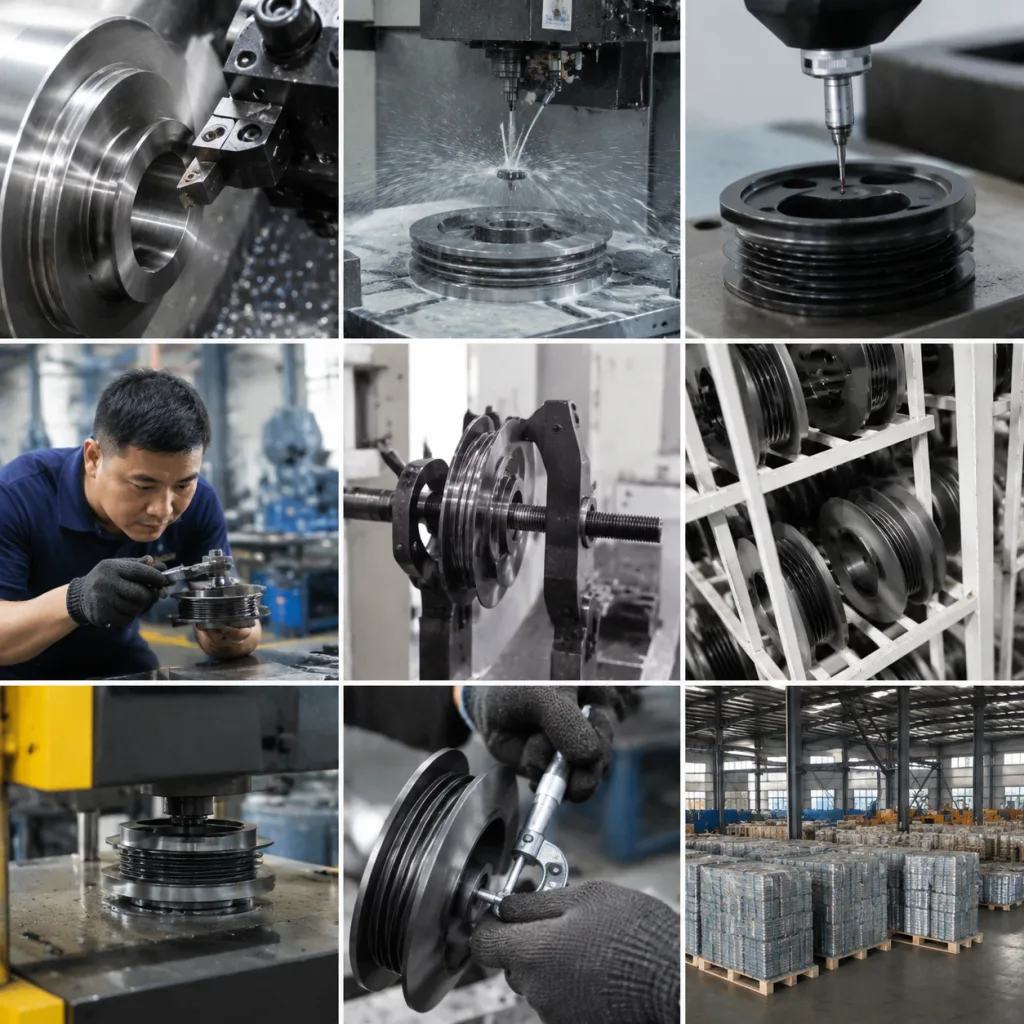
If you are sourcing a crankshaft pulley for a Jeep application from China, the real question is not price first. It is whether the pulley will fit, survive, and stay consistent across repeat orders. Driventus manufactures engine and powertrain components in Taizhou, Zhejiang, and supports aftermarket, OEM, and repair-chain buyers with controlled production and export documentation. Driventus is an independent aftermarket manufacturer; brand names are referenced for fitment only. For Jeep programmes, the most common failure points are the wrong offset, poor belt alignment, bore mismatch, weak damping, and runout that turns a simple replacement into a comeback claim. Our work is controlled under IATF 16949:2016 and ISO 9001:2015 systems, with material and process discipline suitable for buyers in the EU, UK, US, Canada, Australia, and Brazil. Typical drawing review takes 1–3 business days. Stocked or standard-machined samples usually take about 7–15 days. New-tool or custom builds generally take 25–45 days after technical confirmation.

The first decision: solid pulley or bonded damper?

Before comparing suppliers, decide whether the original Jeep engine uses a plain pulley or a vibration-damping assembly. That choice changes everything. A solid pulley may match the outside geometry, but it is not a safe substitute when the OE design depends on torsional damping.

Where buyers get it wrong

The most common sourcing mistake is treating a visual match as a functional match. If the engine was designed around a bonded elastomer damper, replacing it with a rigid part can increase vibration, load bearings harder, shorten belt life, and create noise complaints. The reverse error happens too: buyers sometimes over-spec a damped assembly where the application only needs a standard drive pulley, which adds cost and lead time without value.

Use this quick decision filter:

  • If the OE part has rubber bonding or a visible damping layer, keep the same construction type.
  • If the part only drives accessory belts with no vibration-control function, a solid pulley may be acceptable.
  • If the vehicle is fleet-operated or warranty-sensitive, do not change construction just to reduce unit price.
  • If the application is unknown, request a sample and inspect the hub, mass distribution, and bond line before quoting volume.

For procurement, this is the fastest way to avoid a false comparison between suppliers. Two parts can share the same outer diameter and still behave very differently in service.

Fitment checks that actually prevent returns

The dimensions that matter most

A Jeep crankshaft pulley lives or dies on a small set of critical dimensions. Get them wrong and the part may still bolt on, but the belt will not track correctly or the crank interface will not seat as intended.

Start with these checks:

  • Engine code and model year
  • OE reference number, if available
  • Crank bore diameter and locating feature
  • Hub depth and face offset
  • Outer diameter, groove count, groove pitch, and belt width
  • Pulley-to-block clearance and accessory alignment
  • Radial runout and face parallelism

The tightest tolerances are usually held on the bore, hub, offset, and runout. In sourcing reviews, critical bores are often specified around ±0.02 mm to ±0.05 mm, while sensitive assemblies may need radial runout at 0.05 mm or better. Surface finish on mating faces is often controlled around Ra 1.6–3.2 μm.

Failure modes to watch for

Most field failures are predictable:

  • Offset off by 1–2 mm, causing belt wander
  • Bore too loose, leading to seating issues and vibration
  • Groove geometry inconsistent with the belt section
  • Damped pulley substituted with a rigid design
  • Coating or surface finish too rough, affecting fit or corrosion resistance

The safest sourcing sequence is simple: verify the drawing, compare against a physical sample, then confirm installation geometry before releasing production.

How Driventus builds consistency into the part

We focus on repeatability. That means the same geometry, the same inspection logic, and the same release records from lot to lot.

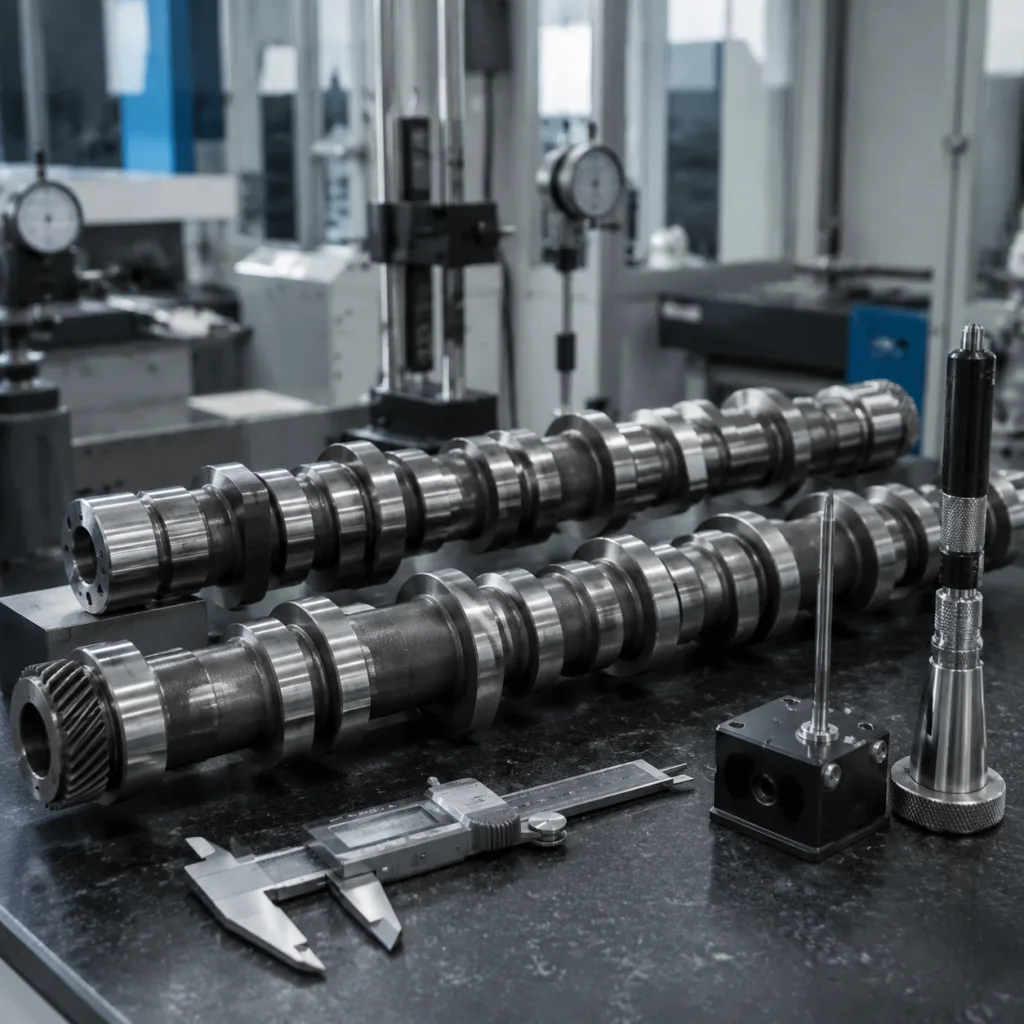
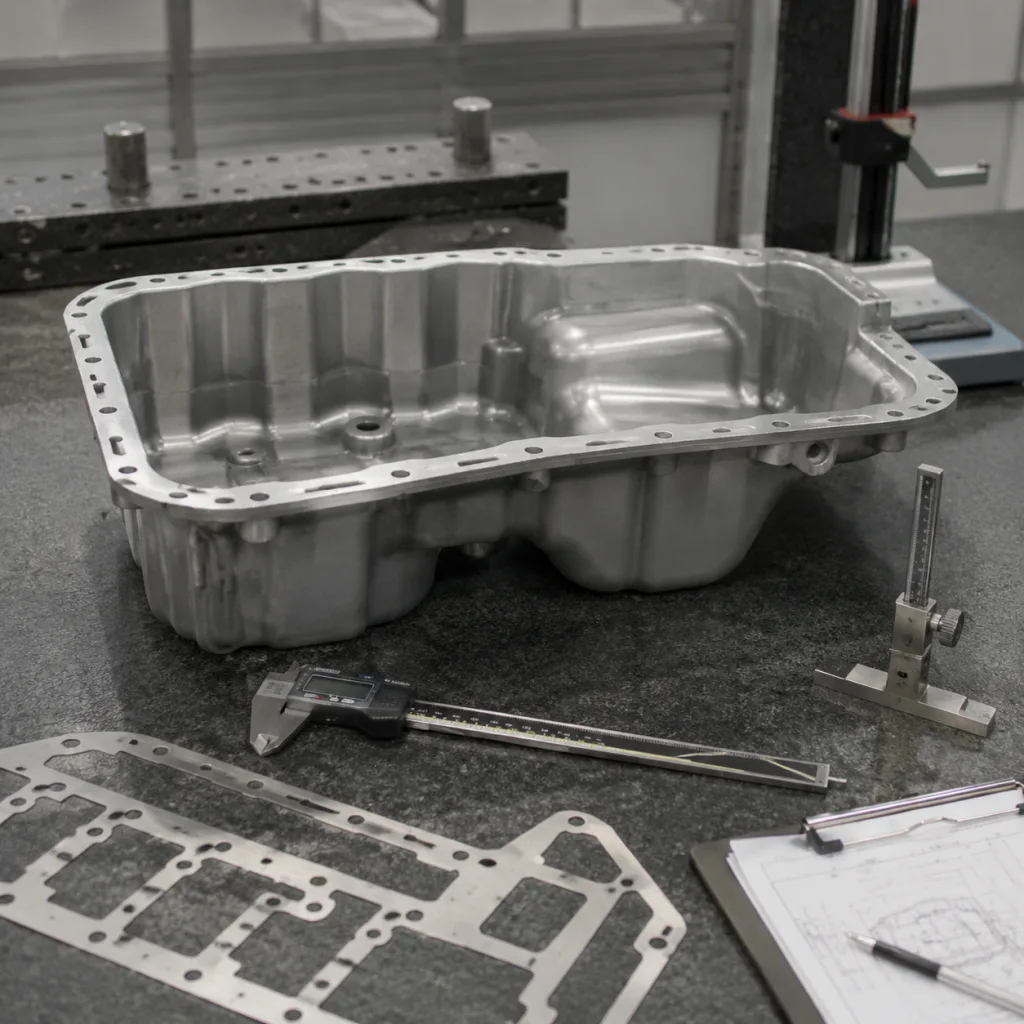
</tr></thead><tbody> </tbody></table>Inspection is not limited to the finished part. We can support first-article checks, batch sampling, and dimensional reports for incoming quality teams. For launch lots or warranty-sensitive programmes, buyers often request AQL 1.0 or AQL 1.5 sampling on critical characteristics, plus 100% visual and geometry checks on bore, groove profile, and obvious defects.

If your team needs documented supplier controls, our quality system outlines traceability, process flow, and certification practices. The point is simple: the quote should be based on measurable fit, not catalogue language.

How Driventus builds consistency into the part

Choosing the right material and construction for the engine family

Jeep-related crankshaft pulleys are not all built the same. Material and construction depend on engine speed, accessory load, and how much vibration control the engine needs.

Common construction choices

  • Solid steel pulleys for durable, cost-effective direct drive
  • Cast iron pulleys where mass and toughness matter
  • Aluminium pulleys where weight reduction is a priority
  • Harmonic damper assemblies with bonded elastomer for torsional control
  • Multi-groove pulleys for heavier accessory demand

What changes for buyers

Material affects not only price, but also risk. Steel and cast iron are usually the simplest recurring supply options. Aluminium can reduce rotating mass, but it raises raw-material cost and may need tighter process control. Damper assemblies sit at the high end because bonding, curing, and validation add steps.

For bonded designs, buyers often want rubber hardness control, bond-line quality, and heat-ageing evidence. Elastomer hardness is commonly specified around Shore A 55–75, depending on the application. Coating thickness may be controlled around 8–25 μm where corrosion protection is required.

If your part needs a specific OE-equivalent build, special marking, or non-standard packing, we can support custom manufacturing. Quote drivers usually include material grade, geometry, finish, annual volume, and whether balancing or special testing is required.

What certification and export paperwork should be on the table?

This is where many sourcing discussions become vague. They should not.

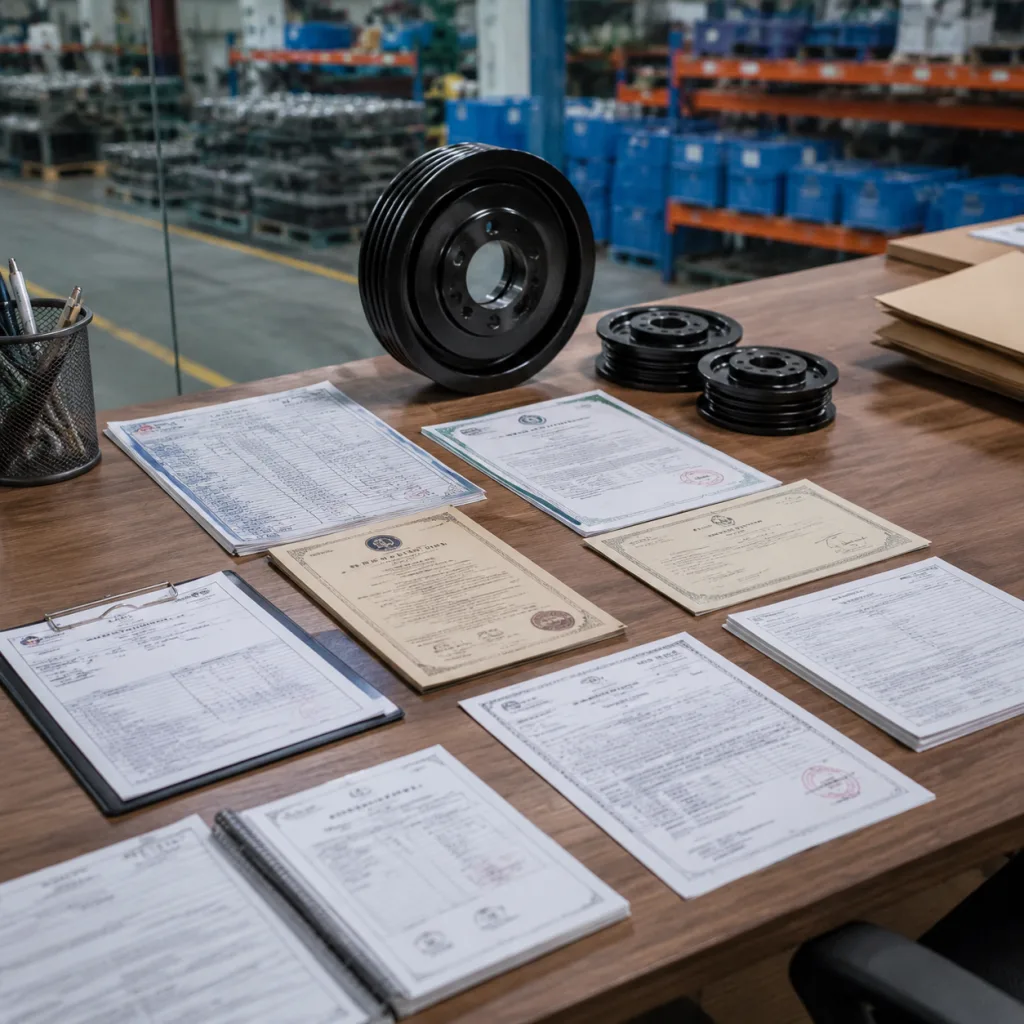
Driventus operates under IATF 16949:2016 and ISO 9001:2015. For export orders, buyers may also need material declarations and compliance support relevant to REACH (EC) No 1907/2006. Depending on the end application and customer spec, test references may also include ECE R-83 or SAE J2527.

Documents commonly requested by procurement teams

  • Commercial invoice and packing list
  • Certificate of conformity to the agreed drawing or specification
  • Material declaration and batch traceability data
  • Critical-dimension inspection report
  • Sample approval records for pilot orders
  • Coating or balance report where required in the PO

The best way to prevent audit friction is to lock the acceptance criteria before sample sign-off. Ask for the document set in writing, then match it to your supplier scorecard and import file. If you need to start a file review, begin with our catalog and align the target application with the drawing and inspection plan.

What certification and export paperwork should be on the table?

A practical sourcing path for MOQ, samples, and lead time

The right commercial model depends on whether you are buying a catalog item or building a new program. Standard parts usually move faster and with lower MOQ. Custom parts need a longer runway.

Step-by-step sourcing flow

1. Share OE reference, engine code, or a sample part 2. Confirm critical dimensions and construction type 3. Review MOQ, packaging, and target annual demand 4. Approve the sample or first article 5. Release production with batch traceability

Typical commercial ranges

  • Standard stock or existing-tool pulleys: MOQ often 50–200 pcs; sample lead time about 7–15 days; bulk lead time about 20–35 days
  • Modified catalog parts with new coating, label, or pack requirements: MOQ often 100–300 pcs; lead time about 25–40 days
  • New tooling or fully custom geometry: MOQ often 300–1,000 pcs for economic production; lead time about 30–60 days after sample approval

Look at landed cost, not unit price alone. A lower unit price tied to a 1,000-piece MOQ can be the wrong deal if your demand is still uncertain. Freight matters too. Air is for launch samples and urgent replenishment. Ocean works better for recurring lots above a few hundred kilograms.

If your sourcing list includes other drive-train items, you can also review our engine components range for consolidated purchasing.

When a sample review is enough, and when you need a factory audit

A sample review is enough when the part is simple, the annual volume is modest, and the application is not highly sensitive. A factory review becomes more valuable when the launch is large, the part is durability-critical, or the vehicle line carries warranty exposure.

Minimum validation for a crankshaft pulley

  • Visual and dimensional inspection against drawing
  • Fit check on the intended crankshaft interface
  • Belt alignment check in the accessory drive system
  • Rotation check for wobble, noise, or drag
  • Packaging check for transit protection

Stronger validation package

  • 3–5 samples for initial fit confirmation
  • 10-piece pilot lot for repeatability checks
  • CMM or calibrated-gauge dimensional report
  • Dynamic balance report on specified units
  • Salt-spray or coating-thickness results if corrosion is a concern
  • Install/removal notes from the test vehicle or rig

For higher-risk launches, buyers often add a pre-shipment inspection. That gives you a last check on count accuracy, label compliance, and carton condition before the goods move. If your programme needs a supplier review, sample match, or production quotation for a Jeep crankshaft pulley, use request a quote to share the OE reference, quantity, target market, and required documents.

Frequently asked questions

Yes. If you provide the OE code and fitment data, we can review dimensional match, construction type, and drawing requirements. Driventus is an independent aftermarket manufacturer; brand names are referenced for fitment only. For the most accurate quotation, send the OE reference together with engine code, sample photos, or a drawing so we can verify bore, offset, groove count, and hub depth before production.

We can supply agreed-spec inspection records, material declarations, traceability data, and commercial export documents. Final documentation depends on the order type and customer requirements. If requested, we can also provide first-article data, coating verification, packing photos, and batch identification details for receiving teams and audit files.

Yes. We support custom manufacturing for geometry, coating, packaging, and inspection needs when the application is outside standard catalogue supply or needs a specific OE-equivalent build. Custom projects are usually quoted after drawing review, target annual volume confirmation, and sample or tool-path approval, with lead time and MOQ depending on whether the part can be made from existing tooling or requires new tooling.

If you need a supplier review, sample match, or production quotation for a Jeep crankshaft pulley, send the OE reference and target volume through /contact.html.

Request a Quote
Control item Typical requirement Procurement relevance
Bore toleranceDrawing-controlled, often H7-class or customer-specificEnsures correct crank seating
ConcentricityControlled to drawing limit, often ≤0.05 mm on critical designsReduces belt oscillation
Radial runoutChecked on fixture, commonly ≤0.08 mm depending on designImproves drive stability
Face parallelismTypically within 0.03–0.05 mm on critical facesSupports belt alignment
Surface finishOften Ra 1.6–3.2 μm on key surfacesHelps seating and corrosion resistance
Dynamic balanceApplied where specifiedReduces vibration and bearing load