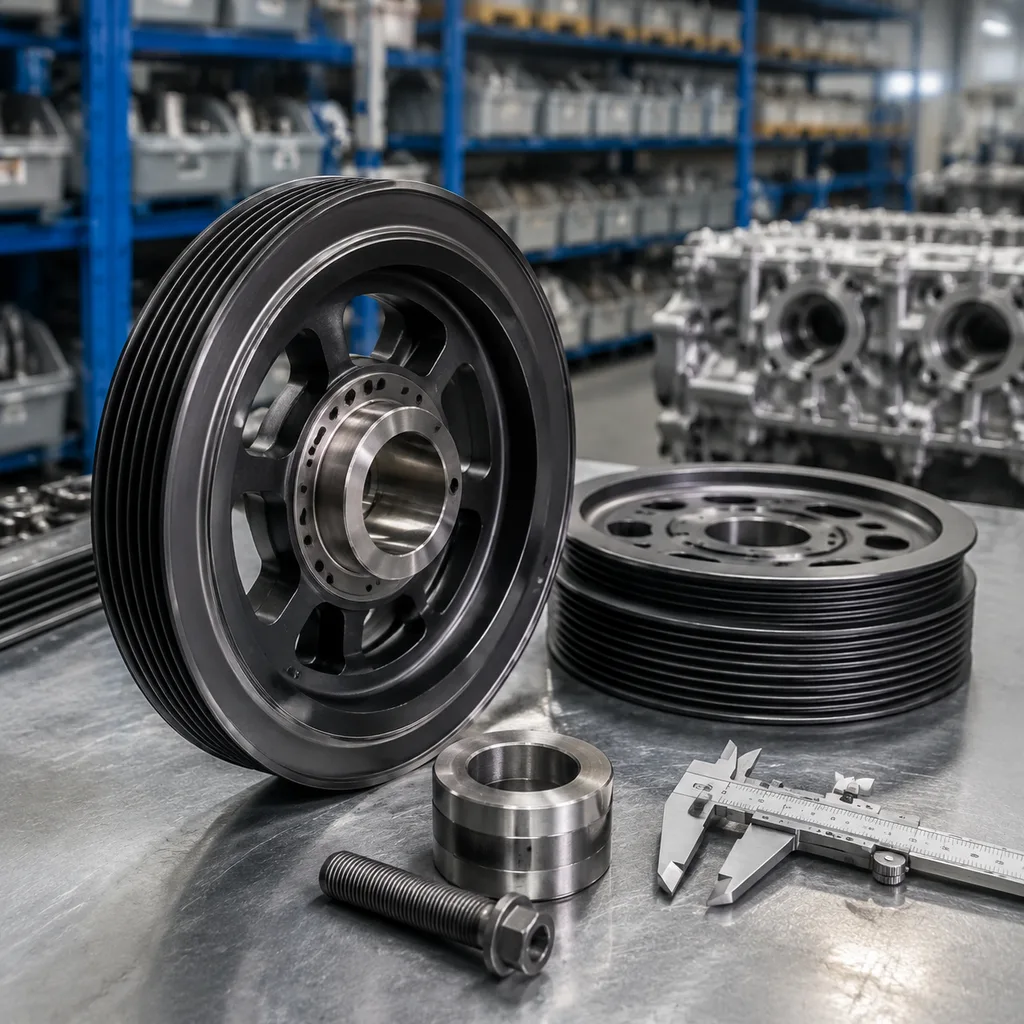
Buying Audi crankshaft pulleys at wholesale level is rarely a simple catalogue order. One wrong offset, groove profile, damping design, or cross-reference can create belt noise, warranty claims, and dead stock across several distributor locations. The better approach is to treat each programme as a fitment-controlled release: confirm the engine code, validate the drawing or sample, define inspection limits, and only then scale volume.
Driventus supplies crankshaft pulleys for B2B aftermarket buyers that need repeatable quality, export-ready packing, and cross-reference support. We are an independent aftermarket manufacturer; brand names are used only to identify fitment. Our factory in Taizhou, Zhejiang operates under IATF 16949:2016 and ISO 9001:2015 systems, with export experience in more than 60 countries.
If you are sourcing `crankshaft pulley audi wholesale` programmes for distribution, OE replacement coverage, or private-label supply, start with verified application data. For example, where an `06A107065`-style OE reference applies, confirm it against the engine family, pulley construction, and measured dimensions before releasing a bulk purchase.
Start with the decision gate, not the price list
A low unit price is useful only after fitment risk is under control. For an Audi crankshaft pulley programme, the first decision is whether the part in front of you is the correct construction for the engine and accessory drive layout. Some applications use a solid drive pulley. Others require vibration damping or an integrated decoupler-type design. Substituting one for another can cause belt walk, idle noise, premature belt wear, or crankshaft vibration.
Use this first gate before asking for volume pricing:
Confirm engine code, platform, model year range, and drive layout
Match the OE cross-reference, such as `OE 06A107065` where applicable
Measure outer diameter, bore, keyway, hub depth, and offset
Check belt groove count, rib pitch, and pulley face width
Define material, coating, and corrosion protection expectations
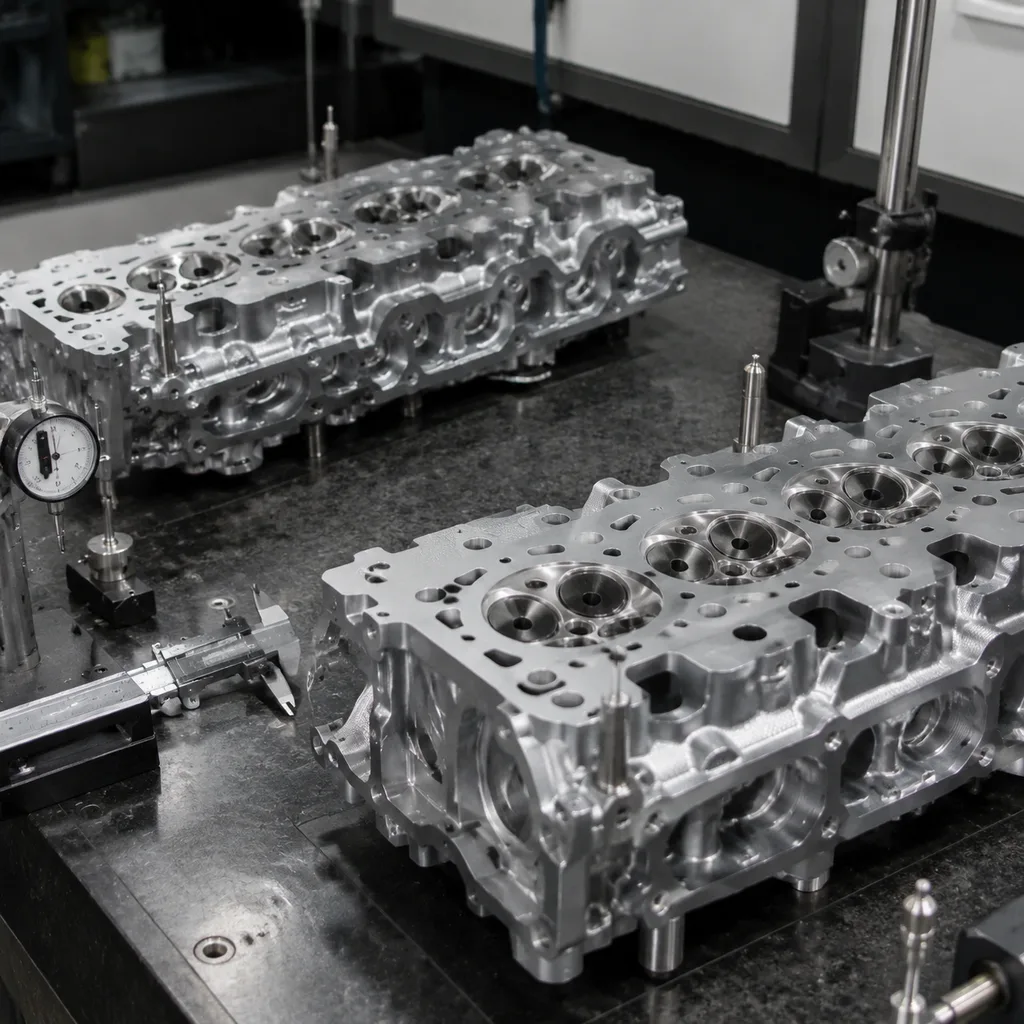
Set runout, balance, and inspection requirements
Confirm carton quantity, label data, pallet format, and destination market
For distributor stock, do not rely on catalogue text alone. Ask for dimensional confirmation against a drawing or verified sample before the first shipment. A practical approval path is simple: approve samples for fitment first, then run a pilot order of 20-50 pieces for receiving, binning, and sales-channel confirmation. This catches cross-reference errors before they become warehouse inventory.
Spec deep-dive: the dimensions that create or prevent claims
A crankshaft pulley has to stay true while exposed to heat, belt tension, and cyclic load. The safest wholesale specification is not the longest one. It is the one that names the few dimensions that actually decide fitment, noise, and service life.
Parameter
Typical procurement target
Why it matters
Radial runout
≤ 0.05 mm
Limits belt tracking error
End face runout
≤ 0.03 mm
Reduces accessory-drive vibration
Bore tolerance
H7 or per drawing
Protects crank fit and concentricity
Groove width variation
±0.10 mm max
Keeps belt engagement consistent
Dynamic balance
G16 or better for rotating assemblies
Lowers NVH and high-rpm risk
Surface hardness
Per material spec, often 180-260 HB for steel families
Supports wear resistance
Corrosion protection
Zinc plating, phosphate, or e-coating where specified
Improves shelf life and field durability
</tr></thead><tbody> </tbody></table>Material choice should follow the function of the part. Cast iron is often chosen for damping behavior and cost stability. Steel can help where strength and reduced mass are priorities. Elastomer-isolated designs are used when torsional vibration control is central to the application, not optional.
Driventus machines and verifies pulleys to drawing, with checks on critical dimensions before shipment. For private-label programmes, marking, carton design, and barcoding can be aligned through custom manufacturing. Where the buyer needs stronger control, lot-level traceability can link the shipment to production date, material heat, and inspection records.
Failure modes a release test should catch before shipment
Appearance is a weak release standard. A pulley can look correct and still fail through runout, poor balance, weak coating adhesion, incorrect groove geometry, or inadequate export packaging. The test plan should be built around the claims you do not want to receive.
Typical failure modes to screen for include:
Belt tracking error caused by radial runout or offset mismatch
Accessory vibration from end-face runout or poor balance
Squeal or accelerated belt wear from incorrect rib pitch or groove finish
Rust during storage due to unsuitable coating or weak packaging
Fitment complaints caused by bore, keyway, or hub-depth variation
Carton damage and mixed stock after long export transit
A practical B2B release package usually includes:
100% visual inspection for casting, machining, plating, and handling defects
Dimensional sampling against the approved drawing, commonly AQL 1.0 for critical dimensions and AQL 2.5 for cosmetic items
Coating adhesion and corrosion checks where specified, such as 96-hour salt spray for plated parts when required by the programme
Static or dynamic balance verification for rotating assemblies
Belt tracking, idle noise, and high-rpm review on bench or vehicle where the launch risk justifies it
Packaging drop and vibration checks for long-distance export cartons
For non-standard or launch programmes, Driventus can support pre-production samples, PPAP-style documentation, and batch traceability aligned with IATF 16949:2016. Our quality system is built for repeat orders and export audits, not one-time spot sales. A strong launch sequence is T0 sample approval, pilot lot confirmation of 30-100 units, then mass-production release after the first accepted shipment.
Compare wholesale offers by landed risk, not just unit cost
Two quotes can show the same crankshaft pulley price and still create very different outcomes. One may include stable packaging, usable labels, realistic lead time, and clear claims handling. The other may leave those details vague until the shipment is already moving.
When comparing suppliers for `crankshaft pulley audi wholesale` orders, separate the offer into three layers:
1. Technical control: drawing match, tolerance agreement, inspection method, material and coating confirmation. 2. Commercial structure: MOQ, price breaks, sample policy, pilot pricing, currency basis, and quote validity. 3. Logistics execution: carton quantity, pallet pattern, label format, Incoterms, document pack, and destination-market requirements.
Confirm these commercial points before issuing a purchase order:
MOQ by part number and by custom variant
Standard lead time, rush capacity, and seasonal constraints
Sample policy, including sample cost and freight responsibility
Price breaks by annual volume and order quantity
EXW, FOB, or CIF pricing basis
Carton quantity, pallet pattern, and label format
Warranty terms for fitment and workmanship
Export documents: invoice, packing list, COO, and inspection record where required
Many buyers compare three price levels: sample cost, pilot-lot price, and production price at forecast volume. Expect 20-50 sample units to carry a higher landed cost. The pilot lot usually follows MOQ pricing. A lower production unit price is realistic once replenishment is stable.
Catalogue discipline also matters. Audi-related demand is often planned by engine family rather than trim level. Use our catalog and, where relevant, engine components to keep pulley, crankshaft, gasket, and water pump references in one sourcing file. For active stock, a simple rule works: reorder when inventory reaches 6-8 weeks of sell-through, then buy 2-3 months of demand plus transit safety stock.
Scenario: when a custom Audi pulley programme is the safer route
Custom manufacturing is not only for unusual parts. Sometimes it is the lowest-risk option because the standard catalogue item does not match the buyer's market, warranty target, or branding process.
Choose a custom route when:
The OE reference is obsolete, unstable, or supplied inconsistently
A distributor needs branded cartons, part marking, and serial or batch traceability
Field history shows a durability issue that calls for revised material, coating, or balance control
A market requires a new validation standard or document pack
The programme needs a different hub offset, bolt pattern, or belt groove configuration from the stock part
A typical scenario: a regional wholesaler has demand for an older Audi engine family, but existing stock from multiple suppliers shows inconsistent belt alignment. The correct response is not to keep buying mixed inventory. It is to collect the best sample, confirm the OE reference and engine code, lock the measured offset and groove profile, then approve a controlled pilot batch before launching a private-label SKU.
For RFQs, send engine code, photos, measurements, OE reference, annual demand, and target market list. Add tolerance requirements, packing quantity, label format, and the earliest acceptable ship date. Then request a quote with the service level you need.
Driventus can build from drawings, samples, or benchmark parts while keeping the supply chain independent of vehicle-maker endorsement. As a planning guide, allow 15-20 days for sample preparation, 30-45 days for tooling or process setup if needed, and 30-60 days for initial production depending on complexity and coating requirements.
Frequently asked questions
Yes. Send the OE number, engine code, and photos. We confirm fitment against the sample or drawing, then finalize the part number and tolerance requirements before production.
Typical export packs include invoice, packing list, COO, and inspection data. Additional reports can be arranged for programme launches or audited customers, including dimensional records, material traceability, and batch identification when required.
Yes. We support marking, packaging, and drawing-based changes through our OEM programme, subject to MOQ and validation requirements. We can also quote sample cost, pilot-lot price, and production price separately so buyers can compare landed cost by volume tier.
If you need a stable source for Audi crankshaft pulley programmes, send your OE reference, annual volume, target market details, and required tolerance sheet. Start here: /contact.html