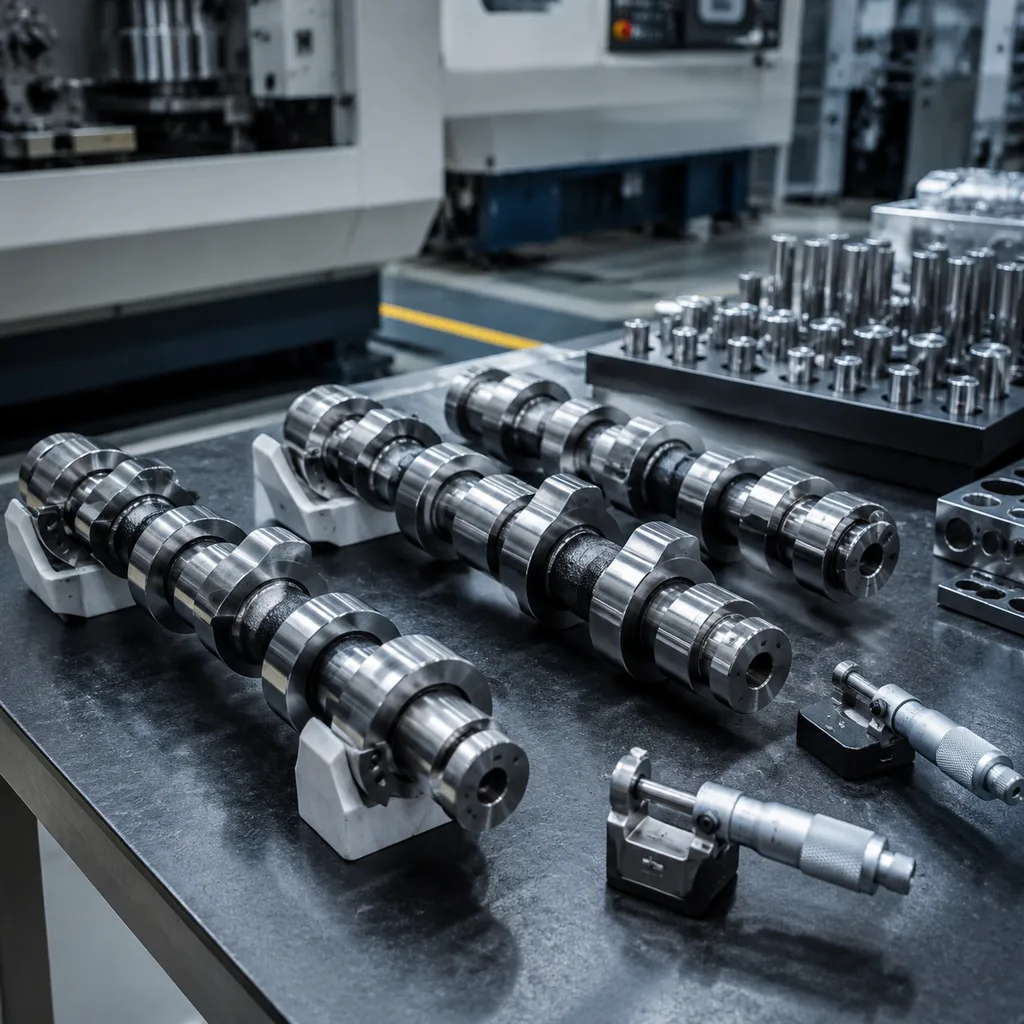
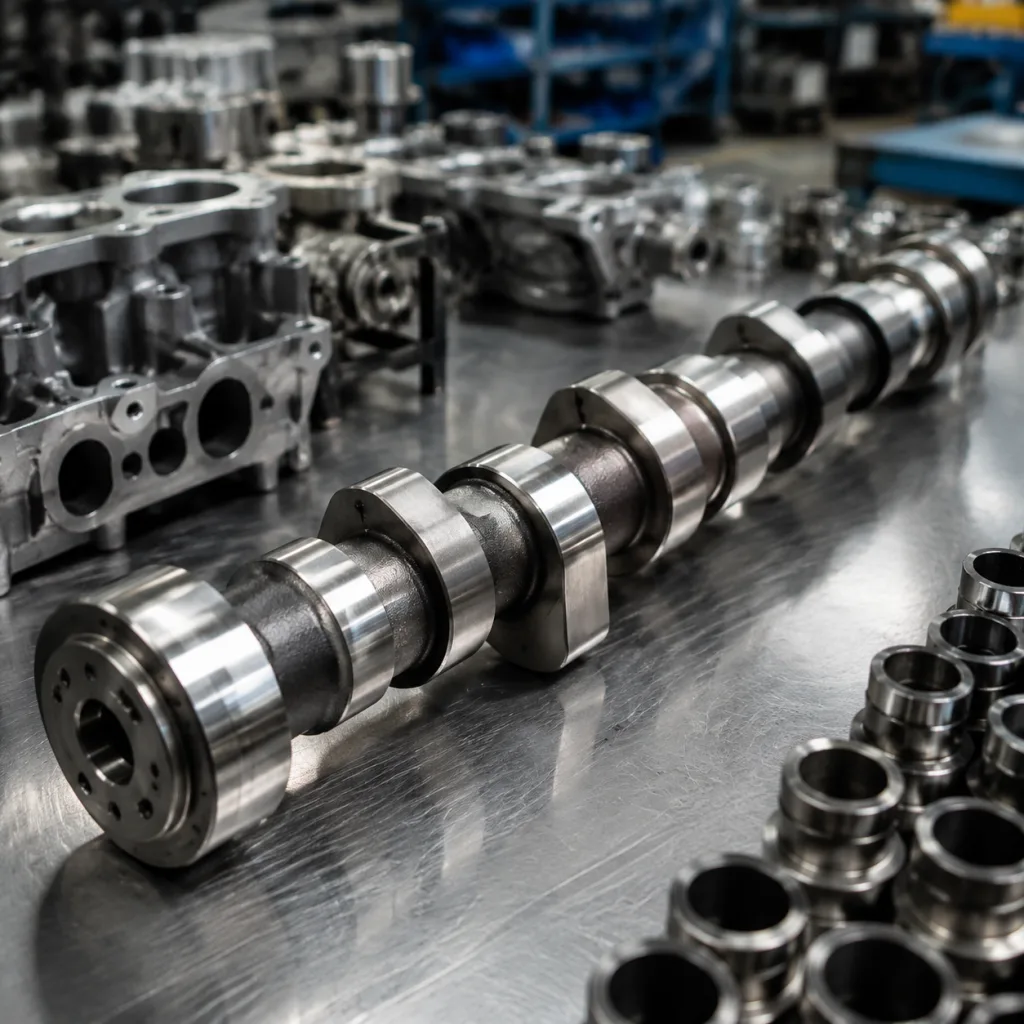
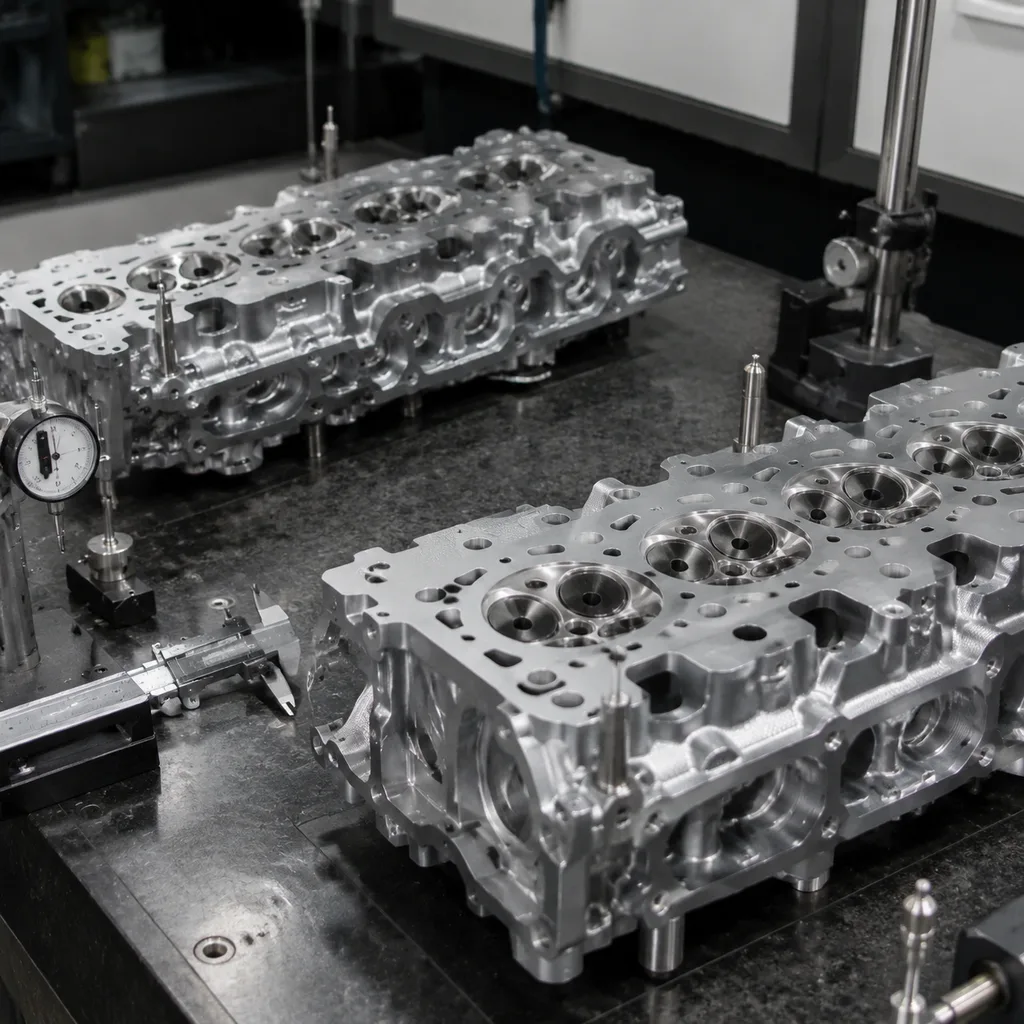
Coolant in oil is a contamination fault that calls for a structured diagnosis, not a guess. In a coolant in oil oil pump assembly case, the pump is usually a secondary suspect: head gasket leakage, a cracked block or head, oil cooler failure, or a front-cover sealing path are more common root causes. The pump can still be damaged by contaminated lubricant, so the real question is whether the assembly can hold pressure, maintain flow, and protect bearing surfaces after the fault is corrected. Driventus is an independent aftermarket manufacturer; brand names are referenced for fitment only. We build to IATF 16949:2016 and ISO 9001:2015 controls, and our replacement parts are validated for dimensional fit and functional consistency before shipment.
Failure modes: what coolant in oil does to the pump
When coolant and engine oil mix, the lubricant loses film strength, foams more easily, and accelerates bearing wear. That matters even if the pump did not start the problem. Once the oil is contaminated, the pump can wear faster, cavitate, or lose pressure control.
Common signs show up in a few ways:
Milky or tan oil on the filler cap or dipstick
Unexplained coolant drop in the expansion tank
Oil pressure fluctuation after start-up
Overheating followed by contaminated oil
Sludge in the oil filter or rocker cover
Treat visible emulsion as a warning, not a diagnosis. A useful screen is a sample that shows water contamination near 0.1% by volume or a sharp TAN/TBN shift out of normal service range. In workshop terms, oil pressure that drops more than about 10% from known-good baseline after warm-up justifies deeper inspection, especially if the engine normally idles around 1.0 to 1.5 bar and should reach roughly 3.5 to 5.5 bar at 2,000 to 3,000 rpm depending on application.
If the engine ran for any length of time on contaminated oil, treat the oil pump assembly as a wear-risk component. Emulsified oil can abrade rotors, gears, relief valves, and housing surfaces. That is why buyers should ask for a post-failure condition note instead of relying only on the contamination symptom.
Decision path: where the leak usually starts
The highest-probability causes are usually outside the pump. Start with the sealing interfaces that separate oil galleries from coolant passages.
Likely source
What to inspect
Typical result
Head gasket
Compression test, leak-down test, coolant pressure test
</tr></thead><tbody> </tbody></table>A simple pressure-isolation check narrows the fault quickly. The cooling system is typically tested at 1.0 to 1.5 bar for 10 to 15 minutes, while the oil side can be checked against service pressure with the engine cranking or idling. A drop that exceeds 0.1 bar per minute on the coolant side, or visible pressure transfer between circuits, points to a leak path rather than a worn pump.
A damaged oil pump assembly can look like the main fault when the real issue is a failed seal or coolant-side component. Confirm the source before ordering a replacement. If the oil cooler or front cover is not isolated first, replacement pumps are often returned as “no fault found.”
Step-by-step diagnosis for a clean call
A short sequence keeps the diagnosis disciplined and reduces repeat warranty claims.
1. Drain a sample of engine oil and check for emulsion, coolant residue, or metal debris. 2. Pressure-test the cooling system to identify external leaks and slow internal seepage. 3. Remove the oil filter and inspect pleats for sludge, bearing material, and coolant staining. 4. Check oil pressure against the service specification at idle and at rated speed. 5. Inspect the oil pump pickup, rotors or gears, relief valve, and housing surface condition. 6. If contamination is confirmed, inspect the cooler, head gasket, and front cover before final pump replacement.
Measure the parts. Do not stop at appearance. A pump rotor end clearance above the OE limit by even 0.05 to 0.10 mm can reduce output enough to show up as hot-idle pressure loss, and cover flatness beyond roughly 0.03 to 0.05 mm over the sealing face often indicates leakage risk. Relief valves should move smoothly through full stroke with no scoring; any sticking, weak spring return, or varnish buildup is a reject condition.
If the pump was run on contaminated oil, measure shaft end play, rotor clearance, and relief-valve movement against OE service data where available. For replacement programs, dimensional consistency matters more than nominal part naming. Buyers should also ask whether 100% functional pressure testing or sample-based validation is used, because that changes the defect risk profile on incoming lots.
Spec deep-dive: when replacement is justified
Replace the oil pump assembly when one or more of the following conditions is present:
Scored or galled housing surfaces
Relief valve sticking or spring fatigue
Excessive end clearance or side clearance
Loss of oil pressure after all external leaks are corrected
Evidence of coolant ingress into the pump cavity or oil passages
Contamination after engine overheating or bearing distress
A practical replacement threshold is any pump that can no longer maintain within about 90% of specified hot-idle pressure after the circuit is clean and sealed, or any pump whose wear measurements are outside OE tolerance. In sourcing terms, the decision should be tied to measured performance, not only contamination history.
For procurement, the replacement part should match the original mounting pattern, drive interface, pickup geometry, and pressure-control characteristics. Driventus supplies oil pump assembly units for B2B repair and distribution channels, with OE cross-reference data used for fitment selection rather than endorsement. We can also support custom manufacturing through custom manufacturing when a buyer needs a controlled dimensional or packaging specification for a regional programme. For launch planning, MOQ is typically set by SKU complexity and packaging spec: a standard catalog unit may support lower trial quantities, while custom cartons, labeling, or private-label builds usually need a higher opening order. Buyers should align target sell-through, annual forecast, and desired safety stock before requesting a firm quote.
Quality checks that cut repeat returns
A contaminated-lube failure can repeat quickly if the replacement part is not checked properly. Buyers should ask for traceable process control, incoming inspection, and functional testing.
Relevant controls and references:
IATF 16949:2016 for automotive quality management
ISO 9001:2015 for documented process control
REACH (EC) No 1907/2006 for regulated substance compliance in the EU
Pressure and flow verification for pump function before packing
The useful question is how the factory verifies function. A defensible control plan should include incoming dimension checks on rotor or gear sets, 100% end-of-line spin or pressure tests where the process supports it, and sample-based salt-spray or corrosion checks for export packaging. Typical buyer specs to request are: critical dimensions held to ±0.02 to ±0.05 mm depending on feature class, sealing-face flatness documented to the same part drawing, and lot traceability back to material heat number or batch code.
Driventus publishes a documented quality system for buyer review and supports catalog review through our catalog. For broader engine-line sourcing, our engine components page helps teams map adjacent parts such as gaskets, pumps, and related sealing items into one procurement cycle. For price and lead-time planning, standard catalog pumps generally move faster than application-specific variants; buyers should ask for ex-works pricing, MOQ tiers, and confirmed production lead time together so landed cost can be compared fairly across suppliers.
Scenario guide for repair networks and distributors
For distributors and multi-site repair groups, contamination-related parts should be bought as a controlled set, not as isolated line items. A pump replacement may need a gasket kit, front cover seal, oil filter, coolant service parts, and cleaning materials.
Practical sourcing points:
Confirm OE 06A107065 or other listed cross-reference only after VIN and engine code validation
Ask for dimensional match data, not just catalog naming
Require batch traceability for warranty control
Verify packaging and corrosion protection for sea freight and warehousing
Align MOQ and replenishment cadence with actual failure rate
Ask for commercial terms in the same quote: unit price at trial quantity, price break at the first production tier, and the MOQ that unlocks each step. The lowest unit price is not always the best landed option if it requires a larger cash outlay, longer lead time, or excess inventory. For planning, many B2B programs target a 30 to 60 day replenishment window, but the correct number depends on route-to-market, packaging complexity, and whether inventory is held at a central warehouse or per branch.
If you need a sourcing review, request a quote with the engine code, OE cross-reference, annual volume, and target market. We can help align specification, packing, and lead-time requirements for aftermarket distribution or OEM/Tier-1 supply. For RFQs, include required tolerance band, preferred test standard, packaging artwork status, and any target annual buy quantity so pricing and MOQ can be quoted on the same basis.
Frequently asked questions
Yes, but it is less common than head gasket, crack, or oil cooler faults. Inspect the cooling circuit and sealing interfaces first, then confirm the pump condition with pressure and wear checks. If the pump housing is scored, the relief valve sticks, or measured clearance is outside OE limits, the assembly should be replaced.
Not always. Replace it when there is scoring, pressure loss, relief-valve sticking, or internal wear. If the pump is clean and within spec, the primary fault may be elsewhere. A useful rule is to replace when hot-idle pressure cannot return to within about 90% of specification after the cooling leak is repaired and the oil circuit is flushed.
Look for IATF 16949:2016, ISO 9001:2015, and REACH (EC) No 1907/2006 compliance where relevant. Ask for dimensional verification and functional test records. For commercial comparison, request MOQ, price break points, lead time, and packaging spec in the same quotation so the total landed cost is clear.
If you are diagnosing a contamination case or building a controlled replacement programme, send the engine code and OE cross-reference to start a technical review: /contact.html