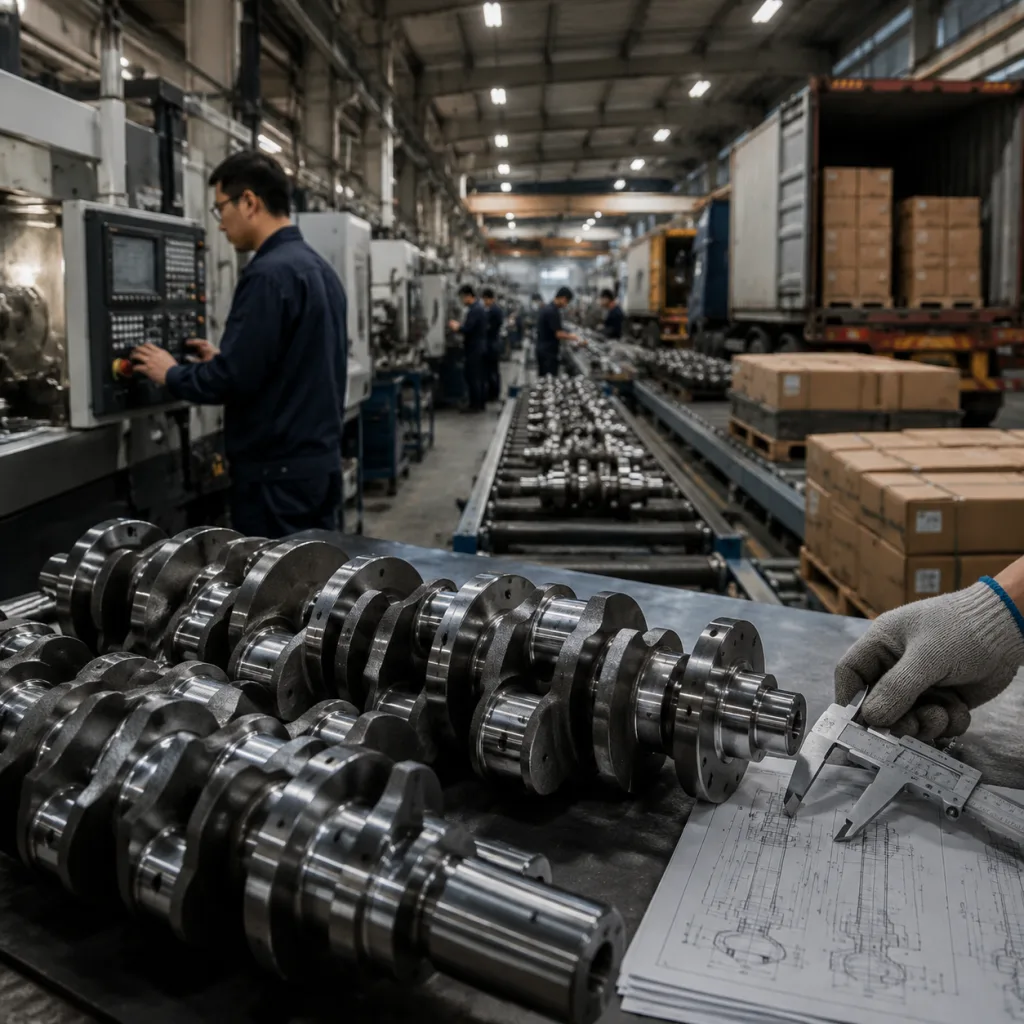
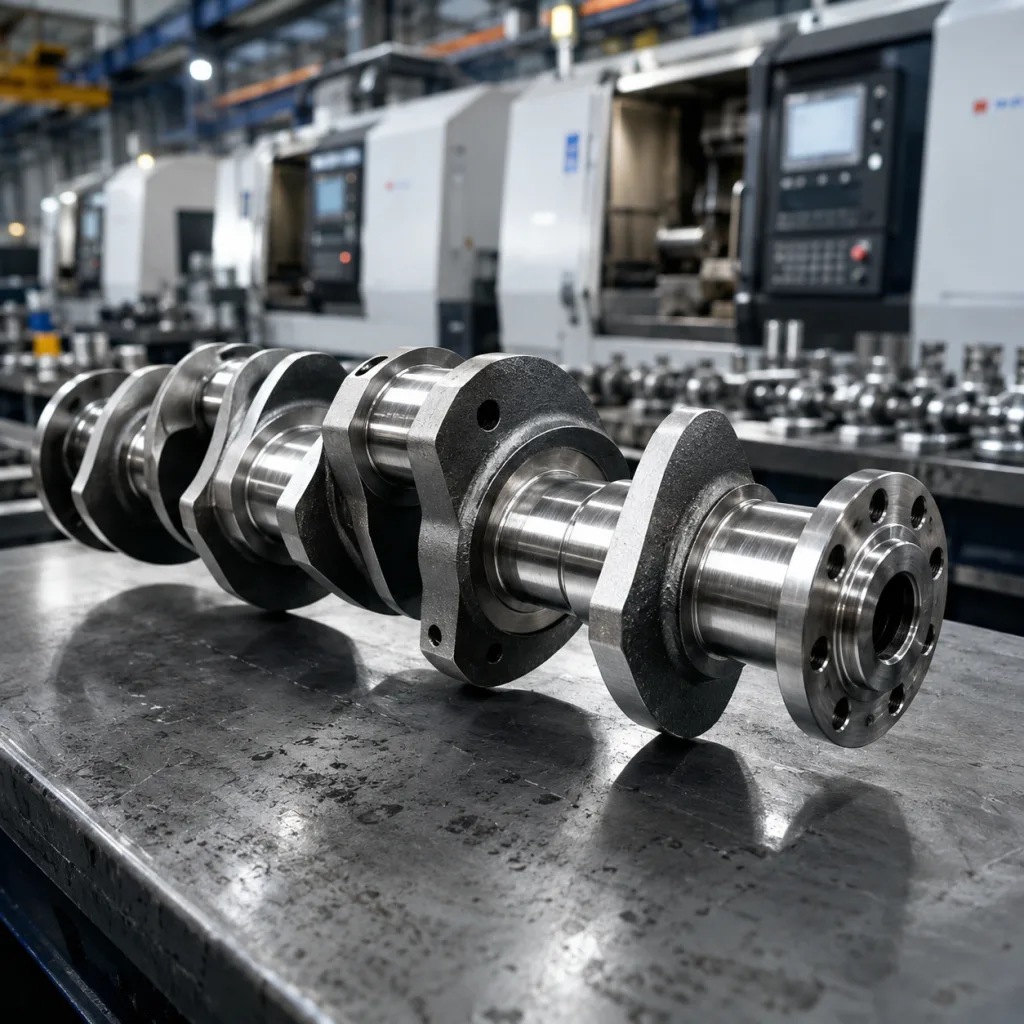
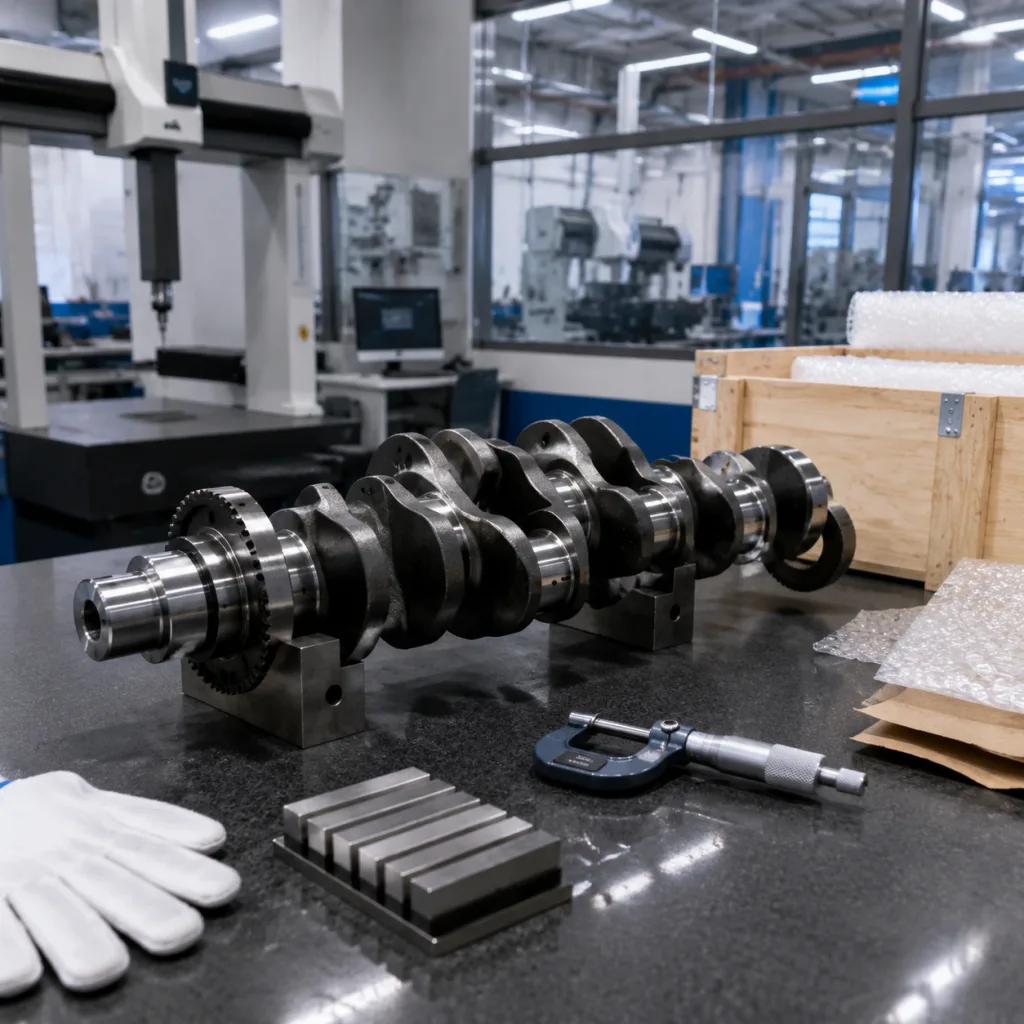
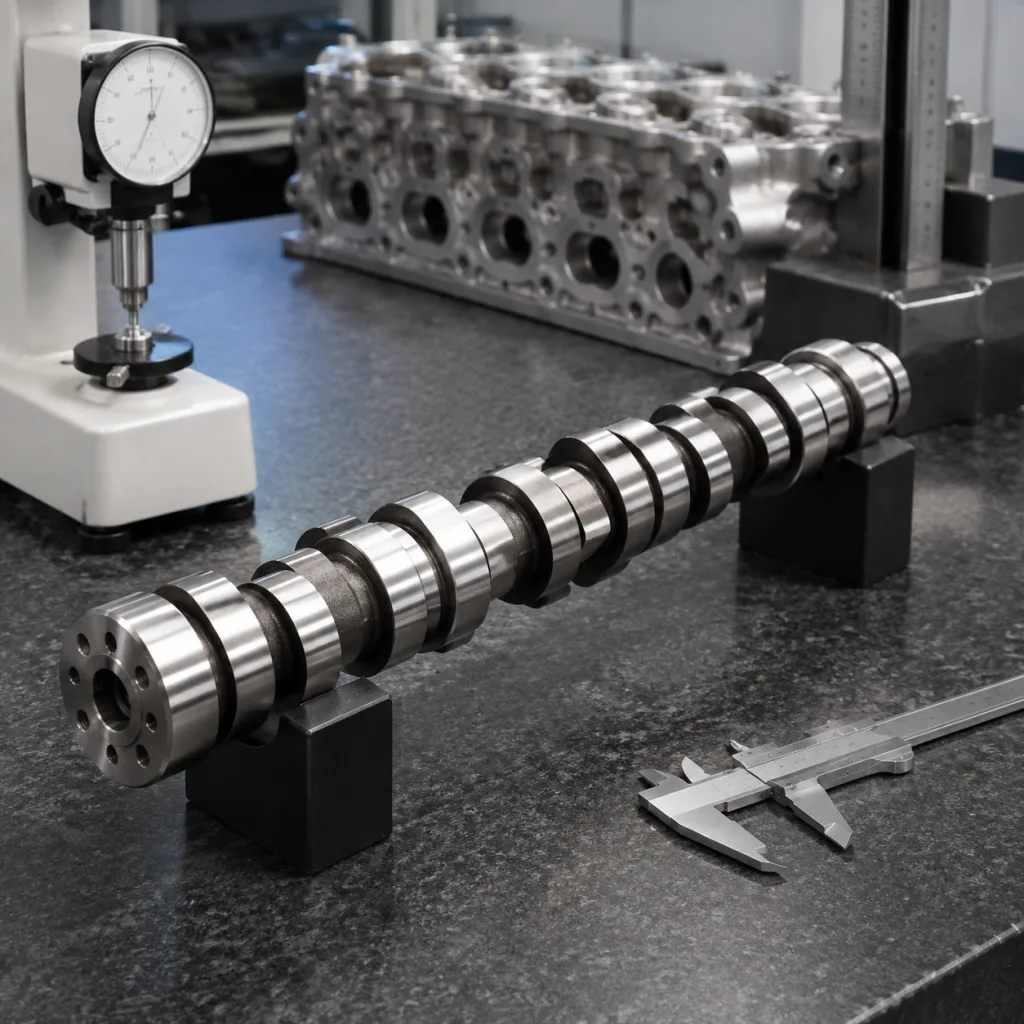
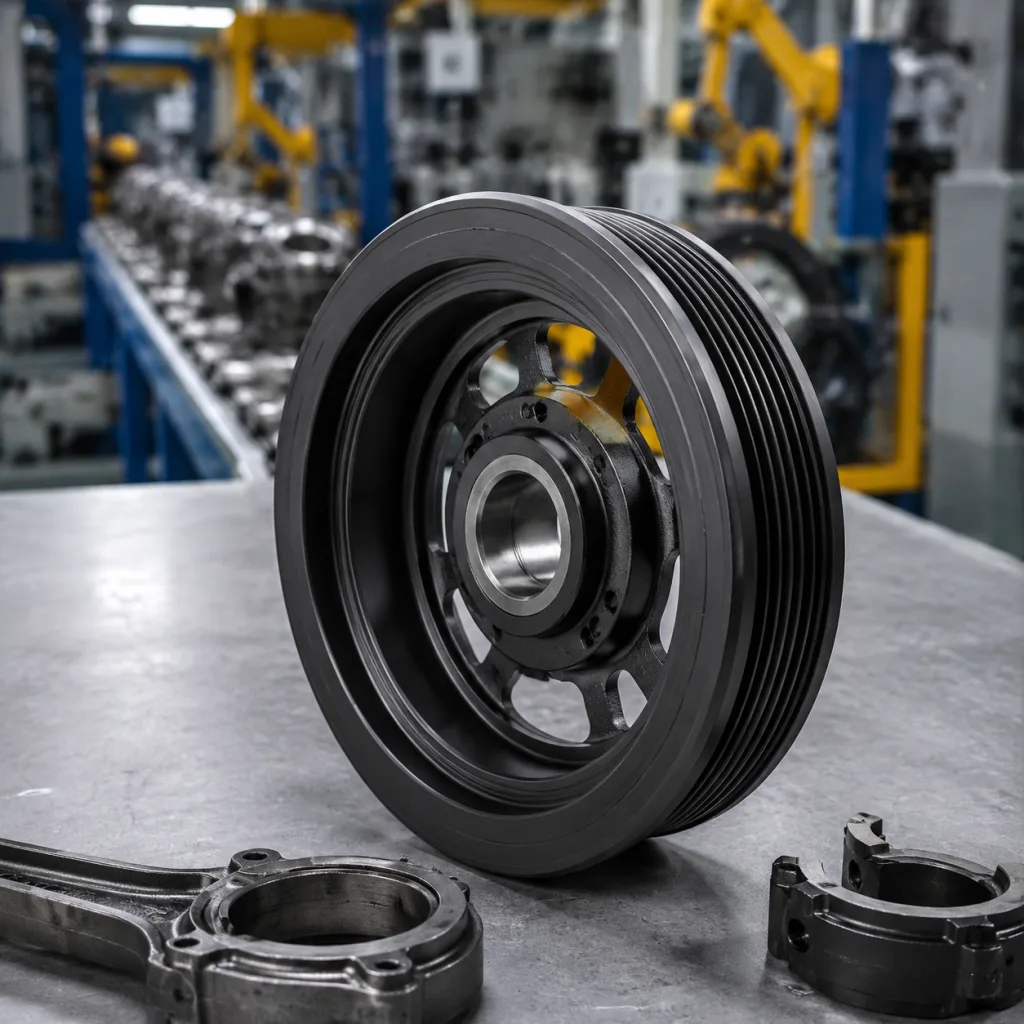
Procurement teams searching for a crankshaft Mazda manufacturer China usually need three things at once: exact dimensional fit, stable supply, and evidence of process control. For Mazda applications, the buying decision is rarely price alone. It comes down to journal geometry, fillet quality, surface hardness, dynamic balance, traceability, and whether the supplier can support OEM, aftermarket, or remanufacturing demand. Driventus is an independent aftermarket manufacturer; brand names are referenced for fitment only. We produce engine and powertrain components in Taizhou, Zhejiang, and export to 60+ countries under IATF 16949:2016 and ISO 9001:2015 systems. This guide shows what to verify before a China sourcing order, which specifications matter most, and where suppliers commonly overpromise.
Start with fitment, not price
For Mazda applications, the first sourcing risk is not cost. It is mismatch. Confirm the OE cross-reference, engine code, journal count, stroke, flange pattern, and any keyway or reluctor features before commercial discussion starts. If a part is listed against an OE reference such as `OE 06A107065`, verify the machining drawing, not just the catalogue line.
Use this checklist before you shortlist a supplier:
Journal diameter and width against drawing tolerances
Main and rod bearing radius, fillet roll condition, and surface finish
Stroke, rod throw phasing, and counterweight mass
Heat-treatment depth and hardness profile
Dynamic balance limits for the target engine speed range
End float control and thrust surface finish
Packaging, rust prevention, and traceability labels
If a supplier cannot state these values clearly, it is not ready for production sourcing.
Spec sheet or red flag?
A useful quotation for a crankshaft should read like a control document, not a sales flyer. The point is to see whether the plant understands the same tolerances your engineers care about. The comparison below covers the data points that should appear on a quotation or inspection report.
Spec item
What to confirm
Practical sourcing target
Material
Forged steel or cast iron grade stated on report
Common aftermarket requests start with 42CrMo forged steel or equivalent; for cast applications, the supplier should state the melt and treatment route
Journal diameter
Main and rod journal nominal size and tolerance
Typical procurement tolerance request: ±0.01 mm on critical journal diameters, unless OE drawing is tighter
Roundness / taper
Measured after final grinding
Keep roundness and taper within 0.005-0.01 mm on critical journals for consistent bearing fit
Runout
Main journal runout measured after final grind
Common acceptable target is ≤0.03 mm total indicated runout at the center journal unless the engine specification requires less
Surface finish
Ra value on journals and thrust faces
Journals commonly require Ra 0.2-0.4 μm; thrust faces can be slightly higher if drawing allows
Fillet radius
Radius at the journal transition
Match OE radius exactly; even a 0.1 mm mismatch can affect fatigue life and bearing edge loading
Hardness
Journal hardness and case depth
Many buyers request 45-55 HRC at the surface with documented case depth, or the OE equivalent if nitrided
Balance
Residual unbalance target stated in g·cm
For passenger car crankshafts, a commercial target is often ≤10 g·cm per plane; performance or OEM programmes may require tighter limits
End float
Thrust face clearance and finish
Confirm with bearing stack-up data; buyers often target 0.05-0.20 mm depending on engine family
NDT
Magnetic particle or equivalent crack inspection
100% crack detection on finished parts is standard for production sourcing
Traceability
Heat number, batch code, and inspection record
Each lot should be traceable to material heat, machining batch, and final inspection report
</tr></thead><tbody> </tbody></table>If those numbers are missing, the offer is incomplete. Driventus can supply inspection data tied to batch traceability, which matters when buyers need repeatability across multiple deliveries.
Where lead time really goes
Lead time is usually decided by three bottlenecks: raw material availability, heat-treatment capacity, and final grinding slots. Stocked aftermarket crankshafts can ship much faster than custom or low-volume applications. Non-stock Mazda references usually need a sample cycle before mass production.
Ask for three timing commitments, not one:
Sample lead time
First production lead time
Repeat-order lead time
Commercial variables also change the schedule:
MOQ by part family and packaging format
Tooling status for cast or forged blanks
First article approval cycle
Special coating or surface treatment requirements
Export documentation for EU, UK, US, Canada, Australia, or Brazil
Typical planning ranges are straightforward. A stocked reference may ship in 7-15 days after order confirmation. A made-to-order crankshaft often needs 25-45 days for sample approval and 30-60 days for mass production, depending on machining load and heat-treatment capacity. MOQ matters too: 10-20 pieces may work for a catalogue item, while custom machining often starts at 50-100 pieces per reference to absorb setup and inspection cost.
Do not compare unit price in isolation. Freight, crate format, balance verification, and packaging can change landed cost by 8-15%. Request a quoted price at 1 unit, 10 units, 50 units, and 100 units, plus tooling or setup charges if the part is not already in production. A supplier that only quotes a shipping date is not giving a usable schedule.
How Driventus controls variation
A crankshaft is a rotating precision part, so process control matters more than final inspection alone. Driventus operates under IATF 16949:2016 and ISO 9001:2015, with documented control over incoming material, machining, grinding, cleaning, and packing.
Our quality checks are built around measurable points:
Material verification before machining
In-process dimensional checks on critical journals
Final runout, balance, and hardness verification
Non-destructive inspection where specified
Batch traceability from raw material to shipment
The sequence is meant to catch drift before it becomes scrap. Incoming blanks are checked for chemistry and hardness consistency, then rough-machined before intermediate dimensional inspection. After heat treatment, the crankshaft is finish-ground, cleaned, and checked again for journal size, taper, runout, and residual unbalance. If required by the customer specification, we add magnetic particle inspection and 100% visual checks for surface damage before packing.
For compliance-sensitive markets, buyers should also ask whether the supplier can support documentation aligned with REACH (EC) No 1907/2006 and market-specific import files. If your purchasing team needs supplier audit support, review our quality system before shortlisting.
When custom work is worth it
Standard catalogue parts cover many aftermarket needs, but custom manufacturing makes sense when the engine code is discontinued, the volume forecast is stable, or the customer wants a controlled material upgrade. This is common in fleet repair, remanufacturing, and regional distribution.
Custom sourcing is usually justified when:
The OE part is unavailable or inconsistent across sources
The application needs modified counterweights or journal geometry
A buyer wants specific balance limits for high-load use
Packaging, branding, or barcoding must match a distribution programme
It is easier to justify when demand is predictable. As a rule of thumb, programmes under 50 units total are usually better handled as special procurement or remanufacturing support. Recurring demand of 100-500 units per year can support dedicated production with fixed gauges and repeat inspection routines. If the programme requires changes to steel grade, heat treatment, or inspection frequency, engage custom manufacturing early. That reduces rework and shortens approval loops. For current stock and adjacent engine parts, review our catalog or the broader engine components range.
Audit the factory, not the brochure
A factory audit should confirm capability, not just capacity. Use a short question set and ask for evidence, not promises.
1. Can the plant show calibration records for the measuring equipment used on crank journals? 2. Are process controls documented for grinding, polishing, and final inspection? 3. What is the rejection rate for balancing or runout failures, and how has it trended over the last 12 months? 4. How are nonconforming lots quarantined and reworked, and who authorizes release? 5. Can the supplier provide COA, inspection data, and packing records with each shipment? 6. What is the standard AQL or 100% inspection plan for journal size, runout, and visual damage? 7. How many crankshaft references are produced on the same line, and what changeover controls prevent mix-up? 8. Can the plant support PPAP-style documentation, first article samples, and retained master samples?
The strongest signal is consistency across multiple orders. A supplier with stable records, clear drawings, and controlled documentation is easier to qualify than one offering a one-time low price. When comparing offers, weigh unit price against lead time, MOQ, and inspection content together. A slightly higher quote that includes full dimensional reports, balanced packing, and a confirmed 30-day repeat lead time is usually lower risk than a discounted offer with vague process control. If you are ready to compare options or start an RFQ, use request a quote.
Frequently asked questions
Yes, when the engine application and drawing data are confirmed. We cross-reference fitment by OE reference and dimensional requirements, not by brand endorsement. Driventus is an independent aftermarket manufacturer; brand names are referenced for fitment only.
Typical supply packs can include inspection records, batch traceability, packing lists, and commercial documents. Additional reports such as hardness or balance data can be supplied when required by the buyer.
Yes. We support custom manufacturing for geometry, balance limits, packaging, and other agreed requirements. Share your drawing, OE reference, or sample part so we can assess feasibility and lead time.
If you are sourcing a Mazda-fit crankshaft from China, share your target OE reference, annual volume, inspection requirements, and acceptable MOQ/lead-time window. We will review the application and help you move to a quotation at /contact.html.