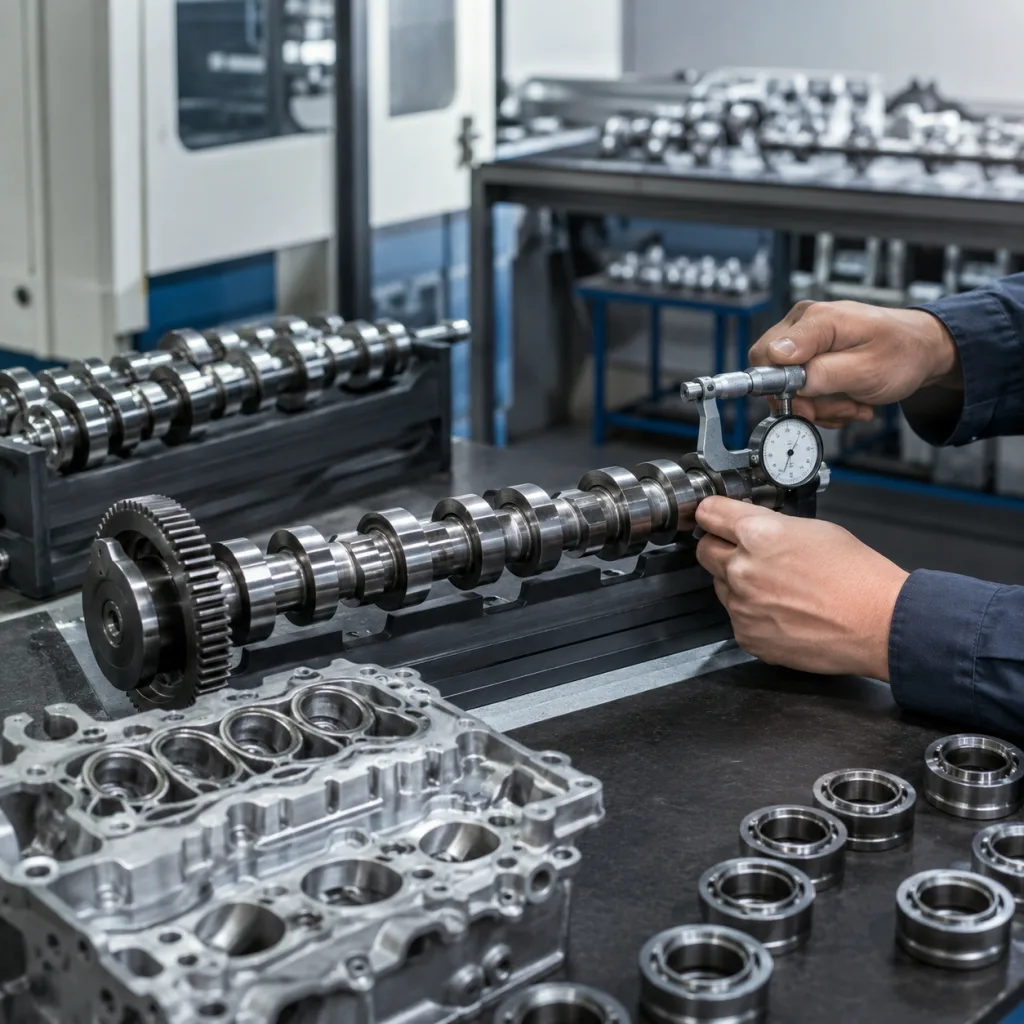
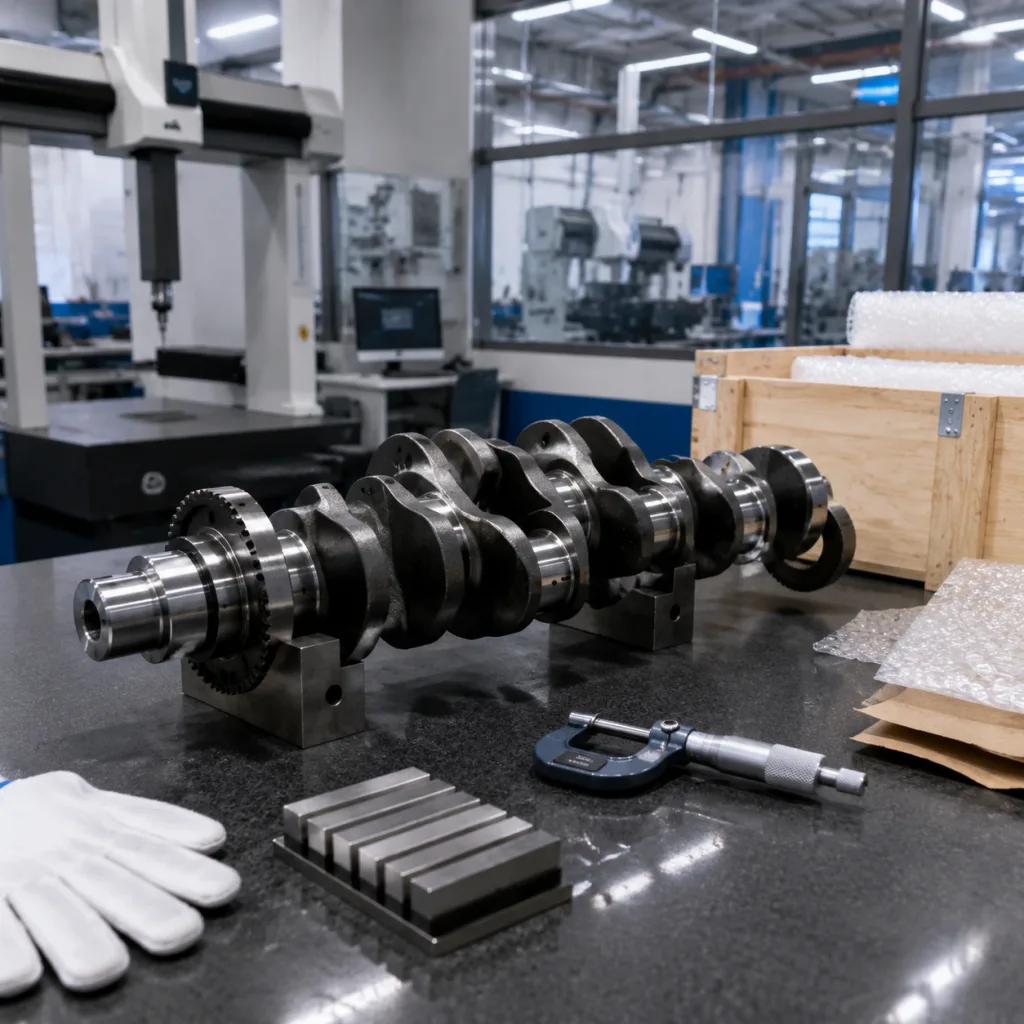
A camshaft Hyundai replacement only works when the part matches the engine’s geometry and timing behavior, not just its outline. That means lobe lift, base circle, journal locations, thrust control, and any sensor or phaser interface all have to line up with the original specification.
For buyers, the risk is simple: a camshaft that looks right can still shift valve timing, increase follower wear, or create end-play issues after installation. Driventus supplies replacement camshafts for Hyundai applications with dimensional control, traceable materials, and batch testing aligned to IATF 16949:2016 and ISO 9001:2015 processes. Driventus is an independent aftermarket manufacturer; brand names are referenced for fitment only. When an OE cross-reference is provided, such as OE 06A107065, verify the full application data first, including engine code, emissions variant, and cam drive type.
Start with the failure modes, not the catalog photo
Most sourcing mistakes happen because the approval starts with appearance instead of function. The common failure modes are predictable:
The part fits the housing but changes valve timing.
Journal dimensions are close, but oil clearance is wrong.
The thrust face is slightly off, so axial movement increases.
The lobe profile is correct in shape but not in lift.
A trigger wheel or phaser interface is indexed incorrectly.
A photo match is not enough. Two camshafts can share the same outside silhouette and still behave differently in service. For a camshaft Hyundai replacement, the first question should be: what engine variant is this for, and what exact OE reference or engineering drawing defines it? If the buyer is using an OE number like OE 06A107065, confirm the engine code and model-year split before release.
The specification checklist that actually controls fit
A correct replacement has to match the features that affect valve-event timing, wear, and durability. Use this as the core review list:
Overall length and journal positions
Journal diameter and concentricity
Lobe lift, base circle, and lobe separation
Thrust face location and end-play control
Trigger wheel or phaser interface, if fitted
Surface hardness and case depth
Material grade and heat-treatment route
If any one of those areas drifts, the engine may still assemble, but performance and durability can move outside the OE window. That is why procurement should require both dimensional data and material confirmation, not one or the other. Depending on the original design, the camshaft may be chilled cast iron or forged steel. Driventus can support batch traceability and inspection records tied to production lots for buyer qualification.
Dimensional control: what to measure before release
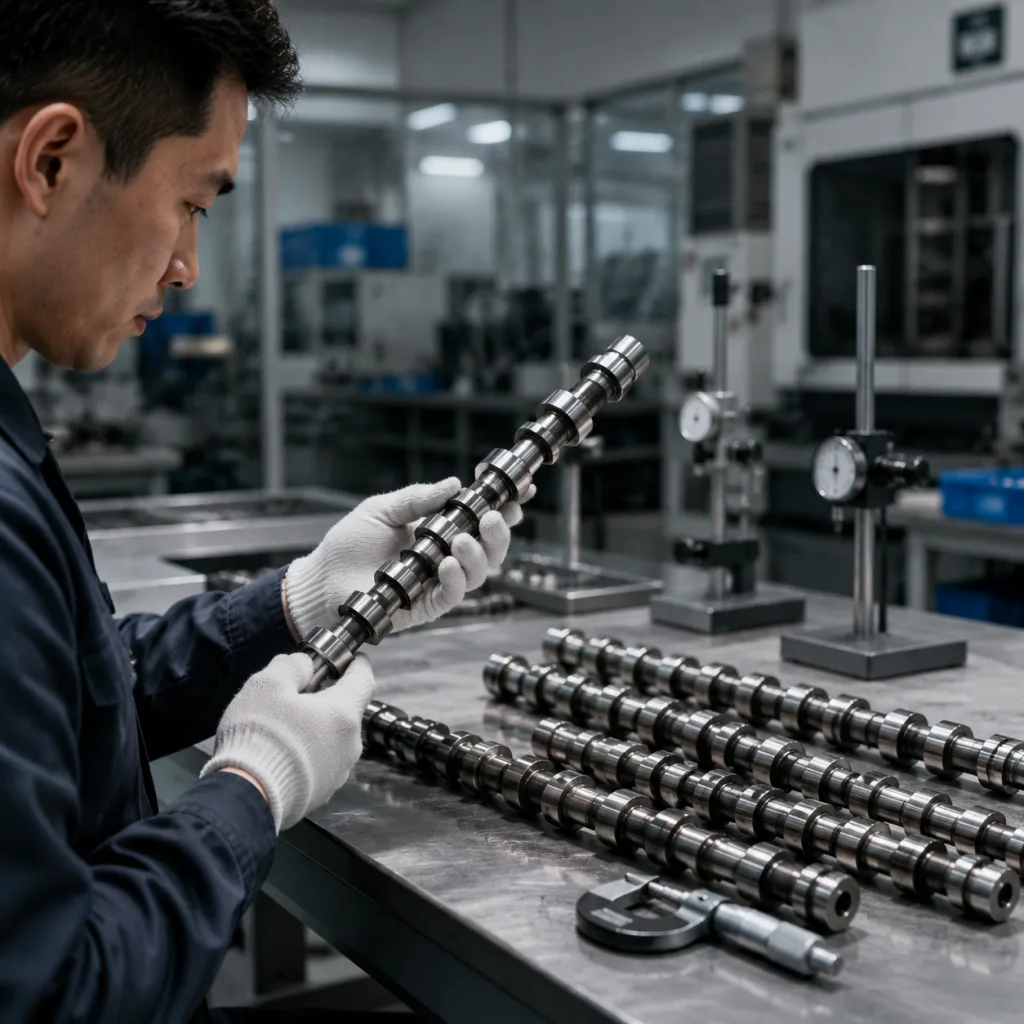
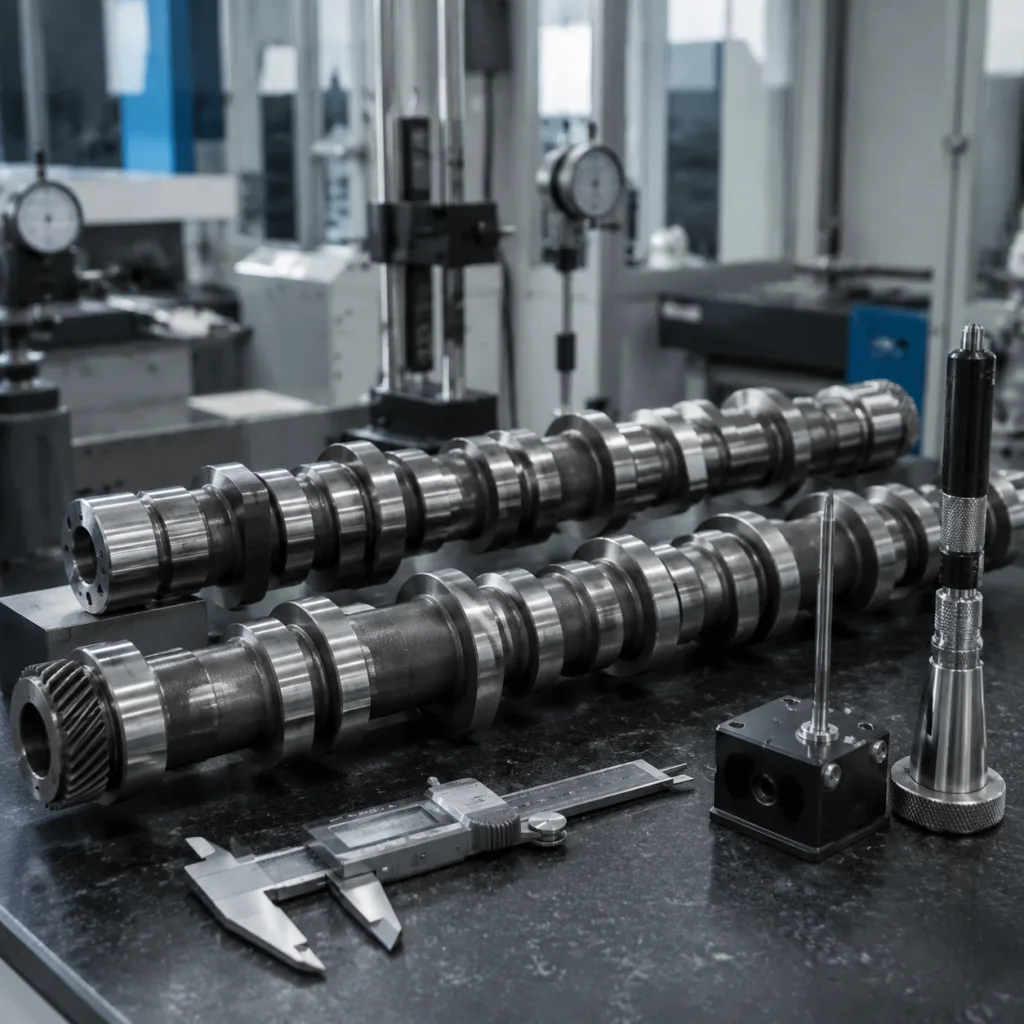
The best procurement teams treat inspection as a gate, not a paperwork exercise. Before packing or outbound approval, the camshaft should be checked for the dimensions that affect rotation and valve action.
Check item
Why it matters
Journal diameter
Bearing fit and oil clearance
Cam lobe lift
Valve opening consistency
Runout
Smooth rotation and stable timing
Surface roughness
Wear rate on follower or tappet
Hardness / case depth
Scuff resistance and fatigue life
Thrust face position
Axial control and noise reduction
</tr></thead><tbody> </tbody></table>Runout and lobe profile deserve particular attention. A part can pass a visual check and still generate noise, poor idle quality, or premature wear because the lobes are slightly out of spec. Buyers should also ask whether the supplier measures against a master reference or only compares to the finished part drawing. Those are not the same control method.
Material and heat-treatment evidence: the spec deep-dive
Material choice is not a detail to file away for later. It directly affects wear life, contact stress, and the way the camshaft survives repeated loading. For Hyundai programmes, buyers commonly see chilled cast iron or forged steel, but the correct answer depends on the OE architecture.
What matters in the review:
Material grade and cast or forging route
Heat-treatment summary
Surface hardness range
Case depth, where applicable
Traceability to a production batch and date code
If the supplier cannot explain why a specific material is used, that is a warning sign. The objective is not to copy a shape; it is to reproduce performance in volume. Driventus supplies documentation that supports incoming inspection and supplier qualification, including records tied to batch control and quality-system procedures.
Validation tests that separate a usable part from a risky one
A serious validation plan does more than confirm the part exists. It checks whether the camshaft will survive handling, installation, and service loads.
Typical validation steps include:
100% dimensional inspection on key features
Profile or lobe lift sampling against master data
Hardness testing on production lots
Magnetic particle or other NDT where applicable
Functional rotation checks for trigger features
Packaging verification to prevent surface damage in transit
This last point is often overlooked. Surface damage during shipping can create early scuffing even when the geometry is right. Packaging should isolate lobes and journals, and storage should prevent corrosion before installation. Driventus operates under a documented quality system aligned to IATF 16949:2016 and ISO 9001:2015; see our quality system for process detail.
How to compare suppliers without wasting time
When suppliers all claim OE-equivalent fit, the comparison has to move beyond price and lead time. A useful side-by-side review should ask for:
Certificate of conformity to IATF 16949:2016 or ISO 9001:2015
Dimensional inspection report with measured values
Heat-treatment summary and hardness range
Traceability to production batch and date code
Packaging specification for export transport
Correct marking format for internal warehouse control
That list helps buyers separate a finished component from a controlled one. If a programme requires a non-standard configuration, custom manufacturing can align the part to customer drawings and inspection criteria. That is especially useful for private label supply, aftermarket distribution, and niche engine variants where the original route is closed. Driventus supplies replacement components to distributors, OEM and Tier-1 buyers, and multi-location repair groups that need stable specification control across multiple markets.
Sourcing workflow for Hyundai programmes: a practical sequence
Use a disciplined request pack so engineering and purchasing are working from the same data set.
Recommended RFQ data
Engine code and displacement
Vehicle model year and emissions market
Intake or exhaust position
OE reference, if available
Photo of the original part markings
Required annual volume and target lead time
Packaging and labelling requirements
If the family has multiple variants, start with a sample approval run before blanket release. That is particularly important when variable valve timing hardware is involved, because indexing or oil-feed differences can change idle stability and emissions performance. For broader engine programme sourcing, review our catalog and the wider engine components range for related parts such as lifters, timing components, gaskets, and water pumps.
Practical fitment checks before stock is released
Before approving stock for production or warehouse release, confirm the following with the customer or engineering team:
1. Intake camshaft and exhaust camshaft are not interchangeable unless the engine family explicitly allows it. 2. Variable valve timing phaser fitment matches the correct bolt pattern, oil feed, and index position. 3. The engine code, not only the vehicle badge, is used for final approval. 4. The same Hyundai model may use different camshafts by market, year, and emission package. 5. Installation instructions include break-in and lubrication requirements if the design calls for them.
This is the point where many teams lose time. A quick badge-level match can create a downstream mismatch. Release only after the OE reference, engine code, and inspection data line up. If your team needs a supply review, use request a quote to start the enquiry with application details and target quantity.
Frequently asked questions
Match the engine code, intake or exhaust position, OE reference, and critical dimensions such as journal diameter, lobe lift, and end-play location. A visual match alone is not sufficient.
Request dimensional inspection data, material traceability, heat-treatment summary, packaging details, and evidence of a controlled quality system such as IATF 16949:2016 or ISO 9001:2015.
Yes. For customer drawings or niche applications, Driventus can support custom manufacturing with inspection criteria, batch traceability, and export packaging aligned to the project requirements.
If you are comparing suppliers or validating a replacement programme, send your engine data and OE reference for review. Start here: /contact.html