Crankshaft Kia Wholesale: Sourcing, Fitment, and Quality Checks
Procurement teams sourcing a crankshaft Kia wholesale programme need more than a catalogue match. Consistent dimensional control, traceable material records, clear application data, and realistic lead-time planning all affect whether the part can be stocked, sold, and installed with confidence. For Kia applications, the main purchasing risk is variation across engine families, crank journals, thrust faces, counterweight geometry, timing features, and production revisions. A supplier should only confirm OE-style references such as 06A… or 11251… numbers when the buyer provides exact application information and when the part can be checked against engine code, model year, displacement, transmission pairing where relevant, and revision details. Driventus is an independent aftermarket manufacturer; Kia and other brand names are referenced for fitment identification only. Our manufacturing base in Taizhou, Zhejiang supports B2B supply to distributors, repair networks, engine rebuilders, and OEM-style programmes, with production managed under IATF 16949:2016 and ISO 9001:2015 controls. This guide explains how buyers can compare crankshaft suppliers, what documentation to request, and which inspection points should be reviewed before placing a bulk order.
What buyers should confirm before placing a Kia crankshaft order
A Kia crankshaft order should begin with application validation, not price comparison. The same vehicle name can be linked to different engine versions depending on market, production year, emissions package, and service history. Before confirming a wholesale order, buyers should provide the engine code, OE reference if available, vehicle model year range, displacement, and any sample or drawing used by the local market.
Common procurement checks
- Match by engine code and OE-style reference, not by model name alone
- Verify main journal and rod journal diameters, including undersize or repair options if required
- Confirm fillet radius, oil hole position, oil passage design, and chamfer details
- Check thrust face width, thrust bearing location, and axial clearance requirements
- Review counterweight geometry, balance requirements, keyway position, and timing feature design
- Confirm bearing grade or bearing compatibility if supplied as a matched set
- Check machining finish on seal areas, thrust faces, and journal surfaces
- Ask for inspection records, material traceability, and test certificates tied to the batch number
For importers and distributors, the safest approval process is to compare the supplier drawing with the buyer’s reference sample or OE-style specification before a production lot is released. This reduces the risk of receiving a visually similar crankshaft that does not fit correctly during engine assembly.
Manufacturing controls that matter in wholesale supply
A wholesale crankshaft order should not move forward until the supplier can show how quality is controlled during production. Final visual inspection is not enough for repeat B2B supply because many crankshaft defects are dimensional, metallurgical, or balance-related rather than obvious at first glance.
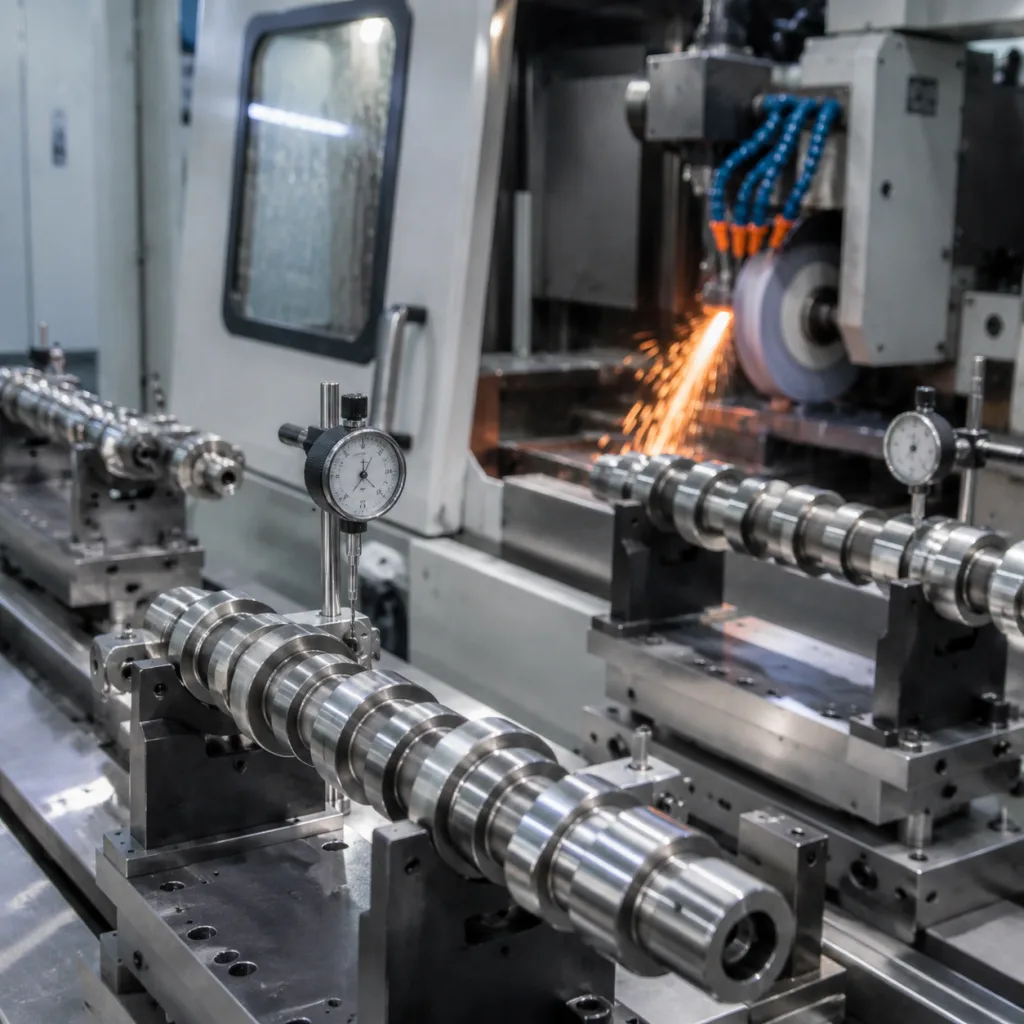
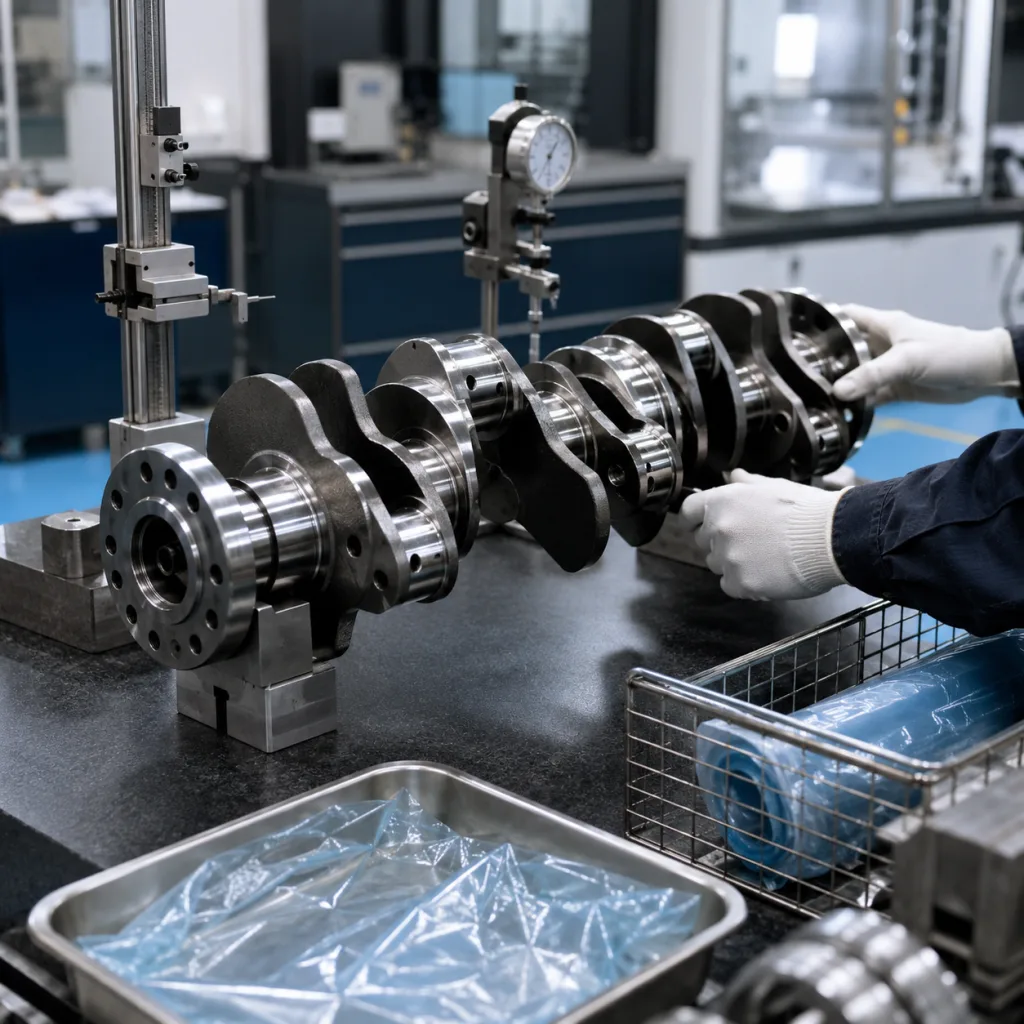
Key controls should include incoming material verification, forging or casting process checks depending on the design, heat treatment control, straightness inspection, CNC machining records, journal grinding control, surface finish measurement, hardness testing, magnetic particle or crack detection where specified, and final dimensional inspection. For higher-volume supply, buyers should also ask how nonconforming parts are isolated and how corrective actions are recorded.
Driventus manages crankshaft production with quality-system discipline aligned with IATF 16949:2016 and ISO 9001:2015. In practical purchasing terms, this means buyers can request structured records such as batch traceability, inspection summaries, packing specifications, and quality confirmation documents instead of relying only on catalogue claims. These records are especially important when the same crankshaft family is supplied across multiple customers, repair networks, or export markets.
How Driventus supports aftermarket and OEM-style sourcing
Driventus supports crankshaft Kia wholesale sourcing for distributors, engine parts importers, repair chains, and OEM-style purchasing projects that require stable specifications over repeat orders. Our role is to help buyers turn an application requirement into a controlled supply item, whether the project is based on an existing aftermarket reference, an OE-style number, a sample, or a technical drawing.
For multi-SKU programmes, buyers can request a consolidated quotation so crankshaft families, related bearings, gasket sets, and complementary engine parts can be planned together. This helps purchasing teams compare tooling status, MOQ, available stock, production lead time, and packaging requirements across the full line rather than treating each item as a separate emergency purchase.
For custom or lower-volume programmes, the review normally starts with the target application, sample condition, drawing data, required material, surface treatment, dimensional tolerances, annual demand, and destination-market documentation needs. When these details are available early, the quotation is more accurate and the approval process is faster.
Lead-time, MOQ, and purchasing terms for bulk orders
Lead time and MOQ depend on the crankshaft family, current production schedule, tooling status, testing requirements, packaging method, and whether the order uses an existing specification or a new drawing-based programme. Stock-supported items may move faster, while custom crankshafts or new-market references usually require sample review, dimensional confirmation, trial production, and approval before bulk manufacturing.
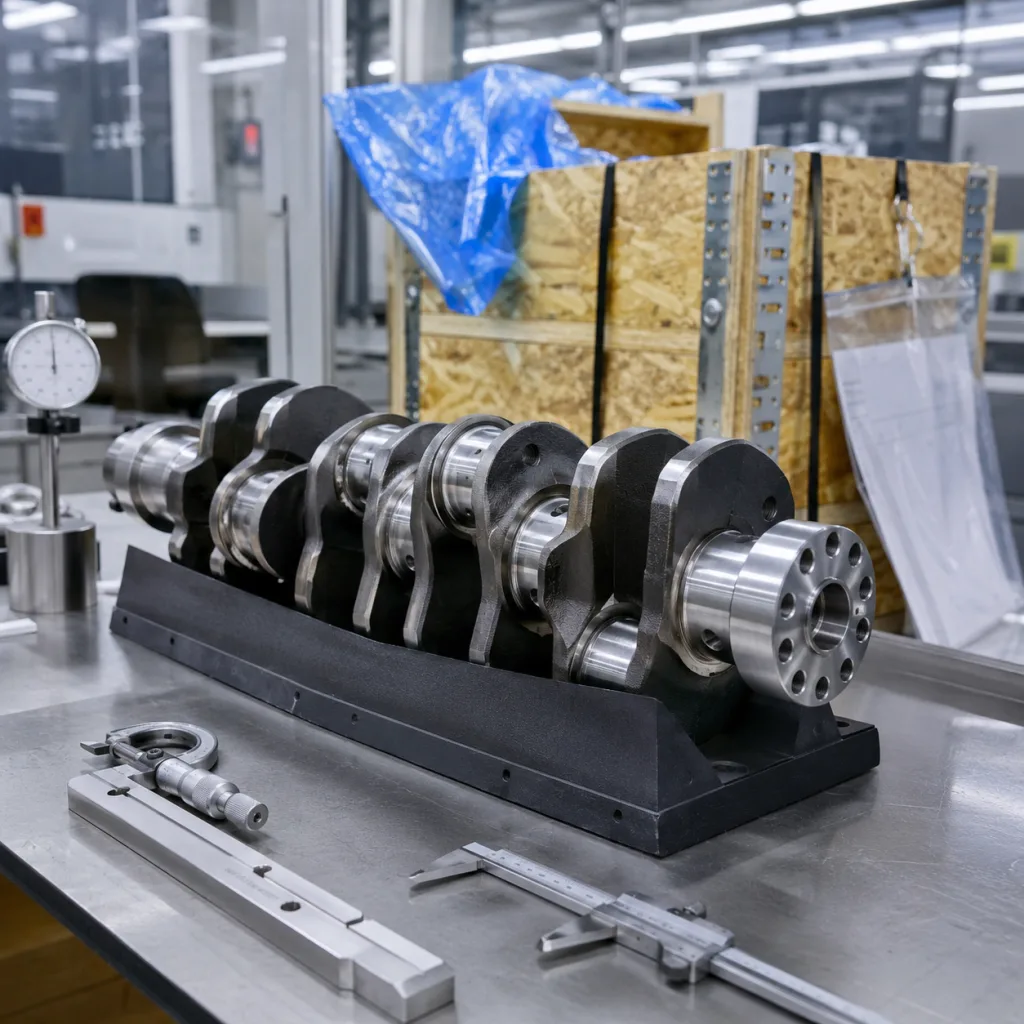
Buyers should also define the commercial details before comparing supplier prices. A low unit price can become expensive if the MOQ is unrealistic, packing is unsuitable for sea freight, documents are incomplete, or the lot cannot be traced after delivery. For importers, it is useful to agree on carton or wooden-case packaging, rust prevention method, labelling format, inspection documents, delivery terms, and after-sales claim procedures before placing the purchase order.
Questions to include in the RFQ
1. Which engine code, displacement, and OE-style reference are required? 2. What annual volume and first-order quantity are expected? 3. Is the supply for stock distribution, repair service, or engine rebuilding? 4. Are balance weights, tone wheels, timing features, or special keying details needed? 5. Are standard, undersize, or repair-grade journals required? 6. What inspection records and quality documents must be shipped with each lot? 7. What packaging, labelling, and pallet requirements apply for the destination market? 8. Which Incoterms, payment terms, and delivery schedule should be quoted?
Providing these answers at the RFQ stage allows the supplier to quote the correct crankshaft rather than a similar item with uncertain fitment.
Fitment validation and risk reduction for importers
Fitment validation is the main safeguard in crankshaft purchasing. Importers should avoid approving a crankshaft only because the catalogue title, photo, or vehicle model appears to match. The better approach is to compare engine code, OE-style reference, journal dimensions, thrust configuration, timing interface, oil hole layout, seal diameter, and overall geometry against a trusted sample or drawing.
For first orders, many buyers use a staged approval process: document review, sample inspection, trial assembly or local technician verification, and then bulk production release. This is especially useful when the product is intended for engine rebuilders or repair networks, where installation problems can create warranty claims and customer downtime.
Driventus is an independent aftermarket manufacturer; brand names are referenced for fitment identification only. We recommend that every crankshaft Kia wholesale inquiry include full application data and, where possible, a drawing, OE-style reference, or sample photos from multiple angles. Clear information at the beginning of the project reduces quotation errors, shortens confirmation time, and helps both sides maintain consistent quality across repeat shipments.
Frequently asked questions
Start with the engine code, OE-style reference if available, model year range, displacement, and all critical dimensions. Do not buy from model name alone. Request a drawing, journal measurements, thrust face details, and batch traceability before approval.
Ask for material traceability, dimensional inspection data, heat treatment records, surface finish or hardness results where applicable, packing specification, and commercial export documents. For quality review, IATF 16949:2016 and ISO 9001:2015 control evidence is useful.
Yes. For drawing-based or sample-based projects, use our custom manufacturing service. We support B2B supply for distributors, OEM-style programmes, repair networks, and engine rebuilders with defined MOQ, lead-time planning, and fitment review.
If you need a bulk quote, application check, or drawing review for a crankshaft programme, please [request a quote](/contact.html).
Request a Quote