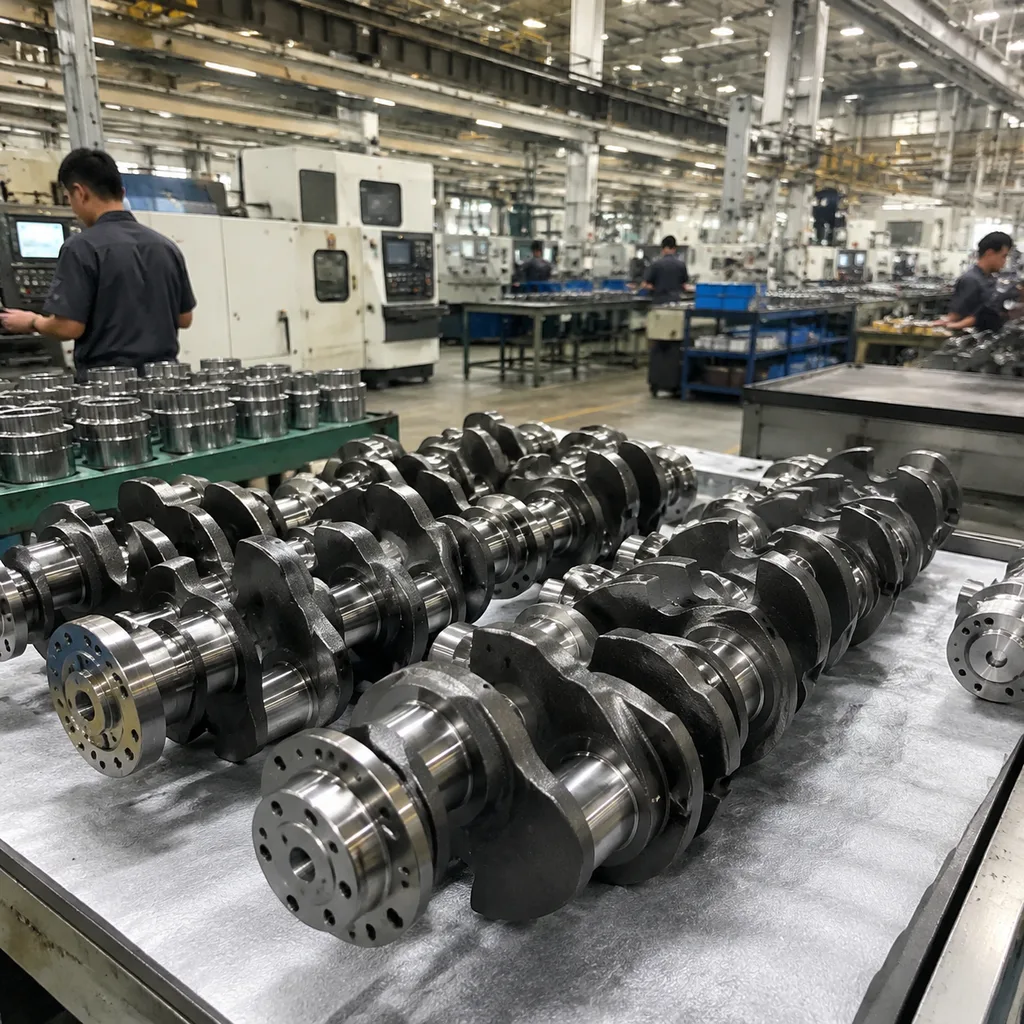
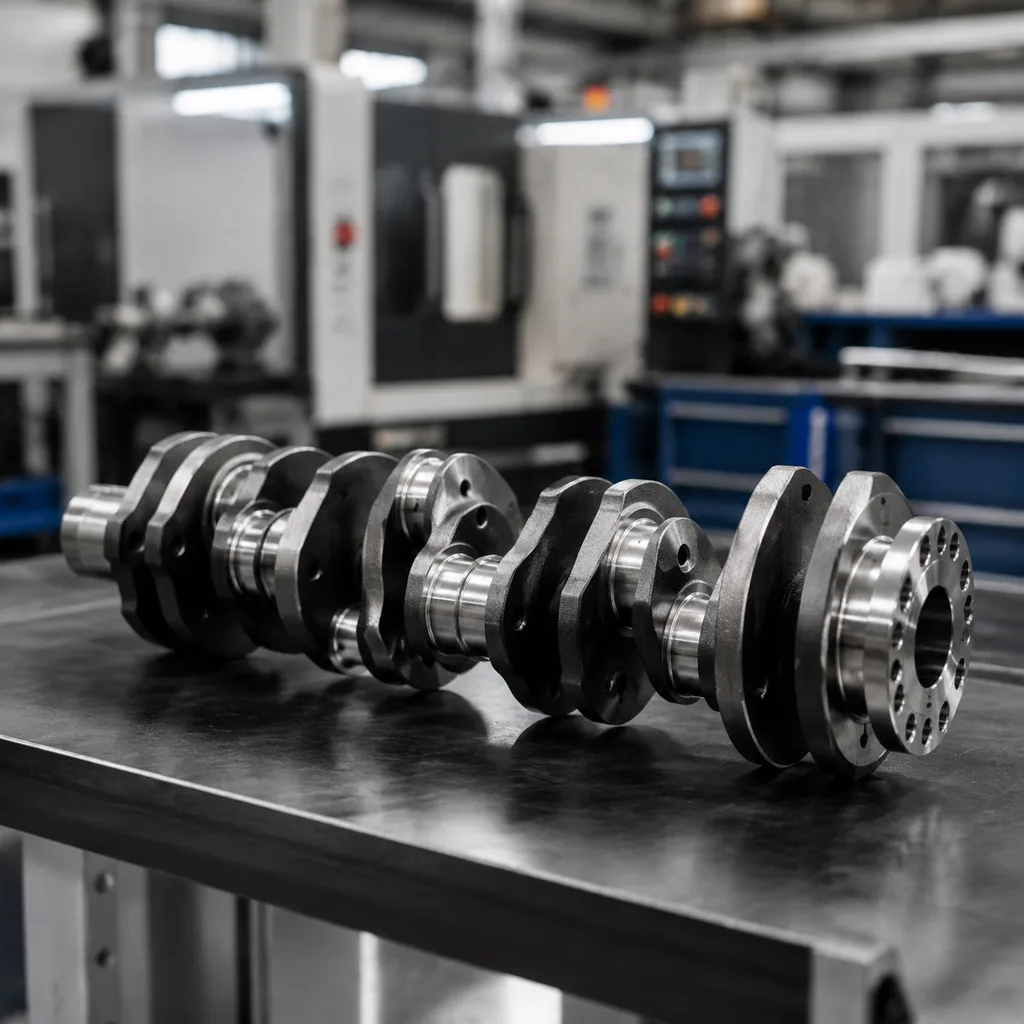
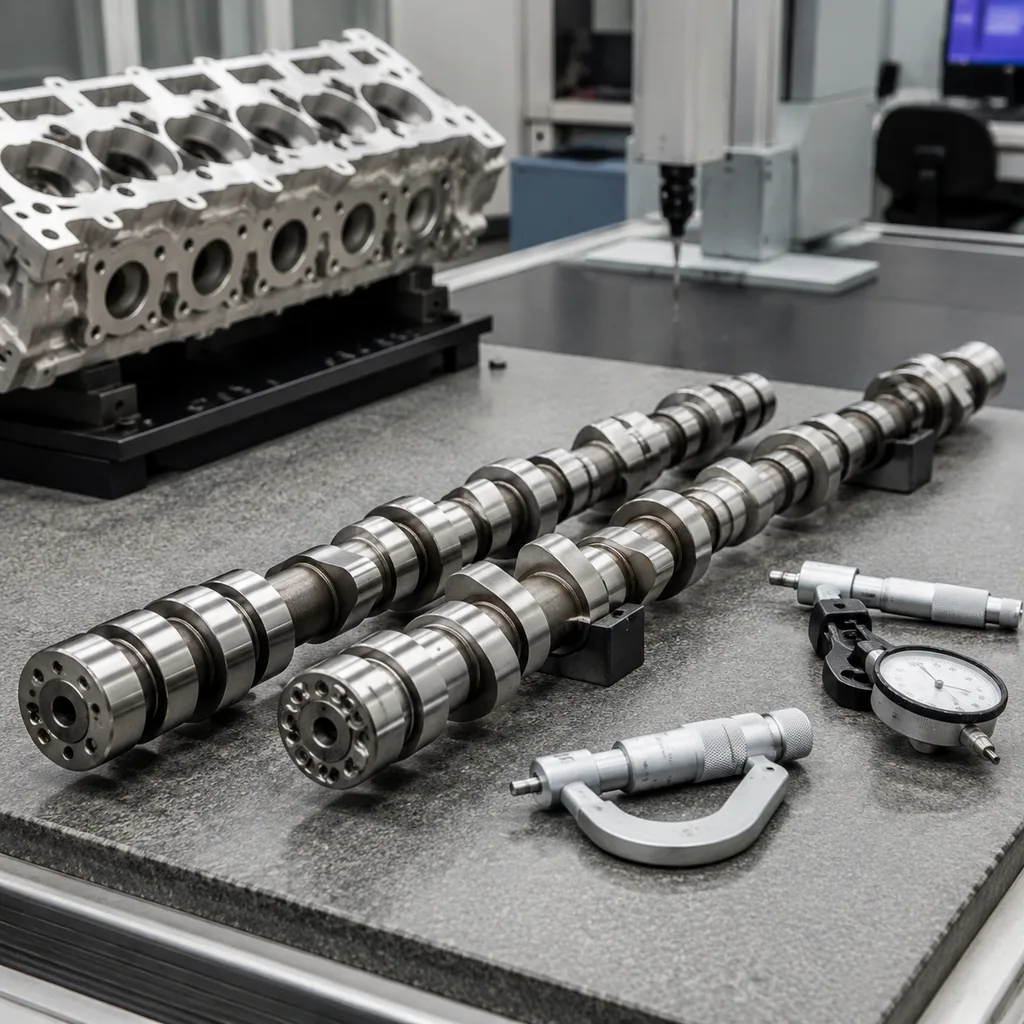
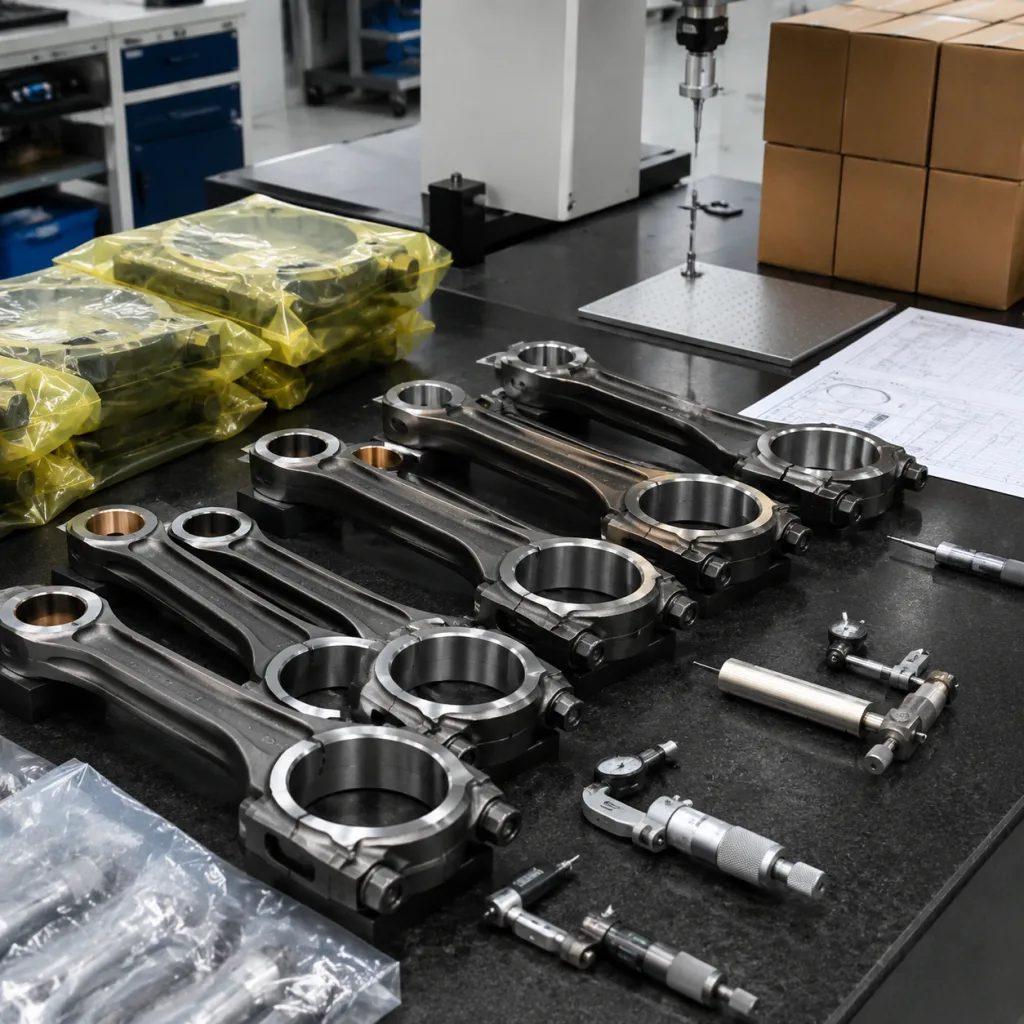
Selecting a crankshaft Acura manufacturer China is not a catalogue exercise. A low quote means little if the stroke is wrong, the trigger pattern is shifted, the thrust face is misplaced, or journal geometry drifts after the first batch. Acura-fitment crankshafts are tied to Honda-derived engine families, where small design differences can decide whether the part assembles, runs quietly, reads the crank sensor correctly, and protects bearing life.
For B2B buyers, the better sourcing question is: can this supplier repeat the approved crankshaft under controlled metallurgy, machining, heat treatment, balancing, inspection, packaging, and traceability conditions? That requires confirming engine code, stroke, main and rod journal specifications, reluctor configuration, thrust location, flange detail, and reference sample data before price comparison.
Driventus Auto Parts manufactures engine and powertrain components in Taizhou, Zhejiang, supplying distributors, wholesalers, repair-chain sourcing teams, and OEM/Tier-1 programmes in more than 60 countries. Our crankshaft supply model combines controlled forging or casting routes, CNC machining, heat-treatment verification, dynamic balancing, and final inspection within IATF 16949:2016 and ISO 9001:2015 quality systems. Driventus is an independent aftermarket manufacturer; vehicle brand names are referenced only for fitment identification.
Decision Gate: Prove the Fitment Before You Ask for a Final Price
Do not start with the model name. Do not rely on displacement alone. Acura applications are closely linked to Honda engine platforms, but interchange can break on details that are not visible in a quotation photo: stroke, crankpin indexing, trigger wheel pattern, oil-hole layout, flange arrangement, thrust bearing location, and counterweight design.
A useful RFQ fixes the engineering baseline first. Provide:
Engine code and displacement, for example J-series V6, K-series inline-4, or another confirmed platform
Vehicle application region, such as US, Canada, EU grey import, or Middle East import channel
OE part-number cross-reference where available, for example an OE 13310… reference only when supplied in the enquiry data
Main journal and rod journal nominal diameters, including oversize/undersize service requirement if applicable
Stroke length and counterweight configuration, ideally measured from a usable reference crankshaft
Sensor reluctor pattern, tooth count, missing-tooth position, and crankshaft position reference
Thrust bearing location, thrust width, and rear flange details, where known
Oil-hole count, entry/exit angle, and chamfer style if the sample has been modified or reground
Required supply form: bare crankshaft, crankshaft with bearings, or balanced rotating kit
Target annual volume, first-order quantity, and replenishment schedule
A quotation is only meaningful after these parameters are fixed. Driventus recommends attaching 6–10 sample photos at minimum: both end faces, trigger feature, flange, keyway or dowel area, and close-ups of every journal group. Add a measurement sheet if available. If the buyer has a worn sample or drawing, Driventus can check datum points, journal positions, oil-hole layout, and hardness targets through our custom manufacturing workflow. For existing references, buyers can also review engine component coverage in our catalog.
This early gate prevents expensive mistakes. Two crankshafts may look interchangeable and still fail in assembly. A 0.25 mm service undersize, a shifted thrust position, or a trigger pattern off by a few degrees can create returns, sensor faults, bearing distress, or unsellable warehouse stock.
Spec Deep-Dive: Where Crankshaft Quality Is Won or Lost
Crankshaft quality is built into the route, not added by a final visual check. Material consistency, heat treatment, machining stability, grinding discipline, oil-passage cleanliness, and balance control all matter. For Acura-fitment aftermarket programmes, the correct route depends on engine load, expected service environment, annual volume, and cost target. Some applications require forged steel. Others may use cast iron or another validated route when it matches the original design and buyer specification.
Sourcing point
Typical procurement requirement
Driventus control approach
Material route
Forged steel such as 40Cr/42CrMo or cast iron route where validated
Heat/batch material certificate, chemical composition review, and incoming inspection
Journal diameter
Controlled to drawing or approved sample, commonly within micron-level grinding tolerance
CNC grinding with in-process micrometer checks and final dimensional record
Taper/ovality
Usually controlled within 0.005–0.010 mm where drawing requires
Roundness and multi-position journal measurement by batch
Journal finish
Low roughness suitable for hydrodynamic oil film, commonly Ra 0.2–0.4 μm target by spec
Surface-finish measurement after finish grinding/polishing
Hardness
Controlled surface or case hardness after treatment, often HRC/HB range by material route
Hardness testing by batch and critical position, with heat-treatment records retained
Runout
Low total indicated runout on main journals, typically verified against agreed datum
Final runout inspection on precision fixtures or between centres
Balance
Application-specific dynamic balance target, commonly gram-level residual unbalance control
Dynamic balancing records for controlled batches and correction documentation
Oil passages
Clean oil flow with no harmful burrs, chips, or abrasive residue
Drilling, chamfering, deburring, flushing, and cleanliness checks
Traceability
Heat, batch, machining lot, and inspection linkage
Lot coding on inspection documents, cartons, and pallet labels
</tr></thead><tbody> </tbody></table>Weight and appearance are weak indicators. Buyers should ask for actual inspection data for main journal diameter, rod journal diameter, taper, ovality, thrust width, flange face runout, keyway or dowel position where applicable, oil-hole deburring, and surface finish. If no drawing tolerance exists, the approved sample should be dimensionally mapped and the tolerance plan agreed before price finalisation. Otherwise, competing suppliers may quote the “same” part against very different assumptions.
For high-volume supply, Driventus can define a control plan with measurement frequency, critical-to-quality dimensions, and retention samples. A typical plan includes first-piece approval at setup, patrol inspection during turning and grinding, 100% visual and rust-prevention checks before packing, and AQL or customer-defined final sampling before shipment. Production is managed within our quality system, aligned with IATF 16949:2016 and ISO 9001:2015. These certifications do not replace part validation; they support process control, corrective action, document control, and traceability.
Scenario Planning: Sample, Trial Batch, or Forecast Programme?
A buyer evaluating a crankshaft Acura manufacturer China may begin with unit price, but the real landed cost is shaped by MOQ, planning method, inspection scope, export packaging, corrosion protection, and damage rate. Crankshafts are heavy, precisely machined, and rust-sensitive. Poor carton strength or weak pallet design can erase a price advantage quickly.
Match the order structure to the sourcing stage:
Sample order: 1–5 pieces for dimensional verification and installation testing
Trial order: 20–100 pieces, depending on part family, packaging, and tooling status
Regular replenishment: forecast-based production with an agreed batch size, often 100–500 pieces per reference for active programmes
Private-label packaging: available subject to artwork control, label approval, and minimum quantity
Mixed container supply: possible when combined with pistons, gaskets, bearings, or other engine components
Catalogue crankshafts usually carry the lowest MOQ and shortest lead-time because fixtures, process sheets, and packaging data already exist. New development parts require more engineering time and may need prototype fees, fixture cost, or a larger first production lot to absorb setup. A one-piece sample price can be several times the mass-production unit price because it includes measurement, setup, inspection, export handling, and small-batch inefficiency. Compare quotations only at the same quantity and inspection level.
Indicative timing for planning:
Active catalogue item with stock or near-stock status: about 7–15 days for sample preparation and export paperwork
Active item requiring production: about 30–45 days after deposit and packaging approval
New development from sample/drawing: about 45–75 days for mapping, process preparation, prototype machining, and buyer approval
Repeat production after approval: commonly 30–45 days, depending on queue, order size, and surface-treatment schedule
Lead-time depends on whether the crankshaft is already in production and whether the buyer needs PPAP-style files, special packing, 100% measurement, or third-party inspection. For a new Acura-fitment crankshaft requiring sample reverse engineering, tooling review, or fixture development, procurement should allow time for dimensional mapping, prototype machining, validation, packing confirmation, and buyer approval.
Set documentation requirements early. Commercial invoice, packing list, certificate of origin where applicable, material documentation, and inspection reports can be prepared according to destination-market and customer procedures. For a distributor launch, confirm label format, barcode rules, carton markings, pallet height limits, and spare-parts database information before mass packaging. Payment structure normally follows project risk: sample payment before dispatch, and for production orders a deposit with balance before shipment or against agreed documents.
Failure Modes to Expose During Factory Qualification
A remote price comparison does not qualify a crankshaft supplier. It only shows who can answer an RFQ. Before awarding repeat volume, buyers should verify that the manufacturer can reproduce the approved sample consistently—not just produce one acceptable demonstration part.
Use the audit to look for failure modes:
Material mix-up or missing heat-number control
Heat-treatment variation that changes hardness, runout, or machining stability
Journal ovality after grinding or poor wheel-dressing discipline
Oil-hole burrs, trapped chips, or abrasive residue
Incomplete balancing records or worn balance fixtures
Rust protection that fails during 30–60 days of ocean freight
Carton collapse, journal impact, or insufficient pallet restraint
Pass/fail inspection sheets with no actual measured values
Weak traceability when a complaint is reported months after shipment
Recommended audit checkpoints include:
Valid IATF 16949:2016 and ISO 9001:2015 certificate scope, with crankshaft or engine-component relevance
Incoming material inspection procedure, heat number control, and segregation of unverified material
Heat treatment supplier control or in-house process records, including furnace batch traceability
CNC turning, milling, drilling, oil-hole machining, and finish-grinding capability
Journal grinding machine maintenance, dressing frequency, and calibration records
Dynamic balancing equipment, fixture condition, and record retention
Nonconforming product segregation process with red-tag or quarantine control
Corrective action process with root-cause evidence, containment, and effectiveness review
Gauge calibration to recognised measurement practice, including micrometers, dial indicators, hardness testers, and roughness meters
Operator training for critical machining, deburring, and inspection steps
Export packaging test records or transport-damage history, especially for sea freight
Rust-prevention method, VCI use, oil film specification, and shelf-life expectation
Questions to Ask During Supplier Review
Ask how the factory controls journal ovality after heat treatment. Ask how often grinding wheels are dressed. Ask how oil holes are deburred and verified. Ask how crankshafts are protected from rust during ocean freight and warehouse handling. Then ask whether inspection reports include actual measured values or only pass/fail marks. Actual values allow trend review across batches and show whether the process is centred or drifting toward a tolerance limit.
Also test the supplier’s traceability logic. If a distributor reports a fitment issue six months after shipment, the supplier should link the part to its production lot, inspection records, process route, and packaging batch. A credible factory should be able to retrieve the drawing revision or approved sample reference used for that lot.
Driventus supports distributor and Tier-1 supplier audits with process flow charts, control plans, inspection records, and export documentation. Buyers can request a quote with target annual volume, drawing/sample status, required AQL level, packaging style, and audit requirements so that commercial and engineering teams respond with the correct level of detail.
Buyer Q&A: What Must Be Validated Before Aftermarket Release?
Aftermarket crankshafts for Acura-fitment engines must match the original design intent closely enough to support assembly, oil-film formation, sensor reading, rotating balance, and service life. Driventus does not claim approval or endorsement by any vehicle manufacturer. Driventus is an independent aftermarket manufacturer; brand names are referenced for fitment only.
What should be compared first? Start with dimensional comparison against an approved sample or drawing, including a signed inspection layout. Confirm main and rod journal diameters, taper, ovality, stroke, crankpin indexing, thrust width, flange geometry, and timing features.
Which features create the most fitment risk? Reluctor position, keyway or dowel location, rear flange bolt pattern, pilot diameter, face runout, thrust face width, and oil-hole geometry. These are easy to underestimate and expensive to discover after inventory arrives.
What should inspection include?
Main and rod journal diameter, taper, and ovality verification at multiple axial positions
Stroke and crankpin indexing measurement, with angular reference to the timing feature
Thrust face width, perpendicularity, and finish inspection
Reluctor, keyway, dowel, or timing feature position check
Rear flange bolt pattern, pilot diameter, and face runout verification
Oil passage cleanliness, chamfer, and burr inspection, preferably with borescope or flushing check where required
Hardness and microstructure review where required by material route or customer standard
Dynamic balance verification and residual unbalance record if specified
Trial assembly with specified bearings, connecting rods, flywheel/flexplate, and front pulley where possible
Packaging drop, vibration, or transport simulation if required by the buyer
How much validation is enough? It depends on the sales channel. A distributor serving engine rebuilders usually needs more measurement data than a buyer placing a one-time spot order. A repair-chain programme may also need installation feedback from pilot workshops before broad rollout. For pilot builds, record bearing clearance, crank end play, rotation torque, sensor signal confirmation, and oil-pressure behaviour after assembly. These field notes often reveal more than a pass/fail photo report.
What compliance documents may be requested? Requirements vary by market. Buyers selling into the European Union may request material or chemical declarations related to REACH (EC) No 1907/2006. For the UK, US, Canada, Australia, Brazil, and other markets, importer compliance teams may request material declarations, restricted-substance statements, or customer-specific forms. Driventus can provide standard export documentation and discuss customer formats during sourcing review, but the importer should confirm local compliance obligations before purchase order release.
Step-by-Step: Launching an Acura-Fitment Crankshaft Programme with Driventus
Driventus manufactures crankshafts and related engine components for B2B supply chains that need stable quality, clear communication, and repeatable delivery. The practical goal is to move from an engine code, reference sample, or existing part number to controlled production with agreed inspection criteria.
A clean launch sequence looks like this:
1. RFQ data check — confirm engine code, market region, sample status, OE-style reference if available, quantity target, and documentation requirements. 2. Sample or drawing review — map journals, stroke, thrust, flange, timing features, oil holes, and other critical geometry. 3. Quotation by quantity tier — separate sample, trial, and repeat-batch pricing so the buyer can compare realistic landed cost. 4. Sample approval — verify dimensions, trial assembly conditions, balance requirements, packaging, and inspection format. 5. Pilot order — produce a controlled batch for incoming inspection, workshop feedback, and packaging review. 6. Repeat production — move to forecast-based replenishment with batch inspection records, carton labels, and traceability controls.
Driventus support includes:
Application review by engine family, market region, and sample comparison
Catalogue supply for active crankshaft references
Reverse engineering for selected discontinued or low-availability parts
Dimensional mapping of buyer samples, including journals, stroke, thrust, flange, and timing features
Batch inspection reports for agreed critical dimensions, with actual values when requested
Neutral or private-label packaging for distributors, including barcode and carton-label control
Mixed engine-component shipments for container optimisation
Engineering discussion for OEM and Tier-1 projects
For buyers consolidating supply, Driventus also provides pistons, cylinder liners, gaskets, water pumps, turbochargers, and other engine components. Consolidation can reduce supplier-management cost and improve container utilisation, but crankshafts still need their own dimensional and functional approval. They are heavy, machined, and vulnerable to corrosion and impact. Packing should include protected journals, anti-rust coating, moisture control, end supports, and palletisation that prevents carton crushing under mixed-load conditions.
The sequence is deliberately conservative. Technical confirmation first, then sample order, pilot batch, and scheduled replenishment. This reduces incorrect fitment, machining mismatch, and packaging damage before larger inventory commitments are made. It also creates a shared record of what was approved, how it was measured, and how future batches must be controlled.
Frequently asked questions
Yes, where the buyer provides a valid reference, sample, drawing or engine code. Driventus can review OE-style cross-references such as OE 13310… when supplied by the customer, but does not claim vehicle manufacturer approval or endorsement.
MOQ depends on whether the part is an active catalogue item or a new development. Samples are typically 1–5 pieces; trial orders are often 20–100 pieces; repeat batches may be planned at 100–500 pieces per reference depending on demand, packaging type, inspection scope and production status.
Driventus operates under IATF 16949:2016 and ISO 9001:2015 quality management systems. For specific export markets, buyers may also request material or restricted-substance documentation, including REACH (EC) No 1907/2006-related declarations where applicable.
If you are qualifying a crankshaft Acura manufacturer China for distribution, repair-chain supply or OEM/Tier-1 sourcing, share the engine code, sample details, required documentation, inspection scope and target volume. Contact Driventus to discuss technical review and quotation at /contact.html