Coolant replacement cost is more than a labour entry on a repair order. For repair chains, distributors, fleet maintenance teams, and import buyers, the final price depends on coolant chemistry, system capacity, regional labour rates, disposal rules, and the condition of adjacent parts such as the water pump, thermostat, hoses, seals, and gaskets. A basic drain-and-fill may keep the invoice low, but poor flushing practice, the wrong inhibitor package, or low-grade sealing components can increase warranty exposure and repeat labour. This guide explains the main B2B cost drivers behind coolant service programs and shows where OE-equivalent aftermarket parts influence the total job value. Driventus is an independent aftermarket manufacturer; brand names are referenced for fitment only.
Typical Cost Range by Service Scope
A coolant service can range from a quick fluid exchange to a broader cooling-system repair. Procurement teams should separate labour, coolant, flushing media, consumables, disposal, and replacement parts before comparing supplier or workshop pricing. That structure makes bids easier to benchmark across regions and service networks.
Service scope
Typical B2B cost drivers
Common replacement items
Procurement note
Drain and refill
4–10 L coolant, 0.5–1.0 labour hour
Coolant, drain plug seal
Lowest upfront cost; limited removal of degraded fluid
Machine flush
8–16 L coolant or flushing media, 1.0–1.8 labour hours
Coolant, flushing agent, hose clamps
Better contamination removal; higher consumable use
Coolant plus thermostat
Fluid, 1.5–3.0 labour hours
Thermostat, housing gasket, O-rings
Reduces repeat labour when the thermostat is aged or sticking
Coolant plus water pump
Fluid, 2.5–6.0 labour hours
Water pump, gasket, bolts where required
Timing-belt-driven pumps can raise labour sharply
Cooling-system repair bundle
Fluid, pressure test, 3.0–8.0 labour hours
Pump, hoses, radiator cap, gaskets
Suited to fleets with leakage, overheating, or repeat-visit history
</tr></thead><tbody> </tbody></table>For high-volume service networks, the quote should identify coolant type, concentration, system-capacity allowance, disposal fee, pressure-test inclusion, bleeding procedure, and warranty terms. A low headline price may exclude deionised water, air-bleeding time, replacement seals, or post-service inspection.
Parts That Change the Final Invoice
The largest variation in coolant replacement cost often comes from associated parts rather than the coolant itself. Workshops may recommend additional components after pressure testing, visual inspection, leak tracing, or temperature-control diagnostics. Buyers should define which parts belong in the standard service kit and which items require separate authorisation.
Common parts affecting total service value include:
Water pump: Housing material, impeller design, bearing quality, mechanical seal specification, and gasket fit all affect durability. Pump replacement can dominate labour time on transverse engines and timing-belt layouts.
Thermostat and housing: Integrated plastic or aluminium housings usually cost more than standalone wax thermostats. Correct opening temperature, sensor compatibility, and dimensional match are critical.
Cylinder-head and intake gaskets: External leaks, coolant contamination, or previous overheating may require gasket replacement. Materials must tolerate glycol-based coolant, heat cycling, and clamping load.
Radiator cap and expansion tank cap: Incorrect pressure ratings can cause boiling, hose stress, coolant loss, or false overheating complaints.
Hoses and clamps: Age-hardening, swelling, oil contamination, and clamp corrosion are common causes of repeat service visits.
Distributors can review relevant engine and cooling-system components in our catalog. For platform-specific programs, Driventus can also support custom manufacturing for water pumps, gaskets, machined housings, and related engine components.
Coolant Specification and Compliance Considerations
Coolant chemistry affects cost because vehicle applications use different inhibitor packages and service intervals. Procurement specifications should not reduce coolant selection to colour alone. Organic acid technology, hybrid organic acid technology, phosphate-containing formulas, and silicate-containing formulas may all appear in aftermarket programs depending on the region, vehicle parc, and OEM-era requirements.
A purchasing specification should state:
Coolant chemistry and concentration, such as premix or concentrate.
Freeze and boil protection targets for the operating market.
Compatibility with aluminium, cast iron, elastomers, solder, seals, and plastic tanks.
Service interval expectation in kilometres, miles, months, or engine hours.
Packaging format, including 1 L, 5 L, 20 L, 200 L drum, or IBC.
Labelling and safety documentation expectations under REACH (EC) No 1907/2006 where applicable.
For parts bundled with coolant service, quality controls are separate from coolant formulation controls. Driventus manufactures aftermarket engine and powertrain components under IATF 16949:2016 and ISO 9001:2015 frameworks. Incoming material inspection, machining control, sealing-surface verification, assembly checks, and final inspection are handled through our documented quality system.
Vehicle emissions regulations such as ECE R-83 are not coolant standards. However, stable engine temperature control supports drivability, combustion management, fan operation, and diagnostic readiness. For procurement purposes, buyers should treat coolant service as part of a broader thermal-management reliability program, not as a stand-alone fluid purchase.
Regional Pricing Variables for Buyers
The same coolant-service package can price differently across the EU, UK, US, Canada, Australia, Brazil, and other major aftermarket regions. Labour rates, environmental disposal charges, tax treatment, vehicle mix, coolant availability, and parts lead times all influence the final amount. Import managers should also account for currency exposure, freight terms, duties, and minimum order quantities when sourcing replacement parts for cooling-system programs.
Variable
Effect on price
Buyer control point
Labour rate
Higher hourly rates increase pump and thermostat replacement cost
Define standard labour times by job type
Coolant capacity
Larger engines and light commercial vehicles use more fluid
Specify litre allowance per vehicle class
Coolant type
Long-life or application-specific formulas cost more
Avoid colour-only substitutions
Part accessibility
Timing-belt-driven pumps raise labour time
Identify high-labour platforms in advance
Disposal rules
Used coolant handling adds local charges
Include disposal lines in RFQ templates
Import logistics
Freight, duty, MOQ, and packaging density affect landed cost
</tr></thead><tbody> </tbody></table>For multi-location repair chains, a controlled parts list reduces variation. Standardising water pumps, thermostat housings, gasket kits, radiator caps, and hose clamps by application can lower inventory duplication, simplify technician selection, and reduce bay downtime.
Validation Checks for Aftermarket Cooling Parts
When buyers evaluate aftermarket replacement parts, price should be read alongside validation evidence. A lower pump, gasket, or housing price has little value if seal failure creates coolant loss, overheating, warranty claims, or repeat labour.
For water pumps and related parts, typical validation checkpoints include:
Dimensional inspection against drawing or approved sample.
Impeller clearance and rotation verification.
Bearing noise, axial play, and radial play checks.
Mechanical seal leakage testing.
Housing pressure testing where applicable.
Gasket compression and sealing-surface flatness review.
Thread quality and bolt-hole alignment checks for housings and covers.
Packaging drop resistance and corrosion protection for export shipping.
Batch traceability linked to material, machining, assembly, and inspection records.
For gaskets, buyers should check material construction, coating uniformity, coolant-port alignment, bolt-hole accuracy, edge quality, and compression behaviour. For machined housings, sealing faces, thread quality, casting porosity, and pressure integrity are key inspection points.
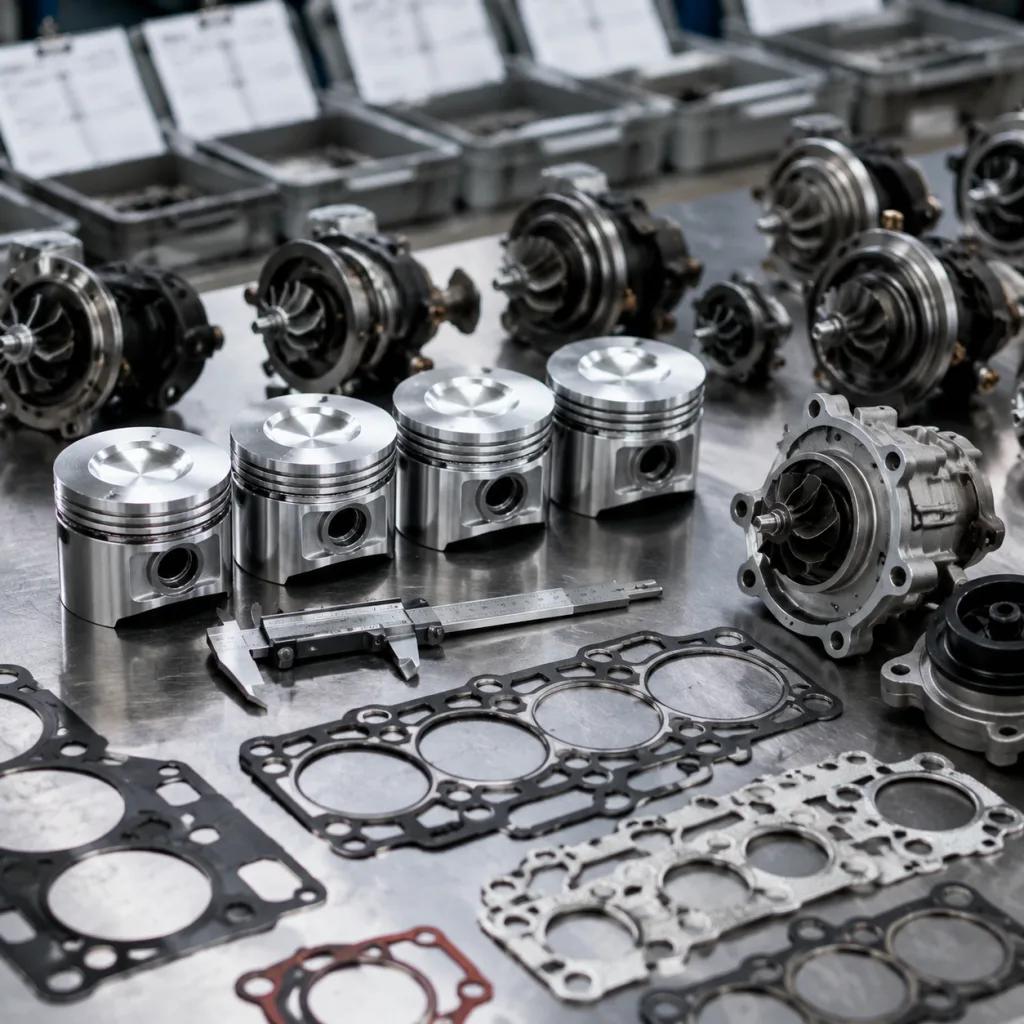
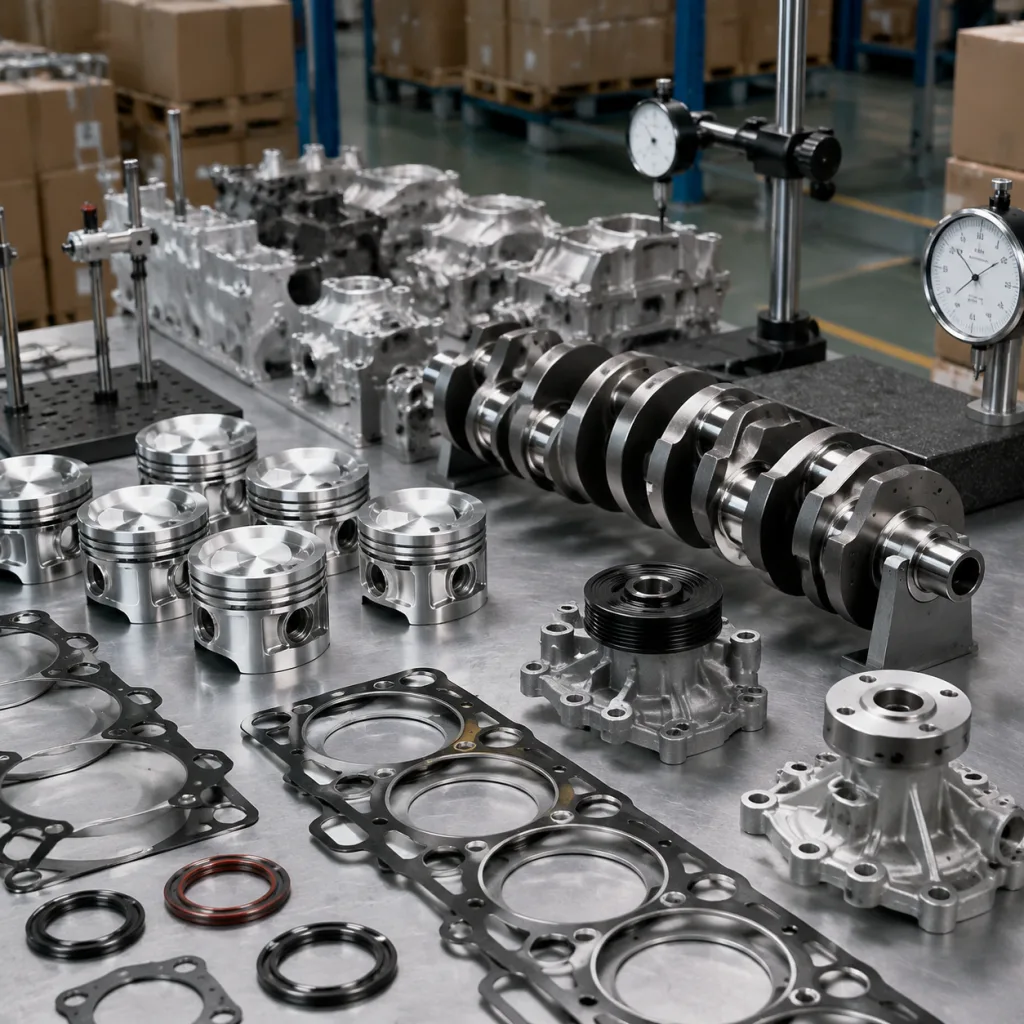
Driventus supplies B2B aftermarket programs from Taizhou, Zhejiang, with exports to more than 60 countries. We manufacture pistons, crankshafts, gaskets, water pumps, turbochargers, and related engine components for distributors, wholesalers, OEM and Tier-1 supply channels, and multi-location repair chains.
How to Build a Reliable RFQ
A clear RFQ reduces ambiguity and helps suppliers quote against the same technical and commercial assumptions. For coolant-service parts programs, buyers should include vehicle coverage, expected annual volume, packaging needs, validation documents, warranty process, and cross-reference information. If the program uses OE part-number cross-references, list them in the generic format used in your data file, such as OE 06A… or OE 11251…, without implying vehicle manufacturer approval.
Suggested RFQ fields:
Vehicle application, engine code, model years, and market region.
Part family, such as water pump, thermostat housing, gasket kit, radiator cap, or hose set.
OE cross-reference format supplied by the buyer.
Annual forecast and first-order quantity.
Target incoterm, destination port, carton specification, and packaging format.
Required certifications, including IATF 16949:2016 and ISO 9001:2015 where relevant.
Inspection requirements, such as dimensional report, pressure test, leakage test, or material report.
Branding requirement, neutral packaging, or private-label packaging.
Warranty handling process and claim evidence requirements.
This structure supports accurate comparison between suppliers and separates part cost from service labour. For buyers managing coolant service kits, the strongest cost control usually comes from reducing repeat repairs, improving fitment accuracy, and standardising validated components—not from selecting the lowest individual component price.
Frequently asked questions
Labour and associated parts are usually the largest drivers. Coolant volume matters, but replacing a water pump, thermostat housing, gasket, cap, or hose can change the invoice more than the fluid itself.
No. Colour is not a reliable technical specification. Buyers should define chemistry, concentration, material compatibility, service interval, safety documentation, and regional compliance requirements such as REACH (EC) No 1907/2006 where applicable.
Yes, if fitment, materials, sealing performance, and validation records meet the buyer’s requirements. Driventus is an independent aftermarket manufacturer; brand names are referenced for fitment only.
If you are building a cooling-system parts program for distribution, fleet service, or repair-chain supply, share your application list and volume forecast to [request a quote](/contact.html).