Coolant in Oil Oil Filter Housing: Diagnosis and Replacement
Coolant in oil is a contamination fault, not a cosmetic issue. When the oil filter housing includes an internal cooler, a cracked casting, or a failed gasket land, coolant can enter the lubrication circuit and quickly affect bearing protection, viscosity, and deposit control. In practice, many buyers first see a milky oil film, rising oil level, unstable oil pressure, or repeated coolant loss after a refill. Typical workshop evidence includes coolant in the filter cavity, staining around the cooler interface, or pressure decay during a static test. For procurement teams, the key question is not only what failed, but whether the replacement housing matches the OE envelope, oil and coolant port geometry, seal stack, and thermal performance. Driventus is an independent aftermarket manufacturer; brand names are referenced for fitment only. This article outlines the fault path from symptom to inspection to replacement, with practical checks for sourcing an oil filter housing that meets fleet or workshop requirements.
Where the leak starts: housing, cooler, or seal land?
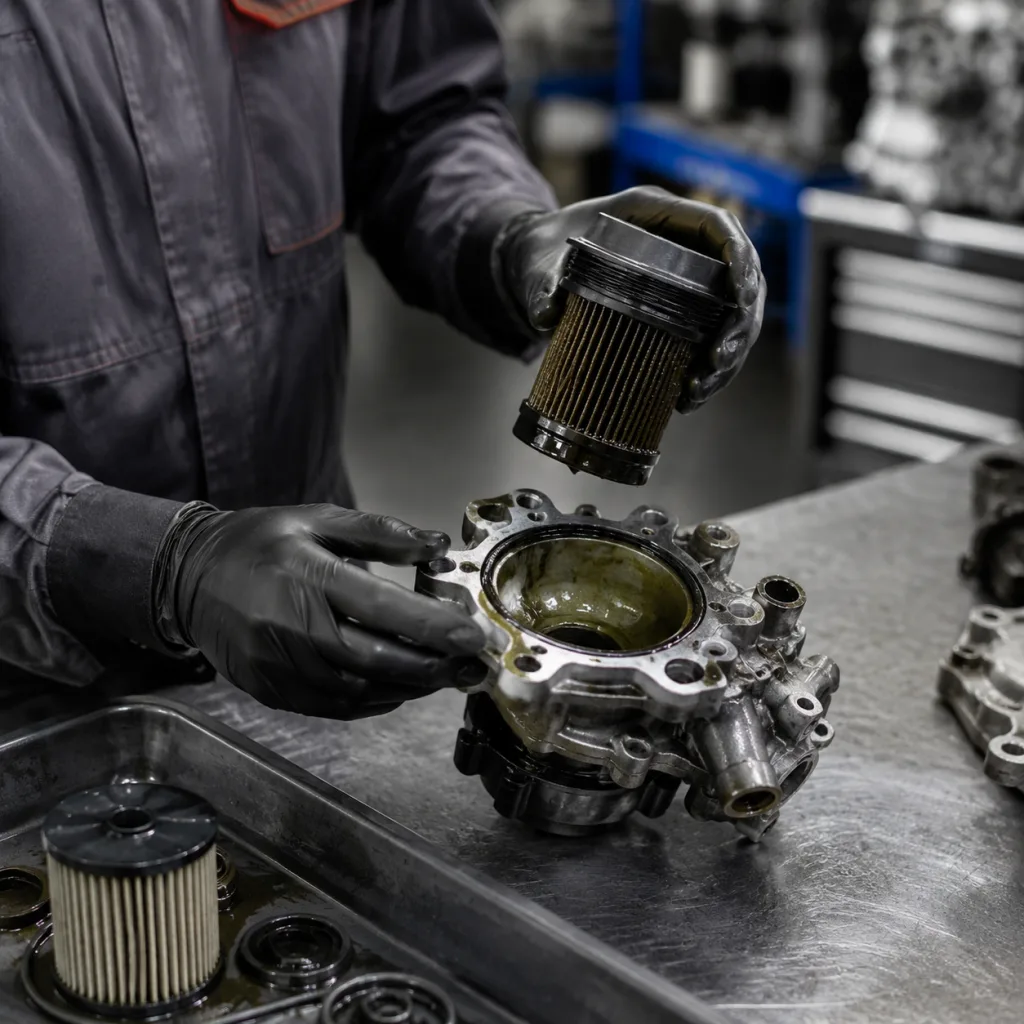
The first job is to separate the failure paths. Coolant can pass through the oil filter housing itself, leak across the integrated cooler core, or escape at the gasket face and only look like an internal cross-contamination fault. That distinction matters because a seal kit can solve one problem and do nothing for another. If the housing contains an oil cooler, treat the cooler and the casting as one assembly until pressure testing proves otherwise. A common pattern is coolant appearing in the filter cavity, then returning after a short drive because the internal wall between coolant and oil circuits has already been compromised. The buying takeaway is simple: do not source by appearance alone. Match the exact leak mode, then choose the part level that actually removes it.
How buyers should compare replacement options
Compare replacement housings on fit, function, and validation. Fit means exact OE envelope, mount pattern, sensor positions, and port orientation. Function means the correct oil and coolant routing, plus any thermostat or bypass behavior the engine expects. Validation means measurable proof: dimensional inspection, pressure test records, seal-seat verification, and traceability for the machined casting. Ask suppliers for test pressure, hold time, pass/fail criteria, and sample size from the production lot. For a sourcing team, the useful comparison is not “aftermarket versus OE” in the abstract; it is whether the replacement preserves the same sealing stack, thermal path, and service envelope without creating a new leak mode. Driventus supports drawing-based validation and OE-matched replacement through custom manufacturing, with product coverage shown in our catalog and engine components.
Decision guide: complete assembly or partial repair?
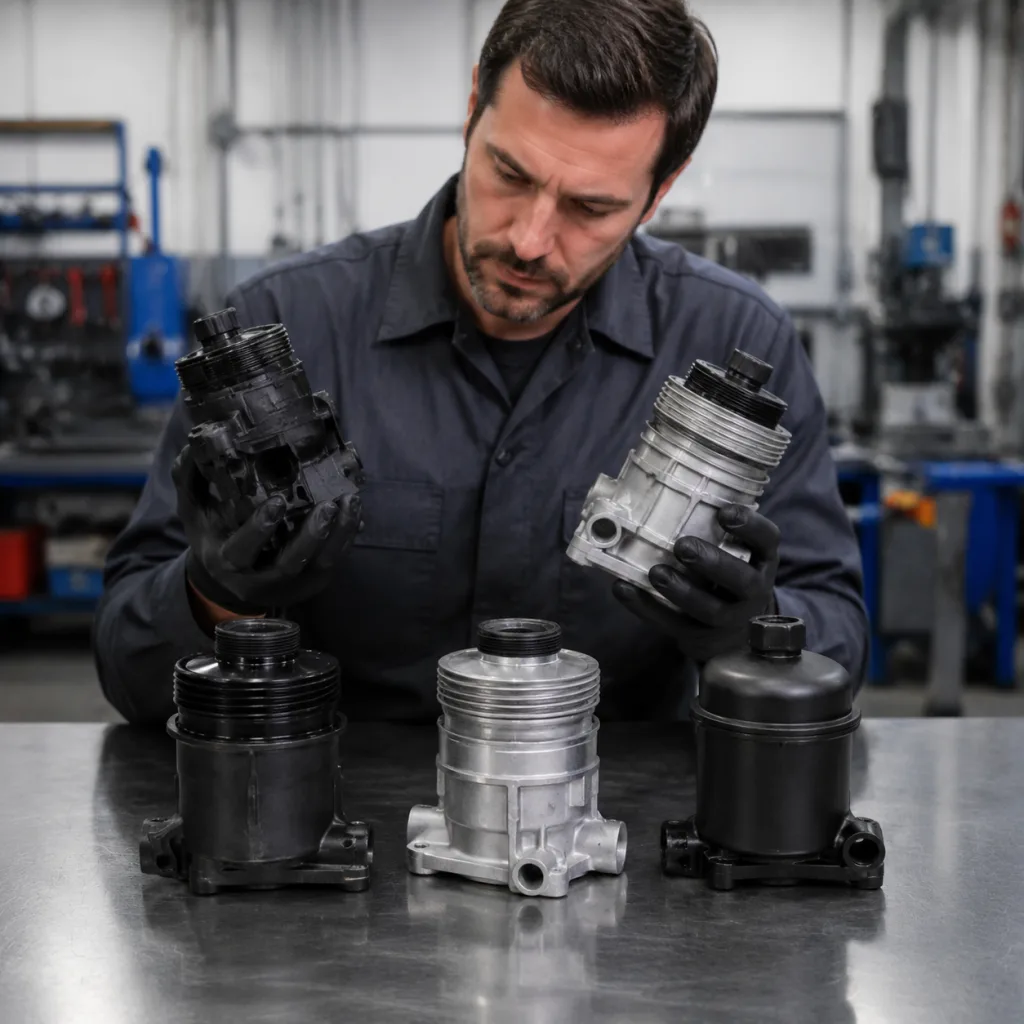
Use a simple rule. Choose the complete assembly when the cooler core is suspect, the casting is damaged, the sealing surface is distorted, or the fault has already returned after a seal-only attempt. Choose the partial repair only when the leak is isolated, the part measures within tolerance, and the cooler passes pressure test. If the unit is integrated, hard to dismantle, or expensive to remove twice, full replacement is usually the safer procurement choice. To make the call, compare part price, gasket kit price, labor hours, coolant refill volume, and the cost of a comeback. Once repeat-leak risk is no longer low, the assembly swap normally wins on total cost. If you need a sourcing review, sample comparison, or application confirmation, use request a quote. Driventus is an independent aftermarket manufacturer; brand names are referenced for fitment only.
Frequently asked questions
Yes. On engines with an integrated cooler or sealed adapter, the housing can be the direct leak path. It is still wise to pressure-test the cooling system and inspect other likely sources before replacing the part. In practice, isolate the housing, test the circuit at about 1.0-1.5 bar, and confirm whether the pressure loss follows the housing or remains in the engine block or head area.
Only if the casting and cooler core are proven sound. If there is cracking, porosity, warped seating, or repeated cross-contamination, the complete housing is the safer replacement. A seal-only repair is most defensible when measured flatness is within tolerance, the cooler holds pressure, and the leak is clearly limited to the external gasket land.
Provide the OE reference, engine code, vehicle build range, photos of the old housing, and any measured dimensions. That helps confirm fitment and reduces ordering errors. For faster quoting, also include expected annual volume, target MOQ, preferred packing format, required lead time, and whether you need the assembly with thermostat, cooler, and seal kit supplied together.
If you are matching an oil filter housing for a contamination repair or fleet programme, send the OE reference and sample photos for review. Start here: /contact.html
Request a Quote