Connecting Rod vs King Alternative: Sourcing Comparison
Procurement teams comparing a connecting rod vs king alternative need more than a price check. The decision affects dimensional interchangeability, fatigue performance, bearing compatibility, documentation quality, and supply continuity across engine programs. A connecting rod is a safety-critical powertrain component that must maintain big-end roundness, pin-bore geometry, bolt preload, and mass balance under repeated combustion loads that can exceed several tonnes per cylinder event in diesel and turbocharged gasoline applications. For a distributor, Tier-1 buyer, or repair-chain category manager, the sourcing review should therefore cover part specification, manufacturing route, inspection evidence, and commercial risk before supplier approval. This article provides an objective B2B comparison for aftermarket and OE-service sourcing. It covers forged and machined rod options, validation evidence, incoming inspection criteria, and the trade-offs between a branded reference, a King alternative route, and direct factory supply from an independent manufacturer. Driventus is an independent aftermarket manufacturer; brand names are referenced for fitment only.
What Buyers Usually Mean by the Comparison
The phrase connecting rod vs king alternative can point to several sourcing scenarios. Some buyers use “King” as a benchmark brand or catalog reference. Others are looking for another supply route for an engine family where the original branded source is expensive, delayed, or unavailable. In both cases, procurement should avoid approving a rod on catalog fitment alone.
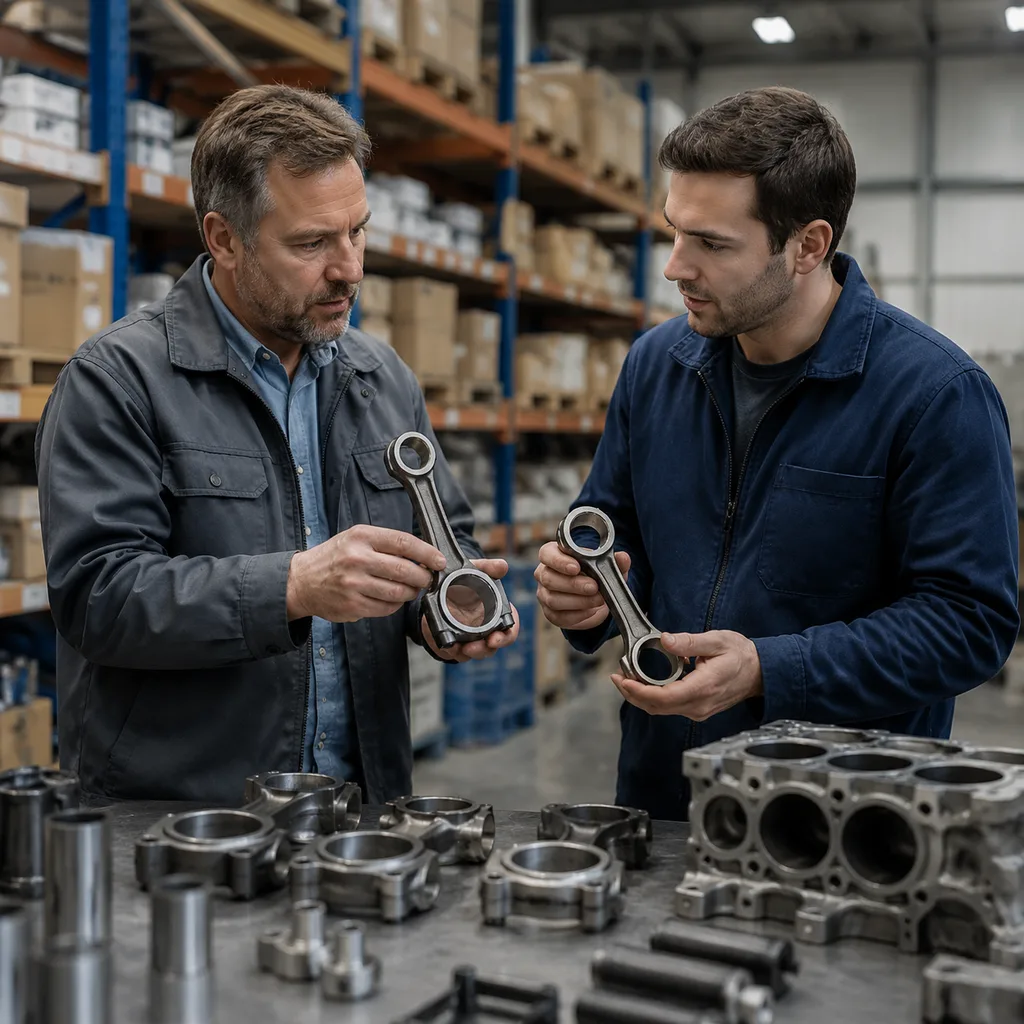
A connecting rod assembly normally includes the rod body, cap, bolts, small-end bush if applicable, and sometimes matched weight grading. Key interfaces include the crankpin journal, piston pin, bearing shell, and cylinder block clearance envelope. A deviation of only 0.02–0.05 mm in housing bore, big-end width, or centre-to-centre length can affect bearing crush, side clearance, piston deck height, oil film stability, noise, and load distribution.
For initial screening, buyers should request:
Engine application, engine code, displacement, fuel type, and production-year coverage
OE part-number cross-reference format where available, such as OE 06A… or OE 11251… if cited in the buyer’s program
Material grade, such as 40Cr, 42CrMo, C70S6, 35MnVS, or buyer-specified equivalent, with heat-treatment route
Big-end bore, small-end bore, centre distance, big-end width, and weight tolerance; typical review ranges include centre distance within ±0.02 mm and set weight grouping within 2–5 g where the design permits
Bolt specification, thread size, tensile class or material, lubricant condition, and torque-angle instruction, such as staged torque plus 60–90° where applicable
PPAP-style dimensional report, ISIR, CMM layout, or final inspection summary when required
MOQ, packing quantity, incoterm, payment terms, and lead-time assumption for sample, pilot, and repeat orders
Driventus lists engine-component coverage in our catalog, with additional application discussion available for custom manufacturing.
Side-by-Side Sourcing Factors
The table below compares the practical factors buyers usually weigh when reviewing a branded catalog item, a King alternative route, or a direct factory program. It does not claim approval or endorsement by any vehicle manufacturer. Its purpose is to structure supplier evaluation for aftermarket distributors, OEM service programs, and repair-chain private-label lines.
Factor
Branded catalog route
King alternative route
Direct factory alternative
Fitment reference
Usually clear catalog mapping
Depends on cross-reference quality
Built from drawing, sample, OE reference, or application data
Unit cost
Often highest
Usually medium
Usually lower at volume after sample approval
Typical MOQ logic
1–50 sets from stock
10–100 sets if reseller stocked
Often 100–500 sets per SKU, lower if machining from shared forging
Price structure
List less distributor discount
Reseller margin included
Quoted by material, forging, machining time, bolts, inspection, packing, and order size
Sample lead time
Immediate if stocked
Immediate to 2 weeks if stocked
2–6 weeks for sample machining; 6–10 weeks if new forging/tooling is needed
Repeat lead time
Stock dependent
Stock dependent
Commonly 35–60 days after deposit and sample approval, depending on queue and heat treatment
Dimensional evidence
Varies by supplier
Varies by supplier
Can include CMM report, bore-gauge records, hardness data, and material certificate
Lead-time control
Dependent on stock position
Dependent on reseller inventory
Managed through production schedule, WIP visibility, and agreed safety stock
Branding options
Limited
Limited or mixed
Neutral, private-label, buyer barcode, carton, and pallet plan possible
Engineering changes
Usually difficult to customise
Usually difficult to customise
Possible through controlled drawing revision and ECN record
Audit access
Rare
Rare
Factory audit, process walk-through, or remote video audit can be arranged
</tr></thead><tbody> </tbody></table>A direct factory option is not automatically better. It becomes practical when the buyer has enough demand visibility, can approve samples, and needs stable documentation. A catalog route may still be suitable for low-volume emergency replenishment, especially when the approval workload would outweigh the savings. The right route depends on annual volume, warranty exposure, vehicle parc, and the buyer’s internal approval process.
As a working rule, direct manufacturing starts to make commercial sense when annual demand reaches several hundred sets per family, or when the buyer can consolidate multiple rods using the same forging blank, bolt family, packaging specification, or inspection plan.
Technical Specification Points to Compare
A connecting rod purchase specification should be written around functional dimensions, process controls, and validation evidence, not only vehicle model names. For high-volume aftermarket programs, Driventus recommends a drawing-controlled specification with tolerances agreed before tooling, fixture design, or batch production.
Typical specification items include:
Material: forged steel, powder-forged steel, or cast/forged route according to application duty; common aftermarket forged routes include 40Cr/42CrMo family alloys or application-specific micro-alloy steel
Heat treatment: hardness range and microstructure requirement defined in the drawing or control plan; buyers commonly ask for HRC/HB records by lot and one retained coupon or part per heat-treatment batch
Centre-to-centre length: controlled to maintain compression height and piston deck position; typical aftermarket review tolerance is often ±0.02 mm, but the drawing must govern
Big-end housing bore: roundness and size measured after cap assembly and bolt tightening; roundness is often reviewed in the 0.005–0.015 mm range for precision-machined rods depending on design
Small-end bore: bronze bush ID or direct pin-bore finish according to design; bush ID, oil-hole alignment, and interference fit should be separately defined
Big-end width: matched to crankshaft side-clearance requirement, commonly reviewed within ±0.02–0.05 mm when no OE drawing is available
Surface finish: bearing housing and pin-bore finish specified for oil-film stability; buyers often request Ra values for bearing and pin contact areas, plus burr-free oil holes
Mass tolerance: total weight and end-to-end balance targets defined for multi-cylinder sets; typical private-label programs group full sets within 2–5 g total mass and control big-end/small-end split where required
Bolt performance: thread quality, tensile property, seating condition, coating or lubricant state, and torque-angle validation where applicable
Traceability: forging heat, machining batch, heat-treatment lot, bolt batch, final inspection record, and packing lot should remain linkable for claim analysis
Published management-system standards such as IATF 16949:2016 and ISO 9001:2015 do not define connecting rod dimensions. They define how quality planning, traceability, corrective action, and process control should be managed. Material and chemical compliance may also intersect with REACH (EC) No 1907/2006 for EU-market documentation, especially where coatings, anti-corrosion oils, or packaging materials are involved.
For quality planning details, buyers can review the Driventus quality system.
Validation and Incoming Inspection
A fair comparison requires the same inspection plan for every candidate part. Do not approve a substitute rod on visual similarity alone. Even when a part fits the same engine family, bearing crush, cap alignment, bolt stretch, and big-end distortion can differ.
Recommended validation checks include:
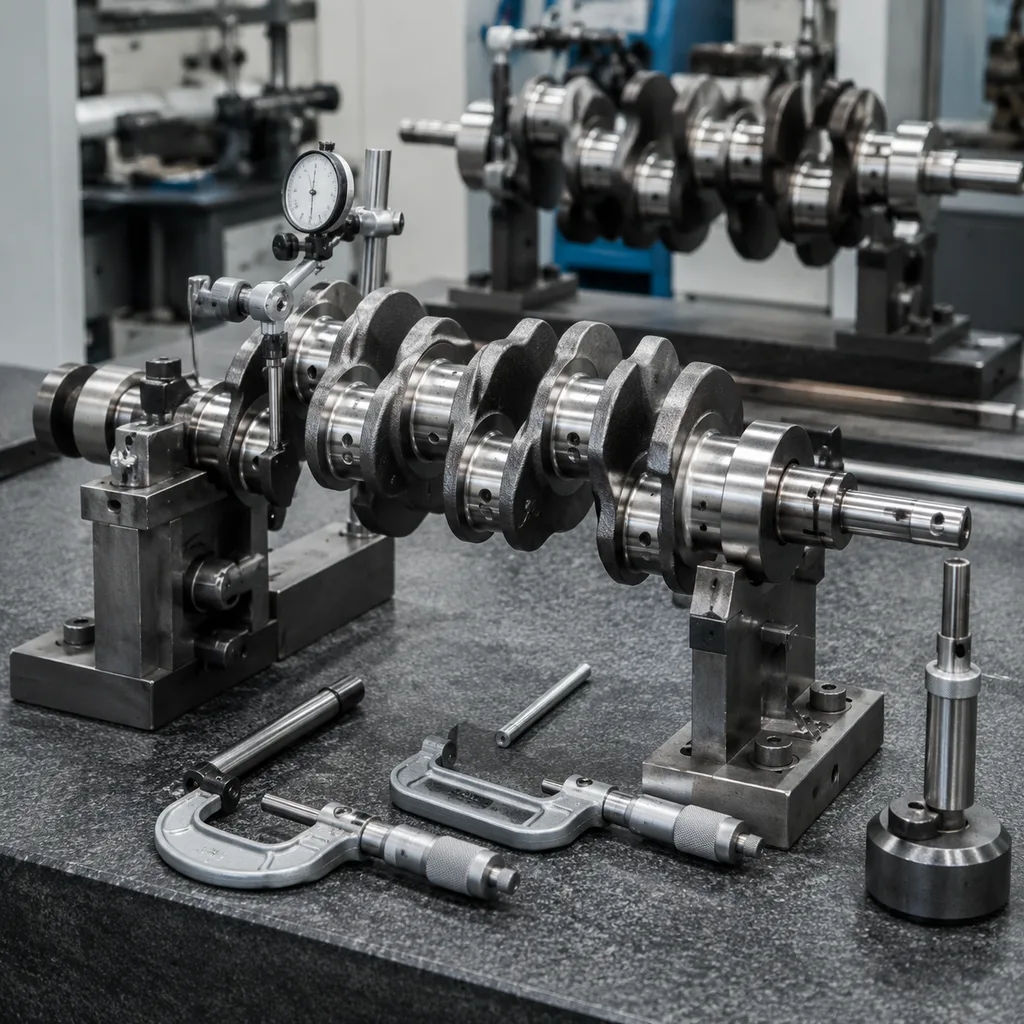
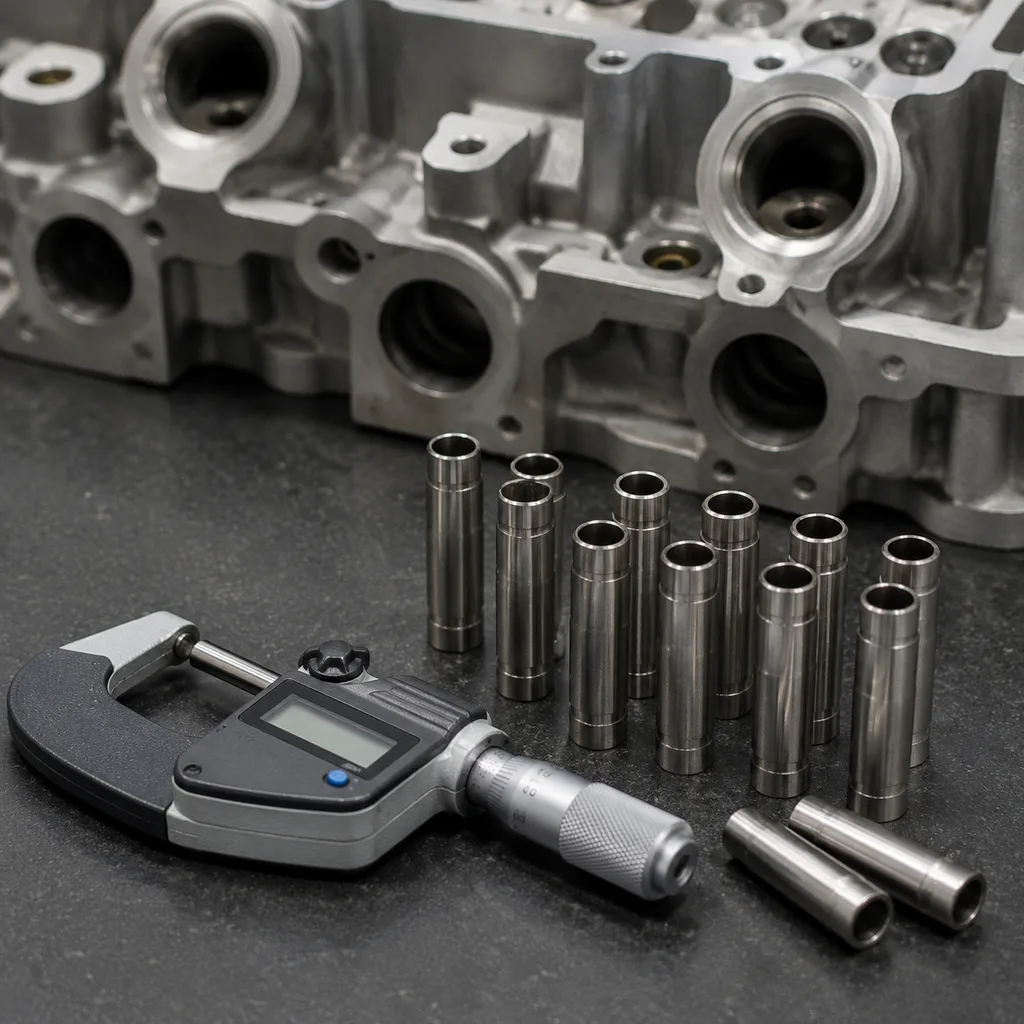
1. Sample dimensional inspection: verify centre distance, big-end bore, small-end bore, width, bolt seating face, parting-line offset, cap register, and oil-hole position against drawing or reference sample. Use calibrated bore gauges, height gauges, micrometers, and CMM where the geometry requires it. 2. Material confirmation: review mill certificate, chemical composition, hardness data, heat-treatment lot traceability, and, for critical programs, metallographic or tensile-test evidence. 3. Assembly simulation: tighten bolts using the specified torque or torque-angle method, then measure big-end bore distortion. If the bolt is torque-to-yield or single-use, mark it as non-reusable in the instruction sheet. 4. Weight grouping: compare total and end-to-end mass across a full engine set. For four-cylinder sets, many buyers specify maximum set spread before packing rather than allowing random mixed weights. 5. Surface inspection: check bearing housing finish, bush finish, parting-line quality, edge break, shot-peening coverage if specified, and burr control around oil holes. 6. Packaging trial: confirm VCI paper or anti-rust oil, bag thickness, inner dividers, carton compression strength, pallet stacking height, and corrosion protection for 30–90 days of sea freight, inland transport, and warehouse dwell time.
Practical acceptance criteria
Acceptance values depend on engine design, so buyers should not copy tolerances from unrelated rods. As a practical procurement rule, the supplier should state the measuring method, gauge calibration status, sample size, and lot number. For a pilot order, an actionable plan is to inspect 5–10 complete sets or at least 10 pieces per SKU dimensionally, then move to AQL-based receiving inspection after two or three stable lots.
Where a buyer does not own the OE drawing, approval can be based on controlled reverse engineering, repeated sample measurement, and fitment validation by the buyer’s technical team. A useful reverse-engineering pack includes three to five reference samples, measurement of each functional dimension, photos of oil-hole and cap features, bolt-preload notes, and installation feedback from a controlled engine build.
For repair-chain programs, warranty data should be separated by engine code, installation mileage, oil grade, installer process, and failure mode. This prevents a sourcing decision from being distorted by unrelated lubrication, assembly, or operating-condition issues.
Commercial Trade-Offs for Importers and Distributors
The commercial difference between a branded part, a King alternative, and direct manufacturing is often visible only after landed-cost analysis. Buyers should include freight density, packaging damage, inspection labour, customs classification, warranty reserve, payment terms, and inventory turn rate.
A low unit price can become expensive if the rod set requires re-sorting, re-packing, additional inspection, or high claim handling. Conversely, a direct factory program can reduce cost and improve control when the importer has repeat demand, stable application data, and a clear approval file.
Key questions for a sourcing review:
Is the application stable enough to justify tooling or dedicated machining fixtures? New forging or cap tooling can change the economic break-even compared with machining from an existing blank.
What annual volume and reorder pattern can be committed? A typical direct program may be quoted at price breaks such as 100, 300, 500, and 1,000 sets, while stocked catalog items may be economical at much lower quantities.
Are rod bolts included, and are they single-use or reusable by design? Bolt inclusion can materially change both unit price and warranty responsibility.
Does the supplier provide lot traceability from forging through final inspection, including heat-treatment batch and bolt lot?
Can the supplier hold safety stock for seasonal, fleet, or regional demand, such as 1–3 months of forecast volume after the buyer establishes repeat orders?
Does private-label packaging require additional barcode, QR code, country-of-origin mark, carton drop-test, pallet height, or mixed-SKU packing rules?
For planning, buyers can separate the program into three commercial stages: sample order, pilot order, and production order. Samples normally carry a higher unit cost because they absorb setup and measurement time. Pilot orders validate packaging, fitment, claim handling, and sell-through. Production orders should use the final drawing revision, carton artwork, inspection frequency, and agreed incoterm, such as FOB Ningbo/Shanghai, CIF destination port, or DDP by special arrangement.
Driventus manufactures engine components in Taizhou, Zhejiang, and exports to more than 60 countries. For connecting rods, pistons, crankshafts, gaskets, water pumps, turbochargers, and related powertrain parts, buyers may combine standard catalog coverage with application-specific review through custom manufacturing.
When to Choose Each Route
For low-volume coverage, a catalog-based branded route may be the lowest-risk choice because the buyer avoids tooling review, drawing control, and engineering workload. It is also useful when demand is irregular and immediate stock is more important than unit price.
A King alternative route may be suitable when the buyer has established market acceptance for that reference and can verify equivalent dimensions, materials, bolts, and packaging. The main risk is that reseller-level documentation may be limited, making root-cause analysis harder if a claim occurs.
A direct factory alternative is usually strongest when the buyer needs repeat supply, private-label control, documented inspection, and predictable landed cost. It requires more upfront work: sample approval, inspection-plan agreement, and packaging confirmation. For procurement teams managing multiple engine-component SKUs, this workload can be spread across a wider program.
A reliable sourcing process is straightforward: define the application, compare the functional dimensions, inspect samples under the same method, run controlled installation validation, and then negotiate commercial terms. A practical timeline is 1–2 weeks for data review, 2–6 weeks for samples if an existing forging or blank is available, 2–4 weeks for buyer validation, and 35–60 days for the first production lot after approval. If new forging tooling is required, add tooling confirmation and trial time before the sample window.
If the part is for a sensitive fleet or warranty-heavy repair chain, start with a pilot order before full rollout. The pilot should lock the drawing revision, inspection checklist, bolt instruction, packing method, and warranty feedback form. After two stable shipments, buyers can discuss blanket orders, rolling forecasts, or reserved monthly capacity.
Buyers can review our catalog and relevant engine components before sending drawings, samples, or application lists for technical review.
Frequently asked questions
No. Interchangeability must be confirmed by dimensions, material, bolt specification, bearing fit, and application testing. Catalog references are useful for screening, but final approval should use sample inspection and buyer validation.
Request dimensional reports, material certificate, heat-treatment data, hardness records, bolt specification, packaging details, and traceability information. For larger programs, include a control plan, inspection frequency, sample approval record, and agreed tolerance list.
No. Driventus is an independent aftermarket manufacturer; brand names are referenced for fitment only. Parts are supplied according to agreed specifications, quality controls, and buyer approval requirements.
For a measured comparison of your current connecting rod source, send application data, drawings, samples, annual volume assumptions, target MOQ, packaging requirements, and required lead time to [request a quote](/contact.html).