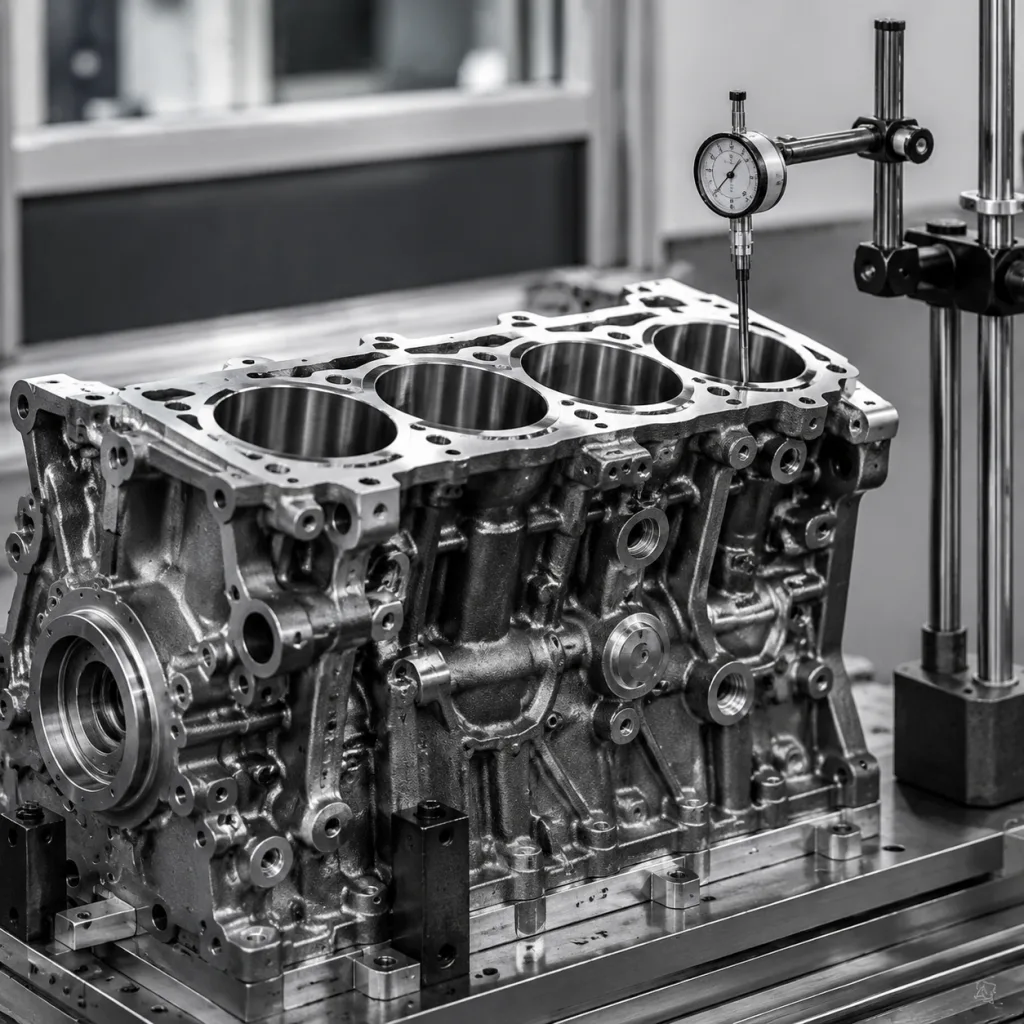
A connecting rod Mazda supplier should be judged less by catalogue size and more by how well it controls fitment, metallurgy, machining, bolts, traceability, packaging, and export paperwork. One wrong pin diameter or bearing width can turn a profitable aftermarket SKU into a warranty problem. Driventus manufactures Mazda-fit connecting rods and related engine components in Taizhou, Zhejiang, supporting B2B buyers with dimensional cross-checks, sample inspection reports, packaging specifications, and batch traceability before purchase order release. This guide gives procurement teams a practical way to compare suppliers, spot failure modes, plan MOQ and lead time, and define the evidence needed for approval. Driventus is an independent aftermarket manufacturer; Mazda and other brand names are referenced only to identify fitment.
Start With the Fitment Decision, Not the Quote
The fastest way to disqualify a connecting rod Mazda supplier is to ask how it confirms fitment. If the answer is only model name, displacement, or model year, the risk is too high. Mazda-fit applications can split by engine family, production range, market version, fuel type, piston pin design, bearing width, and rod-bolt specification.
A usable RFQ file should connect the target application to measurable data:
Target vehicle application, engine code, production year range, and market version where available
Buyer sample, drawing, or OE-style reference when supplied by the buyer
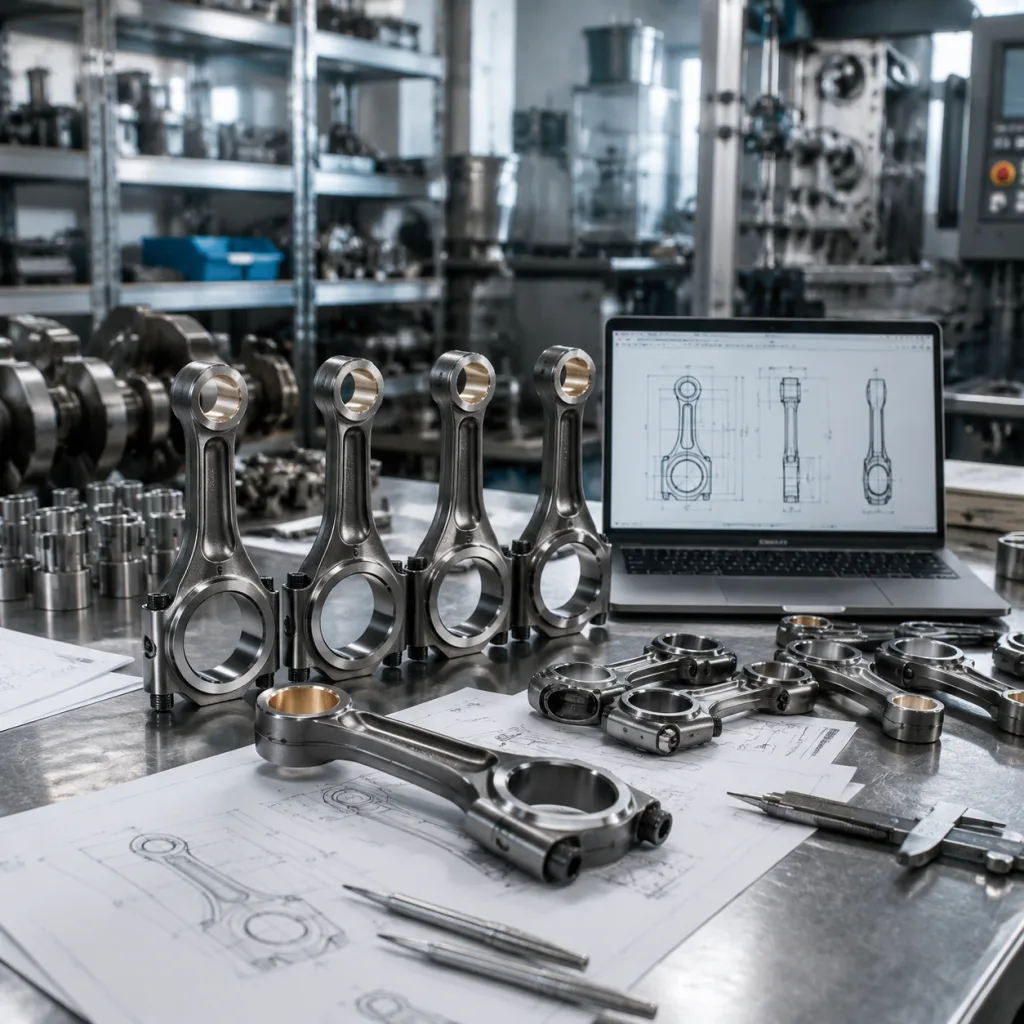
Centre distance, big-end bore, small-end bore, big-end width, small-end width, and pin diameter in mm
Annual forecast, first order quantity, and expected reorder rhythm by SKU
Required branding, neutral packaging, distributor label format, barcode, and carton language
Destination market, Incoterms, compliance requirements, and import document needs
Inspection level, AQL if used, and documents required before shipment
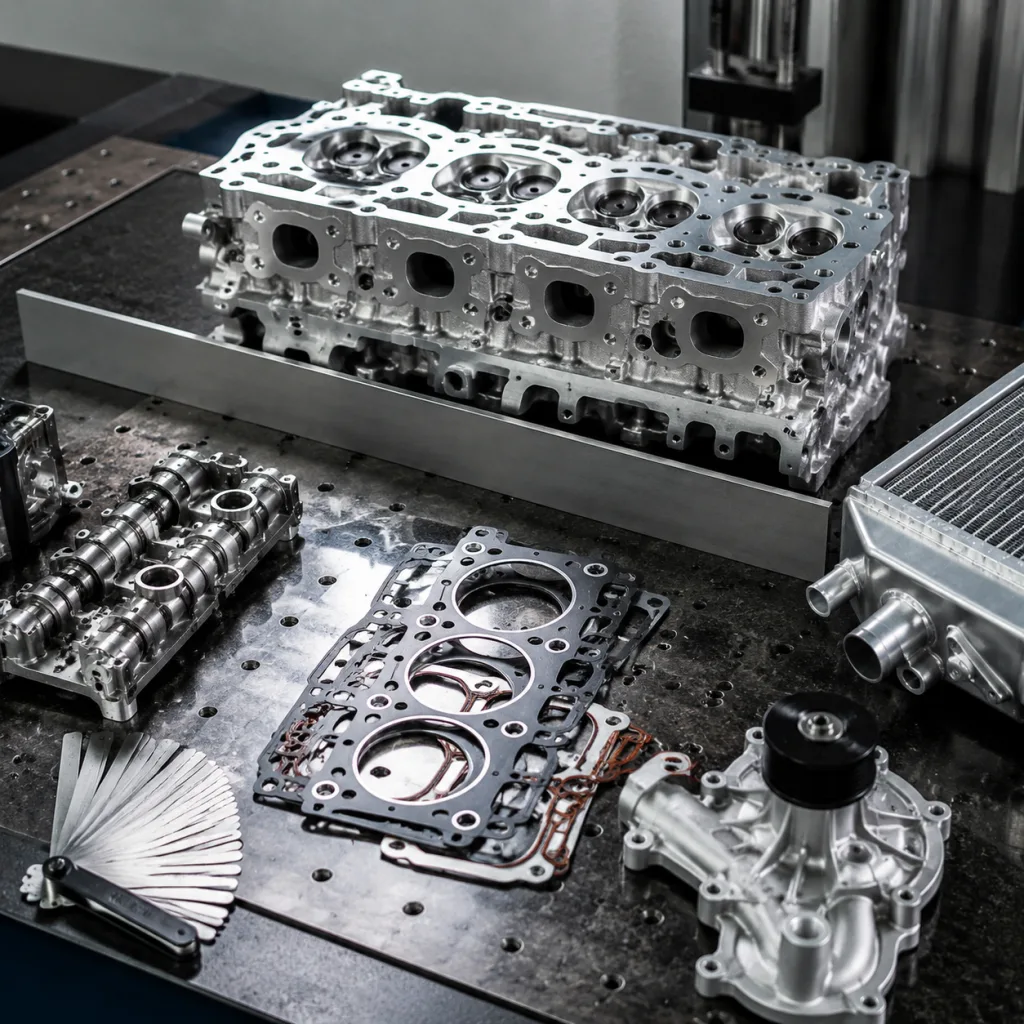
Driventus can review drawings, buyer samples, and application lists against our catalog, including related engine components when buyers source pistons, bearings, gaskets, crankshaft items, or other repair parts within the same programme.
Treat visual similarity as a warning, not proof. Two rods may look interchangeable but differ in pin diameter, big-end width, oil-hole position, bushing material, bearing tang position, or bolt grade. For high-risk SKUs, approve one measured sample set first. Then lock the drawing revision, label code, carton specification, and inspection standard in the purchase order before mass production begins.
Where Connecting Rod Programmes Usually Fail
Most connecting rod claims do not start with one dramatic mistake. They come from small process escapes: a heat-treatment lot mixed with another batch, a bore drifting out of round, a bolt change not reflected in the inspection file, or a private-label carton applied to the wrong SKU. A capable supplier controls these failure points before shipment.
Failure mode
Evidence to request
Why it matters
Wrong steel or mixed heats
Mill certificate, heat number, and grade confirmation such as 40Cr, 42CrMo, or buyer-specified alloy
Confirms chemistry before forging or machining
Unstable blank or forging route
Process flow, forging lot, normalising route, and batch identification
Supports repeatable grain structure or blank quality
Heat-treatment variation
Hardness range, furnace record, quench/temper parameters, and load map
Reduces fatigue, distortion, and premature failure risk
Weak fatigue resistance
Shot-peening coverage, intensity range, and media control where specified
Improves fatigue performance on stressed surfaces
Bearing fit problems
Big-end bore size, roundness, cylindricity, and surface finish data
Affects bearing crush, oil film stability, and service life
Pin noise or seizure risk
Pin bore size, bushing interference, and honing finish where applicable
Affects piston pin fit and lubrication
Engine vibration complaints
Total weight and end-to-end balance tolerance by set
Supports smooth operation across matched rods
Bolt clamping loss
Bolt grade, thread specification, torque method, and lot traceability
Protects clamp load under cyclic stress
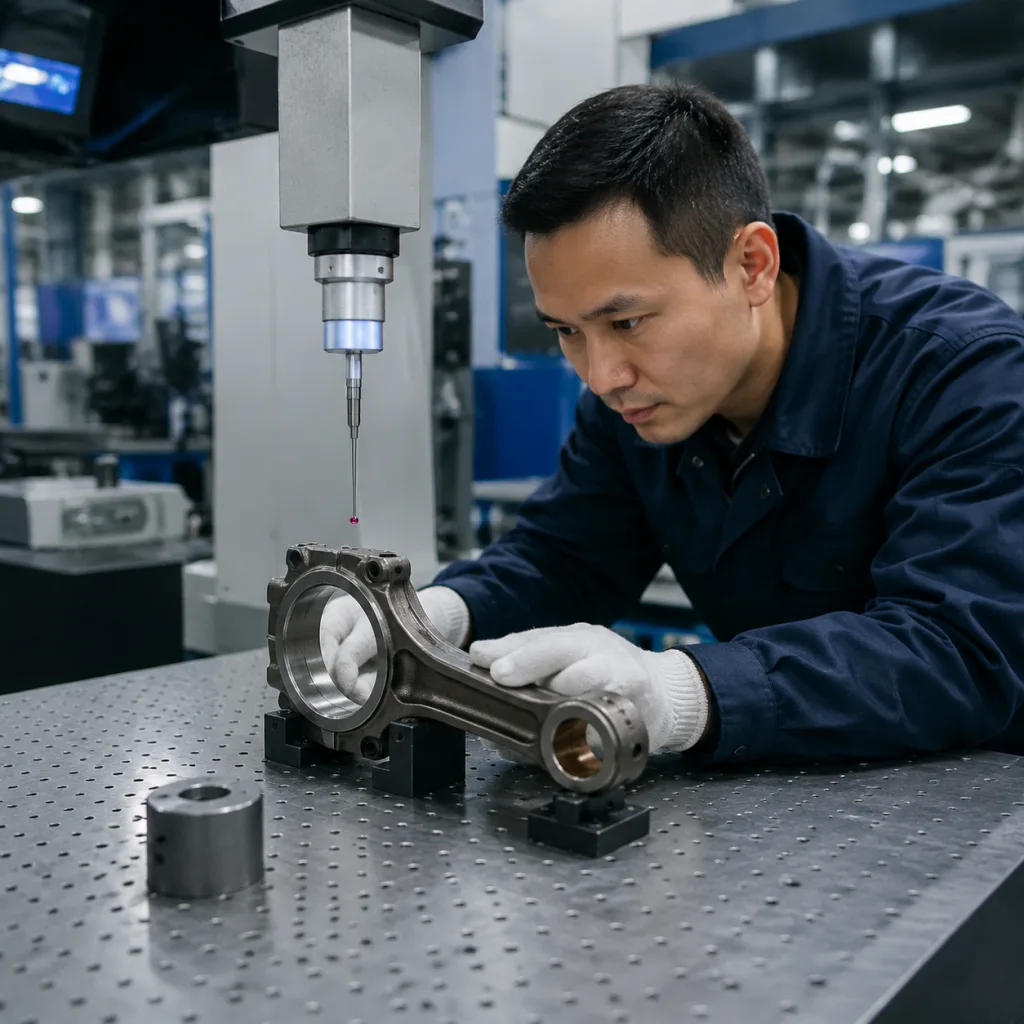
</tr></thead><tbody> </tbody></table>Inspection should cover centre-to-centre length, big-end bore diameter, small-end bore diameter, bore parallelism, twist, bend, side width, surface defects, thread condition, and weight range. Buyer drawings should define the controlling tolerances. If no drawing is available, ask the supplier to propose an inspection standard before quotation, not after production.
Common aftermarket targets may include centre distance within ±0.02–0.05 mm, bore roundness within 0.005–0.010 mm, big-end surface finish around Ra 0.4–0.8 µm, pin-bore finish around Ra 0.2–0.8 µm, hardness held inside a defined HRC band, and set weight variation controlled to an agreed gram range. These are not universal limits. Confirm them against the specific engine family, material, and drawing.
For custom programmes, custom manufacturing may include drawing review, sample reverse measurement, tooling assessment, first article inspection, material confirmation, torque-and-angle bolt guidance where applicable, and packaging design for distributor networks or repair-chain supply.
Audit Evidence: What Proves the Process Is Real
Certificates help, but they do not prove that a shipment is under control. Use them as the entry point, then check whether the supplier can link steel, heat treatment, machining, inspection, packing, and carton labels to the same production batch.
Driventus operates under IATF 16949:2016 and ISO 9001:2015. These systems support process planning, supplier management, corrective action, traceability, calibration, and continual improvement. Buyers preparing supplier approval files can review our quality system.
Request these items before nomination:
Current IATF 16949:2016 and ISO 9001:2015 certificates, where applicable
Process flow chart for the selected connecting rod family, from incoming steel to final packing
Control plan showing inspection frequency, gauge type, reaction plan, and responsible station
Material certificate, heat-treatment record format, and hardness test locations
Sample inspection report or first article inspection report with actual measured values, not only pass/fail marks
Calibration status for bore gauges, micrometers, CMM, height gauges, roughness testers, and hardness testers
Gauge R&R or measurement-system evidence for critical bores when the programme requires it
Nonconformance, 8D, containment, replacement, and corrective action procedure
Export packaging specification or packaging test evidence when required
For EU and UK buyers, approval may also include material and chemical compliance. REACH (EC) No 1907/2006 is relevant to restricted substances in products and packaging. RoHS or customer-specific restricted-substance lists may apply to labels, coatings, bags, inks, or corrosion inhibitors. Vehicle emissions rules, including ECE R-83, may affect the wider vehicle system, but a connecting rod is normally assessed as a mechanical replacement component rather than a stand-alone emissions-control device.
During an audit, ask practical questions. Can the factory trace a finished carton back to material heat and heat-treatment lot? Are bore measurements recorded at first piece, patrol inspection, and final inspection? Are nonconforming rods physically segregated? Can replacement parts be traced by production batch? Driventus is an independent aftermarket manufacturer; brand names are referenced only for fitment identification.
MOQ and Lead Time by Buying Scenario
MOQ is not one number. It changes with the buying scenario: catalogue supply, private-label packing, modified machining, or a new custom rod. Separate sample approval quantity from production MOQ so engineering, fitment, label, and packaging checks can finish before a larger commitment.
Typical scenarios look like this:
Existing catalogue item: sample sets or pilot lots first, then production MOQ influenced by current stock, machining schedule, and batch availability
Private-label packaging: MOQ influenced by printed box quantity, label roll minimums, carton printing, barcode setup, and artwork approval
Modified machining or bushing specification: MOQ affected by setup time, tooling adjustment, fixture changeover, and expanded inspection scope
New forging or dedicated tooling: MOQ and lead time driven by tooling cost, trial production, validation, destructive checks if required, and approval samples
The lowest MOQ usually comes from an existing rod in neutral packing. MOQ rises when printed retail boxes, SKU-specific cartons, or distributor labels are required. It rises again when the programme needs a new blank, new bushing design, or dedicated machining fixture. Unit price normally improves as quantity moves from sample or pilot order to full batch production because setup, inspection, packaging artwork, and export documentation costs are spread across more pieces.
When comparing quotes, check what is included. Rod bolts, bushings, oil paper, VCI bags, retail boxes, master cartons, pallets, fumigation-free pallets, and export documents can change the landed cost.
For repeat distributor supply, a rolling forecast is usually better than one large spot order. Split demand into firm purchase order, 30–60 day call-off, and 90–180 day planning volume by SKU. This helps the factory reserve steel, plan machining capacity, manage bolt and bushing inventory, and keep batch consistency. Before shipment, confirm pallet configuration, carton weight, humidity protection, corrosion prevention, and destination labelling.
Lead time has four separate stages: sample preparation, buyer validation, mass production, and export logistics. Existing samples may move quickly if stock is available. Custom samples require measurement, process review, machining, inspection, and buyer approval. Mass production depends on material availability, heat-treatment queue, machining capacity, packaging readiness, and pre-shipment inspection. If the order needs PPAP-style documents, special packaging, third-party inspection, or consolidation with other engine components, add those items to the timeline at the start.
Cross-Reference Discipline for Mazda-Fit SKUs
Mazda-fit sourcing becomes risky when teams treat an OE-style reference as a complete specification. It is not. Applications may vary by market, engine code, production date, fuel system, service part supersession, bearing supplier, and piston pin configuration.
Driventus uses brand and model references only to identify fitment. We do not claim vehicle manufacturer approval. If a buyer supplies OE-style references, those numbers should be handled as fitment references, not as permission to use protected branding on products, cartons, labels, listings, or marketing materials.
A strong cross-reference file should include:
Buyer SKU and supplier SKU
Vehicle application range, production date range, and destination market
Engine code or engine family, fuel type, aspiration, and relevant displacement
Key dimensions and material specification, including centre distance, big-end bore, pin bore, widths, and bolt size
Bearing and piston pin compatibility notes, including bushing or full-floating pin details where relevant
Supersession history, if supplied by the buyer
Packaging code, barcode requirement, label language, and country-of-origin wording
Drawing revision, sample approval date, and first production batch number
Distributors selling into the EU, UK, US, Canada, Australia, Brazil, or other regulated markets should confirm label rules, customs descriptions, country-of-origin statements, and importer-specific wording before production packaging begins. Clear product descriptions reduce customs delays and help warehouse teams avoid mixing similar rods across multi-location inventory systems.
Add change control to the file. If the buyer updates an OE-style reference, adds a new market application, changes bearing supplier, or switches from neutral to private-label packaging, the supplier should confirm whether dimensions, carton artwork, barcode data, or customs wording need revision before the next shipment.
Final Supplier Scorecard Before Nomination
Use the final evaluation as a scorecard, not a loose checklist. A low unit price loses its value if incoming goods require sorting, packaging must be reworked, fitment data triggers catalogue disputes, or shipment documents delay customs clearance.
Commercial checks
MOQ by SKU, packaging type, and whether rods are sold individually, in engine sets, or master cartons
Sample cost, sample lead time, courier terms, and whether sample cost is credited after mass order
Drawing, sample, or application confirmation before production, with revision control
Dimensional inspection report for the first batch with actual values for critical dimensions
Material, heat-treatment, shot-peening where specified, and hardness traceability
Surface finish, bore geometry, perpendicularity, twist, bend, and weight-control method
Rod-bolt specification, thread inspection, tightening guidance, and replacement-bolt availability where supplied
Audit checks
Valid quality-management certificates and scope matching the manufacturing activity
Calibration records for critical gauges and evidence that overdue gauges are blocked from use
Control plan for machining, heat treatment, final inspection, packing, and traceability labels
Nonconformance handling, containment speed, replacement policy, and 8D response timing
Traceability from finished carton to production batch, material heat, heat-treatment lot, and inspection record
For long-term supply programmes, Driventus can support staged approval through sample review, pilot order, first production shipment, and scheduled repeat supply. To discuss fitment data, drawings, MOQ, documentation, or export packing, request a quote.
Frequently asked questions
Yes. Driventus supports neutral packaging and private-label programmes subject to MOQ, artwork approval, label requirements, barcode data, carton language, and destination market rules. Brand names are referenced for fitment only, not endorsement.
Typical documents include IATF 16949:2016 and ISO 9001:2015 certificates, inspection reports with measured values, material records, heat-treatment records, control plans, calibration evidence, packaging specifications, and traceability records depending on the order scope.
Yes. Buyers can provide drawings, samples, target dimensions, application data, or required tolerances. Driventus can review manufacturability, MOQ, tooling needs, inspection requirements, documentation, sample approval steps, and export packaging before quotation.
If you are comparing suppliers for Mazda-fit connecting rods, share your application list, forecast, target packaging, critical dimensions, tolerance requirements, and documentation needs. Our team can review the project and respond with sourcing options at /contact.html