Connecting Rod for Kia Picanto Replacement: Fitment Checklist
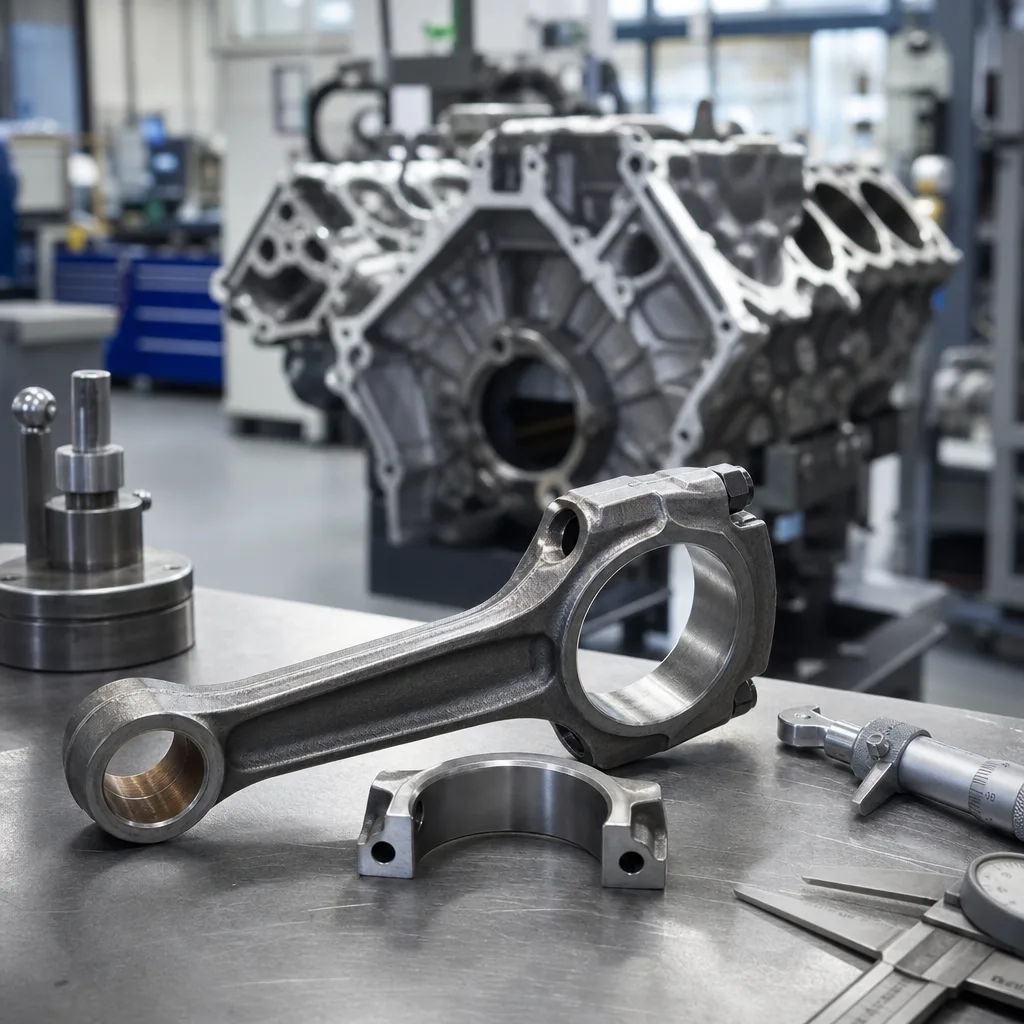
Selecting a connecting rod for Kia Picanto replacement is mainly a dimensional and validation exercise. Buyers should confirm the engine code, piston pin size, centre-to-centre length, big-end and small-end bore, rod bolt specification, and total mass before releasing a purchase order. The goal is not a generic spare part; it is an OE-equivalent component that fits the intended engine family without altering bearing clearance, compression height, or rotating balance. Driventus is an independent aftermarket manufacturer; brand names are referenced for fitment only. For procurement teams, the useful checks are straightforward: material grade, forging route, heat treatment, shot peening, hardness range, and traceability to an audited quality system. That is the basis for stable supply into distributor networks, repair chains, and OEM or Tier-1 programmes. The sections below focus on the match points that matter before approval, stocking, and installation.
Start With the Engine Code, Not the Model Name
A Picanto badge does not define a single connecting rod specification. Model years, engine families, and market variants can change the rod length, pin diameter, bearing width, and bolt design. For that reason, procurement should treat the vehicle model as a starting point only.
Before ordering, confirm:
- Engine code from the block, VIN decode, or dismantled sample
- Piston pin diameter and small-end bush size
- Centre-to-centre length
- Big-end bore and cap geometry
- Rod bolt type, thread, and tightening method
- Total rod mass and pair matching, if the engine is balanced by set
If the sample part is available, measure it directly rather than relying on catalogue photography. A supplier can only match an OE-equivalent rod when the reference data is complete. That is especially important for distributors covering multiple regions, where the same nameplate may hide several internal engine revisions.
Dimensions That Must Match Before Installation
The main risk in a replacement buy is an almost-correct rod that passes visual inspection but fails on clearance or balance. The table below shows the fields procurement teams should verify on every enquiry.
| Check point | Why it matters | Procurement note | |
|---|---|---|---|
| Centre-to-centre length | Affects compression height and piston position | Match to the engine family, not the vehicle badge | |
| Big-end bore | Controls bearing fit and oil clearance | Confirm with a bore gauge on both caps | |
| Small-end bore | Controls pin fit and bush selection | Verify whether a bush is fitted or integral | |
| Beam width and offset | Affects crankcase clearance | Compare against the sample rod and cap profile | |
| Rod bolt specification | Influences clamp load and fatigue life | Record thread form, length, and tightening method | |
| Finished weight | Affects balance and NVH | Request matched sets when the engine requires it |
| Option | Strength | Limitation | Best use case |
|---|---|---|---|
| New aftermarket OE-equivalent | Lowest installation risk when dimensions are verified | Requires upfront validation | Distributor stock and workshop supply |
| Reconditioned used part | Lower purchase price | Variable fatigue history and wear | Short-term service work only |
| Custom manufacturing | Exacting control over revision and packaging | Higher setup effort | Private-label or programme demand |