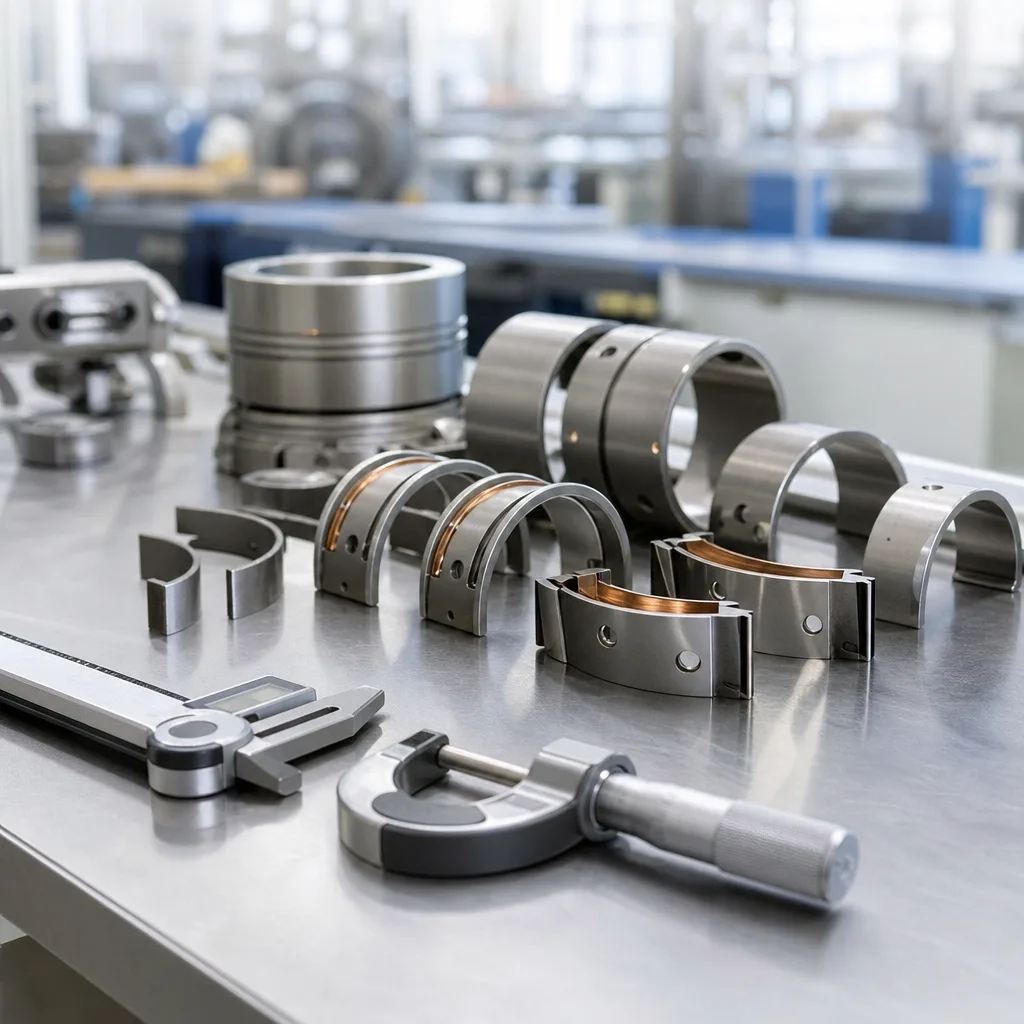
Cylinder liner Renault manufacturer China: sourcing guide
If your search starts with cylinder liner Renault manufacturer China, the real buying question is whether the supplier can match the engine code, the bore geometry, and the documentation your quality team needs. For Renault passenger and light-commercial applications, buyers usually care about dimensional stability, surface finish, metallurgy, and repeatable packaging, not just unit price. Driventus is an independent aftermarket manufacturer; brand names are referenced for fitment only. Buyers should compare drawings, sample reports, and production control before they issue a PO. The strongest suppliers can support OE cross-references, provide PPAP-style data where requested, and keep traceability stable across batches. They should also be clear about MOQ, lead time, and requalification rules after tooling changes. This article covers the checks that matter for distributors, OEM programmes, and repair chains sourcing from China.
What buyers should verify on the first enquiry
Start with the drawing, not the listing title. For Renault applications, the supplier should confirm the engine code, bore diameter, flange height, wall thickness, and any deck or protrusion limit before sample approval. Ask whether the part is a dry liner or wet liner, because sealing, corrosion control, and installation checks are different.
Check
Buyer target
Procurement note
Dimensional report
Match the current drawing revision
Keep CMM or air-gauge data with the RFQ file
Surface finish
Defined on the print
Hone control affects ring seating and oil control
Material
Cast iron grade as specified
Request chemistry and hardness by batch
Traceability
Heat and lot level
Needed for claims, returns, and rework decisions
Packaging
Rust prevention and clear label control
Reduces transit damage and mix-ups
</tr></thead><tbody> </tbody></table>If a supplier cannot answer these five points quickly, the quote is not ready for a sourcing decision.
Materials and machining that affect service life
The main risk in liner sourcing is not nominal size. It is variation in bore geometry, hone quality, and metallurgical consistency across batches. A good production process keeps the bore roundness, taper, and finish inside the drawing window after machining, cleaning, and packaging.
Buyers should ask for:
Chemistry and hardness results tied to the heat number
The hone method used, including whether plateau finishing is controlled in-house
Confirmation of any coating, phosphate, or preservative oil used before shipment
Inspection records for internal and external diameters, flange face, and concentricity
Requalification rules if tooling, material source, or machine setting changes
If the application involves higher thermal load or turbocharged duty, request microstructure evidence as well as a visual sample. For chemical and packaging compliance, confirm REACH (EC) No 1907/2006 status. If the build must support a road-use validation file, keep ECE R-83 references in the dossier where applicable. Where cyclic corrosion data is needed for packaging or coating decisions, SAE J2527 is a reasonable test reference.
Documentation your quality team will ask for
A supplier that can ship parts is not always a supplier that can pass a factory audit. Your file should include signed drawing confirmation, first article inspection results, dimensional reports, chemistry and hardness data, and a traceability map from material heat to finished lot.
The factory should also be able to explain how it controls gauges, calibration intervals, incoming material checks, and nonconforming product. If that answer is unclear, the risk lands on your receiving team.
For internal supplier approval, the relevant benchmark is not a sales brochure. It is the control system behind it. Review our quality system and ask whether the line is managed under IATF 16949:2016 and ISO 9001:2015 procedures. If your programme needs PPAP-style submission packs, state that in the RFQ. It is easier to align on evidence before sampling than after the first shipment.
MOQ, lead time, and sourcing model
For procurement teams, the commercial model matters as much as the part itself. Stock programmes usually move faster, but they cover fewer Renault engine codes and less packaging customisation. Drawing-specific production takes longer, but it reduces the risk of a dimensional mismatch or a packaging error at warehouse intake.
Typical sourcing questions to settle early:
MOQ by engine family, finish size, and carton configuration
Sample lead time versus batch production lead time
Whether export cartons, barcodes, and language labels are part of the quote
How the supplier handles rework, replacement, or credit on failed samples
If you need adjacent parts for the same programme, browse our catalog and engine components. When the liner is only one item in a broader engine rebuild plan, custom manufacturing is the right route. State target annual volume, forecast split, and desired Incoterms at the start so the quote reflects the real landed cost.
How to structure an RFQ for Renault applications
A clean RFQ reduces back-and-forth and improves sample quality. Include the engine code, application, drawing revision, annual demand, target packaging, inspection requirements, and any OE cross-reference your team uses.
If your internal file uses an OE-style reference such as OE 06A107065, keep it tied to the engine code and verify it against the drawing before sample approval. Do not rely on the number alone; the same family can have multiple dimensional variants.
Your RFQ should also state what the quotation includes: machining only, liner plus finish honing, rust prevention, inspection reports, export packing, or all of the above. That avoids later disputes over scope. For multi-warehouse networks, define whether mixed-sku cartons are acceptable or whether each pallet must carry a single reference. Clear scope improves repeatability, which is the real objective in cylinder liner sourcing.
Frequently asked questions
Yes. The normal path is sample submission, dimensional verification, and fit check before batch release. For engine rebuild programmes, ask for sample quantity, lead time, and the exact inspection report format up front.
At minimum, request drawing confirmation, dimensional inspection data, chemistry and hardness results, traceability by lot, and packaging details. If your approval process is stricter, add PPAP-style records and gauge calibration evidence.
Yes, if the specification is clear before the order is placed. Define carton count, label content, barcode format, pallet height, and any corrosion-prevention requirement during the RFQ stage to avoid rework.
If you need a drawing review, sample plan, or commercial quotation, send the engine code and annual volume via [request a quote](/contact.html).