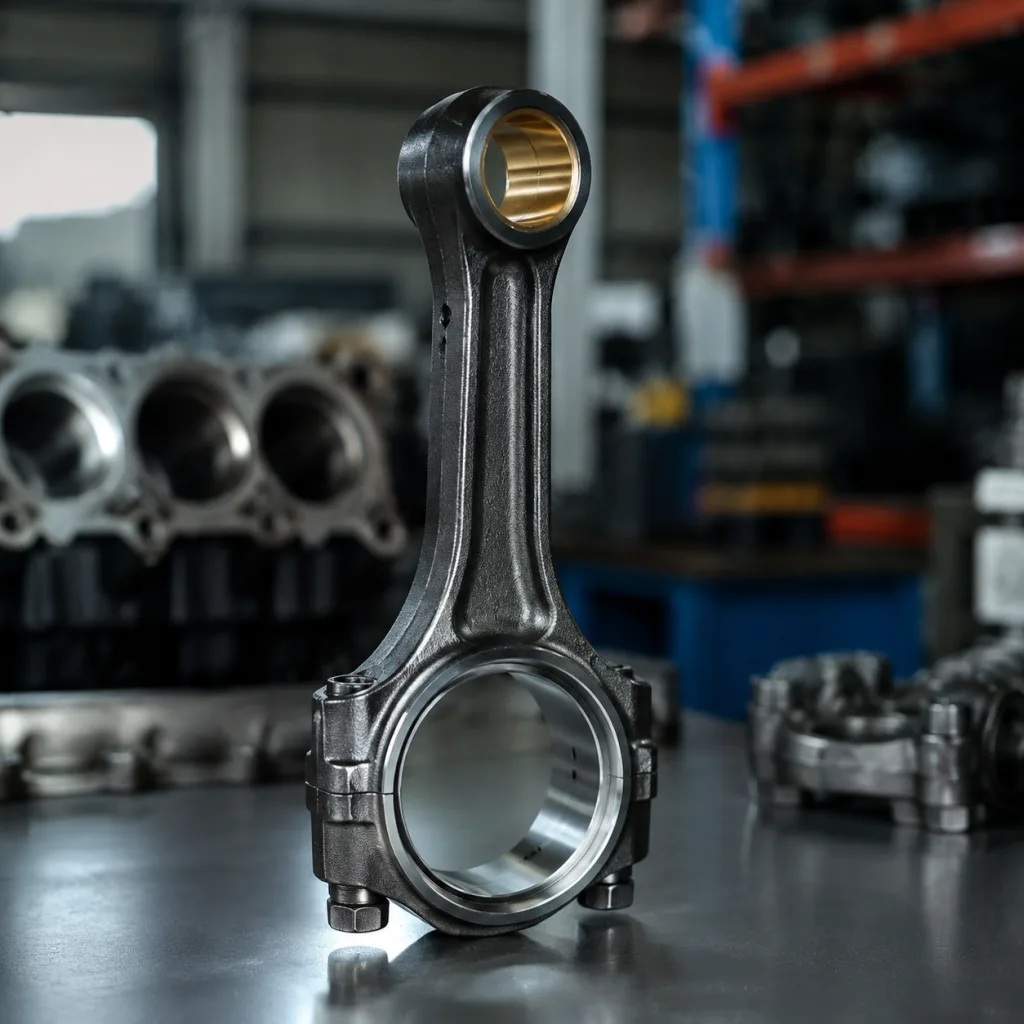
Connecting Rod for Jeep Grand Cherokee Aftermarket Replacement
A connecting rod for Jeep Grand Cherokee aftermarket replacement has to match more than the visible shape. Buyers need the correct centre distance, big-end and small-end geometry, weight balance, and material consistency so the engine assembles correctly and stays within design limits. For procurement teams, the first question is whether the replacement rod is dimensionally equivalent to the OE part and validated for the target engine family. That means checking bore size, bearing seat finish, cap alignment, fastener specification, and batch traceability before placing volume orders. Driventus is an independent aftermarket manufacturer; brand names are referenced for fitment only. We supply engine components from Taizhou, Zhejiang, with IATF 16949:2016 and ISO 9001:2015 systems in place, and we support buyers who need repeatable quality, clear cross-references, and documented inspection results.
Start with the fitment question, not the price
For a connecting rod for Jeep Grand Cherokee aftermarket replacement, the first decision is whether the part is actually interchangeable with the engine family you are buying for. If the dimensions are wrong, a low price only makes the mistake cheaper to repeat.
Confirm engine code, model year, and OE cross-reference before comparing specifications
Verify centre-to-centre length against the target engine print, not just the catalog listing
Check big-end bore, small-end bore, cap register, and bolt pattern together
Compare finished weight and balance limits for the intended rebuild set
Ask for lot-level dimensional data, not a single sample photo or brochure claim
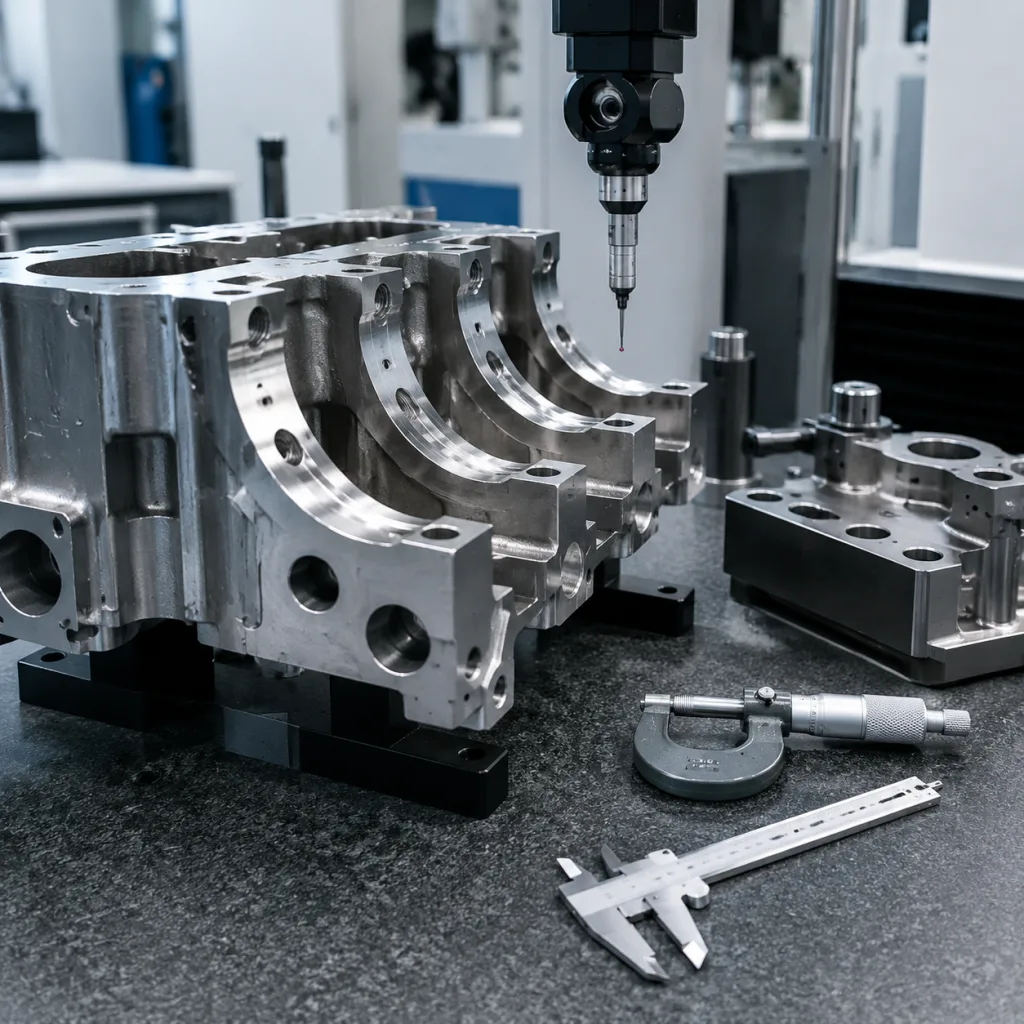
A rod can look correct and still create assembly problems if beam profile, roundness, or cap alignment falls outside tolerance. For fleet and wholesale programs, request a batch report that includes centre distance, bore IDs, roundness, twist, bend, and finished weight. That gives your receiving team something measurable, not just a marketing description.
What fails first when a rod is off spec
Most sourcing problems show up at assembly, and they are rarely subtle. The engine may not seize immediately, but the mismatch usually appears as noise, bearing wear, or balance issues during build-out or early service.
Failure mode
What it usually points to
Tight big-end fit
Bore size, roundness, or cap torque issue
Small-end scuffing
Pin clearance or bushing finish problem
Repeated bearing wear
Bore alignment, surface finish, or clamp load variation
Vibration after rebuild
Weight mismatch across the rod set
Uneven parting-line marks
Cap register or machining shift
</tr></thead><tbody> </tbody></table>Buyers often focus on the rod body and miss the joint. In practice, the cap face, bolt spec, and torque method matter just as much as the beam itself. If those details are uncontrolled, the part may pass visual inspection and still fail in the field. For that reason, ask for the production inspection record, the fastener specification, and the torque procedure used during validation.
Spec checks that separate real replacements from lookalikes
Replacement rods for light-duty engines are commonly forged from alloy steel, but the material route is only one part of the spec. Finished performance depends on machining accuracy, heat treatment, and the quality of the bearing surfaces.
Typical procurement checks
Item
What to verify
Why it matters
Material
Forged steel grade or approved equivalent; request mill certs and heat number traceability
Fatigue life and fracture resistance
Heat treatment
Controlled hardening and tempering; ask for hardness map by batch
Strength consistency
Big-end roundness
Verified after cap torque; target roundness often ≤0.005 mm and bore taper within print limits
Bearing life and oil film stability
Small-end finish
Bushing or honing quality; target surface finish often Ra 0.4–0.8 μm on finished bearing surfaces
Pin wear control
Surface quality
No laps, cracks, burrs, or denting; 100% visual plus periodic NDT
Assembly reliability
Fasteners
Specified bolt grade and torque method; confirm torque-angle or stretch method as required
Clamp load retention
</tr></thead><tbody> </tbody></table>Driventus manufactures to controlled process steps and can align production to customer print requirements through custom manufacturing when a direct OE-equivalent part is not enough. Ask whether the part is supplied as a serviced pair or as an individually balanced single unit, because that affects both installation and inventory planning. Every shipment should carry batch traceability for receiving inspection and claim handling.
Validation data should answer one question: will it hold up?
A credible replacement program needs more than a final inspection sheet. The validation package should show that the rod survived the checks that matter for real engine use, not just that it looked correct in a photo.
1. Dimensional inspection on every lot or defined sampling plan, with AQL or 100% critical-characteristic inspection for rod length, bores, and weight 2. Magnetic particle or crack detection on forged parts where applicable, especially on beam fillets and cap transition areas 3. Hardness verification after heat treatment, typically across a defined batch sample set with acceptance windows tied to the OE specification 4. Static load and fatigue confirmation for the rod body, with cycle targets set to the duty profile and no permanent deformation at proof load 5. Cap bolt torque retention and joint integrity testing, including torque-to-yield or reusability rules by fastener type 6. Fitment verification with the intended crankshaft and piston set, including side clearance, big-end crush, and small-end articulation checks
If the application is emission-controlled or used in export markets with strict compliance rules, material declarations should support REACH (EC) No 1907/2006 where applicable. For outdoor durability, suppliers may also reference SAE J2527 where relevant to component and system-level validation. The key point is simple: the part should be proven on the bench before it enters the warehouse. Buyers should also ask whether validation was performed on a raw rod, a finished rod with bolts, or a full rotating assembly, because that changes how transferable the data is to your program.
How to compare suppliers without getting trapped by unit price
The cheapest quote is often the most expensive option once sampling, delays, and rejects are included. A better comparison looks at total landed cost, documentation depth, and how consistently the supplier can repeat the same part.
Supplier check
Acceptable baseline
Quality system
IATF 16949:2016 and ISO 9001:2015 documented
Traceability
Lot number and inspection record available
Packaging
Corrosion protection and part identification
Lead time
Stable replenishment plan for repeat orders, typically 25–35 days for stocked runs or 45–60 days for new release batches
Cross-reference support
OE number mapping confirmed by application
Claims handling
Photo, measurement, and batch review process
Commercial terms
MOQ, price break, and sampling cost disclosed before order
</tr></thead><tbody> </tbody></table>A practical buyer request is a tiered quote that shows sample quantity, pilot lot, 500-piece and 1,000-piece price breaks, packaging cost, and repeat replenishment timing. That makes suppliers comparable. It also exposes hidden friction, such as high MOQ, chargeable inspection data, or slower release timing. Driventus supports B2B supply for aftermarket distributors, OEM and Tier-1 channels, and repair network customers. Buyers can review our quality system to see how inspection, control plans, and traceability are managed before qualification.
When the right answer is a custom rod
Some Jeep Grand Cherokee programs do not fit a shelf part cleanly. Engine revisions, region-specific calibrations, and long-term service planning can make a direct replacement awkward or risky.
Use a custom specification when:
The OE rod is discontinued
The engine family has mixed bore or pin dimensions
A rebuilder needs a balanced set for matched assembly
A distributor needs private-label packaging and controlled release timing
A fleet program needs a repeatable long-term supply plan
The advantage is control. A custom route reduces mismatch risk and gives procurement a clearer long-term supply picture. Still, the final drawing has to be validated against the target engine: bore diameter, centre length, bolt spec, weight target, and permissible balancing range all need sign-off before release. Ask the supplier to confirm drawing revision, sample approval status, and whether the quote includes PPAP-style documentation, pre-production samples, or only production lot release. Do not assume fitment from appearance alone.
Frequently asked questions
Yes, if it matches the OE dimensions, material requirements, and validation results for the engine family. The supplier should provide traceability and inspection records, including bore checks, weight data, and lot identification.
Check engine code, centre distance, bore sizes, fastener spec, weight range, and lot consistency. Ask for a dimensional report, hardness data, and batch-level quality documents, and confirm MOQ, unit price breaks, and repeat lead time before release.
Yes. We support custom manufacturing for defined drawings and application data, with B2B packaging, sample approval, and repeat-order planning for distributors and service networks.
If you need a verified replacement part, batch documentation, or application review, contact Driventus and [request a quote](/contact.html).