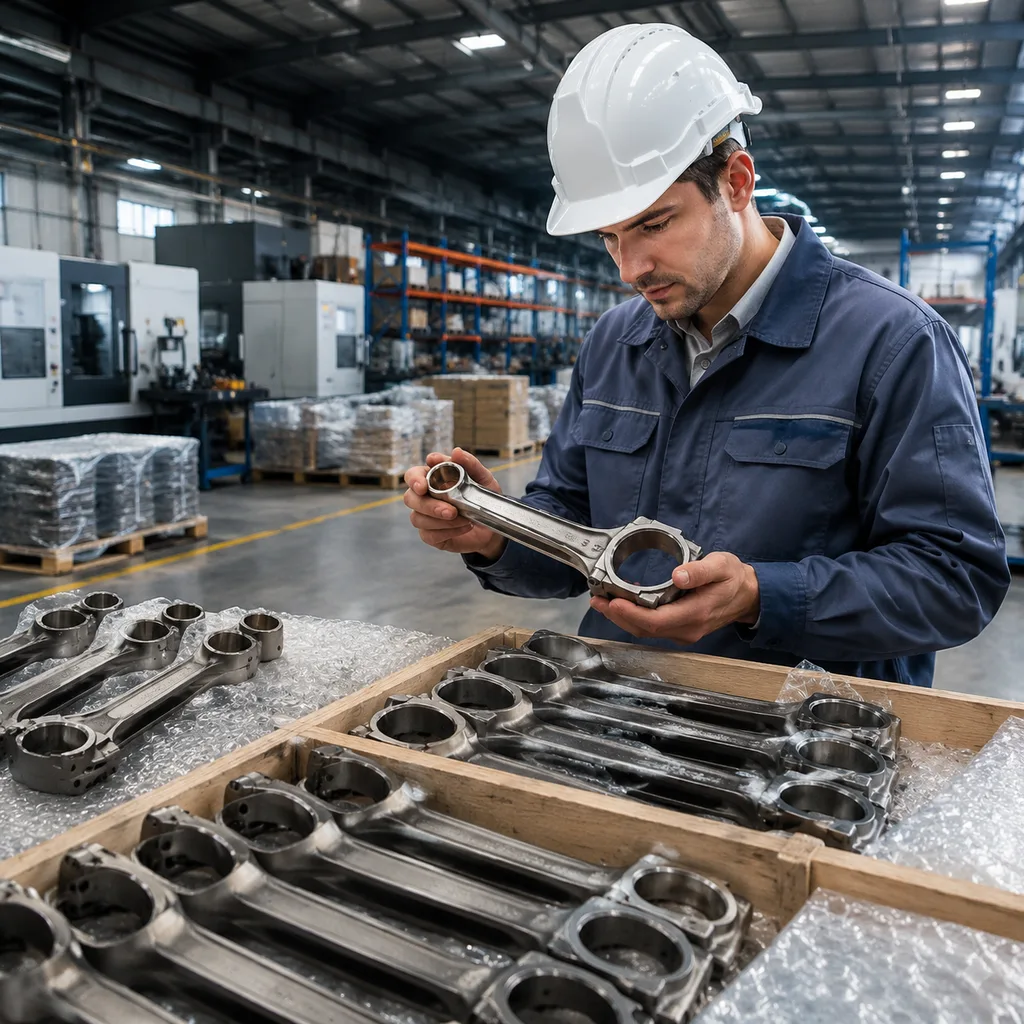
Procurement teams sourcing connecting rod Jaguar wholesale programs need more than a price list. A rod is a fatigue-critical engine component: small errors in bore geometry, bolt clamp load, material cleanliness, or weight matching can create warranty exposure across an engine family. For distributors and engine rebuild suppliers, the commercial question is whether a manufacturer can hold repeatable dimensions across batches, document traceability, and package parts for multi-country distribution. Driventus manufactures engine and powertrain components in Taizhou, Zhejiang, with exports to 60+ countries. We support aftermarket distributors, Tier-1 supply projects, and repair-chain programs with controlled production, inspection records, and packing options. Driventus is an independent aftermarket manufacturer; brand names are referenced for fitment only. This guide outlines how buyers can evaluate Jaguar-fit connecting rods for wholesale supply, including specifications, MOQ, lead time, audit expectations, and documentation.
Wholesale fitment scope and buyer use cases
Jaguar applications can cover different engine architectures, production periods, and service strategies. For wholesale planning, buyers should define the program by engine code, displacement, fuel type, and rod design rather than by vehicle model alone. A typical sourcing file should include sample parts, drawings where available, OE cross-reference style identifiers such as OE 06A… only when applicable to the buyer’s catalog logic, and required kit contents.
Common B2B use cases include:
Aftermarket distributor stocking: boxed individual rods or matched sets for engine rebuild channels.
Machine shop and reman supply: bulk-packed rods with strict big-end bore and pin-end control.
Repair-chain programs: repeatable SKU packing, barcode labels, and predictable replenishment.
Private-label programs: customer artwork, carton specifications, and consolidated export shipments.
For related engine components, buyers can review our catalog and the engine range at /products/engine-components.html. If the application requires a non-catalog geometry, Driventus can evaluate custom manufacturing from samples, drawings, or controlled reverse engineering data.
Technical specification points procurement should lock
A connecting rod sourcing specification should state dimensions, material, machining process, heat treatment, fastener requirements, and inspection method. Without these details, two visually similar rods may perform differently under cyclic load.
Control item
Typical requirement to define
Procurement risk if omitted
Center-to-center length
Drawing nominal with tolerance
Compression ratio variation and imbalance
Big-end bore roundness
Micron-level inspection after cap assembly
Bearing crush loss or oil film failure
Small-end bore geometry
Pin clearance and surface finish
Piston pin noise, scuffing, or seizure
Weight matching
Set tolerance by program requirement
NVH issues and crankshaft loading variation
Material grade
Forged steel, powder metal, or specified alloy
Unknown fatigue strength
Bolt specification
Size, grade, torque-angle or stretch method
Cap movement and bearing damage
Surface treatment
Shot peening or other specified process
Reduced fatigue margin if inconsistent
Traceability
Lot, heat, and inspection record
Slow containment after field issues
</tr></thead><tbody> </tbody></table>Driventus can produce to an agreed buyer specification and inspection plan. We do not claim approval or endorsement by any vehicle manufacturer. Validation evidence can include dimensional reports, hardness checks, material certificates, batch traceability, and production control records, depending on the commercial agreement.
MOQ, lead time, and wholesale ordering structure
For connecting rod Jaguar wholesale purchasing, commercial planning should separate trial orders from repeat production. A small pilot lot allows the buyer to validate fitment, packaging, labeling, and local market demand before committing to a full container or annual framework order.
Typical ordering structure:
Sample order: small quantity for dimensional confirmation, assembly checks, and packaging approval.
Pilot batch: limited production run with inspection records and buyer sign-off.
Repeat wholesale order: scheduled releases by SKU, usually consolidated with other engine parts.
Private-label program: additional lead time for carton artwork, label approval, and packing validation.
Lead time depends on whether the rod is in an active production family, requires new tooling, or needs special marking and packing. For active SKUs, buyers should plan for production scheduling, inspection, export packing, and sea or air freight. For new development projects, the timeline must include sample measurement, drawing confirmation, tooling or fixture preparation, first-article inspection, and packaging approval.
A practical request for quotation should include target annual volume, destination port, required Incoterms, packaging format, inspection level, and whether the buyer needs documentation for customs, marketplace compliance, or distributor onboarding.
Certification, audit readiness, and quality controls
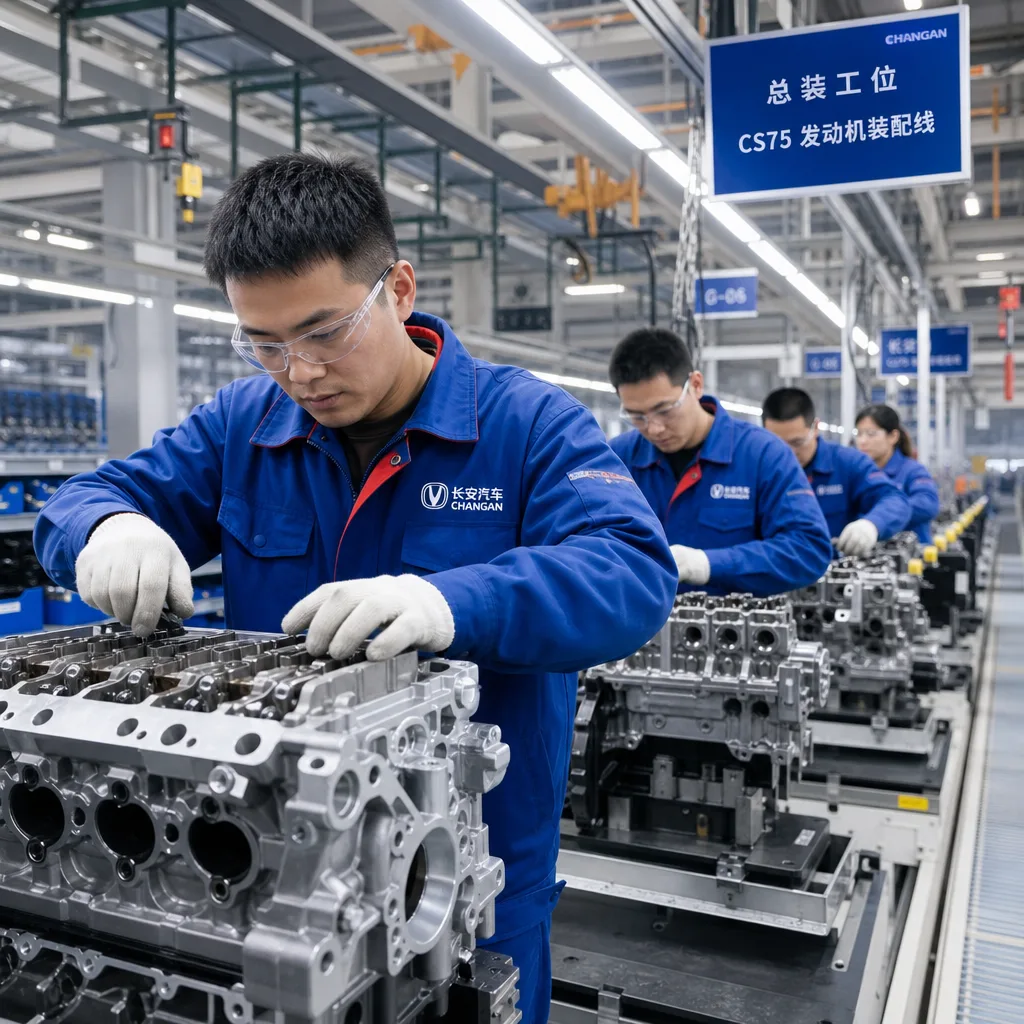
Connecting rods require process discipline because failures are rarely isolated to cosmetic defects. Buyers should verify that the supplier’s quality controls are documented and auditable. Driventus operates under IATF 16949:2016 and ISO 9001:2015 management systems, with controls covering supplier qualification, incoming inspection, machining checks, final inspection, traceability, and corrective action.
Key audit topics for sourcing teams include:
Material certificate review and heat/lot traceability.
Control plan for forging, machining, cap matching, and final inspection.
Gauge calibration records and measurement system controls.
Nonconforming product segregation and rework approval rules.
Packaging validation for corrosion protection and transport damage prevention.
Corrective action workflow for dimensional or field complaints.
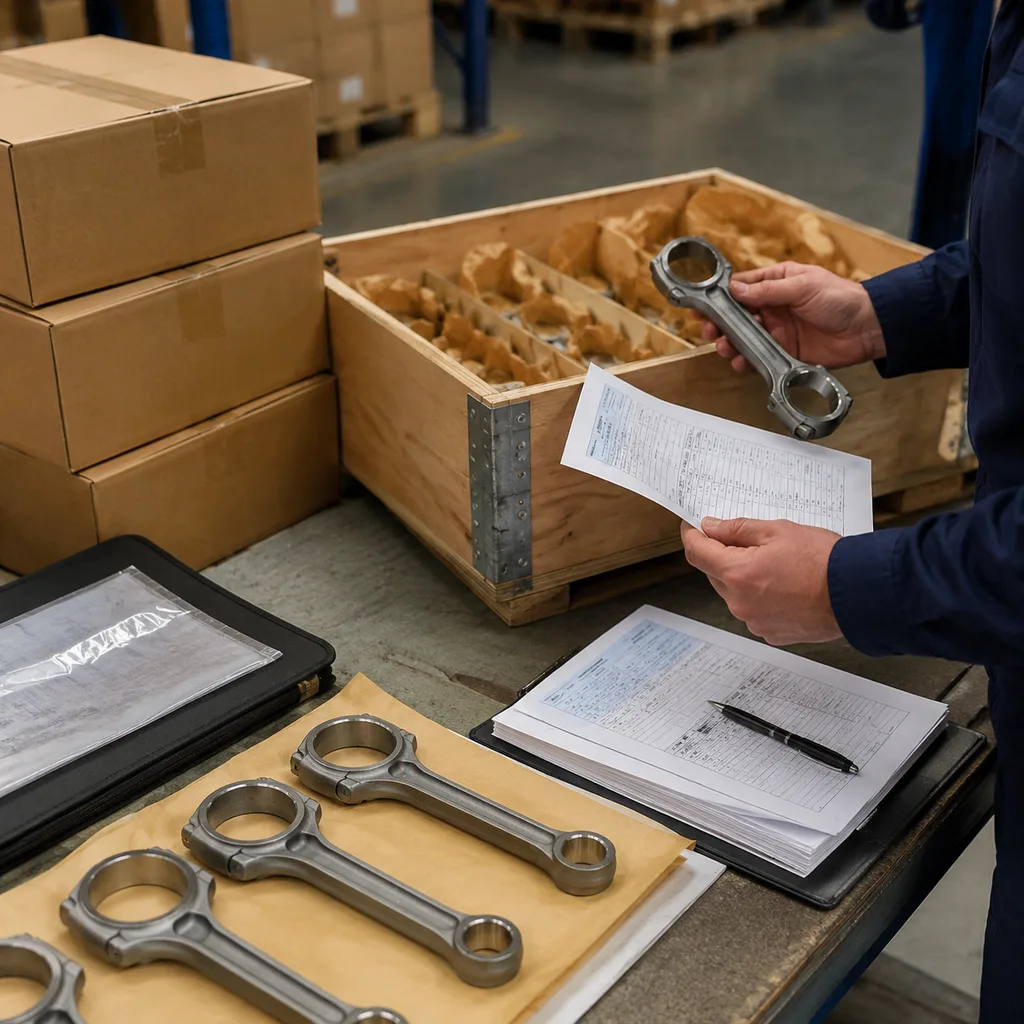
Our quality system documentation can support supplier onboarding and remote audit preparation. For larger programs, buyers may request first-article inspection reports, pre-shipment inspection, production photos, or third-party inspection coordination. Requirements should be agreed before purchase order release so inspection time and documentation cost are reflected in the quotation.
Packaging, export compliance, and market documentation
Wholesale connecting rods are shipped into markets with different labeling, customs, and importer documentation expectations. EU, UK, US, Canadian, Australian, and Brazilian buyers often require clear country-of-origin marking, SKU labels, carton barcodes, neutral or private-label packaging, and stable palletization.
For corrosion control, rods are normally protected with oil or VCI packaging, then boxed to prevent cap or bolt damage during transit. Set packing may require weight grouping and matched carton labels. Bulk packing can reduce unit cost but should be reviewed for the buyer’s warehouse handling method.
Compliance documentation should be based on actual materials and destination requirements. Where relevant, buyers may request declarations related to REACH (EC) No 1907/2006 for substances in articles. Engine mechanical parts are not evaluated under emissions standards such as ECE R-83 as standalone components, but the buyer’s final engine or vehicle compliance obligations may still apply. Driventus can provide commercial invoices, packing lists, certificates of origin when arranged, and product declarations agreed in the order file.
Clear documentation reduces customs delays and avoids relabeling work after arrival. It also helps distributors maintain SKU-level traceability across multiple branches.
How to compare connecting rod suppliers objectively
Price comparisons should be made only after the specification, inspection scope, and packing requirements are aligned. A low unit price may exclude matched sets, fasteners, dimensional reports, corrosion protection, or private-label cartons.
Use this comparison checklist during supplier review:
Does the supplier manufacture the part or only trade it?
Are IATF 16949:2016 and ISO 9001:2015 certificates current and relevant to the production site?
Can the supplier provide sample parts before mass production?
Is the big-end bore inspected after cap assembly with the specified fasteners?
Are rods traceable by batch or heat lot?
Can weight matching be controlled for set packaging?
Are export cartons tested or specified for the shipment method?
Is there a defined process for claims, containment, and corrective action?
For a connecting rod Jaguar wholesale program, the strongest supplier file combines technical evidence with commercial predictability: stable MOQ, realistic lead time, controlled packaging, and transparent communication when specifications change. Buyers can send target SKUs, annual volume, and documentation requirements to request a quote.
Frequently asked questions
MOQ depends on whether the rod is an active SKU, a private-label order, or a new development item. Trial orders are usually handled separately from repeat wholesale production. Share the engine application, target volume, and packing format for a practical MOQ proposal.
Yes. Driventus can evaluate custom manufacturing from samples, drawings, or buyer specifications. The process normally includes measurement, material review, drawing confirmation, sample production, first-article inspection, and buyer approval before mass production.
No. Driventus is an independent aftermarket manufacturer; brand names are referenced for fitment only. We do not claim approval or endorsement by any vehicle manufacturer. Parts are supplied to agreed buyer specifications and inspection requirements.
If you are building a wholesale sourcing file for Jaguar-fit connecting rods, send your SKU list, annual demand, packing requirements, and inspection needs. Our team will review feasibility and respond with next steps at /contact.html