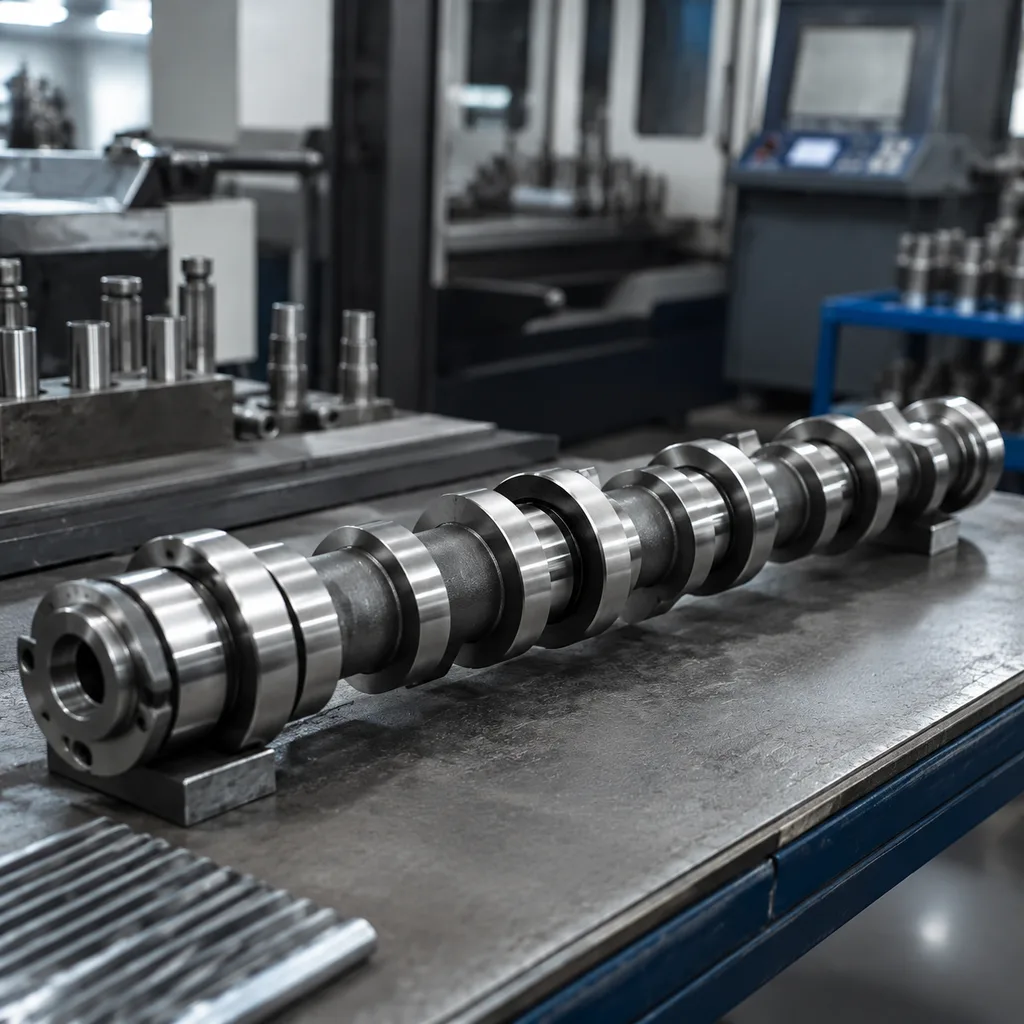
A camshaft Iveco OE equivalent is not selected by catalogue text alone. For replacement supply, buyers need a controlled match to the original application: base-circle diameter, lobe lift, journal size, thrust face location, gear or sensor interface, and material specification. A small deviation can change valve timing, oil film thickness, or cam follower wear.
This article is written for aftermarket distributors, repair-chain buyers, and sourcing engineers comparing replacement camshafts for Iveco engine families. It covers the technical checks Driventus uses when developing OE-equivalent camshafts for commercial vehicle applications, including dimensional inspection, hardness validation, runout control, packaging, and documentation.
Driventus is an independent aftermarket manufacturer; brand names are referenced for fitment only. We do not claim approval or endorsement by any vehicle manufacturer. OE references such as OE 06A… or OE 11251… should be treated as fitment identifiers only and verified against the engine code, VIN data, and application catalogue before procurement.
What OE-equivalence means for a replacement camshaft
For procurement purposes, OE-equivalence means the part is designed to perform the same mechanical function as the original camshaft in the specified engine, without requiring modification to the cylinder head, timing drive, or valve train. It does not mean the part is supplied by, approved by, or endorsed by the vehicle manufacturer.
A replacement camshaft should match five areas:
Geometry: journal diameters, lobe lift, cam profile, thrust width, total length, keyway or locating feature, and sensor target geometry.
Material: chilled cast iron, induction-hardened steel, or other specified alloy depending on the engine design and follower type.
Surface condition: lobe roughness, bearing journal finish, edge radii, and absence of grinding burns.
Heat treatment: controlled hardness depth at lobes and journals, with records tied to batch numbers.
Functional interfaces: timing gear fit, oil feed alignment, camshaft position sensor trigger, and end-float control.
For Iveco commercial applications, duty cycles can include long idle periods, high load operation, and extended service intervals. The camshaft must therefore be assessed together with followers, tappets, lubrication quality, and timing components. A dimensionally similar part is not sufficient if the lobe surface hardness or profile acceleration differs from the original design intent.
Critical dimensions and validation points
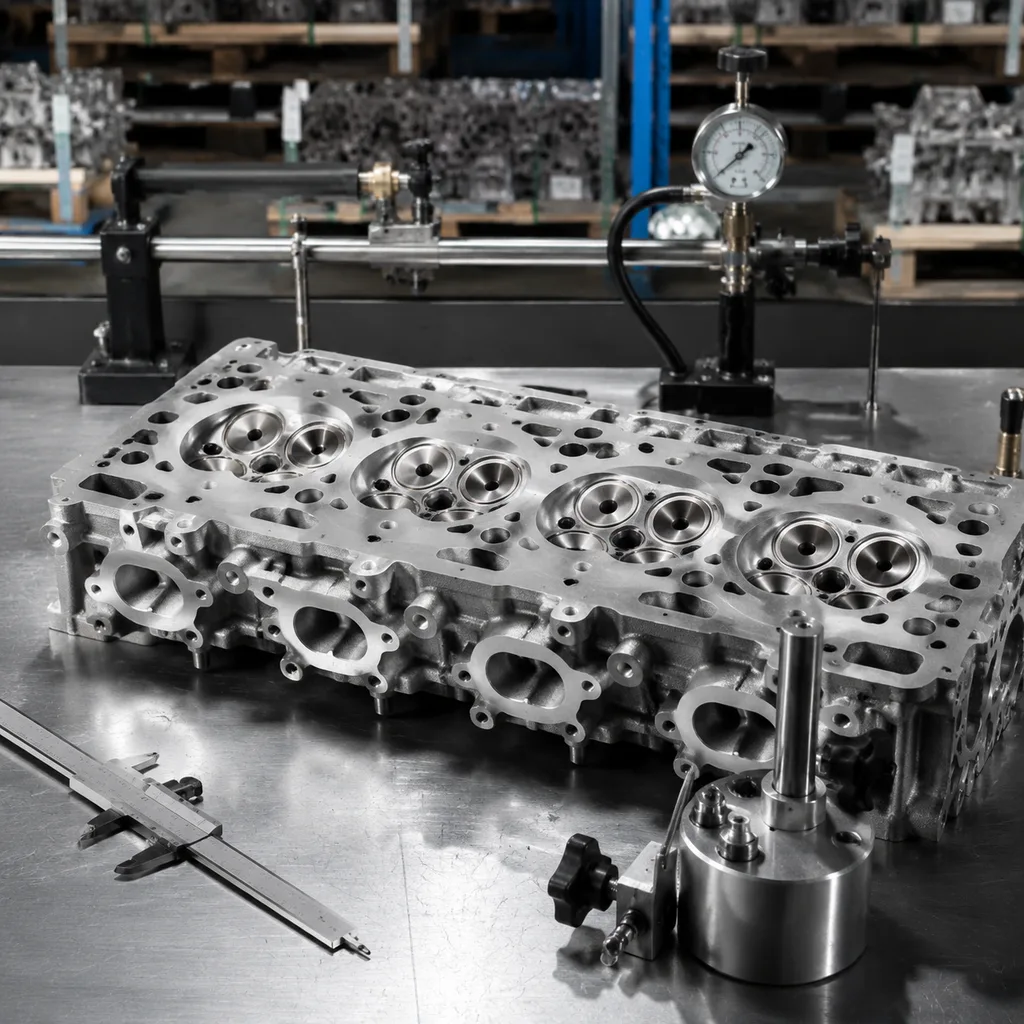
Buyers should ask suppliers for controlled drawings or inspection reports that define measurable characteristics. A photo, weight, and application list are not enough for replacement sourcing.
Check item
Typical control method
Procurement note
Overall length
Vernier, CMM, or fixture gauge
Confirms cylinder head and timing cover fit
Journal diameter
Micrometer, roundness gauge
Affects oil clearance and bearing life
Lobe lift
Camshaft measuring machine or CMM
Controls valve opening and engine breathing
Base circle
Profile measurement
Must match tappet and lash adjustment assumptions
Runout
V-block and dial indicator or between-centres gauge
Excess runout can create bearing load and noise
Surface roughness
Profilometer
Important for bedding-in and follower wear
Hardness
Rockwell or Vickers test
Confirms heat treatment consistency
Sensor trigger position
Angular fixture or CMM
Incorrect angle can cause fault codes or no-start conditions
</tr></thead><tbody> </tbody></table>Where the customer provides an OE cross-reference, it should be documented in the form used by the buyer’s system, for example OE 06A… or OE 11251…. Driventus recommends confirming the reference against the engine code and production date rather than relying on vehicle model names only.
A practical incoming inspection plan for distributors may include:
Sample measurement of journals and lobes per batch.
Visual inspection for corrosion, burrs, and impact marks.
Verification of protective oil, VCI paper, or sealed packaging.
Barcode or label check against purchase order, application, and batch number.
Retention of one control sample for high-volume programmes.
Driventus publishes product families through our catalog, including engine components relevant to commercial vehicle repair channels.
Materials, heat treatment, and wear control
Camshaft material selection depends on the follower system and engine loading. Many replacement applications use chilled cast iron because it provides a hard wear surface at the lobes with a machinable core. Some designs use forged or machined steel with induction hardening or other controlled heat-treatment processes.
For a credible OE-equivalent camshaft programme, buyers should verify the following:
Chemical composition checked by spectrometer or certified material report.
Heat-treatment process window defined by work instruction.
Lobe and journal hardness measured at controlled locations.
Metallographic inspection for selected development or batch samples.
Grinding process controls to prevent overheating and micro-cracking.
Magnetic particle inspection or equivalent crack detection where appropriate.
Surface finish is often underestimated. Rough lobes can accelerate follower wear, while excessively polished surfaces may not retain adequate lubricant during break-in. The target depends on material pairing, coating, oil specification, and valve train architecture.
Supplier documentation should also address restricted substances and market access. For parts sold into the EU and UK channels, buyers commonly request material declarations aligned with REACH (EC) No 1907/2006. Quality management should be supported by IATF 16949:2016 and ISO 9001:2015 systems, with traceability from raw material lot to finished product batch. Driventus explains its inspection framework through its quality system.
Application matching for Iveco replacement programmes
A commercial vehicle platform may use several engine variants across model years, emissions levels, and regional specifications. The same vehicle name can include different cylinder heads, cam sensor arrangements, timing drives, or lubrication details. This is why a camshaft Iveco OE equivalent should be validated at engine-family level, not only by vehicle description.
Key matching data for RFQ review:
Engine code and displacement.
Emissions level and production year range.
OE reference supplied by the buyer, if available.
Timing drive type and gear or sprocket interface.
Camshaft sensor trigger style and position.
Number of cylinders and valve arrangement.
Follower type: flat tappet, roller follower, or rocker configuration.
Required packaging: neutral, customer label, or kit packaging.
For importers managing multiple markets, catalogue accuracy is part of risk control. A part that fits one European application may not fit a Latin American or Australian specification if the engine family was built with a different timing or sensor arrangement. Driventus can review drawings, samples, and buyer cross-reference data through custom manufacturing when a standard catalogue item is not sufficient.
Driventus is an independent aftermarket manufacturer; brand names are referenced for fitment only. The use of Iveco as a fitment reference does not indicate vehicle manufacturer approval.
Quality evidence buyers should request before ordering
Replacement sourcing should move beyond price comparison. A low unit cost has limited value if the first shipment creates installation claims, catalogue returns, or warranty disputes. Buyers should request evidence that the supplier can control production repeatedly.
Useful documents include:
Dimensional inspection report for the submitted sample.
Material certificate or chemical composition report.
Hardness and heat-treatment record.
Surface roughness report for lobes and journals.
Runout measurement record.
Packaging drop or transport protection review for export shipments.
PPAP-style documentation where required by OEM or Tier-1 customers.
Control plan, process flow, and inspection frequency.
Published management standards such as IATF 16949:2016 and ISO 9001:2015 do not prove a specific camshaft is correct, but they indicate that the factory operates under documented process control, corrective action, calibration, and traceability systems. For regulated or large-volume programmes, a factory audit may also review measuring equipment calibration, heat-treatment control, grinding wheel dressing records, and non-conforming product segregation.
For high-volume aftermarket distribution, Driventus recommends staged validation: sample approval, pilot order, monitored field feedback, then volume release. This reduces the risk of scaling a mismatch across multiple warehouses or repair locations.
Commercial sourcing considerations for distributors and fleets
A camshaft is usually not purchased as an isolated component. It may be sold with followers, bearings, seals, gaskets, timing components, or installation hardware. Buyers should define whether the programme requires a single camshaft, a repair kit, or a bundled assortment for engine overhaul.
For B2B procurement, clarify these points before issuing a purchase order:
Annual forecast and first-order quantity.
Required Incoterms and destination port.
Label format, barcode standard, and language requirements.
Carton strength, palletisation, and corrosion protection period.
Whether mixed SKUs are required in one shipment.
Warranty handling process and evidence required for claims.
Lead time for samples, pilot order, and repeat production.
Driventus manufactures engine and powertrain components in Taizhou, Zhejiang, and exports to more than 60 countries. For replacement camshafts, we support distributors, wholesalers, OEM/Tier-1 programmes, and multi-location repair chains with drawing review, sample matching, and batch traceability. Buyers can request a quote with engine code, target OE reference, annual volume, packaging requirement, and destination market.
Frequently asked questions
Confirm the engine code, production year, emissions level, timing interface, sensor trigger design, and OE cross-reference. Then compare journal diameters, lobe lift, total length, thrust face, and material specification using inspection data rather than catalogue text alone.
Yes. Driventus can review a buyer-supplied sample, drawing, or OE reference and assess feasibility for standard supply or custom manufacturing. Dimensional measurement, material review, hardness testing, and packaging requirements should be agreed before sample approval.
No. OE-equivalent means the replacement part is designed to match the fit and function of the specified application. Driventus is an independent aftermarket manufacturer; brand names are referenced for fitment only and do not indicate manufacturer endorsement.
If you are sourcing camshafts for Iveco replacement programmes, share the engine code, OE reference, annual volume, and inspection requirements. Driventus can review feasibility and pricing through /contact.html