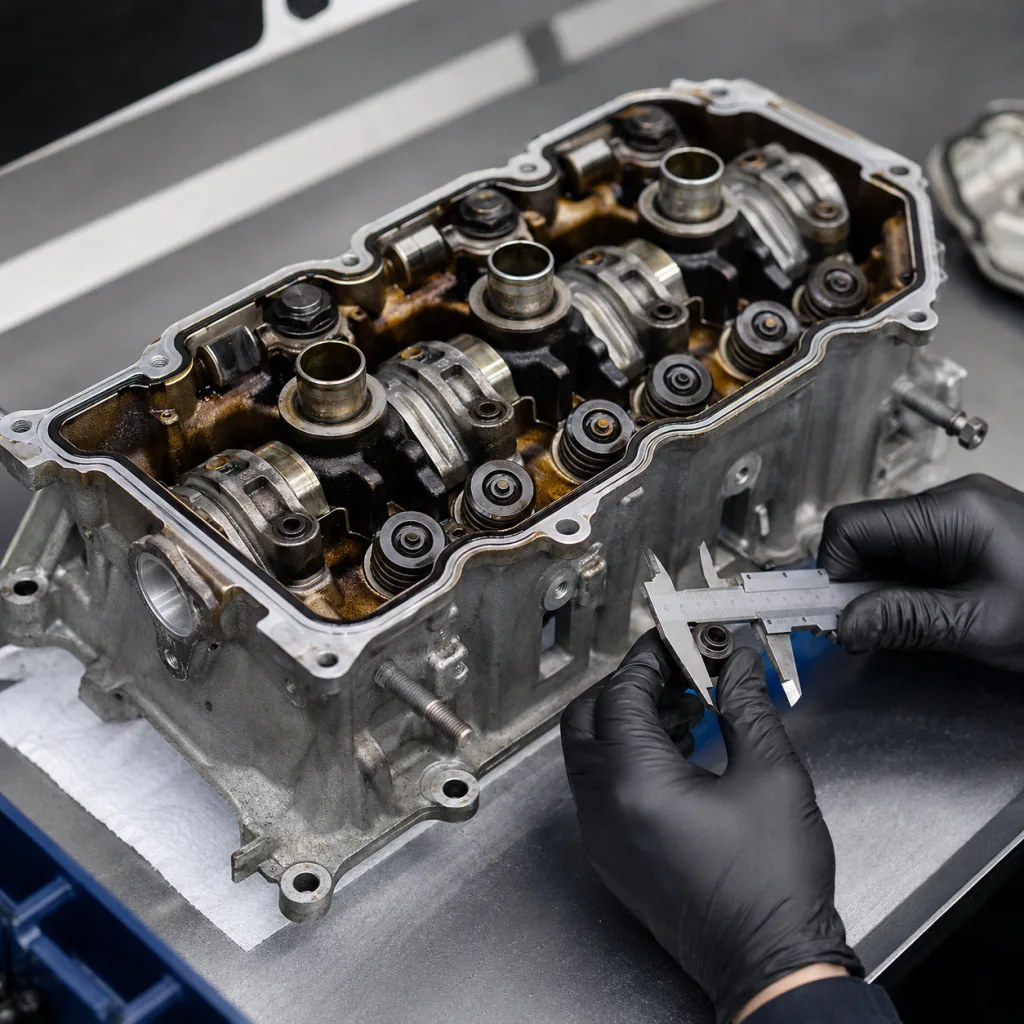
Connecting rod GMC wholesale sourcing is driven by fleet engine rebuild demand, aftermarket coverage gaps, and distributor programmes for North American light truck, SUV, van, and commercial applications. For importers and rebuilders, the risk is rarely limited to catalogue interchange. A reliable programme also depends on controlled metallurgy, accurate big-end and small-end geometry, bolt integrity, set balancing, batch traceability, and repeat production that does not drift from the approved drawing. Driventus manufactures engine and powertrain components in Taizhou, Zhejiang, for B2B customers in more than 60 countries, including distributors, wholesalers, OEM/Tier-1 suppliers, and multi-location repair chains. Production and inspection are structured around IATF 16949:2016 and ISO 9001:2015 systems, with incoming material controls, in-process gauging, final inspection records, and export packing requirements. Driventus is an independent aftermarket manufacturer; brand names are referenced for fitment identification only. This guide explains the specification checks, MOQ questions, quality documents, packaging controls, and supplier audit points to review before placing wholesale orders for GMC-fitment connecting rods.
Wholesale Fitment Scope and Buyer Use Cases
GMC-fitment connecting rods are typically sourced for engine rebuild programmes covering pickups, vans, SUVs, and commercial platforms. In wholesale purchasing, the central question is not whether one rod can match a sample. It is whether the supplier can hold the same dimensional and material standard across repeated batches, mixed shipments, and future replenishment orders.
Typical B2B use cases include:
Aftermarket distributors expanding engine internal parts coverage for warehouse stock.
Engine rebuilders purchasing full rod sets for planned remanufacturing volume.
Importers consolidating rods with pistons, rings, bearings, gaskets, oil pumps, and water pumps.
Repair chains standardising sourcing across multi-location service networks.
Private-label programmes that require controlled labelling, carton artwork, and batch records.
Part identification should be based on engine code, displacement, model year range, rod dimensions, bearing compatibility, and OE-style cross-reference format where applicable. Internal references such as OE 06A... or OE 11251... conventions can help organise catalogue mapping, but they should be treated only as fitment references. They are not evidence of vehicle manufacturer approval, endorsement, or original equipment supply. Driventus does not claim approval or endorsement by any vehicle manufacturer.
Connecting rods carry high cyclic loads and should be purchased as precision engine components, not as generic metal parts. For connecting rod GMC wholesale programmes, the technical file should clearly define the material route, machining controls, surface condition, bolt specification, traceability method, and packing standard before price comparison begins.
Specification item
Procurement check
Why it matters
Material route
Forged steel, sintered steel, or another approved process
Determines fatigue strength and application suitability
Big-end bore
Diameter, roundness, taper, and housing bore tolerance
Controls bearing crush, oil clearance, and cap alignment
Small-end bore
Diameter, bush material, and pin-fit requirement, if fitted
Affects piston pin fit, lubrication, and wear control
Centre-to-centre length
Measurement against the approved drawing or sample
Influences compression height, piston position, and engine balance
Weight class
Individual rod weight and set balancing tolerance
Reduces vibration in rebuilt engines and supports consistent assembly
Bolt and nut grade
Thread form, torque method, coating, and replacement policy
Maintains cap clamping force under repeated engine loads
Surface treatment
Shot peening, phosphate, oiling, or other approved process
Supports fatigue resistance and corrosion protection during storage
Traceability
Lot number, heat number, inspection record, and drawing revision
Enables containment and root-cause review if a batch issue occurs
Packaging
Inner protection, carton strength, set separation, and pallet layout
Prevents transit damage and warehouse sorting errors
</tr></thead><tbody> </tbody></table>Where local market regulations apply, buyers should also consider REACH (EC) No 1907/2006 for chemical substance responsibilities in the EU supply chain. Emissions regulations such as ECE R-83 may affect complete vehicle or engine system compliance, but they do not replace dimensional, material, and fatigue-related validation for the connecting rod itself.
Quality System, Inspection, and Traceability
A connecting rod supplier should be able to provide more than a finished sample and a quotation. Procurement teams should review the production control plan, incoming steel records, forging or sintering controls, machining process capability, gauge calibration, final inspection criteria, and non-conforming material process.
Driventus operates under IATF 16949:2016 and ISO 9001:2015 frameworks. Our quality system covers supplier qualification, process documentation, gauge control, non-conforming material handling, corrective action, and inspection record management. For connecting rods, typical inspection points include big-end bore diameter, bore roundness, small-end bore size, centre distance, cap mating surface condition, bolt thread integrity, hardness, weight classification, visual defects, anti-rust protection, and packaging condition.
Recommended audit documents include:
Business licence and certification scope.
IATF 16949:2016 and ISO 9001:2015 certificates, where applicable to the production site.
Process flow chart and control plan.
Material certificate or heat traceability record.
Drawing revision or approved sample record.
First article inspection report.
Batch inspection report with measured values, not only pass/fail marks.
Gauge calibration records for bore and length measurement.
Packaging drop, stacking, or transport protection method for export shipments.
Corrective action format for warehouse, assembly, or field claims.
For private-label programmes, inspection requirements should be agreed before mass production. This prevents disputes over acceptable bore variation, cosmetic marks, oil coating, carton strength, barcode position, country-of-origin marking, and customer SKU labelling. Clear acceptance criteria also make repeat orders easier to compare with the original approved batch.
MOQ, Lead Time, and Packaging for Importers
Wholesale connecting rod sourcing depends on order structure. A distributor buying one fast-moving GMC-fitment rod family has different priorities from an importer consolidating multiple low-volume references in a mixed container. MOQ should be assessed by part number, engine set, material route, production scheduling, and whether tooling, special inspection, or private packaging is required.
Practical sourcing points:
MOQ: confirm whether the minimum applies per reference, per engine set, per carton configuration, or per total shipment.
Lead time: separate sample lead time, tooling or fixture lead time, and mass production lead time.
Packaging: specify single-piece boxes, set packaging, master carton quantity, pallet dimensions, corrosion protection, and separator material.
Labelling: define part number, batch number, barcode, customer SKU, country of origin, and any private-label artwork approval process.
Incoterms: confirm EXW, FOB, CIF, or DDP responsibility before comparing quotations.
Mixed shipments: agree how multiple references will be packed, labelled, and separated to avoid warehouse rework.
Spare stock: define how replacement pieces are handled if a distributor sells rods individually instead of only in balanced sets.
A low unit price can become expensive if carton damage, mixed SKUs, missing batch numbers, or incomplete labelling creates rework at the destination warehouse. For buyers in the EU, UK, US, Canada, Australia, and Brazil, clear packing specifications should be part of the purchase order and supplier confirmation. They should not be left to routine factory practice, especially when the shipment includes private-label cartons or multiple connecting rod references.
Custom Manufacturing and Cross-Reference Development
Not every connecting rod programme begins with a standard catalogue item. Some buyers need a dimensional match to an existing sample, a replacement for a discontinued aftermarket reference, or a modified configuration for a private rebuild programme. Driventus supports custom manufacturing where drawings, samples, or approved specifications are available.
A typical development process includes:
1. Fitment and application review. 2. Sample, drawing, or interchange confirmation. 3. Material route and production process selection. 4. Prototype or pre-production sample. 5. Dimensional inspection and buyer approval. 6. Pilot batch for assembly or warehouse validation. 7. Mass production with lot traceability and agreed inspection records.
For OE part-number cross-references, buyers should provide their existing interchange data in a controlled list rather than scattered emails or catalogue screenshots. Generic references such as OE 06A... or OE 11251... may help structure catalogue mapping, but they must be verified against engine application, bore dimensions, centre-to-centre length, piston pin fit, rod weight, and bearing compatibility. Brand names and OE references are used for fitment identification only.
When a buyer requests a new reference, the strongest starting package includes a physical sample, target annual volume, destination market, packaging requirements, and any known failure history from the current supply source. That information helps align the specification with real operating and commercial requirements instead of relying on part-number matching alone.
Supplier Evaluation Checklist
Before awarding a connecting rod GMC wholesale order, procurement teams should compare suppliers on documented capability, not quotation format alone. The best supplier profile is one that can connect engineering, production, inspection, packing, and repeat-order support in the same controlled programme.
Use this checklist during supplier selection:
Does the supplier manufacture the part or only trade it?
Is the production site covered by IATF 16949:2016 or ISO 9001:2015 certification?
Can the supplier provide measured inspection data for each batch?
Are steel material records traceable to the production lot?
Is bore measurement performed with calibrated gauges?
Are big-end roundness, centre distance, and weight class controlled against an approved drawing?
Are rod sets balanced or weight-classed according to the agreed specification?
Is the bolt specification defined, including grade, coating, thread form, and torque method?
Can packaging withstand ocean freight, inland handling, and warehouse stacking?
Is private labelling controlled under written artwork approval?
Can the supplier support repeat orders with the same drawing revision and inspection plan?
Is there a clear corrective action process for field, assembly, or warehouse claims?
Driventus is a vertically integrated manufacturer, so procurement discussions can include material route, machining process, inspection method, packaging design, labelling, and shipment planning in one technical file. That gives import managers and sourcing engineers a clearer basis for comparing quotations, approving samples, and maintaining stable supply across repeat wholesale orders rather than relying on one-off spot purchases.
Frequently asked questions
Provide engine application, model year range, displacement, sample photos or drawings, current part reference, target quantity, packaging requirements, and destination market. If you have OE-style cross-reference data, include it for fitment review.
Yes. Private-label supply can include customer SKU labels, cartons, barcodes, and agreed packing layouts. Artwork, compliance markings, and inspection criteria should be confirmed before mass production.
No. Driventus is an independent aftermarket manufacturer; brand names are referenced for fitment only. Products are developed and inspected according to agreed specifications and applicable quality system controls.
For MOQ, lead time, inspection documents, or a cross-reference review, send your application list and target annual volume. You can [request a quote](/contact.html).