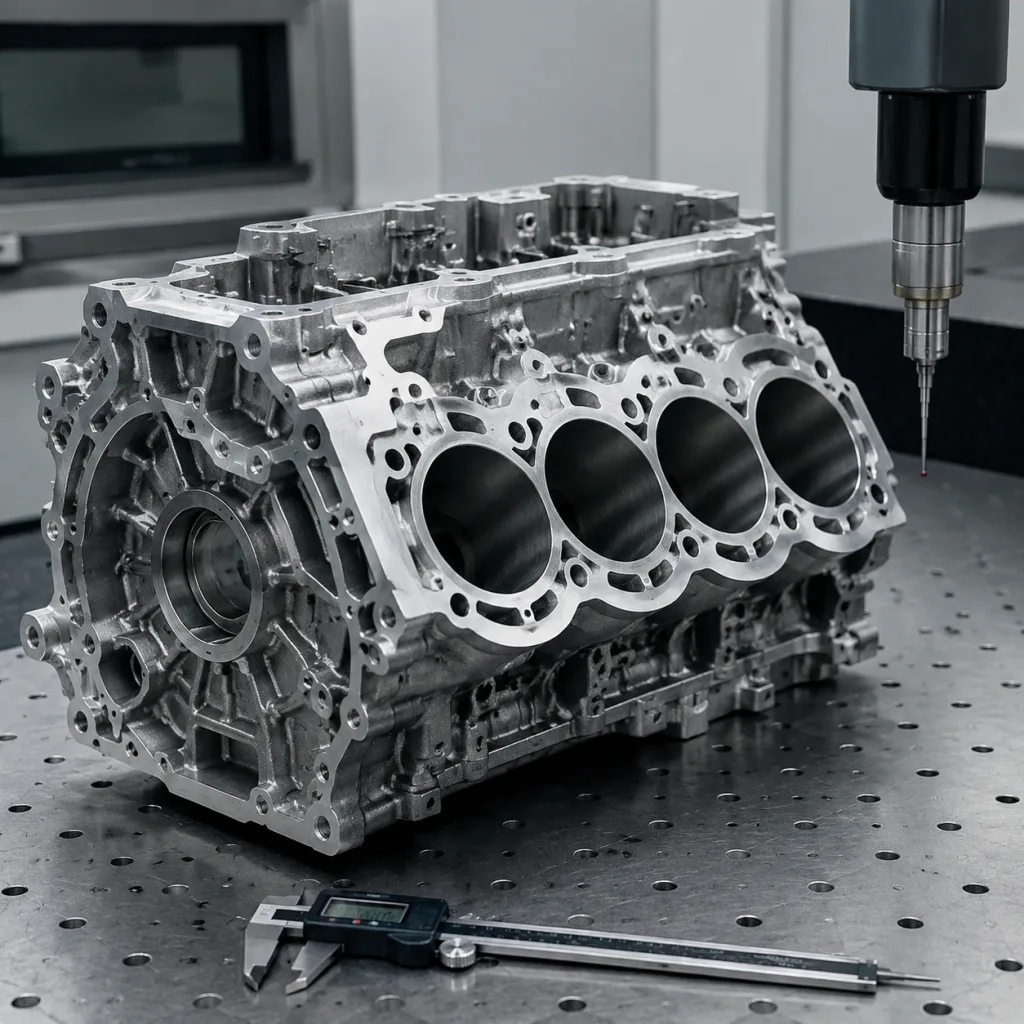
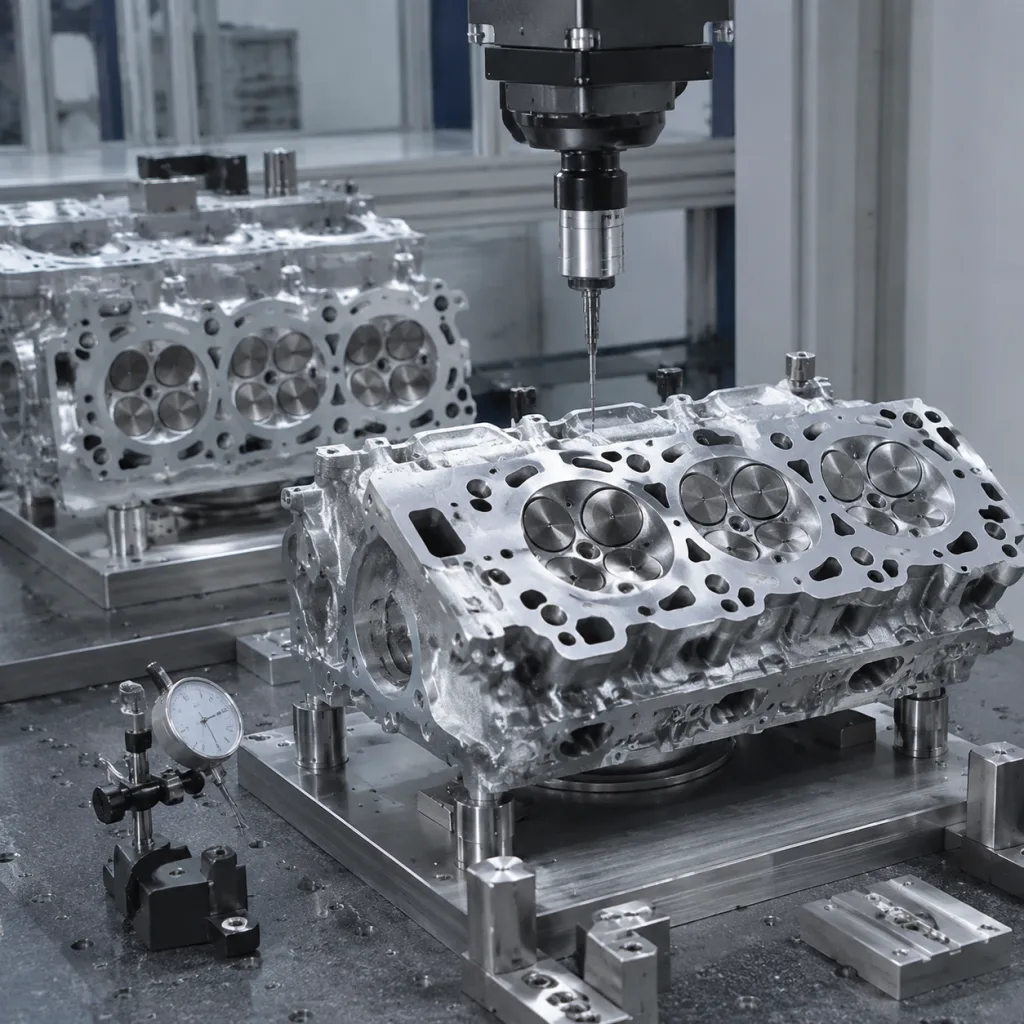
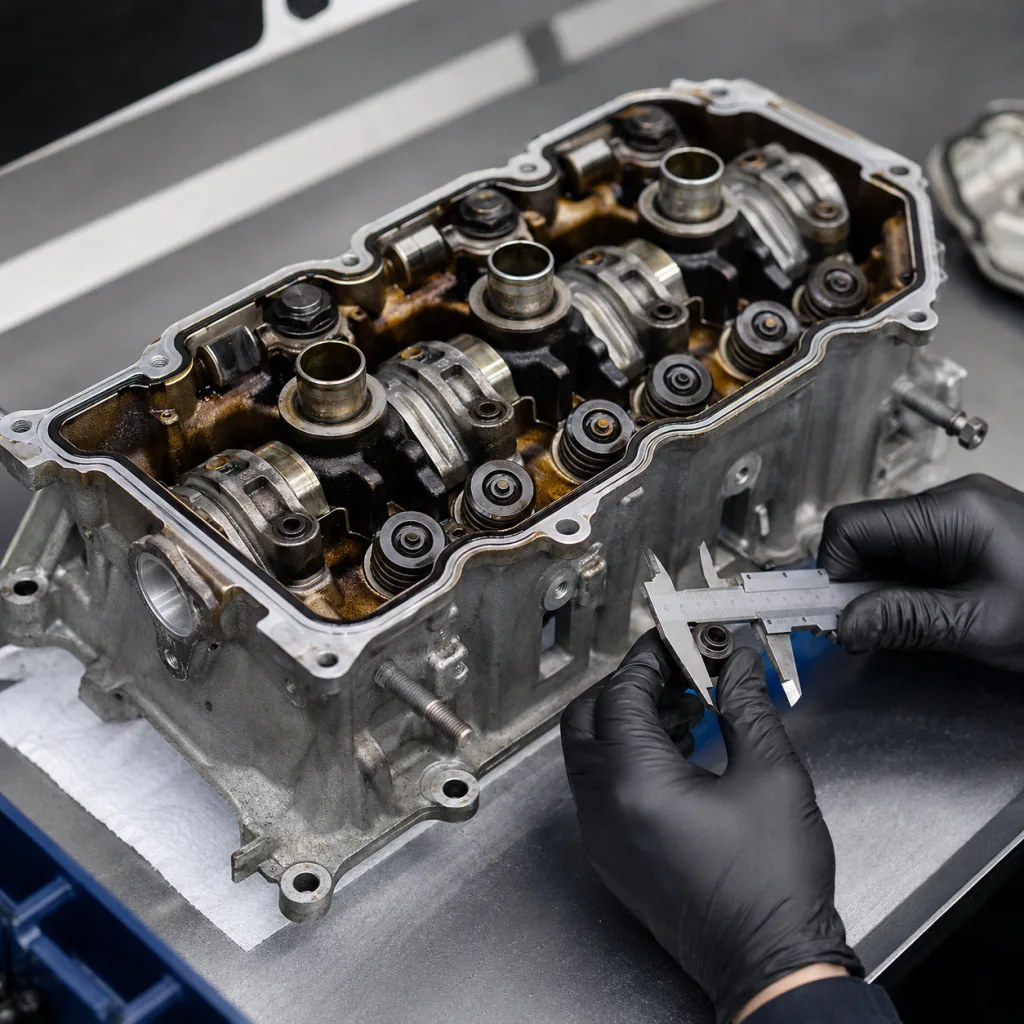
Throttle body specifications influence airflow control, idle quality, emissions stability, ECU adaptation and assembly fit. For procurement teams, the specification sheet is also a risk-control document: it defines which characteristics must be measured before sample release, where approved equivalents may be accepted, and which features must remain fixed for OE-equivalent replacement fitment. A complete sourcing package should cover bore size, flange geometry, actuator type, sensor output range, connector layout, shaft sealing method, surface treatment, packaging, traceability and validation results. Driventus manufactures throttle body assemblies and related engine air-management components for aftermarket distributors, OEM programmes, Tier-1 suppliers and repair-chain private labels. Production is managed under IATF 16949:2016 and ISO 9001:2015 controls. Driventus is an independent aftermarket manufacturer; vehicle and brand names, when used, are referenced for fitment identification only.
Core Dimensions Buyers Should Lock Before Sampling
Dimensional control is the first filter for any throttle body sourcing project. A correct electrical signal will not compensate for a bore, bolt pattern, shaft position or throttle plate angle that causes leakage, interference, unstable idle or ECU learning problems.
Procurement files should include a controlled drawing, a 3D model where available, and measured samples from both OE and current aftermarket references. Cross-reference lists may include generic formats such as OE 06A107065 or OE 11251... when supplied by the buyer, but they should be treated as fitment references, not evidence of vehicle manufacturer approval.
Parameter
Typical Control Point
Procurement Note
Bore diameter
40-90 mm, application-specific
Confirm clean bore, plate diameter and closed-angle leakage
Flange flatness
Commonly controlled within 0.05-0.10 mm
Verify against gasket compression requirement
Bolt-hole position
Drawing tolerance required
Use CMM inspection for new tooling release
Shaft runout
Low runout needed for plate centring
Check for binding after thermal cycling
Plate closed angle
ECU-dependent
Match sample and calibration requirement
Connector orientation
Fixed by harness routing
Confirm latch direction, keyway and pin count
Overall height
Intake package constraint
Compare against engine cover, hose and bracket clearance
</tr></thead><tbody> </tbody></table>For distributors managing multiple regions, a single part number should not be released until left-hand-drive, right-hand-drive and emissions-market variants have been checked against the vehicle application list. Small changes in connector clocking, coolant ports, hose clearance or idle airflow can turn an apparently interchangeable part into a catalogue return risk.
Materials, Coatings and Sealing Interfaces
Most modern throttle body housings are aluminium alloy die castings or precision-machined aluminium bodies. Material selection should balance weight, corrosion resistance, thermal stability, machinability and consistency across production batches. Plastic housings are used in selected applications, especially where weight and packaging are priorities, but they require additional review for creep, insert retention, heat ageing and dimensional movement around the bore and flange.
A practical specification list for procurement review includes:
Housing material: aluminium alloy casting or approved engineering polymer, according to application.
Throttle plate: aluminium, stainless steel or coated steel as defined by the OE sample.
Shaft material: corrosion-resistant steel or equivalent, with controlled surface finish at bearing points.
Gasket interface: machined flange or moulded seal groove with verified compression.
Fasteners: torque-controlled screws with thread locking or staking where required.
Shaft sealing: design matched to dust, oil vapour, moisture and blow-by exposure.
Sealing interfaces deserve particular attention because they directly affect idle quality and field durability. Buyers should verify gasket groove depth, O-ring hardness, seal compression, shaft seal design and the condition of any coolant or heater passages. Burrs, porosity, poor machining marks or inconsistent coating at these points can lead to vacuum leakage, corrosion or premature contamination of the shaft and gear area.
The supplier should also provide material declarations for restricted substances where required by the importer. For EU-market programmes, REACH (EC) No 1907/2006 should be considered during material review. For UK, US, Canadian, Australian and Brazilian importers, local substance, packaging and labelling obligations may differ, so declarations should be confirmed before mass shipment.
Electronic and Mechanical Control Requirements
Throttle body specifications differ sharply between cable-operated, electronic throttle control and hybrid designs. Buyers should separate the mechanical casting from the mechatronic content when comparing quotations, because the actuator, sensor, gear set, connector and calibration-related requirements drive both cost and validation risk.
Design Type
Key Components
Main Verification Points
Cable-operated
Pulley, return spring, shaft, plate
Spring torque, idle stop, cable travel, leakage
Electronic throttle
DC motor, gear set, dual position sensors
Sensor correlation, motor response, limp-home angle
Seal integrity, heater resistance, corrosion control
</tr></thead><tbody> </tbody></table>For electronic units, dual-track sensor output must remain consistent through the full travel range. Buyers should request bench curves rather than a simple pass/fail statement. The curve should identify closed position, wide-open position, voltage range, monotonicity, dead zones if any, and correlation between channels. Clear limits are important because an ECU may set fault codes even when a unit appears to move normally on a basic bench test.
Production control should include 100% electrical testing for motor operation, sensor output and connector continuity. Sample approval should also include vibration, thermal exposure and connector movement checks, because intermittent electrical faults often appear only after heat soak, harness strain or repeated cycling. For mechanical versions, return-spring torque, shaft smoothness, plate centring and idle-stop position should be checked alongside airflow leakage.
Validation Data for Sourcing Engineers
A quotation is incomplete without validation scope. The required test plan depends on whether the buyer is sourcing an aftermarket replacement, developing a private-label range, or purchasing components for an OEM or Tier-1 programme. Driventus aligns production control with its quality system, including incoming inspection, in-process checks, final inspection and traceability.
Common validation items include:
Dimensional inspection using CMM, gauges and functional fixtures.
Air leakage testing at the specified closed-plate condition.
Actuator response and sensor output testing across the travel range.
Endurance cycling to confirm gear, shaft, bearing and plate wear behaviour.
Thermal cycling to check housing stability, seals and electronics.
Salt spray or corrosion exposure where the installation position requires it.
Vibration testing for connector, motor, shaft and mounting reliability.
Packaging drop and compression tests for export shipments.
Useful validation reports should state the sample size, test conditions, acceptance criteria and result summary. For example, a leakage result should identify test pressure and allowable flow; a sensor test should show voltage limits or curve data; and a dimensional report should link measured values to drawing revisions. Without this context, a test certificate may be difficult for the buyer to use in supplier approval, PPAP review or field-issue investigation.
Emissions-related performance is normally vehicle-system dependent. Standards such as ECE R-83 define emissions requirements at vehicle level, while component suppliers must verify that the throttle body does not introduce airflow control instability or leakage that could affect compliance. No aftermarket supplier should claim vehicle manufacturer endorsement unless a formal approval exists.
How to Compare Supplier Data Sheets
Two throttle body quotations can appear equivalent while hiding material, test, sensor, tooling or packaging differences. Buyers should request a controlled data sheet and compare it line by line against the sample and drawing. Price should be reviewed after the supplier has confirmed all critical characteristics, not before key risks are understood.
Data Sheet Item
Acceptable Evidence
Risk if Missing
Application list
Fitment table and sample cross-check
Wrong connector or flange variant
Drawing revision
Controlled drawing or buyer-approved sample
Uncontrolled dimensional drift
Material specification
Material grade or approved equivalent
Corrosion, wear or heat distortion
Electrical test limits
Sensor curve and motor test data
ECU fault codes or unstable idle
Leakage limit
Test pressure and flow limit
Rough idle or emissions instability
Traceability
Batch code and inspection record
Difficult field issue containment
Packaging spec
Export carton, label and protection method
Transit damage and mixed stock
</tr></thead><tbody> </tbody></table>A strong supplier response should also clarify what is standard production and what requires new tooling, special validation or a different MOQ. If a quotation uses phrases such as “same as OE”, “universal fit” or “standard sensor” without drawings and test limits, the buyer should ask for measurable evidence before approving samples. For electronic throttle bodies, connector pinout, sensor curve and actuator response data are usually more valuable than broad compatibility claims.
For broad range development, buyers can start with high-volume references from our catalog, then define regional packaging, labelling and application data requirements. Where an existing catalogue item does not fit the target programme, Driventus can review drawings, samples and performance targets through custom manufacturing.
Procurement Notes for Export Programmes
Throttle bodies are sensitive to both technical and commercial controls. Importers should confirm MOQ, lead time, PPAP or sample submission requirements, carton labelling, barcodes and private-label documentation before issuing a purchase order. For OEM and Tier-1 projects, additional documents may include a control plan, process flow, FMEA, inspection reports and material certificates.
Driventus operates from Taizhou, Zhejiang and exports engine and powertrain components to more than 60 countries. For throttle body programmes, the most efficient RFQ package includes:
Target part numbers and application list.
OE cross-reference format where available, such as OE 06A... or OE 11251..., without implying brand approval.
Annual volume forecast and first-order quantity.
Required certificates, inspection format and packaging standard.
Sample quantity and test schedule.
Market destination, including EU, UK, US, Canada, Australia or Brazil.
Private-label requirements, including carton artwork, part labels, barcodes and instruction sheets.
Any required approval format, such as PPAP level, buyer inspection template or third-party test report.
This information allows engineering, quality and commercial teams to check feasibility before tooling, sampling or bulk production commitments are made. It also helps avoid late changes to packaging, labelling, documentation or validation scope after parts have already entered production.
Frequently asked questions
Bore diameter, flange flatness, bolt-hole position, throttle plate angle, connector orientation and total package height are usually the first dimensions to confirm. Electronic units also require sensor output, actuator travel, connector pinout and closed-plate leakage checks.
Yes, but only after the flange, connector, bore, sensor signal, actuator type and ECU adaptation requirements match each application. Regional emissions, harness routing, coolant-port and packaging variants should also be checked before catalogue release.
Yes. Driventus supports aftermarket distributors, OEM programmes, Tier-1 suppliers and repair-chain brands with catalogue items and custom manufacturing, subject to drawing, sample, quality and volume review.
For drawings, samples, validation data or a controlled RFQ review, contact Driventus to [request a quote](/contact.html).