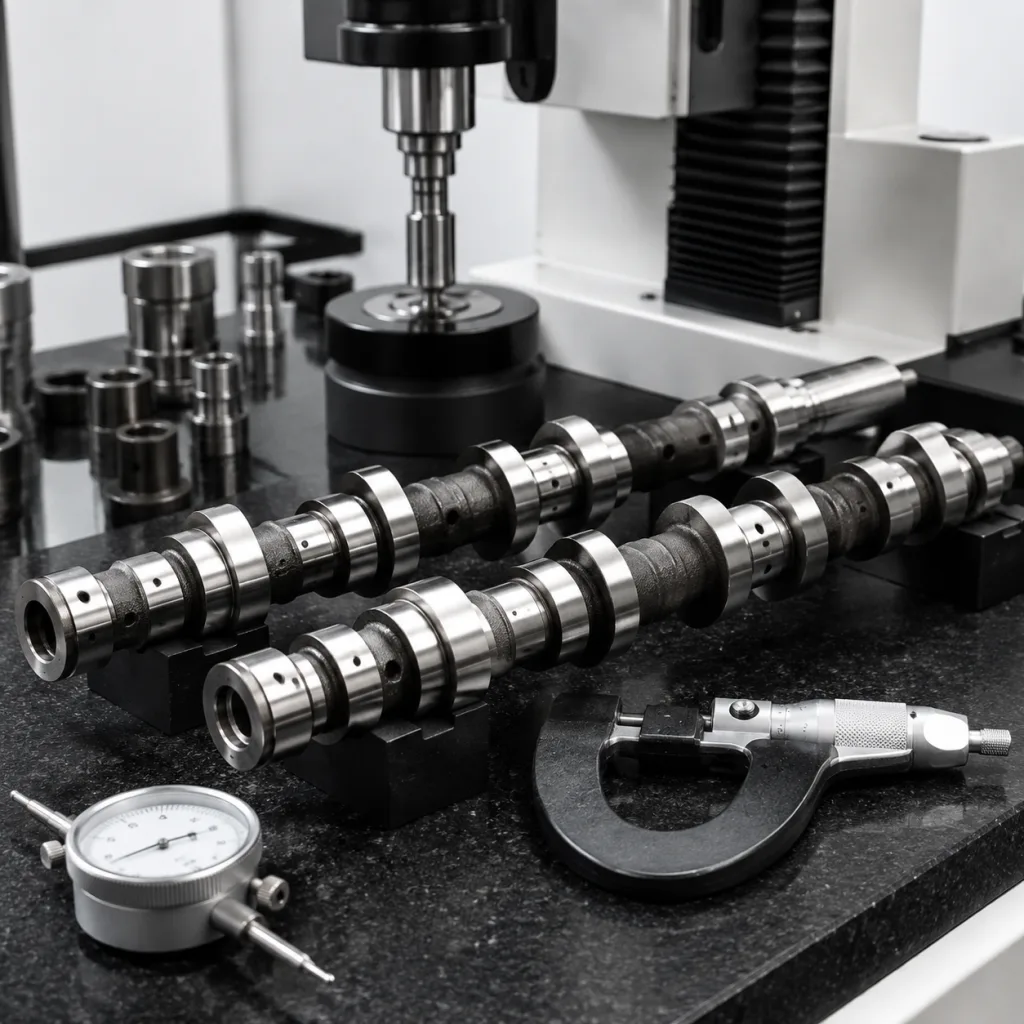
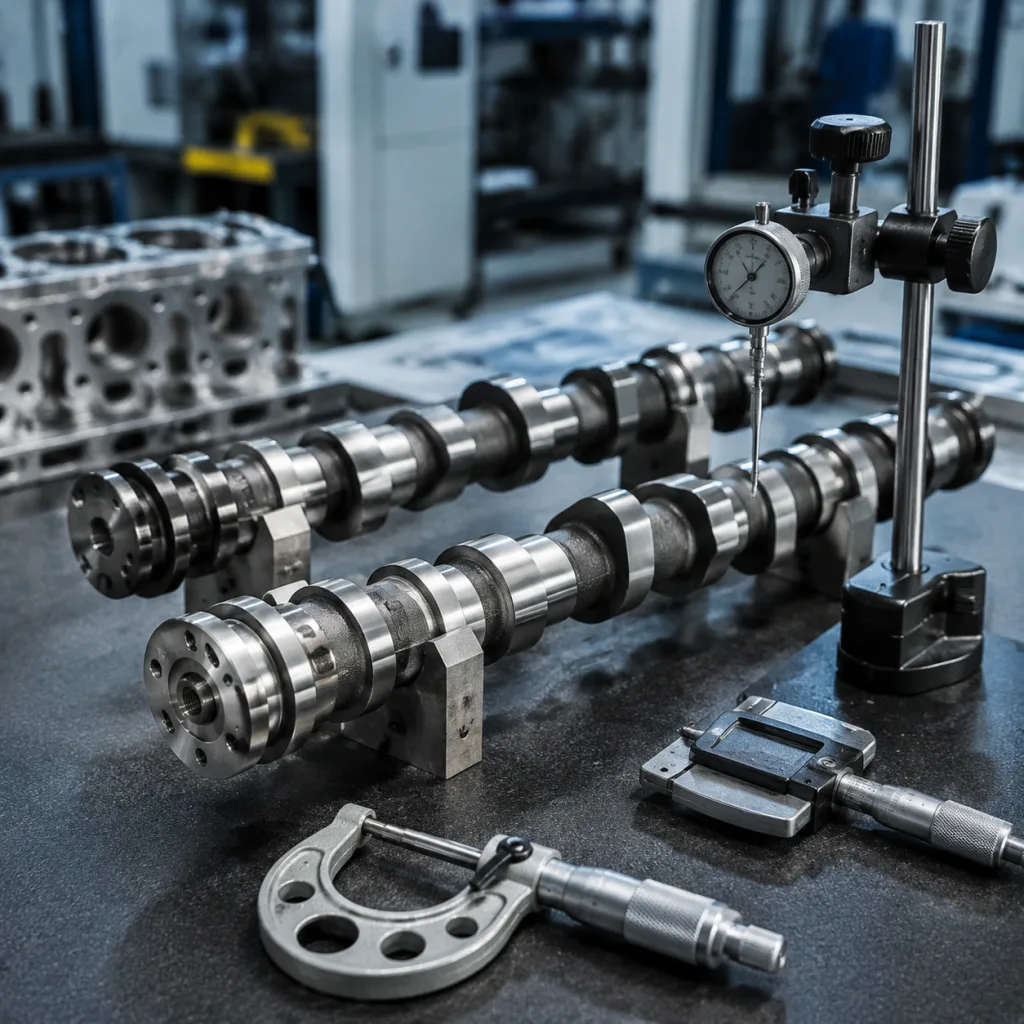
A connecting rod for Ford Ranger OE equivalent program should start with evidence, not a catalogue interchange line. The rod has to match the original geometry, bearing interface, bolt clamp behavior, reciprocating mass window, and durability expectations seen in real rebuild and fleet repair work. For an RFQ, include engine code, displacement, fuel type, model-year range, piston pin diameter, crankpin journal size, sample weight, annual volume, target MOQ, packaging format, and inspection documents required. This article gives sourcing teams a practical way to judge Ford Ranger replacement connecting rods through dimensions, material control, validation data, packaging traceability, and supplier documentation. Driventus manufactures engine and powertrain components in Taizhou, Zhejiang, and exports to more than 60 countries. Production is managed under IATF 16949:2016 and ISO 9001:2015. Driventus is an independent aftermarket manufacturer; brand names are referenced for fitment only.
Decision Point: What Must Match Before You Call It OE-Equivalent?
OE-equivalent does not mean vehicle manufacturer approval. For a replacement connecting rod, it means the supplied part is engineered to meet agreed fitment and performance criteria for the target application. Procurement teams should define that target with measurable characteristics: center-to-center length, big-end bore, small-end bore, width at both ends, oil-hole position, surface finish, weight band, bolt specification, and bearing housing roundness after torque.
A useful purchase specification states nominal dimensions plus tolerances. Do not stop at “fits Ford Ranger.” State the center distance tolerance, bore roundness after bolt torque, bush inside diameter, big-end width, small-end width, and maximum weight spread within a set.
Ford Ranger replacement programs can involve different rod variants by engine generation, fuel type, displacement, emissions market, and production year. A sourcing file should identify the engine code, model years, piston pin diameter, crankpin diameter, bearing shell reference, bolt size, cap separation style, and any buyer-supplied OE part-number cross-reference. Treat cross-references as clues, not proof.
If no drawing is available, ask for one unused reference sample, one used workshop sample if possible, measured bore data, and photos of orientation marks, bearing tangs, oil holes, and bolt heads. That minimum package helps avoid approving the wrong variant because two rods look similar in a photo.
Driventus does not claim approval or endorsement by any vehicle manufacturer. The accurate commercial description is an independent aftermarket replacement part designed to match specified fitment and performance criteria for the agreed application. Commercial files should avoid phrases such as genuine, original, or Ford-approved unless the buyer has separate legal authorization.
Spec Deep-Dive: Dimensions That Decide Fit and Service Life
Connecting rods live under alternating tensile and compressive loads while holding bearing geometry at high speed. Small errors in bore shape, side clearance, cap alignment, or weight can create bearing wear, piston noise, oil pressure instability, vibration, and fatigue risk. Buyers should request a drawing-controlled specification, not a sample photo or catalogue interchange line.
For most replacement programs, the drawing should separate safety-critical dimensions, fitment dimensions, cosmetic limits, and packaging requirements.
Control item
Typical procurement requirement
Why it matters
Center-to-center length
Drawing-specific; often controlled within ±0.02-0.05 mm after final machining
Controls compression height and piston deck position
Big-end bore roundness
Checked after bolt torque; commonly ≤0.005-0.010 mm depending on design
Protects bearing crush and oil film stability
Small-end bore
Matched to piston pin and bush design; clearance target agreed by drawing
Prevents pin scuffing, knock, and uneven pin loading
Big-end width
Controlled against crankshaft journal spacing, typically within ±0.02-0.05 mm
Maintains side clearance and oil flow
Weight spread
Set target agreed with buyer, commonly within 2-5 g per set for rebuild kits
Reduces imbalance in rebuilt engines
Bolt thread and seating
Torque-angle or torque value validation with thread gauge and seating-face check
Maintains cap clamping force
Surface finish
Honed bore and thrust-face Ra targets by drawing, often Ra 0.4-1.6 µm by surface
Reduces local stress, friction, and wear
Cap-to-rod matching
Laser mark, punch mark, or serialized control as an inseparable pair
Prevents bore mismatch during assembly
</tr></thead><tbody> </tbody></table>Driventus production may include forging or precision casting route control according to part design, incoming steel verification, blank inspection, CNC rough machining, cap split or cap machining, bolt-hole machining, bush pressing where applicable, semi-finish boring, heat-treatment or stress-relief confirmation where specified, final honing, cap matching, hardness verification, dimensional inspection, ultrasonic or magnetic-particle crack checks when required, cleaning, preservation, and lot traceability.
Where required, rods can be supplied as weight-matched sets for engine rebuilders and repair chains handling multi-cylinder overhaul kits. Buyers should define whether matching is by total weight only or by big-end and small-end balance. End-to-end balancing improves control but adds inspection time and cost.
Failure Modes to Screen Before Approval
Modern diesel and petrol pickup engines place high cyclic loads on the connecting rod. Towing, high boost operation, low-speed high-torque use, cold starts, and poor lubrication events all raise the penalty for weak process control. A connecting rod for Ford Ranger OE equivalent application should therefore be evaluated against the intended engine duty, not only against catalogue interchange.
A private-label line aimed at fleet repair needs a stronger evidence package than a spot purchase for slow-moving aftermarket inventory. The common failure modes are predictable, and most can be screened before bulk release.
Material mismatch: confirm forged steel, powder metal, precision casting, or other drawing-approved material, with chemical composition tied to the heat or batch number.
Heat-treatment drift: request hardness range, microstructure checks, and batch traceability; a single average hardness value is not enough.
Bolt clamp loss: review material class, thread inspection, seating face control, lubrication condition, torque-angle curve, and clamp-load retention after retorque or relaxation testing.
Bore distortion: measure big-end bore roundness after final torque and small-end bush concentricity where used, using the same bolt and torque method intended for assembly.
Fatigue risk: request rotating-bending, tensile-compressive, bench, or engine-simulated test data as agreed, with sample quantity, load level, cycle count, and failure criteria stated in the report.
Abrasive contamination: define washing, anti-corrosion oil, and packaging controls; premium programs may set maximum residue by mass or particle size.
Surface defects: inspect for cracks, burrs, laps, decarburisation, grinding burn, sharp transitions, or incomplete shot-peening coverage where the design requires it.
Driventus maintains process documentation under its quality system, aligned with IATF 16949:2016 and ISO 9001:2015. For EU and UK importers, material declarations may also need to support REACH (EC) No 1907/2006 compliance review. For Brazil, North America, and Australia, buyers usually focus on customs classification, traceability, packaging durability, and warranty evidence rather than type approval, because internal engine rods are not regulated in the same manner as emissions or braking systems.
Step-by-Step Sample Release Before Bulk Orders
Replacement intent requires sample validation before production release. A visual match is not enough. For a connecting rod for Ford Ranger OE equivalent purchase, request an initial sample inspection report and compare the sample with at least one known-good reference part or controlled drawing.
A practical approval path is 3-5 sample rods for dimensional review, one complete engine set for bench build, and then a pilot order before full container or annual blanket purchasing.
Check the complete rod assembly: rod body, cap, bolts, bush if fitted, oil-hole details, bearing tang location, chamfer direction, and orientation marks.
Measure center distance, bores, widths, chamfers, thrust faces, bolt-hole position, cap alignment, and oil-hole angle using calibrated CMM, air gauge, bore gauge, micrometer, or height gauge as appropriate.
Torque bolts using the specified method before measuring the big-end bore; record torque value, angle, lubricant condition, and whether bolts are reusable or one-time-use.
Record hardness at the agreed location and inspect for decarburisation, laps, cracks, grinding marks, sharp burrs, dents on mating faces, or machining steps at radius transitions.
Compare total rod weight and end-to-end balance if supplied as sets; state whether the allowed spread is per rod, per engine set, or per shipment lot.
Install with the intended bearing shell and piston pin during bench verification to confirm bearing crush, side clearance, pin fit, and free movement without tight spots.
Confirm orientation marks, bearing tang position, and oil-hole alignment for assembly clarity so technicians do not reverse the cap or install the rod in the wrong cylinder direction.
Run packaging drop and corrosion checks for long-distance sea freight where relevant, especially for shipments requiring 60-180 days of storage protection.
For multi-location repair chains, include technician feedback from pilot installations. Assembly feel, bolt torque response, and bearing fit are best checked under workshop conditions. For distributors, the priority is fitment clarity, barcode traceability, complaint-rate monitoring, and carton labeling by application. Freeze the drawing, inspection plan, packaging artwork, and traceability code before the first bulk order, not after market complaints begin.
Supplier File Comparison: What Makes Two Quotes Truly Comparable?
A reliable supplier file combines technical evidence with export readiness. For a connecting rod replacement program, procurement teams should request documents before confirming tooling, stocking orders, or private-label packaging, especially when the part will be sold across multiple markets. Price comparison only makes sense after material route, bolt specification, matching requirement, inspection level, and packaging standard are identical between suppliers.
Key items to request include:
Technical drawing or controlled specification agreed for the target Ford Ranger application, including critical dimensions, tolerances, surface finish, and weight range.
PPAP-style documentation where required by OEM or Tier-1 buyers, commonly including process flow, control plan, FMEA, MSA, dimensional report, and initial sample approval.
Material certificate and heat-treatment batch record linked to the production lot, not only a generic material statement.
Dimensional inspection report for samples and production lots, with sample size defined, such as 5 pieces per lot, 1 piece per cavity, or another agreed AQL plan.
Process flow, control plan, and critical-characteristic inspection method for bores, center distance, bolt thread, cap matching, hardness, and weight sorting.
Fatigue, hardness, cleanliness, or crack-detection evidence where required by the purchase specification.
Packaging specification with corrosion-protection period, carton quantity, pallet size, gross weight, barcode format, and private-label artwork approval.
Country-of-origin statement, HS code review, export carton data, and Incoterms such as EXW, FOB Ningbo/Shanghai, CIF, or DAP depending on buyer responsibility.
Warranty handling procedure and traceability format, including batch code location on the rod, inner box, master carton, and packing list.
MOQ and price logic should be transparent. Catalogue items may allow lower MOQs when existing tooling, bolts, bushings, and packaging are already available. Private-label cartons, modified markings, special weight matching, or new variants usually increase MOQ because of setup, inspection, printing, and inventory risk.
Lead time is normally split into sample preparation, sample approval, pilot production, mass production, and sea or air freight. Buyers should plan roughly 2-4 weeks for sample or document review and 30-60 days for regular production after approval, subject to tooling and material availability.
Driventus supports aftermarket distributors, wholesalers, OEM/Tier-1 programs, and repair-chain sourcing teams. Standard and project-based engine components can be reviewed through our catalog. Where a buyer needs a revised material, alternate bolt specification, private-label packaging, or application-specific engineering change, custom manufacturing is available after drawing and sample review.
Procurement Scenario: The Low Quote That Creates Expensive Claims
The main risk in connecting rod sourcing is assuming that fitment interchange equals engineering equivalence. Similar-looking rods may differ in cap separation method, bolt stretch behavior, bearing tang position, pin-bush material, oil-hole detail, surface treatment, or weight. These differences can affect assembly quality, noise, oil control, and field durability.
Consider the common low-quote scenario. Supplier A offers a lower unit price and lists the same interchange number. Supplier B costs more but separates bolt grade, weight matching, bore inspection after torque, packaging protection, and batch traceability. If Supplier A’s rods cause bearing failures, repeated labor claims, or mixed-variant inventory, the cheaper unit price disappears quickly.
A practical risk-control process is simple:
Risk
Procurement control
Wrong application variant
Require engine code, year range, market region, and measured sample confirmation
Bearing bore distortion
Measure big-end bore after final bolt torque and record torque method
Mixed batch weights
Define acceptable weight spread, end-balance rule, and set-matching label format
Bolt relaxation
Validate torque method, lubrication condition, and clamp retention
Bush or pin mismatch
Confirm piston pin diameter, bush material, oil-hole position, and running clearance
Corrosion during transit
Specify VCI bag, rust-preventive oil, desiccant, or sealed inner pack for shipment duration
Unclear warranty review
Use laser marking, batch code, inspection lot number, and carton-level traceability
Price not comparable
Normalize material route, bolt grade, inspection level, packaging, MOQ, and Incoterms
</tr></thead><tbody> </tbody></table>For buyers importing to the EU, UK, US, Canada, Australia, or Brazil, the strongest sourcing position is a controlled technical file plus sample validation. Ask each supplier to separate tooling cost, sample cost, unit price, MOQ, packing quantity, inspection surcharge if any, and freight term. Compare suppliers on verified capability, not catalogue wording.
Frequently asked questions
No. Driventus does not claim approval or endorsement by any vehicle manufacturer. Driventus is an independent aftermarket manufacturer; brand names are referenced for fitment only. OE-equivalent means the part is engineered to match agreed dimensions, materials, and validation requirements for the specified replacement application.
Please provide engine code, displacement, fuel type, model-year range, sample photos, measured dimensions, order quantity, target MOQ, annual forecast, packaging requirements, and any buyer-supplied OE cross-reference. A physical sample or controlled drawing improves quotation accuracy and reduces variant risk.
Yes. Weight-matched sets, private-label cartons, batch traceability, and inspection reports can be arranged according to the purchasing specification. Buyers should define the allowed gram spread, whether end-to-end balancing is required, carton quantity per engine set, and approval sample quantity before bulk production.
For drawings, sample review, or program pricing, send the application details, measured sample data, target volume, MOQ expectation, packaging format, and required inspection documents to Driventus. You can [request a quote](/contact.html) or contact our export team through the contact page.