Connecting Rod for Ford Focus Aftermarket Replacement Guide
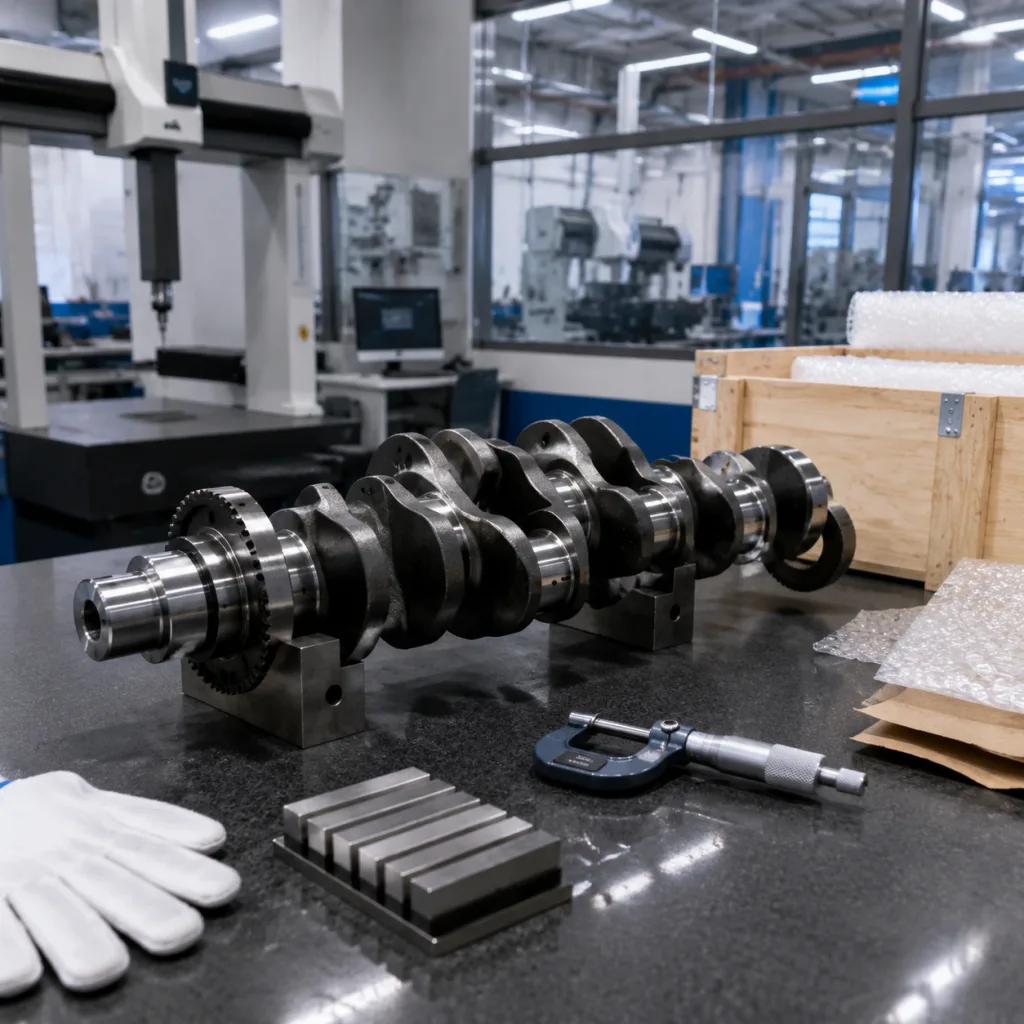
A connecting rod for Ford Focus aftermarket replacement has to do more than fit the engine family. It must preserve center-to-center length, big-end and small-end geometry, mass, and fastener spec under load. For procurement teams, the real risk is not a visible mismatch; it is hidden variation in machining, heat treatment, or bolt preload that shows up later in assembly or durability. Driventus supplies engine components for B2B buyers who need repeatable fitment, traceable production, and export-ready documentation. Driventus is an independent aftermarket manufacturer; brand names are referenced for fitment only. The key supplier checks are material grade, machining capability, heat treatment, balance tolerance, and conformance to IATF 16949:2016 and ISO 9001:2015. Environmental and emissions-related standards can also matter in downstream markets, including REACH (EC) No 1907/2006 and, where relevant to adjacent engine systems, ECE R-83 and SAE J2527. The goal is straightforward: source a rod that matches OE requirements without depending on a vehicle-maker channel.
Where replacement rods fail
Most sourcing problems with a connecting rod for Ford Focus aftermarket replacement start in the same places: the rod looks right, but one critical control is off. The common failure modes are:
- Center-to-center length that misses the OE window and changes stack-up
- Big-end bore drift after cap torque, machining, or heat treatment
- Small-end roundness that creates pin fit issues
- Fasteners that do not match thread, length, or clamp-load requirements
- Weight spread that makes kit matching inconsistent
- Poor traceability that prevents lot-level containment
A rod can pass a visual check and still fail in build. That is why buyers should ask for drawing dimensions, tolerance limits, and the inspection method used for each lot. If the supplier cannot explain how the bores are controlled after final processing, the part is not ready for release.
Match the Ford Focus application first
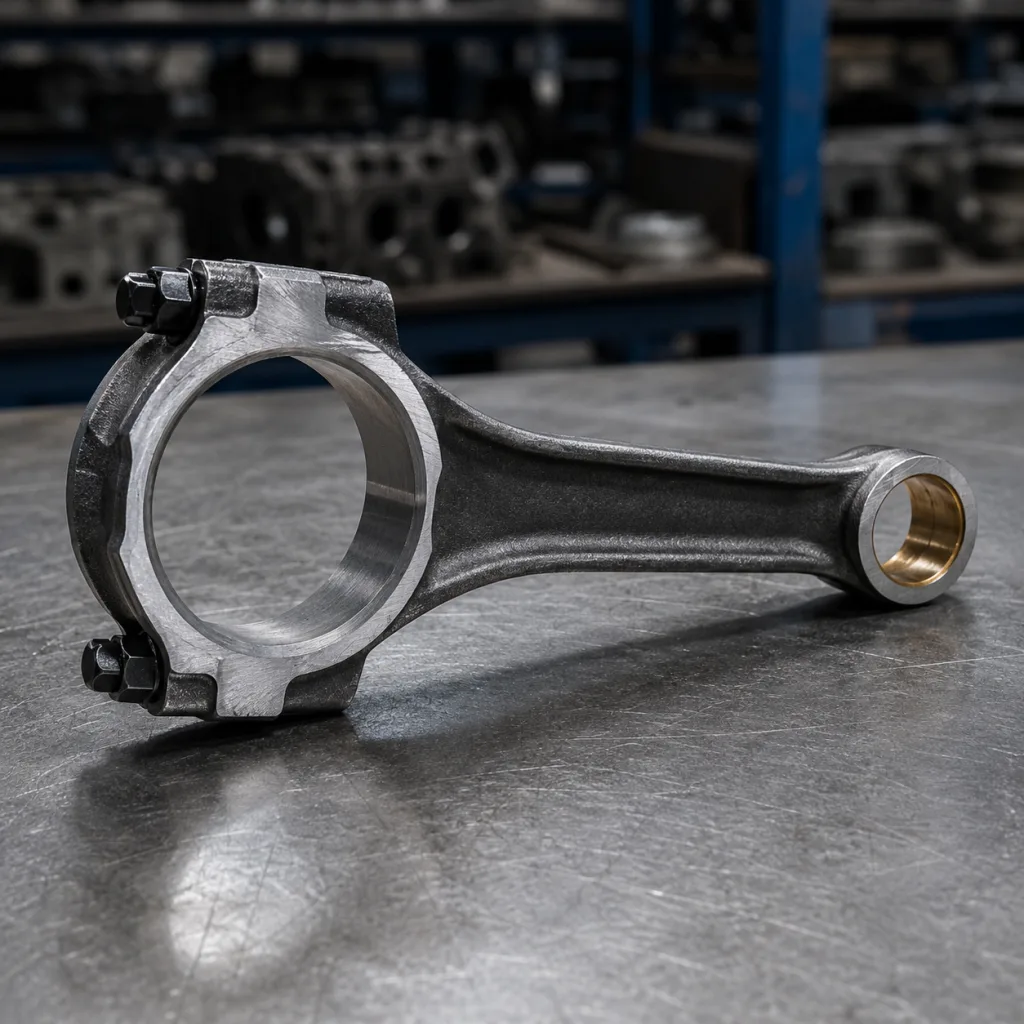
Ford Focus engines use more than one rod design across petrol and diesel variants, so the model name alone is not enough. Start with the engine code, then confirm the rod against the original bill of materials, piston pin diameter, bearing width, cap fastener design, and compression-height stack-up. If an OE cross-reference is available, keep it in the purchasing record in a consistent format, for example `OE 06A107065`.
Validation checkpoints
- Center-to-center length against the target engine drawing
- Big-end bore after cap installation and torque application
- Small-end bore, pin fit, and roundness after finishing
- Material type, typically forged steel or application-appropriate powdered metal
- Heat-treatment record with hardness range and batch data
- Fastener grade, torque-to-yield status, and replacement rule
If the buyer is working from an OE sample, the best practice is to confirm length to 0.01 mm resolution, big-end bore after torquing the cap, and pin bore roundness before first article approval. That is the fastest way to separate a true replacement from a lookalike part.
Compare the build specs, not the marketing claims
Two rods can sound equivalent in a catalog and still behave very differently in production. The useful comparison is not brand language; it is material, process, and tolerance control.
| Check item | What to verify | Typical buyer target |
|---|---|---|
| Material | Forged steel or application-appropriate alloy | Confirm chemical composition and mill certificate |
| Big-end bore | Measured after cap installation and torque application | Roundness and size within drawing tolerance, commonly ±0.005 mm to ±0.015 mm on critical bores |
| Small-end bore | Pin fit and roundness after finishing | Pin clearance controlled to the piston-pin spec |
| Mass | Batch-to-batch consistency | Match rods within 1 g to 2 g unless OE demands tighter grouping |
| Surface finish | Bearing seat and beam finish | Ra target stated on drawing or process sheet, often ≤0.8 µm on critical seats |
| Traceability | Lot and inspection records | Material heat number, machining lot, and final QA release |
| Fasteners | Bolt grade, torque, and reuse rule | Verify whether bolts are reusable or torque-to-yield |