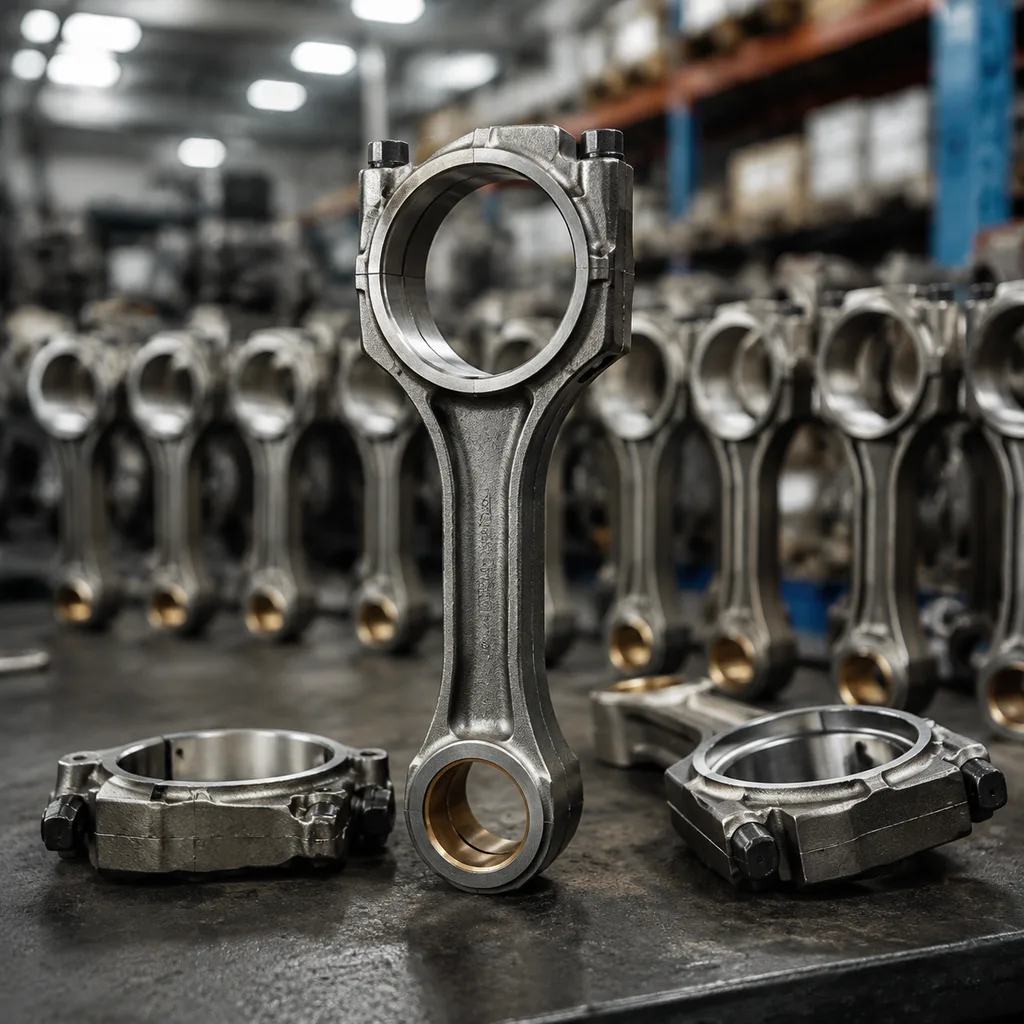
Cadillac aftermarket rod demand is not one market. It splits across North American V6 and V8 rebuilds, fleet repair, remanufacturing, and legacy engine service. That matters because buyers rarely purchase by vehicle name alone. They buy by engine code, OE cross-reference, drawing, sample, or a validated repair kit structure.
In a connecting rod Cadillac wholesale programme, the cheapest quote can become the most expensive choice if bore geometry drifts, caps are mismatched, weight groups are loose, or export packaging allows corrosion. The better question is: can the supplier repeat the same rod, inspection result, label, and carton condition across every batch?
Driventus manufactures engine and powertrain components in Taizhou, Zhejiang, and exports to more than 60 countries. This guide gives importers a practical way to define Cadillac-fitment rods, compare Chinese factory offers, control MOQ and lead time, and avoid common sourcing failures. Driventus is an independent aftermarket manufacturer; brand names are referenced for fitment only.
Start With the Buying Scenario, Not the Vehicle Name
A Cadillac-fitment connecting rod order can mean several different things. One importer may need 6-piece or 8-piece engine sets for rebuilders. Another may want bulk warehouse replenishment. A third may be building a private-label engine kit that combines rods with pistons, rings, bearings, and gaskets.
Those are different sourcing jobs. Treating them as one generic RFQ creates errors.
Use this decision frame before requesting pricing:
Buying scenario
Best order format
Main risk to control
Engine rebuilder supply
Matched 6-piece or 8-piece sets
Weight variation and missing bolts
Distributor replenishment
Bulk cartons or standard sets
Wrong application mix and slow-moving stock
Private-label kit programme
Rods packed with related engine parts
Label, carton, and kit-content errors
Legacy engine support
Low-volume mixed SKUs
MOQ pressure and fixture changeover cost
Performance or premium rebuild line
Forged or upgraded specification
Fatigue validation and documentation gaps
</tr></thead><tbody> </tbody></table>The application boundary must be locked early. Cadillac fitment alone is too broad because dimensions, cap design, bolt type, bearing width, and pin arrangement can change by engine family.
A usable RFQ should identify:
Engine displacement and configuration, such as 3.6L V6, 4.6L V8, 6.0L V8, or another target engine family
Aspiration and fuel type, including naturally aspirated, supercharged, or turbocharged variants
Rod architecture, such as cracked-cap powder metal, forged steel, or machined billet replacement
Small-end design: floating pin with bronze bushing, press-fit pin, or unbushed steel bore
Big-end bearing width, bore diameter, housing bore tolerance, and cap fastener specification
Bolt grade, thread size, torque value, torque-angle requirement, and whether new bolts are supplied
Weight class or maximum set variation, commonly 1-3 g for balanced rebuild sets
Packing format: single piece, 6-piece engine set, 8-piece engine set, or bulk service carton
Separate fast movers from legacy parts before negotiating. A 500-set annual forecast on one rod family does not cost the same as a 50-set mixed-SKU order because forging runs, CNC fixture changes, and carton artwork are spread differently. Buyers planning combined loads can review adjacent engine components in our catalog and engine-specific categories at /products/engine-components.html. Coordinating rods, pistons, bearings, and gaskets can also reduce duplicated inspections for the same rebuild market.
The Dimensions That Decide Whether the Rod Survives Rebuild Use
A connecting rod is a simple-looking part with little tolerance for casual specification. It sees alternating tensile and compressive load every engine cycle. If bore roundness, centre distance, cap alignment, or surface finish moves outside the approved window, the result may be bearing noise, uneven oil clearance, rapid wear, or fatigue failure.
Lock the drawing and inspection plan before final price negotiation. Otherwise, two suppliers may quote the same part number while building to different quality assumptions.
Parameter
Typical procurement control
Why it matters
Centre-to-centre length
Often controlled within ±0.02 mm where the drawing requires precision rebuild fit
Controls deck height and compression balance
Big-end bore diameter
Checked after cap bolts are torqued to the specified value
Confirms bearing crush and oil-clearance consistency
Big-end bore roundness
Common inspection target within 0.005-0.010 mm after torquing
Reduces bearing edge loading
Big-end bore taper
Often limited to 0.005-0.010 mm across bore width where specified
Prevents uneven bearing contact
Small-end bore finish
Typical Ra 0.4-0.8 μm for bushing or pin interface, subject to drawing
Supports oil film and pin movement
Pin bushing interference
Defined by drawing and verified before final honing
Prevents bushing walk-out during service
Side-face parallelism
Checked against drawing datum after machining
Controls crankshaft side clearance
Set weight matching
Often controlled within 1-3 g per engine set
Reduces rotating assembly imbalance
Cap alignment
Checked after bolt torque cycle and cap/body matching
Prevents bearing crush variation
Hardness
Verified by batch according to material and heat-treatment route
Confirms strength and machining stability
Material traceability
Heat number or batch record retained for each lot
Supports claims analysis and recall control
</tr></thead><tbody> </tbody></table>Final limits must follow the buyer’s drawing, approved sample, or agreed technical file. Do not rely on a catalogue description when launching a new connecting rod Cadillac wholesale SKU.
A practical approval package includes 3-5 first-article samples, full dimensional layout, material certificate, hardness result, bolt torque record, and piece-by-piece weight report. Driventus can manufacture to customer drawings through custom manufacturing, including reverse engineering when the buyer supplies physical samples and target application data. Fitment development and cross-reference work do not imply vehicle manufacturer approval.
Where Connecting Rod Programmes Usually Fail
Most supply problems do not start at final inspection. They start earlier: unclear material route, uncontrolled cap pairing, weak torque discipline, or a validation plan that checks appearance but not functional geometry.
For Cadillac-fitment rods, the manufacturing route should match the original design, load requirement, and aftermarket price position. Premium rebuild lines often favour forged steel because of fatigue strength and market acceptance. OE-style service replacement may use powder metal with fracture-split cap geometry when the original rod uses that architecture.
Common failure modes include:
Big-end bore measured before torque, giving a false pass condition
Cap and body mixed after machining or cleaning
Bolt holes not held square enough to maintain repeatable clamping
Bushing interference not controlled before final honing
Hardness variation after heat treatment
Weight sorting done by carton average instead of engine set
Anti-rust protection selected for warehouse storage but not sea freight
A forged-steel route normally includes raw material confirmation, blank forging, trimming, normalising or heat treatment, shot blasting, rough machining, bolt-hole machining, cap separation where applicable, cap assembly, bore roughing, semi-finish machining, final honing, deburring, cleaning, rust prevention, and final inspection.
A powder-metal cracked-cap route needs extra control of sintering, density, fracture quality, and cap reassembly. Once split, the cap and body are not interchangeable.
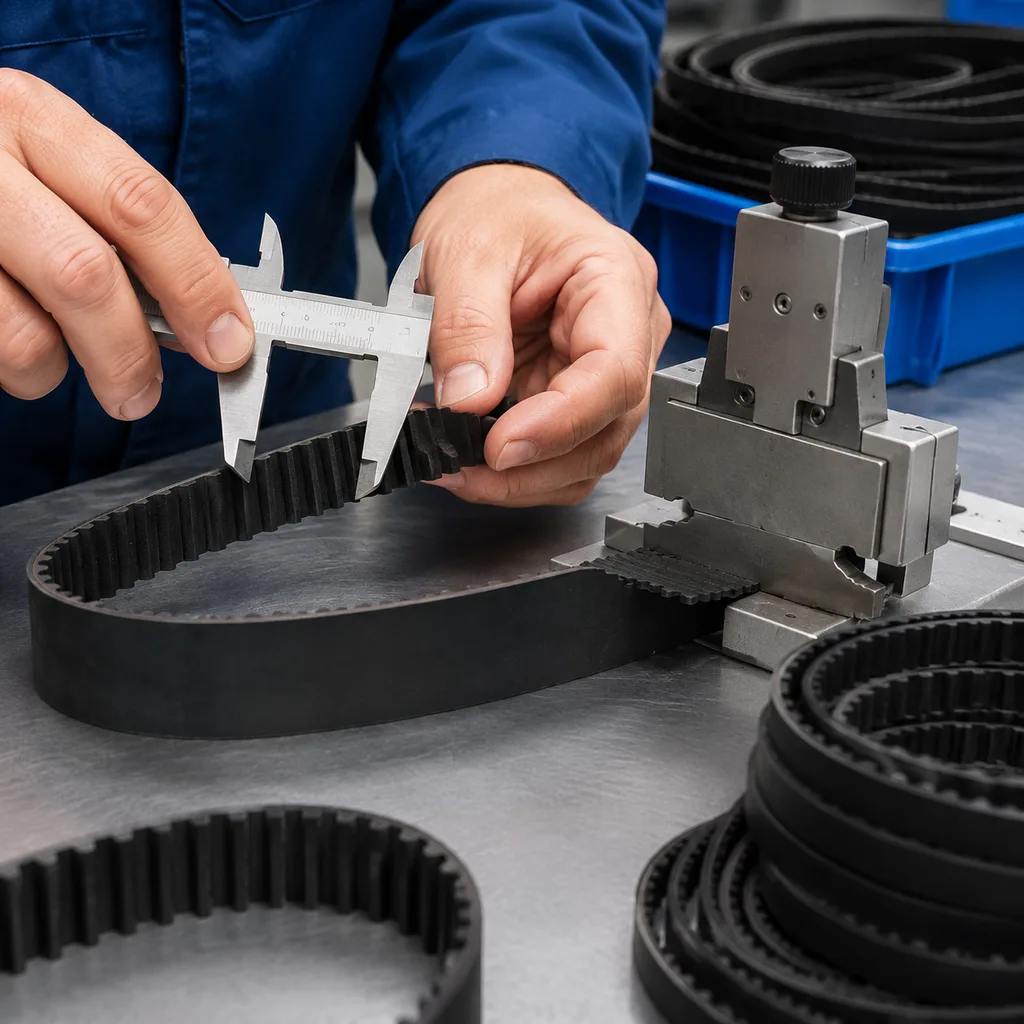
Validation should be functional, not cosmetic. For a new programme, request at least 3 torque-and-release cycles, bore measurement after tightening, hardness testing, visual crack inspection, weight sorting, and metallographic review when needed. Production approval should define inspection frequency: 100% visual and cap-match check, first-off inspection at every CNC setup, in-process bore checks every 30-60 minutes, and final AQL sampling before packing.
Critical gauges need valid calibration records. Torque wrenches used for inspection should be verified on a defined schedule. Driventus operates under IATF 16949:2016 and ISO 9001:2015 quality management frameworks. For export markets, material and surface treatment declarations may also be requested to support compliance review under REACH (EC) No 1907/2006. These systems do not replace part-specific validation, but they show the document control, corrective-action process, and traceability expected by OEM, Tier-1, and aftermarket procurement teams.
How to Structure MOQ, Lead Time, and Packing Without Overbuying
Do not treat the first order as a normal replenishment order. A safer sourcing path is sample confirmation, pilot production, then scheduled release orders. This protects warehouse cash and prevents a buyer from stocking a rod before it has been checked against local engine families.
For connecting rod Cadillac wholesale supply, a practical sequence is:
1. Share engine data, drawings, samples, and target market. 2. Confirm technical feasibility and quote by MOQ tier. 3. Produce 3-10 sample pieces or 1-2 engine sets for review. 4. Check dimensions, assembly fit, weight spread, and documentation. 5. Place a pilot order, commonly 100-300 engine sets depending on SKU complexity and packing. 6. Move to scheduled monthly or quarterly releases once claims risk is understood.
Commercial planning points usually include:
Sample lead time: often 20-35 days where tooling or fixture changes are not extensive
Production MOQ: driven by forging batch, machining setup, bolt procurement, and carton printing economics
Mass production lead time: commonly 45-75 days after approved sample, deposit, and final artwork confirmation
Price tiers: useful at 100 sets, 300 sets, 500 sets, and 1,000 sets
Documents: dimensional report, material certificate, packing list, commercial invoice, and inspection summary
Packing: anti-rust oil, VCI bag or paper, inner carton separation, export master carton, and palletisation if required
Compare offers by landed cost, not EXW unit price. A cheaper rod can become expensive if it needs extra sorting, repacking, air shipment for replacements, or credit notes after distributor returns.
Packing deserves the same discipline as machining. Repair-chain and distributor customers often require barcode labels, country-of-origin marking, batch codes, part number, engine code, production date, and private-label artwork. Put those fields in the purchase order. Do not leave them for pre-shipment inspection.
For mixed containers, rods must be protected from heavier parts such as crankshafts, flywheels, and water pumps. Keep rods in separated inner cartons, specify anti-rust protection for normal sea freight duration, and prevent machined surfaces from touching carton staples, pallet nails, or loose metal hardware.
Audit the Factory Around the Processes That Can Ruin the Part
Certificates are useful. They are not enough.
A connecting rod audit should test whether the supplier can control cap matching, bolt torque, bore measurement, heat-treatment records, and rejected material. The best evidence is not a presentation deck; it is a traceable production record for a similar rod.
Ask audit questions that expose real process control:
Are CNC fixtures dedicated by rod family, or adjustable only through a controlled setup sheet?
Are setup sheets controlled by revision, operator sign-off, and first-piece approval?
Are big-end bores measured after bolts are tightened to the specified torque and angle if applicable?
Are caps and bodies permanently matched by marking, laser code, or controlled pairing method?
Are rejected caps and bodies physically segregated so they cannot be reassembled into another rod?
Are batch records linked to material heat, forging lot, machining date, operator, and inspection result?
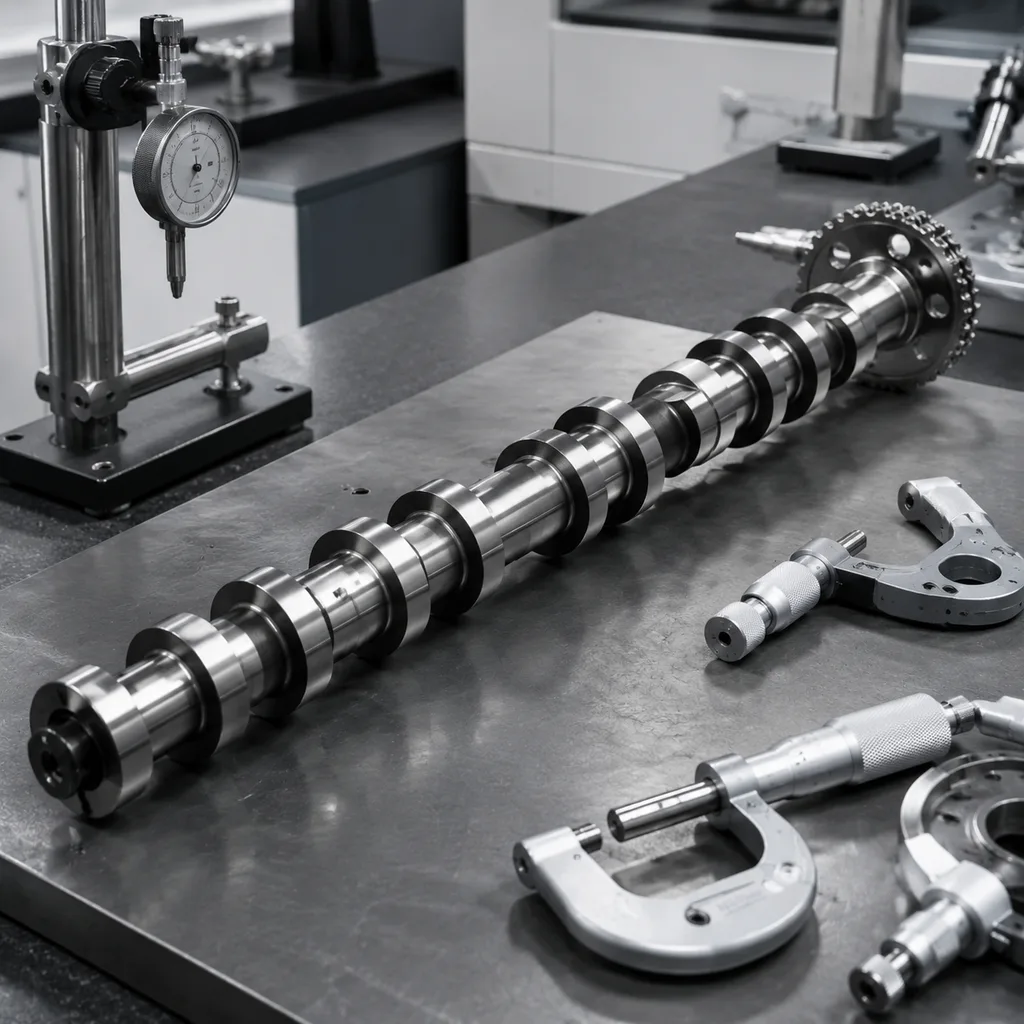
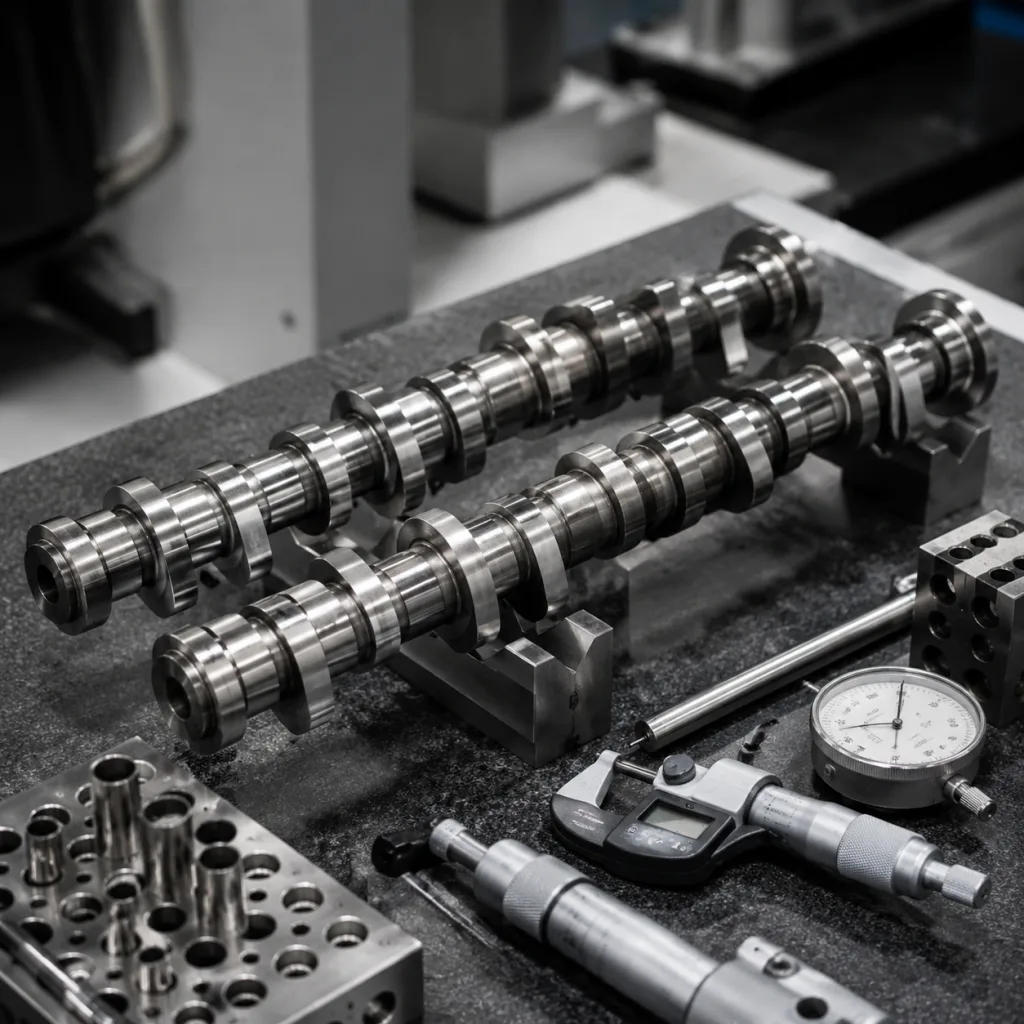
Are torque wrenches, bore gauges, micrometers, hardness testers, and CMM equipment calibrated under a documented schedule?
Is there a corrective-action process with containment, root-cause analysis, and 8D or equivalent reporting for customer claims?
For an on-site or remote audit, request the process flow diagram, control plan, PFMEA summary if available, gauge list, calibration certificates, recent dimensional reports, and photos of packing and rust-prevention practice.
One simple traceability test is powerful: choose one packed rod set and ask the factory to trace it back to material heat, machining batch, inspection operator, and final carton label. If that takes too long or produces gaps, the supplier may struggle during a real claim.
Driventus’ quality system is structured around IATF 16949:2016 and ISO 9001:2015, with incoming inspection, in-process control, final inspection, and export documentation. Buyers may request factory audit materials, production flow charts, control plans, and sample inspection reports before confirming a wholesale contract.
RFQ Questions That Prevent the Wrong Rod From Being Quoted
A strong RFQ does more than ask for price. It removes assumptions.
For Cadillac-fitment rods, the buyer should provide the exact engine family, model-year range, sample photos, physical samples if available, and any OE reference list used internally. If the project is private label, include artwork rules and carton strength targets at the beginning, not after price approval.
Before sending the RFQ, answer these questions:
Which engine code, displacement, and model-year range does each SKU cover?
Is the supplier quoting to drawing, to sample, or to reverse-engineered specification?
Are bolts included, and what torque or torque-angle requirement applies?
What weight spread is acceptable within each engine set?
What first order quantity, annual forecast, and reorder cadence are realistic?
Which Incoterms apply: EXW, FOB Ningbo/Shanghai, CIF destination, or DDP where available?
Is third-party pre-shipment inspection mandatory?
Will rods ship alone or as part of a kit with bearings, pistons, or gaskets?
A buyer-ready RFQ package should include:
Part number list with engine code, displacement, model-year range, and target market
Drawing or sample with critical dimensions, including centre distance, big-end bore, small-end bore, width, and bolt specification
Required material, heat treatment, hardness range, surface treatment, and magnetic particle inspection requirement if any
Target tolerance limits and whether the supplier may quote to drawing, sample, or reverse-engineered specification
Forecast by SKU, first order quantity, reorder cadence, and acceptable MOQ tier
Target price basis, destination port, inspection requirement, and payment discussion point
Required documents, including inspection report, material certificate, control plan summary, and pre-shipment photos
Driventus can support connecting rod Cadillac wholesale enquiries as a standard aftermarket supply project or as a custom drawing-based programme. The most efficient route is to send fitment data, target quantity, quality documentation needs, and market region in one package. Driventus is an independent aftermarket manufacturer; brand names are referenced for fitment only.
Frequently asked questions
Yes. Driventus can support private-label cartons, batch labels, barcode requirements, country-of-origin marking, and export packing for qualified wholesale orders. Artwork, label fields, carton strength, pallet requirements, and carton approval samples should be confirmed before mass production.
Typical documents include a dimensional inspection report, material certificate, packing list, commercial invoice, shipment documents, and inspection summary. For new projects, buyers may also request sample inspection data, hardness results, process flow, control plan summaries, and batch traceability records.
No. Driventus does not claim vehicle manufacturer approval or endorsement. Driventus is an independent aftermarket manufacturer; brand names are referenced for fitment only.
For fitment review, MOQ discussion, price-tier planning, lead-time confirmation, or audit documentation, share your engine data, drawings or samples, target order quantity, and destination market. You can [request a quote](/contact.html).