Connecting Rod for BMW 7 Series Replacement: OE Match Guide
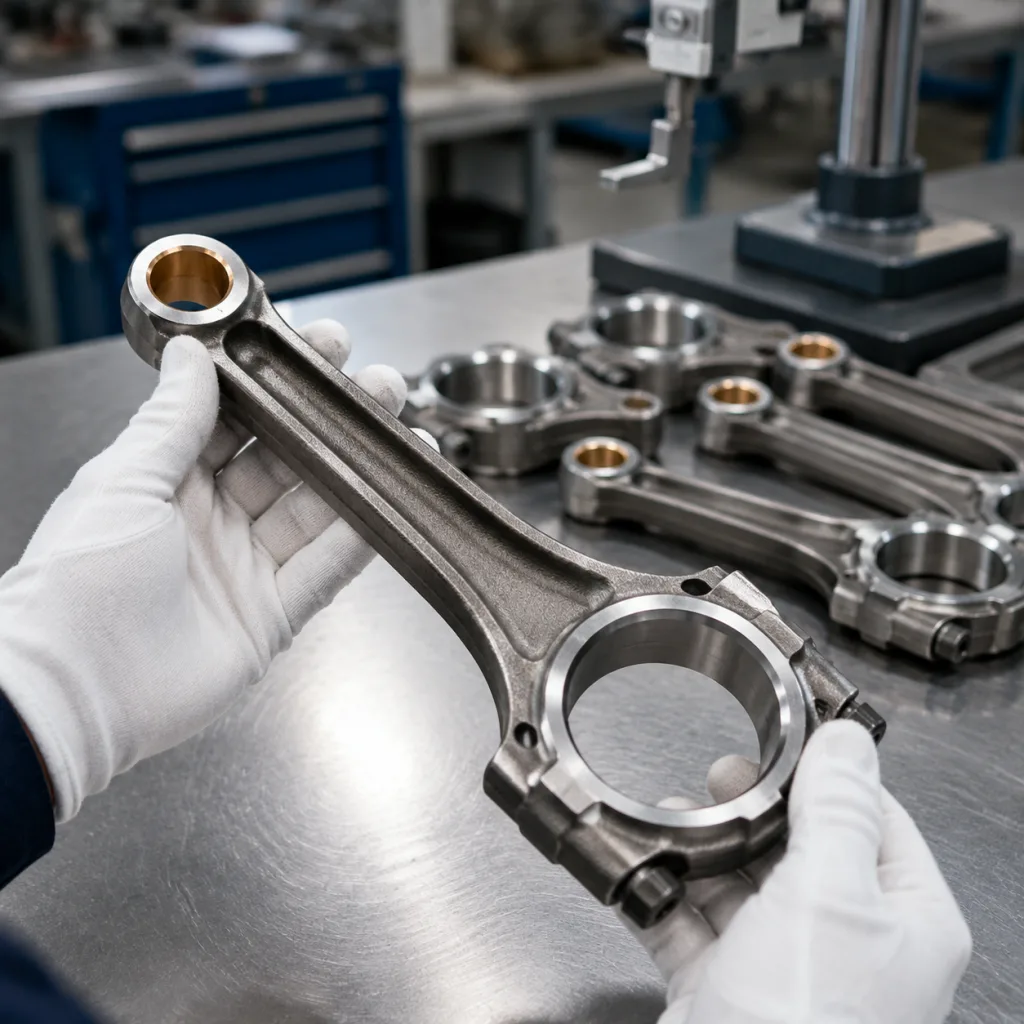
Choosing a `connecting rod for bmw 7 series replacement` is less about finding a similar-looking part and more about locking down the exact engine family, geometry, and load case. If the centre-to-centre length, big-end bore, small-end fit, rod bolt spec, or matched weight is off, the engine may assemble but not survive. That is why the best buying process is simple: confirm the OE reference, verify measured dimensions, and then approve sample, MOQ, and lead time together. Driventus supplies engine and powertrain parts from Taizhou, Zhejiang, under IATF 16949:2016 and ISO 9001:2015 controls. Driventus is an independent aftermarket manufacturer; brand names are referenced for fitment only. For buyers comparing replacement options, a dimensional check plus traceable inspection data is the fastest way to avoid returns and rebuild delays.
Start with the engine code, not the catalog name
For a `connecting rod for bmw 7 series replacement`, the safest first move is to identify the engine code and OE reference before comparing price. A catalog title can hide multiple revisions, and a rod that looks right can still miss by a few hundredths of a millimeter in the places that matter.
Use this order of checks:
Engine code and displacement variant
OE reference number, if available
Centre-to-centre length
Big-end bore diameter and width
Small-end bore or bushing size
Rod bolt grade, stretch target, and reuse policy
Matched weight band
Parting-line quality and cap-joint flatness
If the seller cannot tie the part to the engine build sheet or a measured drawing, treat it as a risk item. Ask for the sample report, revision level, and any fitment notes by model year or production run. That is usually where hidden mismatch shows up.
Where replacements usually fail fitment checks
Most replacement problems are not dramatic. They start as small geometry errors, then show up later as noise, bearing wear, or assembly rework. The usual failure points are predictable:
Check item
What to confirm
Why it fails
Centre-to-centre length
Match the OE drawing
Changes piston position and rod ratio
Big-end bore
Roundness, taper, and width
Affects bearing crush and oil clearance
Small-end bore
Pin size, bush condition, oil hole location
Causes pin fit issues and noise
Rod mass
Set-to-set spread and balance class
Creates imbalance at assembly
Bolt spec
Torque, angle, or stretch value
Clamp-load errors shorten life
Material and heat treat
Chemistry and hardness record
Fatigue resistance depends on it
</tr></thead><tbody> </tbody></table>If a supplier only quotes “fitment confirmed” without measured data, that is not enough for procurement. The practical test is whether the part can be measured against a drawing and approved against the same tolerance stack used by the engine manufacturer.
Spec sheet checkpoints worth asking for
Procurement teams should ask for the spec sheet before they ask for the price break. That keeps the conversation focused on what will actually pass inspection.
Ask for:
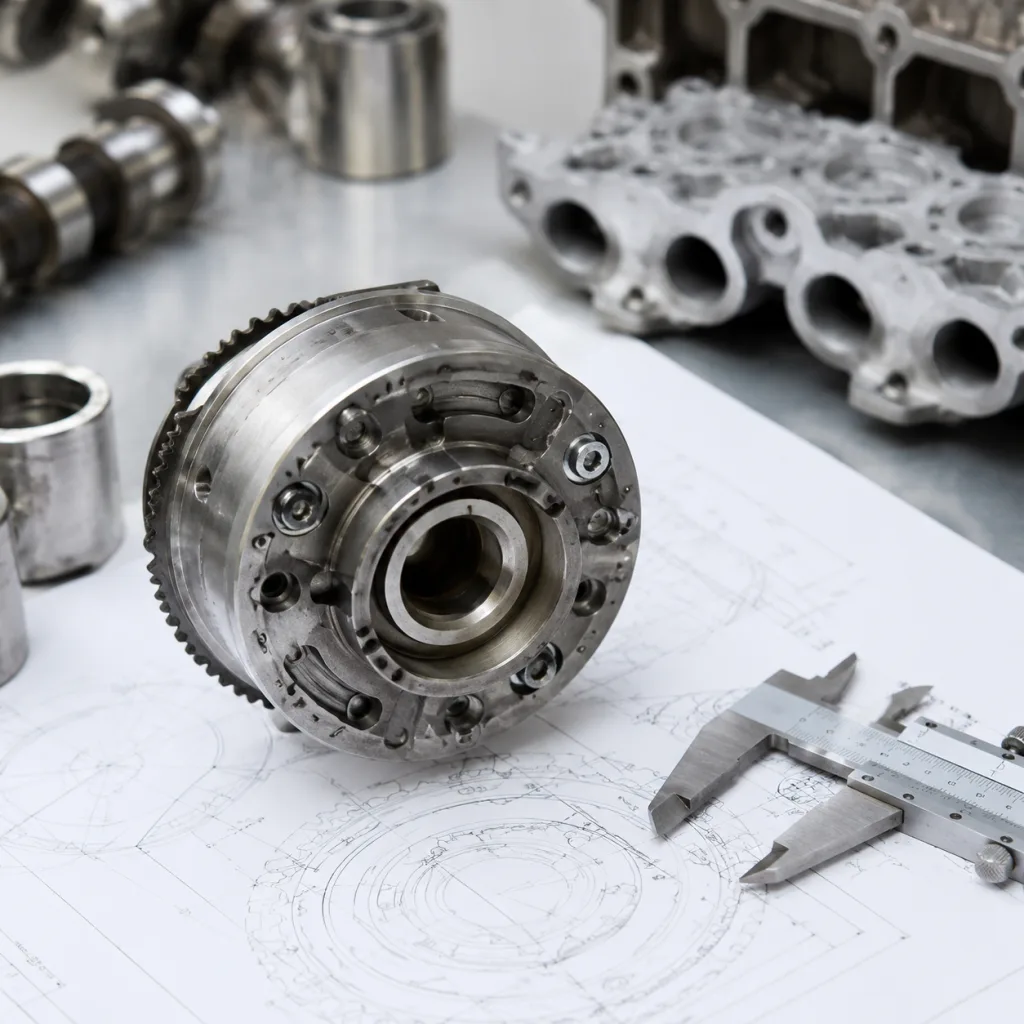
Dimensioned drawing with revision level
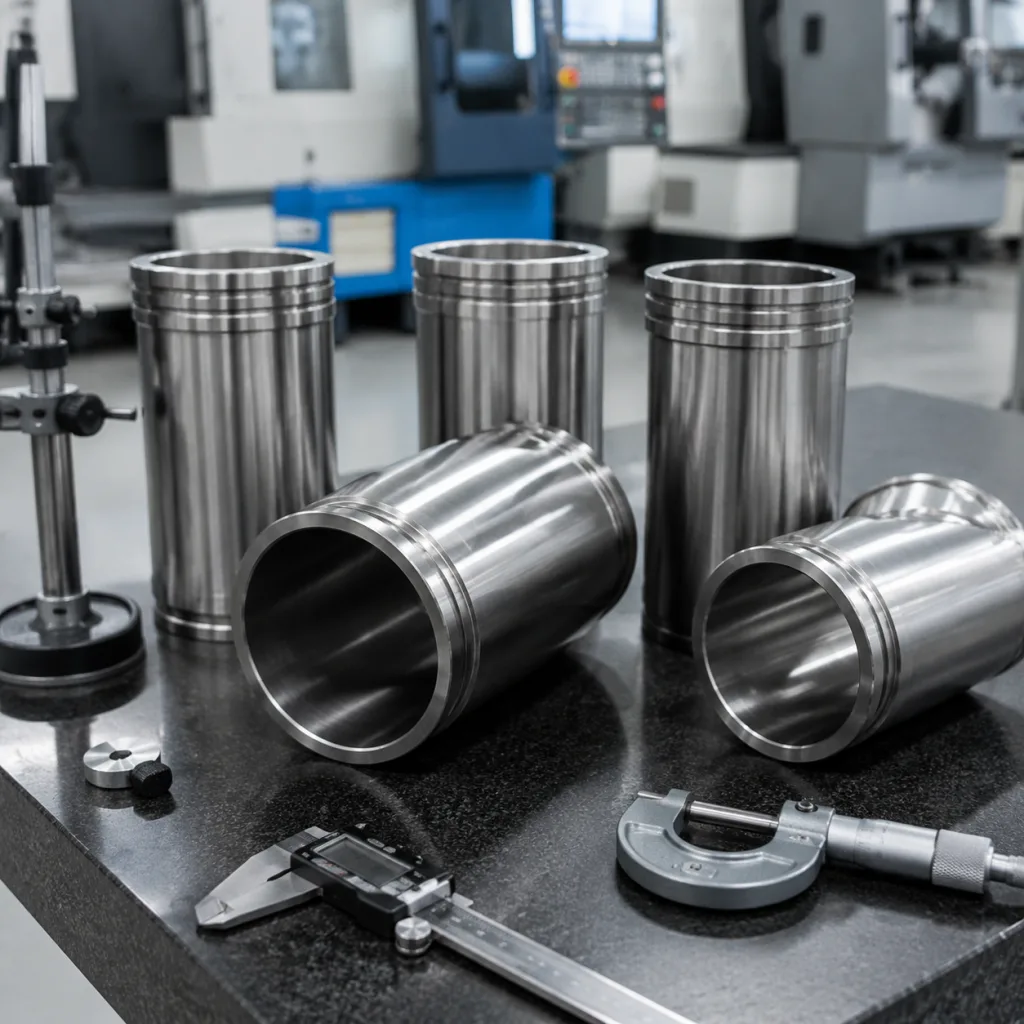
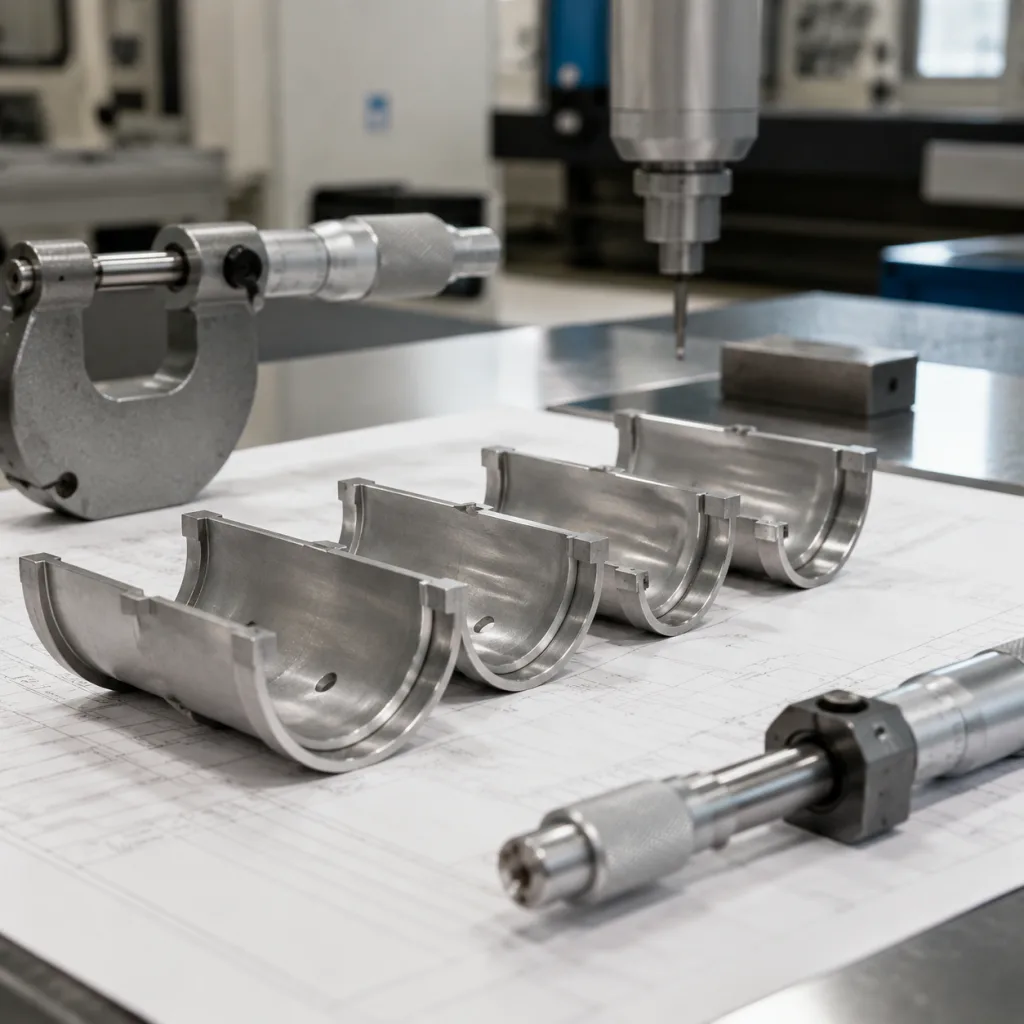
CMM or bore-gauge inspection report
Material certificate and heat number traceability
Hardness or microstructure data where applicable
Rod bolt specification and tightening method
Weight-matching rule for packed sets
Packaging and batch traceability details
A complete packet makes it easier to compare suppliers without guessing. It also helps separate a true OE-equivalent replacement from a part that merely shares the same application label. If the application has emissions or road-use compliance requirements, confirm the material and packaging documentation against the relevant regional rules before release.
Validation package before you release the PO
A strong replacement part is not just measured once. It is controlled through inspection, traceability, and repeatable packing.
Driventus typically supports the following checks for replacement programs:
Incoming material verification by heat number and certificate review
Dimensional inspection against drawing using CMM and bore gauges
Hardness and microstructure review when required
Bolt preload or stretch verification within a defined window
Weight matching by set
Batch traceability by date code and revision
Packaging controls for shipment consistency
For buyers, the useful proof is a combination of inspection reports, sample photos, traceability records, and any deviation statement if the part differs from OE in a non-critical way. That is the difference between a usable cross-reference and a part that creates warranty exposure later.
Replace it, or reuse it? Read the failure modes
A used rod can look serviceable and still be wrong for reuse. Once the engine has seen severe heat, oil starvation, over-rev, or hydrolock, the hidden risk rises quickly.
Do not reuse if you see:
Blueing or heat marks
Cap-joint fretting
Out-of-round big-end bore
Pin-bore wear or bush damage
Measured bend or twist beyond limit
Rod bolt yield or stretch outside spec
Mass spread that no longer matches the set
If the engine failed hard, replace the affected rod set and inspect the crankshaft, bearings, and fasteners at the same time. Straightening or “making it work” is rarely the economical choice once the part has crossed a damage threshold.
How the buying flow should work in practice
The easiest sourcing flow is also the most disciplined one:
1. Send the engine code or OE reference. 2. Review the measured drawing and sample photos. 3. Approve a sample lot for fit confirmation. 4. Confirm MOQ, packaging, and production lead time. 5. Place a trial order before scaling volume.
That sequence keeps engineering, purchasing, and workshop teams aligned. It also makes pricing easier to compare because the quotation can separate sample development, production quantity, and any tooling or fixture update. Lower trial quantities usually cost more per piece; repeated volume is where price and packing efficiency improve. If the listed variant is unavailable, custom development is the right path for non-branded fitment-based applications, provided the geometry and validation requirements are clear.
Frequently asked questions
Yes, when the engine code and OE reference are confirmed. Driventus supplies independent aftermarket replacements matched to the required geometry and inspection standard, with brand names referenced for fitment only. Buyers can request a measured sample, a dimensional report, and a quote tied to MOQ and lead time.
Ask for dimensional drawings, material specification, inspection reports, traceability details, and any validation results tied to IATF 16949:2016 or ISO 9001:2015 controls. For purchasing approval, also request sample photos, pack-out details, revision level, and the expected production lead time by batch size.
Yes. If a listed part is not available, Driventus can review drawings or samples for custom manufacturing through our OEM service process, subject to application fitment and validation review. Custom jobs are typically quoted with a sample-development lead time, a production MOQ, and a volume-based price ladder so buyers can compare trial and repeat order economics.
If you need an OE-matched replacement or a validated cross-reference, contact Driventus for measured support, MOQ review, and sourcing lead-time confirmation at /contact.html.