Connecting Rod for BMW 1 Series Aftermarket Replacement
Buying a connecting rod for BMW 1 Series aftermarket replacement is not a catalogue exercise. The rod has to suit the exact engine family, crank journal, piston pin, bearing shell, cap construction, bolt clamp load and balance requirement. If one of those interfaces is wrong, the part may still look correct on the bench and fail after assembly.
For importers, repair-chain buyers and engine rebuild distributors, the real question is simple: can the supplier repeat the same geometry, material condition and inspection result batch after batch? BMW 1 Series vehicles span multiple petrol and diesel engine families across markets and production years, so selection must be tied to engine code, displacement, crank-piston configuration and OE-format cross-reference, including references that begin with OE 11251….
Driventus manufactures connecting rods and related engine components for aftermarket supply programmes from Taizhou, Zhejiang, under IATF 16949:2016 and ISO 9001:2015 controls. Driventus is an independent aftermarket manufacturer; BMW and other brand names are referenced for fitment identification only.
Decision Framework: Start With the Engine, Not the BMW 1 Series Badge
A connecting rod for BMW 1 Series aftermarket replacement should be approved from the engine outward. The same vehicle line can carry different petrol or diesel engines depending on market, year, emissions package and transmission. A part number chosen only from a model description is a risk.
Use three layers before quoting or sampling:
Vehicle application: BMW 1 Series model, production year range, body variant and market region.
Engine application: petrol or diesel engine code, displacement, induction type and crank-piston layout.
Part reference: OE 11251… format, supplier catalogue number, sample reference and internal SKU mapping.
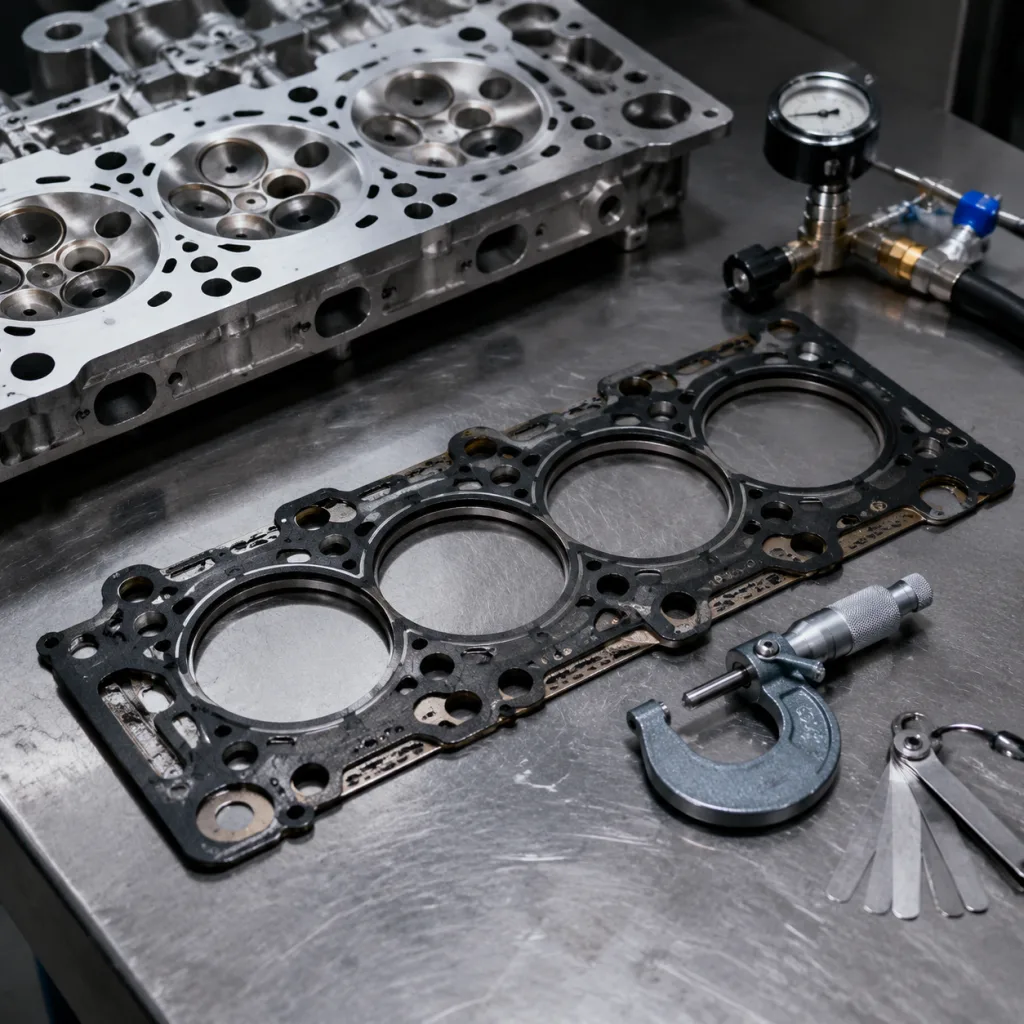
The buying enquiry should include measured sample data, not just catalogue screenshots. Useful baseline measurements include centre-to-centre length to 0.01 mm, big-end bore after cap torque, big-end width, small-end bore or bushing ID, piston pin length/contact pattern, bolt thread diameter and pitch, and the mass of each original rod. Ask the supplier which dimensions are inspected at 100% and which are controlled by sampling.
A small mismatch can create a large workshop problem. A 0.05–0.10 mm error in bore condition, side width or cap seating can affect oil clearance, piston deck position, bearing temperature, noise and wear pattern. Fracture-split caps must stay paired with their original rod. Cap orientation should be marked or packed so the installer cannot reverse it.
For rebuild programmes, rods should usually be purchased as matched sets. A practical specification is set-matched total rod weight within 2–5 g, with tighter end-weight matching requested for higher-speed or turbocharged applications. This reduces variation between repair branches and makes warranty analysis easier if an engine returns with bearing noise, oil-pressure complaints or uneven wear.
Define the supply format early: one replacement rod, a full engine set, or a component within a rebuild kit. Set supply often gives better balance control and simpler stock handling. Relevant connecting rod listings can be reviewed in our catalog, including related engine components used in complete rebuild programmes.
Spec Deep-Dive: Dimensions, Material and Bolt Clamp Load That Matter
Connecting rods see tensile, compressive and bending loads every crankshaft revolution. The purchase specification must therefore describe the part as a loaded engine component, not as a line item for a vehicle model.
Core purchasing requirements should include:
Requirement
Buyer check
Practical tolerance target
Centre-to-centre length
Confirm against OE reference, sample and engine code
Common control band ±0.02–0.05 mm, subject to drawing
Big-end bore
Measure after cap assembly and bolt torque
Size, roundness and taper commonly controlled within 0.005–0.015 mm
Small-end bore or bushing ID
Match piston pin design and lubrication route
Pin clearance per engine design; bushing finish usually Ra 0.4–0.8 µm
Big-end width
Check crankshaft side clearance
Width and thrust faces controlled to maintain specified side clearance
Cap design
Confirm fracture-split, machined cap or other OE-style construction
Cap must be paired, oriented and machined in the torqued condition
Material
Forged steel, sintered steel or specified equivalent
Grade and chemistry verified by material certificate or spectrometer check
Heat treatment
Documented hardness range and process record
Buyer should specify hardness band, case/core requirement if applicable
Weight control
Set or batch tolerance defined by buyer
Set matching commonly 2–5 g; tighter targets require price confirmation
Bolt specification
Correct thread, strength grade, seating face and torque procedure
Bore inspection must use the same torque/angle condition as assembly
</tr></thead><tbody> </tbody></table>Forged steel is often preferred where durability margin is important, especially for turbocharged engines, performance-sensitive applications and professional rebuild channels. Common material routes include medium-carbon alloy steels such as 40Cr/42CrMo-equivalent families, selected according to drawing and load requirement. Sintered rods may be appropriate when the original design used that process and when fracture-split cap geometry needs close replication. Record the chosen production route in the procurement file; it affects cap behaviour, appearance, machining allowance and inspection method.
Rod bolts are a common source of hidden variation. A big-end bore can measure correctly before assembly and move outside tolerance after tightening if bolt grade, seating face or torque-and-angle behaviour is different. Define whether bolts are included, whether they are reusable or torque-to-yield style, the thread condition during measurement, and the exact tightening condition used for final bore inspection. If the workshop procedure uses torque plus angle, the inspection report should not be based on a different clamping method unless the supplier has correlated the two.
Surface condition is part of the specification. Bearing faces should be free from chatter, dents, raised burrs and corrosion. Oil holes need clean deburring. Bushing press fit must not distort the small-end bore beyond approved pin clearance. Driventus can support standard aftermarket supply or custom manufacturing where buyers need a controlled drawing, revised packaging, private label, special material requirement or dedicated inspection plan.
Failure Modes to Control Before the Rod Reaches the Carton
OE-equivalent aftermarket supply does not mean the vehicle manufacturer has approved the part. It means the replacement rod is engineered to perform the same function, with comparable fit, material performance and inspection control for the intended engine. Driventus is an independent aftermarket manufacturer; brand names are referenced only for fitment identification.
The inspection plan should be built around the failures buyers do not want to see: spun bearings, pin-end wear, cap fretting, bolt relaxation, fatigue cracks, distorted bores, set imbalance and corrosion before installation. Under the Driventus quality system, production and inspection activities are structured around IATF 16949:2016 and ISO 9001:2015. These standards do not define one BMW 1 Series rod dimension, but they support process control, traceability, nonconformance handling and corrective action.
Key controls include:
Chemical composition verification against the specified steel grade, with steel heat/lot traceability.
Hardness testing after heat treatment, recorded by batch and compared with the approved range.
Big-end bore size, roundness and cylindricity after cap torque, measured in the same clamping condition used for approval.
Small-end bore size, bushing condition, oil-hole position and pin-fit confirmation.
Parallelism and twist between big-end and small-end bores, using a dedicated fixture or CMM where required.
Centre-to-centre length measurement using controlled fixtures with gauge calibration records.
Surface finish on bearing contact, thrust face and pin bore areas, typically reported in Ra values for controlled programmes.
Magnetic particle or equivalent crack inspection where specified, especially after forging and heat treatment.
Bolt seating inspection, thread gauge checks, torque verification and visual review for thread damage.
Batch weight recording and set matching, with individual rod weights shown on set labels if requested.
Visual inspection for burrs, machining marks, handling damage, sharp edges and corrosion risk.
For critical orders, request a first article inspection package rather than relying on a pass/fail sample. A useful FAI file includes a ballooned drawing or agreed measurement list, at least 3–5 fully measured samples, material certificate, hardness report, heat-treatment batch record, bolt/clamping condition, weight data and packaging approval photos. This documentation helps distributors serving professional engine rebuilders because warranty discussions need evidence, not assumptions.
Inspection scope should match commercial risk. A spot order for low-volume service inventory may need sample approval and final dimensional reporting. A national repair-chain programme may justify FAI, ongoing capability data and retained samples for each approved reference. For long-running SKUs, track capability on critical-to-function dimensions such as big-end bore, centre distance and small-end ID instead of depending only on final random checks.
Step-by-Step Validation Route From Sample to Volume Release
Testing should be proportional to the duty cycle, order volume and buyer exposure. A low-volume service SKU and a national repair-chain programme may use the same base design, but they should not necessarily use the same validation package.
For a connecting rod for BMW 1 Series aftermarket replacement, Driventus usually recommends a validation route that connects each check to a real failure mode: bearing distress, pin-end wear, bolt relaxation, fatigue cracking, dimensional movement after heat treatment and set imbalance. Where the buyer supplies a drawing or sample, reverse engineering should be followed by measurement comparison, material confirmation, controlled trial production and sample sign-off before volume release.
Practical validation checklist
Confirm engine code and OE 11251… cross-reference before sampling.
Compare supplied samples with catalogue data and buyer drawings where available.
Inspect three to five samples for all critical dimensions; for launch lots, increase checks on big-end bore and set weight.
Conduct material grade and hardness verification, including batch traceability back to the steel lot.
Review torque-and-angle behaviour of rod bolts where applicable, including clamp condition used for bore measurement.
Run big-end bore checks after bolt tightening to the specified condition and record roundness/taper.
Compare rod set weights and centre-of-mass variation, especially for full engine sets.
Check small-end bushing finish, oil hole position, pin fit and lubrication path.
Perform fatigue, proof-load or endurance testing when programme volume justifies it.
Retain golden samples for future production comparison, including one approved rod set and one packed reference carton.
Record packaging condition after transport simulation or trial shipment when export damage risk is high.
A staged approval route keeps the work controlled. Stage 1 is sample measurement against the OE sample or buyer drawing. Stage 2 is a pilot lot, often 20–100 pieces depending on the programme, to confirm machining stability, cap fit, bolt behaviour, weight matching and packaging. Stage 3 is volume production with defined acceptance criteria, retained samples and shipment inspection. Higher-risk programmes may add fatigue bench testing or engine-builder field trials before national release.
Import compliance may also affect the release plan. For EU and UK supply chains, buyers often request declarations related to REACH (EC) No 1907/2006. Packaging materials, anti-rust oils, coatings and surface treatment substances should be checked against the buyer’s compliance requirements before shipment. Anti-corrosion protection should reflect the transport route: VCI bagging, neutral oil or sealed inner packaging may be needed for sea freight and humid storage.
Testing does not replace fitment discipline. A strong rod made from the correct material can still fail if bearing clearance, bolt tightening method or piston pin interface does not match the target engine. Approval should combine laboratory checks, application confirmation and assembly-condition measurement.
Scenario Comparison: Spot Buy, Rebuild Programme or Private-Label Range
Not every connecting rod order has the same sourcing logic. A distributor filling a slow-moving service gap, a repair chain rebuilding engines weekly and a brand owner launching a private-label range need different levels of control.
For a spot buy, the priority is fast fitment confirmation, sample approval, clear carton labelling and enough dimensional reporting to reduce receiving risk. For a repair-chain programme, consistency matters more: set matching, repeatable packaging, retained samples and claim review by batch. For a private-label programme, add artwork control, barcode rules, forecast planning, documentation packs and agreed change-control procedures.
Commercial factors to define at quotation stage include MOQ, annual forecast, sample quantity, lead time, packaging format, carton labelling, barcode requirements, private-label artwork, country-of-origin documents and inspection records required with each shipment. Clear application data reduces catalogue returns for distributors. Consistent rod sets reduce workshop delays, unnecessary crankshaft or piston rework, and repeat labour claims for repair chains.
Typical commercial logic is straightforward. If tooling, gauging or packaging artwork already exists, trial MOQ may be as low as a few engine sets. Production MOQ often starts around 100–300 pieces or 25–75 four-cylinder sets, depending on SKU and packaging. New development or private-label programmes usually need a higher commitment because sample machining, fixture setup, inspection time and carton printing must be absorbed. Lead time commonly breaks down into 7–15 days for technical review and quotation, 20–45 days for samples or pilot production where needed, and 30–60 days for production after deposit and sample approval. Sea freight and destination customs time are separate.
Compare price by landed, approved part rather than headline unit cost. A lower quote may exclude rod bolts, set matching, FAI reporting, anti-rust packaging, private labels or batch inspection documents. Ask whether the price is for one rod or one engine set, whether bolts and bushings are included, whether cartons are neutral or branded, and whether the inspection level is standard sampling or enhanced reporting.
Use a structured sourcing table:
Sourcing item
Minimum expectation
Higher-control option
Certification
ISO 9001:2015
IATF 16949:2016 production controls
Fitment data
Model and engine code
Engine code plus OE 11251… cross-reference and sample confirmation
Inspection
Final dimensional report
Control plan, FAI, batch traceability and retained samples
Packaging
Neutral export carton
Private label, barcode labels and set-matched packaging
Compliance
Basic material declaration
REACH (EC) No 1907/2006 declaration support and packaging compliance checks
Supply model
Spot purchase
Forecast-based replenishment with agreed safety stock
Warranty support
Basic replacement policy
Claim review using batch records and inspection history
</tr></thead><tbody> </tbody></table>Driventus exports engine and powertrain components to more than 60 countries and can align documentation to EU, UK, US, Canadian, Australian and Brazilian importer requirements. For active sourcing projects, buyers can request a quote with engine code, sample photos, annual demand, packaging requirements and any existing OE-format references.
A complete enquiry should state the target market, whether the rods are for individual service replacement or full rebuild sets, and any required inspection documents. Precise input data lets the supplier confirm whether an existing aftermarket reference is suitable or whether controlled sample development is needed.
Frequently asked questions
Confirm the engine code, production year, displacement, piston pin diameter, crankpin journal size, centre-to-centre length, bearing specification and OE-format reference such as OE 11251…. Model name alone is not sufficient because BMW 1 Series vehicles use multiple engine families across regions and years.
Yes. A rod can be supplied as an OE-equivalent aftermarket replacement when it matches the required dimensions, material properties, bearing interfaces, bolt specification and validation tests for the target engine. OE-equivalent means designed for functional replacement; it does not mean approval or endorsement by the vehicle manufacturer.
Request dimensional inspection reports, material or hardness records, sample approval data, packaging specification, traceability method and quality certification. For controlled programmes, add first article inspection, a control plan, process flow information, retained-sample agreement and REACH-related declarations where applicable.
If you are sourcing a connecting rod for BMW 1 Series aftermarket replacement, send the engine code, OE-format reference, sample photos and annual forecast for review. Driventus can confirm fitment options and documentation through /contact.html