connecting rod · 2026-06-21

Connecting Rod for Alfa Romeo Stelvio Aftermarket Replacement

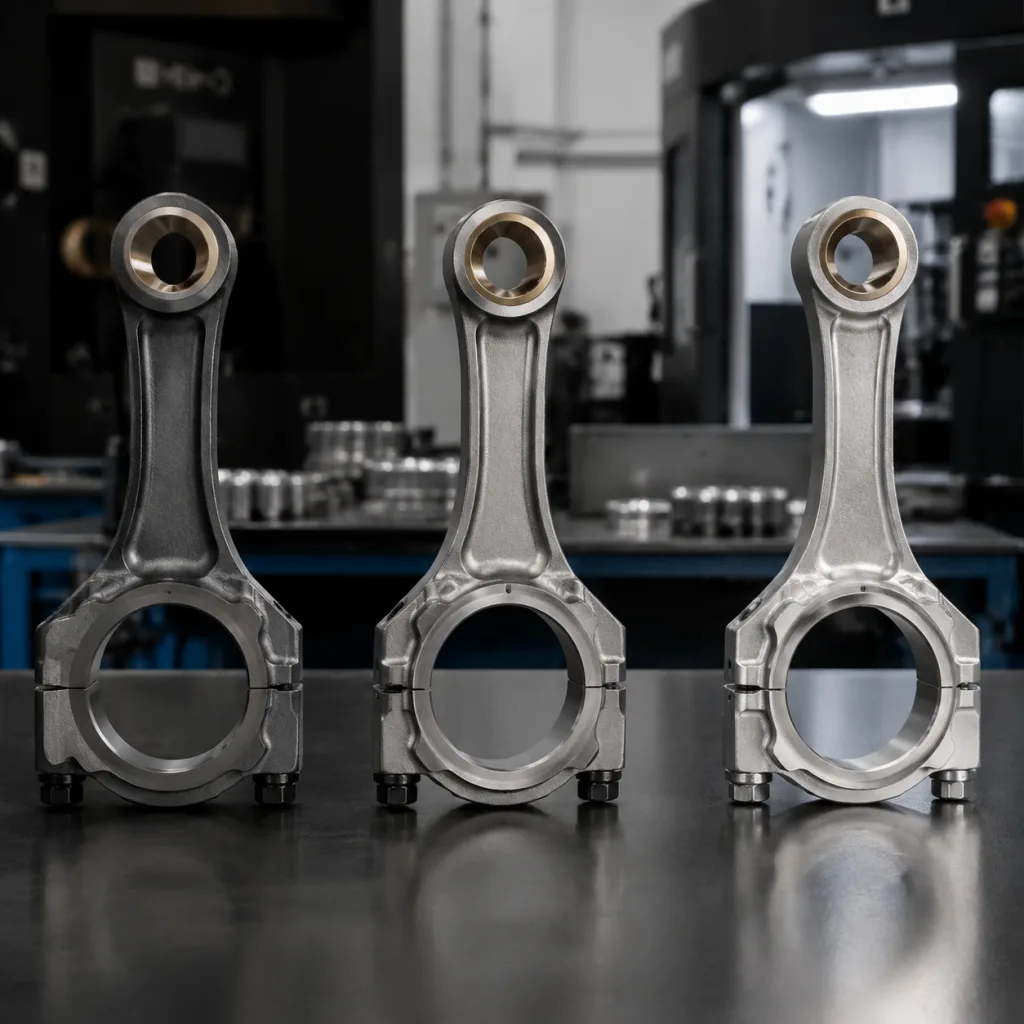
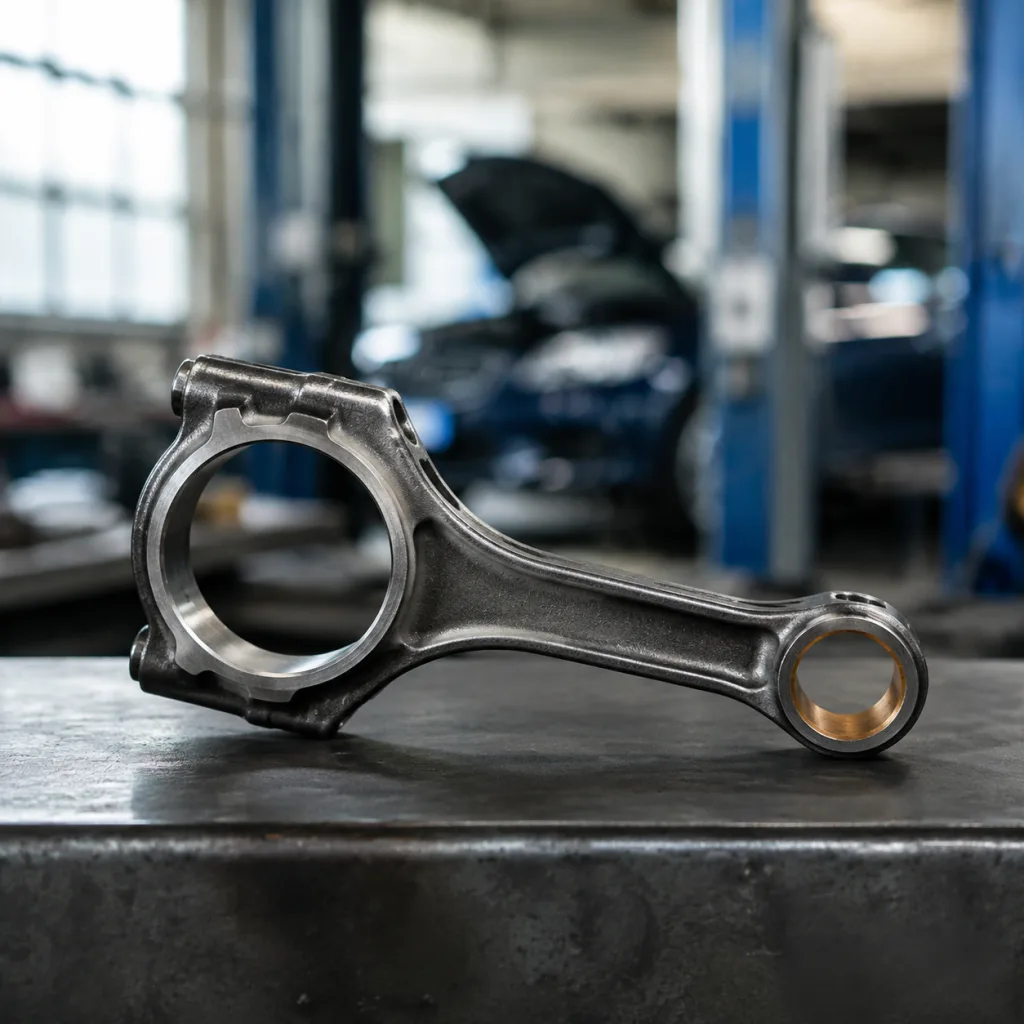
A connecting rod for Alfa Romeo Stelvio aftermarket replacement should be evaluated as an engineering match, not a catalog match. The badge matters less than the engine code, rod geometry, bolt spec, mass, and fatigue performance that the engine family requires.

For B2B buyers, the practical question is simple: can the part hold OE dimensions, material properties, and inspection discipline across repeat orders? Driventus supplies engine and powertrain components from Taizhou, Zhejiang, under controlled manufacturing systems aligned with IATF 16949:2016 and ISO 9001:2015. Driventus is an independent aftermarket manufacturer; brand names are referenced for fitment only.

This page walks through the decision points buyers should use before placing an order, including fitment confirmation, spec matching, validation requests, failure modes, and how to structure an RFQ for a Stelvio program.

Start with the engine code, not the badge

The Stelvio name covers more than one powertrain configuration, so the first sourcing mistake is usually assuming one rod fits every version. That approach fails fast. The correct aftermarket replacement has to align with the engine code, displacement, fuel type, model year, and OE part number tied to the target build.

Use the vehicle badge only as a lead. The technical match comes from the engine family.

For a buyer-ready RFQ, ask for:

  • VIN and engine code
  • OE part number, if available
  • Model year and build date
  • Gasoline or diesel application
  • Sample rod, if the program is rebuild-led
  • Photos of the cap, beam, and bolt interface

If the application is for repair, remanufacture, or a mixed-service rebuild network, also request the removed part and a simple measurement sheet. That reduces cross-reference errors and makes quotation faster. For broader engine sourcing, see our catalog and engine components.

What must match for OE-level replacement

A rod can look right and still be wrong. In this category, the commercial decision comes down to a short list of hard checks: geometry, bore control, bolt design, and material consistency.

A practical approval target is to align with the OE drawing or, if the drawing is unavailable, to approve a controlled sample against measured reference data before volume release.

</tr></thead><tbody> </tbody></table>If the OE drawing is missing, do not guess from photos. Ask for a measured sample set, nominal values, and inspection method before you approve tooling or release a production PO. Driventus can also support custom manufacturing when a buyer needs a controlled deviation from an existing design, provided the technical package is approved first.

A quick comparison: direct replacement, controlled-match, or custom build

Not every Stelvio program needs the same sourcing path. Choosing the wrong one wastes time and creates quality risk.

Specification Buyer check Why it matters Control note
Centre-to-centre lengthConfirm nominal value and toleranceSets engine geometry and compression behaviorMatch OE drawing or approved sample data
Big-end boreCheck diameter, roundness, and widthProtects bearing clearance and crank loadingRecord measurements on the first article report
Small-end boreVerify pin fit and bushing conditionAffects piston pin wear and noiseConfirm bushing interference and finish
Rod weightCompare part-to-part massSupports balance and repeatabilitySort by weight class if the program requires it
Bolt specConfirm grade, length, and tightening methodPrevents cap separationInclude torque or stretch procedure
MaterialVerify forged or equivalent constructionDrives fatigue performanceRequest chemistry, heat treatment, and hardness data

</tr></thead><tbody> </tbody></table>This is where many teams overcomplicate the decision. If the engine code and dimensions are stable, a direct replacement is usually enough. If revisions differ by market or production year, treat it as a controlled-match project. If the buyer wants a different material, finish, marking, or pack spec, move it into a custom build path.

The quotation should reflect the path chosen. Sample cost, tooling status, unit price, and lead time should be separated clearly so procurement can compare bids without hidden assumptions.

A quick comparison: direct replacement, controlled-match, or custom build

Validation checks that should be on the RFQ

A replacement rod should never be accepted on appearance alone. Ask for evidence that the part was built and checked under a repeatable process.

At minimum, the RFQ should request the inspection route, sample size, and acceptance criteria for the first production lot. For repeat orders, insist on lot-level traceability so incoming quality can be compared across shipments.

Recommended validation items:

  • Dimensional inspection report for critical features
  • Hardness results for the body and cap area
  • Material certificate tied to heat or batch number
  • Magnetic particle or dye penetrant inspection, where applicable
  • Balance report for mass consistency
  • Fatigue or bench validation summary for the rod family
  • Surface finish record for bore and parting-line areas, if required

If the program is high volume, ask for PPAP-style evidence or an equivalent approval package. If the parts go into a service network, also request a retained-sample policy and a documented nonconformance process. Suppliers working to quality system controls can usually provide traceability back to production lot, inspection status, and release authority.

Where replacement sourcing usually fails

Most failures do not come from the forging itself. They come from bad input data, mixed revisions, or weak release controls.

The common failure modes are predictable:

  • Wrong engine-code mapping
  • Mixed rod revisions in the same order
  • Caps supplied without the matching beam
  • Bolt length or shoulder mismatch
  • Inconsistent weight between lots
  • Unverified heat treatment or shot peening
  • Packaging that damages the cap seat or contaminates the bearing area

The fix is process discipline. Start with the OE data or a sample rod, measure the critical features, confirm the tightening method, approve a pre-production sample, then release the first shipment against an agreed inspection report.

Commercially, define MOQ and lead time at quotation stage. For standard repeat orders, MOQ is often driven by carton or pallet efficiency. For custom or retooled variants, MOQ is higher because tooling, fixtures, and validation must be recovered. Lead time should be quoted separately for samples, production, and export transit so no one confuses factory days with landed delivery.

Where replacement sourcing usually fails

How Driventus structures a B2B order

Driventus supports distributors, OEM and Tier-1 programs, and multi-location repair networks. For a connecting rod order, the workflow is straightforward: drawing review, sample comparison, validation sign-off, then repeat production with controlled lot traceability.

The fastest RFQs are the ones that arrive complete. Send:

  • OE number or sample photos
  • Engine code and model year range
  • Annual forecast and first order quantity
  • Packaging requirement
  • Requested inspection documents
  • Any private-label or marking needs

That package lets the technical team decide whether the part is a direct substitute, a controlled-match variant, or a fully custom build.

Buyers should expect the quotation to separate three costs: sample or engineering work, unit price at the quoted volume, and freight or packaging charges. Standard programs may allow lower MOQs if the geometry is already in production; new tooling or revised forging fixtures usually require a larger first-order commitment.

Published standards commonly referenced in this process include IATF 16949:2016, ISO 9001:2015, and, where relevant, REACH (EC) No 1907/2006. For programs touching durability documentation, buyers may also align supporting records with application-specific references such as ECE R-83 or SAE J2527 when they apply to the scope.

Frequently asked questions

Yes, if the engine code and OE dimensions are confirmed. Driventus supplies aftermarket parts for fitment-based applications only, with no vehicle manufacturer endorsement implied. Buyers should send the OE number, sample photos, or a dimensional sheet so the correct revision can be matched before quotation.

Provide VIN, engine code, OE part number if available, annual volume, target market, and whether you need sample approval, packaging customisation, or batch traceability. Adding the requested MOQ, target annual forecast, and required lead time helps the factory quote the correct commercial tier the first time.

Production is managed under IATF 16949:2016 and ISO 9001:2015 systems, with dimensional checks, material traceability, and lot-level inspection records available for review. For controlled builds, buyers can also request sample validation, hardness data, balance records, and first-article inspection results before production release.

If you need an OE-matched connecting rod programme or a verified sample set, send your specification through /contact.html and we will review fitment, tolerances, and commercial terms.

Request a Quote
Sourcing path Best when Buyer trade-off Approval requirement
Direct replacementOE data is complete and the rod is already in productionFastest route, lowest engineering effortConfirm fitment and lot traceability
Controlled-match variantOE drawing is partial or regional revisions existSlightly more review, but better fit controlApprove sample, dimensions, and inspection plan
Custom buildThe target program needs a changed spec or private-label versionMore engineering and usually higher MOQSign off on drawing, validation, and packaging