clutch kit · 2026-06-06

Clutch Kit Volvo OE Equivalent Sourcing Guide

A clutch kit for Volvo applications is normally sourced to solve a precise fitment, service-life, and availability requirement—not simply to add another SKU. Buyers need the cover assembly, driven plate, release bearing or concentric slave cylinder, and related hardware to match the original installation envelope while meeting aftermarket cost and delivery targets. For importers, distributors, and repair-chain procurement teams, the central question is whether a clutch kit Volvo OE equivalent programme is genuinely equivalent in geometry, clamp load, friction behaviour, release travel, balance, kit contents, and packaging traceability. Driventus manufactures engine and powertrain components in Taizhou, Zhejiang, and supplies B2B aftermarket channels, OEM programmes, and Tier-1 customers in more than 60 countries. This guide explains how to evaluate Volvo clutch kit sourcing with measurable specifications, validation records, and practical supply-chain controls. Driventus is an independent aftermarket manufacturer; brand names are referenced for fitment only.

What OE-equivalence means for a Volvo clutch kit

OE-equivalence is not a visual claim or a catalogue shortcut. A replacement clutch kit must match the original vehicle application in installation dimensions, release-system interface, rotational balance, clamp load, torque capacity, and service behaviour. For Volvo passenger car and light commercial applications, this means checking the kit against the original installation envelope and the buyer’s cross-reference file rather than relying only on model-year descriptions.

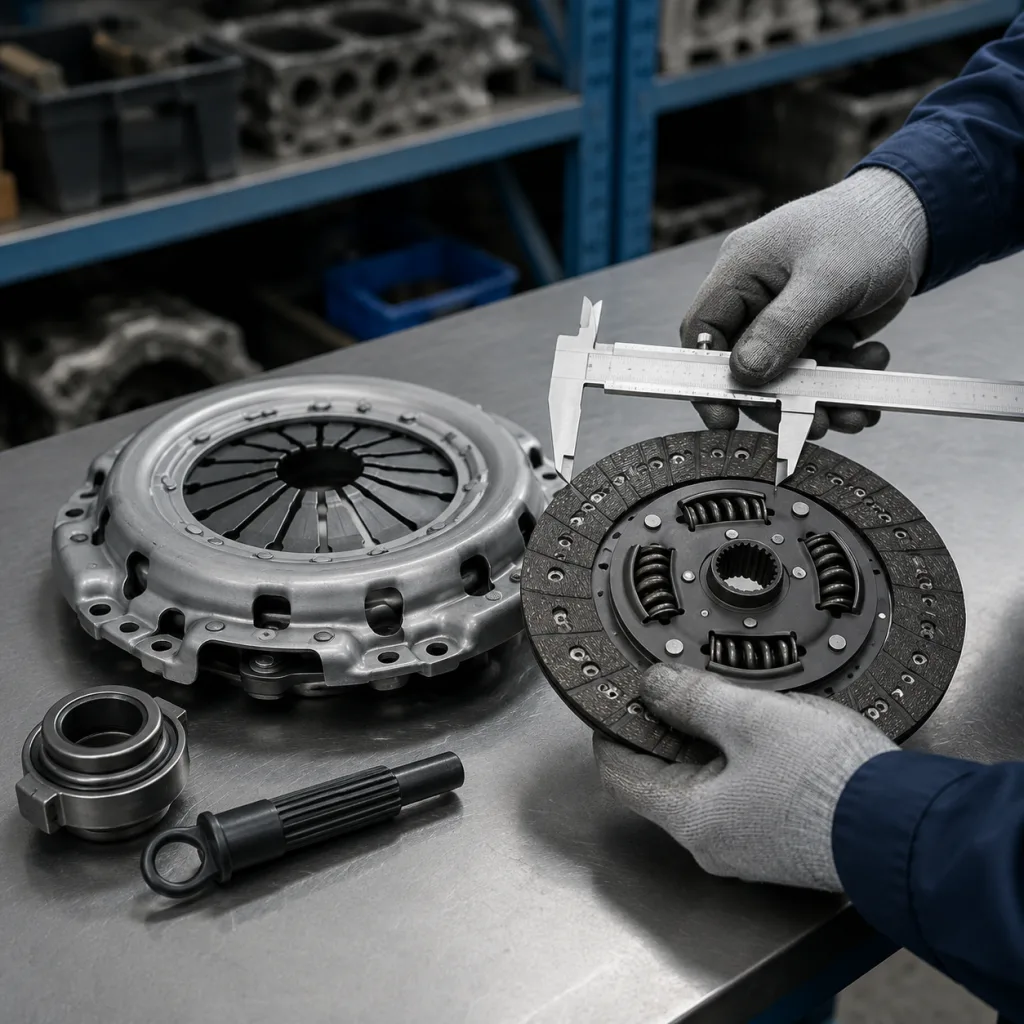
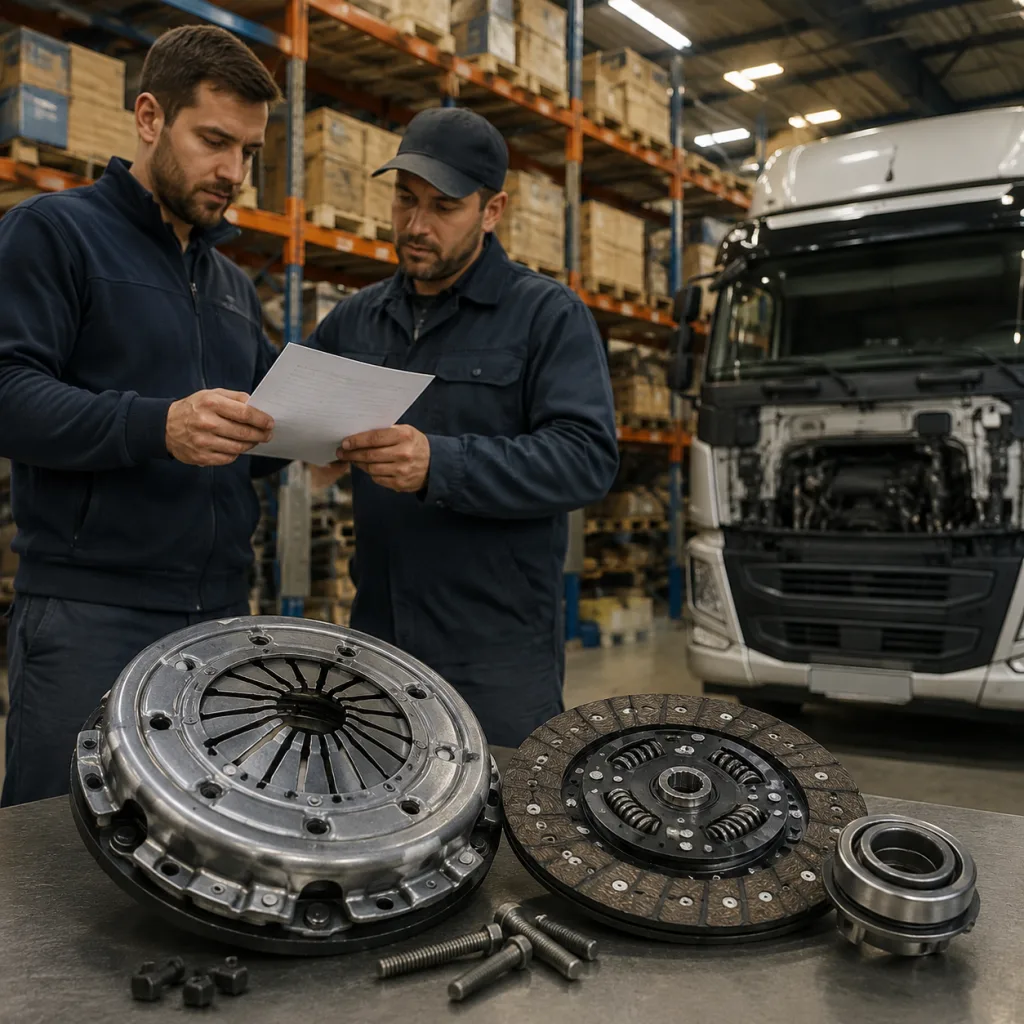
A complete replacement kit may include:

  • Clutch cover assembly with diaphragm spring
  • Driven plate with friction facings, hub spline, torsion springs, and cushion segments
  • Release bearing or concentric slave cylinder, depending on the application
  • Pilot bearing or alignment tool where specified
  • Bolts, clips, seals, grease, and installation notes where required by the service design

For procurement teams, the technical file should define nominal dimensions, tolerance bands, and interchange logic. The same vehicle model can have different engine, gearbox, flywheel, and hydraulic-release configurations by year or market. If a customer uses an OE-style reference such as OE 06A… or OE 11251… in its internal database, that reference should be treated as a fitment cross-reference, not as proof of vehicle manufacturer approval.

A reliable supplier should confirm covered applications through sample measurement, catalogue mapping, controlled drawings, and documented bill-of-material approval. The objective is to prevent three common sourcing failures: a kit that installs but releases poorly, a kit that fits one sub-application but not the full advertised range, or a kit that is mechanically correct but packaged with missing or mixed accessories.

Driventus is an independent aftermarket manufacturer; brand names are referenced for fitment only.

Key dimensions and functional checks to specify

A clutch kit is sensitive to small dimensional changes. A driven plate with the correct outside diameter but incorrect hub offset can cause drag, spline engagement problems, or difficult gear selection. A cover assembly with insufficient clamp load can slip under torque; excessive clamp load can increase pedal effort, shorten release-bearing life, and place more stress on the hydraulic system.

Procurement specifications should include the following minimum checks:

</tr></thead><tbody> </tbody></table>These checks should be tied to defined tolerances, not broad statements such as “same as OE.” For example, spline engagement must be checked with the correct input-shaft geometry, release-bearing height must be evaluated against the cover spring position, and driven-plate runout should be controlled to reduce noise and engagement complaints.

For replacement programmes, Driventus recommends signing off golden samples before mass production. Golden samples should include the complete kit, packaging, labels, component markings, accessory packs, and carton protection. Many import disputes are caused by kit completeness, mixed references, or label inconsistencies rather than by a failed friction component.

Validation testing before catalogue release

A credible Volvo OE-equivalent clutch kit programme should include bench and vehicle-related validation before catalogue release. The exact test plan depends on application volume, torque class, release-system design, and buyer warranty requirements, but the supplier should be able to provide controlled records for each product family.

Relevant validation activities include:

  • Clamp-load curve measurement across the operating travel range
  • Driven plate burst-speed testing with a defined safety margin
  • Torsional damper characteristic testing for spring rate and hysteresis
  • Friction coefficient stability checks at low, medium, and elevated temperatures
  • Release bearing noise, rotation, and endurance checks
  • Concentric slave cylinder pressure, stroke, and leakage checks where included
  • Thermal cycling to evaluate facing bonding and cover spring stability
  • Salt-spray or corrosion-resistance checks for exposed metal parts where relevant
  • Packaging drop and vibration checks for export cartons

Quality planning should be managed under IATF 16949:2016 and ISO 9001:2015 principles, including control plans, inspection records, non-conformance handling, corrective action, and traceability. Material compliance may also be required for EU and UK importers under REACH (EC) No 1907/2006, especially for friction materials, coatings, greases, rubber components, and hydraulic seals.

Validation is strongest when test results are connected to production controls. A clamp-load curve is meaningful only if diaphragm spring heat treatment, cover stamping, rivet setting, and assembly fixtures are also controlled. A successful burst-speed test must be supported by consistent friction-facing bonding, rivet quality, and driven-plate balance in production lots.

For a clutch kit Volvo OE equivalent launch, buyers should ask how often key tests are repeated, which parameters are checked on every lot, and which records can be supplied with a pilot order. This turns validation from a one-time presentation into an auditable sourcing control.

How Driventus manages clutch kit production quality

Driventus applies controlled manufacturing and inspection processes for powertrain and engine components, including clutch-related assemblies supplied to aftermarket distribution channels. The same procurement logic used for pistons, crankshafts, gaskets, water pumps, and turbochargers applies to clutch kits: material control, process stability, and lot traceability matter more than catalogue breadth alone.

Core controls include:

  • Incoming inspection for steel stampings, springs, friction facings, bearings, hydraulic seals, and fasteners
  • Supplier batch certification and material record retention
  • Process checks for rivet height, spring seating, hub concentricity, plate runout, and cover flatness
  • Functional testing for clamp load, release travel, and rotational balance
  • Final inspection against approved drawings and kit bills of material
  • Barcode or batch coding for carton-level traceability
  • Export packaging designed for sea freight and multi-drop warehouse handling

Production quality also depends on disciplined change control. Friction materials, bearing suppliers, hydraulic seal compounds, grease specifications, spring heat treatment, and carton construction can all affect field performance or claims handling. Buyers should expect notice and approval procedures for material, design, supplier, or packaging changes that influence the approved sample.

Buyers can review Driventus capability through our catalog, process documentation, and the company quality system. Where a distributor needs private-label packaging, regional catalogue mapping, or an application-specific kit not already listed, Driventus can discuss custom manufacturing based on drawings, samples, or a cross-reference file.

Procurement checklist for replacement programmes

A clutch kit replacement programme should be approved in stages. This reduces the risk of stocking kits that fit only part of the advertised vehicle range, create avoidable installation claims, or require expensive relabelling after arrival.

Use this checklist before placing a stocking order:

1. Confirm application scope. Define engine code, gearbox type, production year range, market region, and any flywheel variation. Do not rely only on vehicle model names. 2. Request dimensional drawings. Check cover bolt pattern, plate diameter, spline count, hub offset, release bearing height, and included accessories. 3. Review validation records. Ask for clamp-load, burst-speed, friction, bearing, and hydraulic test evidence where applicable. 4. Approve full kit samples. Inspect component fit, markings, instruction sheets, grease packs, fasteners, carton strength, and label format. 5. Check regulatory obligations. For EU distribution, review material declarations connected with REACH (EC) No 1907/2006. 6. Define warranty evidence. Agree on claim forms, required photos, batch codes, mileage limits, and return inspection procedure. 7. Lock packaging and cross-reference data. Ensure the part number, barcode, carton label, and catalogue mapping use the same revision.

The first purchase should normally be treated as a pilot order unless the reference is already proven in the buyer’s market. Pilot lots allow the procurement team to confirm installation feedback, warehouse handling, scanner compatibility, carton durability, and accuracy of the local application data before wider rollout.

For multi-location repair chains, installation feedback should be captured during the first 60 to 90 days after launch. Early comments about pedal feel, release point, noise, hydraulic bleeding, or kit contents often identify catalogue or packaging issues before they become high-volume claims.

Commercial considerations for importers and distributors

For procurement teams, technical equivalence must be matched with reliable supply. A low unit price is not useful if batches are inconsistent, cartons collapse in ocean freight, replacement references are mixed at packing, or documentation is not available when a customs or warranty question arises.

When comparing suppliers, request data in a standard format:

Check item Typical verification method Procurement relevance
Cover outside diameter and bolt patternCMM, fixture gauge, sample fit checkConfirms flywheel interface and assembly position
Driven plate outside diameterVernier, optical measurementConfirms friction sweep and bellhousing clearance
Spline count and major/minor diameterGo/no-go spline gaugeConfirms gearbox input shaft fit
Hub offset and total plate thicknessHeight gauge, runout fixturePrevents drag, release noise, and misalignment
Clamp loadCompression test rigSupports torque capacity and pedal feel consistency
Release bearing height and travel rangeFunctional gaugeConfirms release point and hydraulic compatibility
Static and dynamic balanceBalancing machineReduces vibration and warranty claims
Facing material hardness and densityMaterial test and batch recordSupports wear behaviour and heat resistance

</tr></thead><tbody> </tbody></table>Importers should also compare the supplier’s ability to support range development. A clutch kit programme may begin with fast-moving Volvo references, then expand into slower-moving engine and gearbox combinations. That expansion is easier when the supplier can manage cross-reference review, sample comparison, drawing updates, packaging revisions, and batch records in one controlled process.

Driventus supports aftermarket wholesalers, OEM and Tier-1 sourcing teams, and repair-chain buyers with engineering review, sampling, and export documentation. For new Volvo clutch kit enquiries, buyers should provide the target applications, annual forecast, existing reference numbers, required packaging, destination market, and any failed-sample evidence from current supply.

Frequently asked questions

Verification should include dimensional checks, spline and hub offset measurement, clamp-load testing, release bearing or slave cylinder checks, balance testing, and sample installation review. Catalogue cross-references are useful, but they do not replace physical and functional validation.

Yes. Driventus can discuss neutral packaging, distributor private-label packaging, barcode formats, carton specifications, and market-specific documentation. Final feasibility depends on order volume, reference coverage, artwork requirements, and the approved bill of materials.

No. OE-equivalent means the replacement part is designed to match the relevant fitment and performance requirements for the application. It does not mean approval or endorsement by a vehicle manufacturer. Brand names are referenced for fitment only.

If you are building or reviewing a clutch kit Volvo OE equivalent sourcing programme, share your application list, forecast, and packaging requirements. Driventus can review the project and help you [request a quote](/contact.html)

Request a Quote
Commercial item What to ask for Why it matters
MOQMOQ by reference and by mixed orderAffects launch cost and slow-moving coverage
Lead timeSample, pilot order, and repeat order timingSupports catalogue rollout planning
PackagingNeutral, private label, or customer brand optionsReduces repacking cost at destination
TraceabilityBatch code and carton-level recordsSpeeds claim investigation
DocumentationInspection report, material declaration, test summarySupports importer due diligence
Change controlNotice period for material or design changesPrevents unapproved variation in stocked parts