A clutch kit Volvo aftermarket replacement program does not fail only because a part will not bolt on. It fails when a kit is catalogued too broadly, when release geometry is slightly wrong, when one production lot behaves differently from the next, or when a workshop cannot prove whether a claim came from installation or product variation. For distributors, repair chains, importers, and private-label buyers, those small errors become labour claims, returns, stock blocks, and emergency replenishment costs.
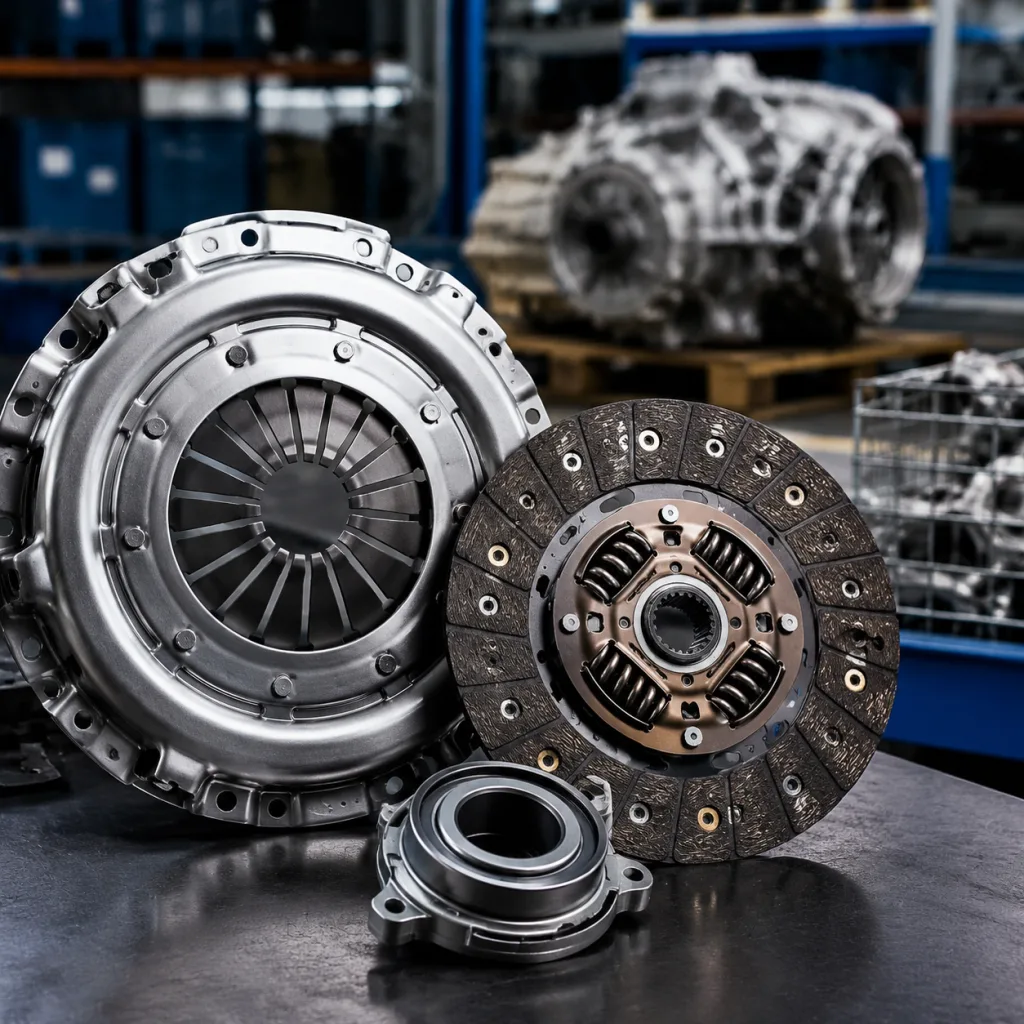
The sourcing decision should therefore start with the clutch as a controlled assembly: cover, driven disc, release bearing or CSC, hardware, packaging, fitment data, and batch records. Correct spline engagement, stable clamp load, release travel, flywheel compatibility, rotational balance, and cross-reference discipline all matter. A kit may look right in the carton and still be wrong for part of the Volvo application range.
This guide sets out practical checks for qualifying aftermarket replacement clutch kits for Volvo passenger car and light commercial applications. It focuses on OE-equivalent dimensional control, validation testing, catalogue accuracy, packaging, MOQ and lead-time planning, and production consistency rather than consumer-level installation advice. Driventus manufactures and supplies powertrain components for B2B customers under IATF 16949:2016 and ISO 9001:2015 controlled processes. Driventus is an independent aftermarket manufacturer; brand names are referenced for fitment only.
Decision Framework: Define OE-Equivalent Before You Compare Prices
OE-equivalent should mean the kit performs within controlled dimensional and functional limits, not that it looks similar to a reference part. Before an RFQ is priced, buyers should define what must be equivalent: the cover assembly, driven disc, release system, accessories, application notes, and the way the supplier validates the kit as one assembly.
A typical aftermarket kit may include a clutch cover assembly, driven disc, release bearing or concentric slave cylinder where applicable, alignment tool, pilot bearing where specified, bolts, and installation accessories. The important question is whether these parts have been approved together. A cover sourced from one validation route, a disc from another, and a bearing chosen by catalogue similarity can pass a visual check and still create drag, slip, noise, or heavy-pedal complaints.
Set the approval baseline around measurable parameters:
Disc outside diameter and effective friction radius; many passenger-car applications sit in the 215-260 mm range, but drawing tolerance is usually far tighter, often around ±0.3 mm to ±0.5 mm depending on design
Driven disc total thickness under a specified measuring load, with facing thickness variation controlled to avoid drag or early slip
Hub spline count, major/minor diameter, tooth profile, lead-in chamfer, and axial engagement length, checked with a mating gauge or transmission input-shaft master
Cover mounting pitch circle diameter, bolt-hole diameter, dowel location where used, and installed cover height
Diaphragm spring clamp-load and release-load curve through the usable stroke, including clamp load after bedding or thermal conditioning
Disc torsional damper rate, free angle, hysteresis, and stop torque matched to engine torque and flywheel type
Cover lift, lift balance, pressure plate flatness, and pressure plate runout; many buyers set runout targets around 0.15-0.30 mm depending on reference design
Release bearing interface diameter, self-centring design where applicable, guide-tube clearance, travel compatibility, and grease or temperature specification
Dynamic balance of the rotating assembly, stated in g·mm at a defined rpm rather than described only as “balanced”
Compatibility with solid flywheel or dual-mass flywheel configurations, including flywheel step height and wear-limit notes where relevant
Volvo coverage can span petrol, diesel, turbocharged, manual transmission, and dual-mass flywheel variants across different production periods. Require application notes that state the intended flywheel type, transmission family, engine variant, torque band, release system, and service restrictions. If an OE cross-reference is used, keep it in a generic purchasing format, such as OE 06A… or OE 11251…, unless a verified catalogue source provides the full reference. A cross-reference helps identification. It is not engineering proof. Similar bolt patterns, disc diameters, or catalogue photos are not proof of interchangeability.
Failure Modes to Eliminate During First-Article Approval
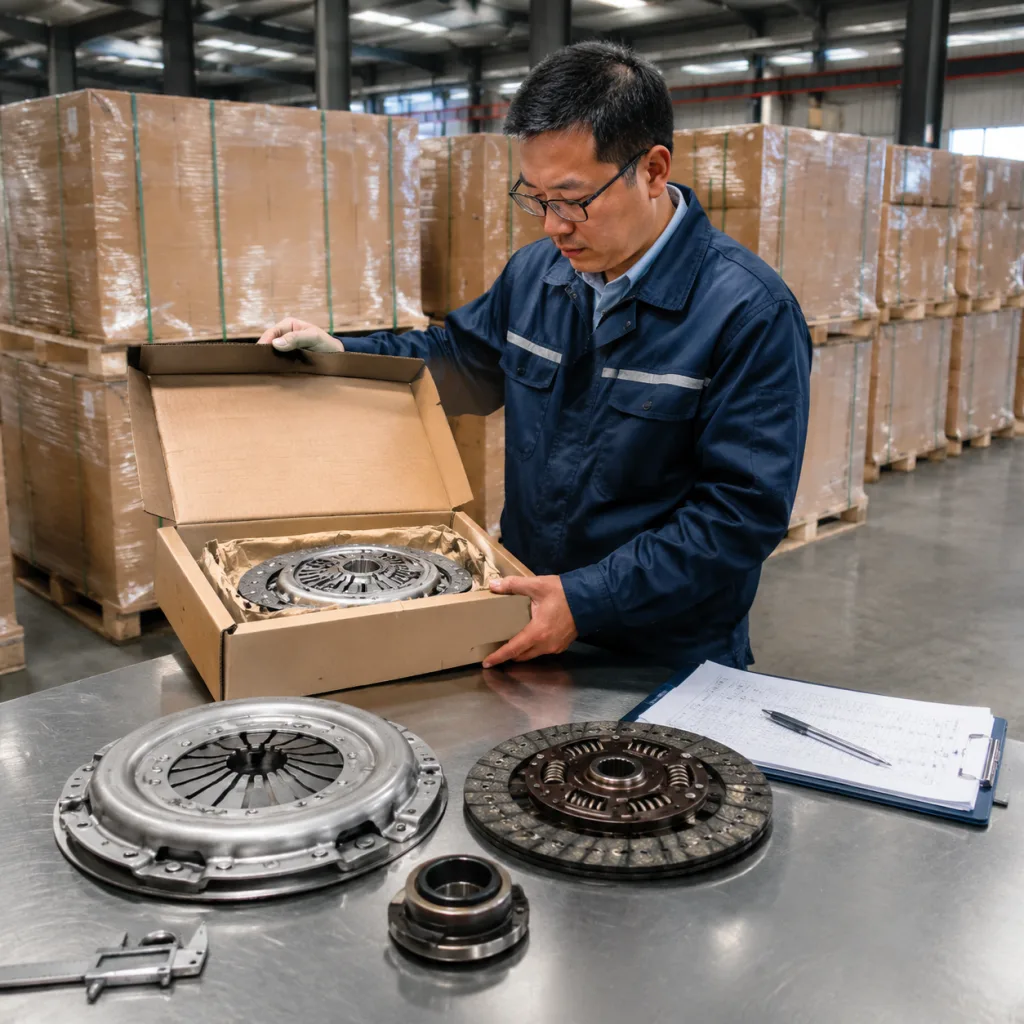
First-article approval is where many sourcing programs either remove risk or create it. A clutch kit Volvo aftermarket replacement should be checked against a controlled drawing set, sample inspection report, and fitment matrix before it is released for purchasing. The best process compares production-intent samples with retained reference parts under the same inspection method, using calibrated equipment and a written acceptance plan.
For initial approval, buyers commonly request 3-5 complete kits per SKU. One kit can be dismantled for dimensional measurement. One can be installed on a reference flywheel or fixture. The remaining samples should be retained for comparison, dispute resolution, or future change-control checks.
Failure mode to prevent
Approval check
Risk if missed
Judder, slip, or edge wear
Disc diameter matches catalogue application range within drawing tolerance, often ±0.3-0.5 mm
Customer complaints and early returns
Drag or poor release
Disc thickness verified under defined load; facing thickness variation recorded
Clamp-load and release-load curve compared with reference curve, not one static value
Labour claims and diaphragm fatigue
Incomplete disengagement
Cover height and lift measured at several release positions
Pedal complaints and gear engagement issues
Vibration
Pressure plate runout checked on a recorded fixture method
NVH complaints and uneven engagement
Bearing noise or premature failure
Release bearing travel, guide-tube fit, and hydraulic/fork compatibility confirmed
Repeat replacement and claim disputes
Rotational NVH
Dynamic balance limit stated in g·mm and checked by defined frequency
Vibration and warranty exposure
</tr></thead><tbody> </tbody></table>The procurement file should include the initial sample inspection report, material declarations, process flow chart, control plan, batch traceability rules, packaging drawings, label specifications, and carton drop-test evidence where export shipments are consolidated. Do not stop at the approval sample. Ask how the supplier controls production after approval.
A practical control plan may use 100% visual and rotation checks for release bearings, 100% spline go/no-go checks for critical hubs, first/last-piece dimensional checks per machining shift, and statistical sampling such as AQL 1.0-2.5 for packaging and labelling defects.
Driventus recommends linking every approved SKU to the vehicle application, engine code where used, gearbox type, flywheel type, release system type, and service notes in the ERP or PIM system. This makes order entry cleaner, reduces mis-picks, and improves return analysis. A supplier that offers only a catalogue image, gross weight, and a broad application list is not giving enough control for a distributor or multi-location repair chain.
Spec Deep-Dive: Friction Material, Clamp Load, and Endurance Evidence
Most field complaints come from how the driven disc, cover assembly, and release system behave after heat, load, and repeated operation—not from how they look when new. Friction material must hold a stable coefficient through repeated heat cycles, resist glazing, recover after thermal loading, and avoid excessive flywheel or pressure-plate wear. Organic facings are common for standard replacement kits. Higher thermal demand applications may need modified formulations.
Procurement teams should ask for a material specification, production control plan, and compliance declarations. A phrase like “OE quality” is not a specification.
A useful validation plan should state conditions and pass criteria for:
Clamp-load and release-load curve measurement over the specified stroke, recorded initially and after endurance cycling
Burst-speed or overspeed safety testing for driven disc integrity, with test speed exceeding expected engine speed by an agreed safety margin
Torsional damper fatigue cycling and stop-torque verification, including spring seating, retainer wear, and noise after cycling
Thermal fade and recovery assessment on a clutch dynamometer, with friction coefficient monitored before, during, and after heat exposure
Static and dynamic coefficient of friction measurement across temperature bands relevant to stop-start driving and hill-start conditions
Cover assembly endurance testing under repeated release cycles, recording diaphragm finger wear, cover lift, and clamp-load loss
Release bearing noise, rotational torque, temperature resistance, seal integrity, and grease retention after thermal exposure
Salt spray or corrosion-resistance checks for plated parts where specified; 48-96 hours can screen basic protection, while longer requirements should match market conditions
Rivet security, facing bond integrity, burst resistance, and hub-to-plate assembly checks after heat and vibration exposure
Quality and compliance standards help structure this evidence. They do not replace fitment proof. IATF 16949:2016 supports automotive quality management through defect prevention, traceability, and variation reduction. ISO 9001:2015 supports documented process control and consistent production management. REACH (EC) No 1907/2006 is relevant for substance compliance when supplying the EU market. Buyers should also request asbestos-free declarations, heavy-metal or restricted-substance statements where required, and market-specific chemical compliance documentation for friction materials.
Driventus maintains controlled inspection and traceability through its quality system, including incoming material checks, in-process measurement, final inspection, and retained batch records for export orders. Those records matter when claims arrive. A returned kit with uneven hot spots, damaged guide-tube contact, and no batch pattern should be handled differently from repeated clamp-load deviation across one production lot. Clear evidence prevents good inventory from being blocked while allowing real corrective action where needed.
Fitment Data Scenario: The Kit Is Correct, but the Catalogue Is Wrong
A sourcing program can pass engineering approval and still fail commercially. The usual cause is over-broad fitment data. One kit gets mapped to too many applications. A flywheel note is missing. A gearbox restriction is hidden in a free-text field. Warehouses ship the right part number, workshops install it on the wrong variant, and the claim is recorded as product failure.
For Volvo applications, the data set should separate engine output, gearbox version, production period, left-hand and right-hand drive service differences where relevant, flywheel configuration, and release mechanism type. It should also flag exclusions such as “not for dual-mass flywheel conversion”, “requires CSC version”, or “for gearbox code only” where those restrictions apply.
For distributors, the minimum data package should include:
Driventus part number and customer private-label number if applicable
Vehicle make, model, engine, production year, fuel type, engine output, and market notes where needed
Transmission notes, gearbox family or code where available, flywheel type, and release system type
Kit contents with individual component references, including cover, disc, release bearing or CSC, pilot bearing, bolts, alignment tool, and accessories where supplied
Comparable OE reference field where verified, formatted generically if not complete
EAN/UPC, net weight, gross weight, inner-box dimensions, master-carton dimensions, pallet quantity, and stacking limit
Country-of-origin marking and customs HS classification support; clutch kits are often handled under HS 8708 classifications, but buyers should confirm local customs practice
Label layout, barcode format such as EAN-13 or Code 128, batch code position, production date format, and packing quantity
Warranty handling procedure and claim inspection form with mileage, installation date, failure symptom, and required photos
Structured data prevents duplicate listings and helps sales teams distinguish near-identical SKUs that differ by disc diameter, spline count, release bearing type, cover height, or flywheel requirement. Buyers can review related coverage in our catalog and request SKU mapping against their existing product information management system.
For private-label launches, Driventus recommends two approvals. First approve the technical fitment matrix. Then approve the commercial data used for e-commerce, ERP, warehouse labels, and printed cartons. Changes after artwork and barcode approval can delay the first shipment by 1-3 weeks because carton printing, label validation, and customer system loading may need to be repeated.
Driventus is an independent aftermarket manufacturer; brand names are referenced for fitment only. No vehicle manufacturer approval or endorsement is implied by any cross-reference, application listing, catalogue comparison, or interchange reference.
Operations Comparison: Packaging, MOQ, Lead Time, and Lot Control
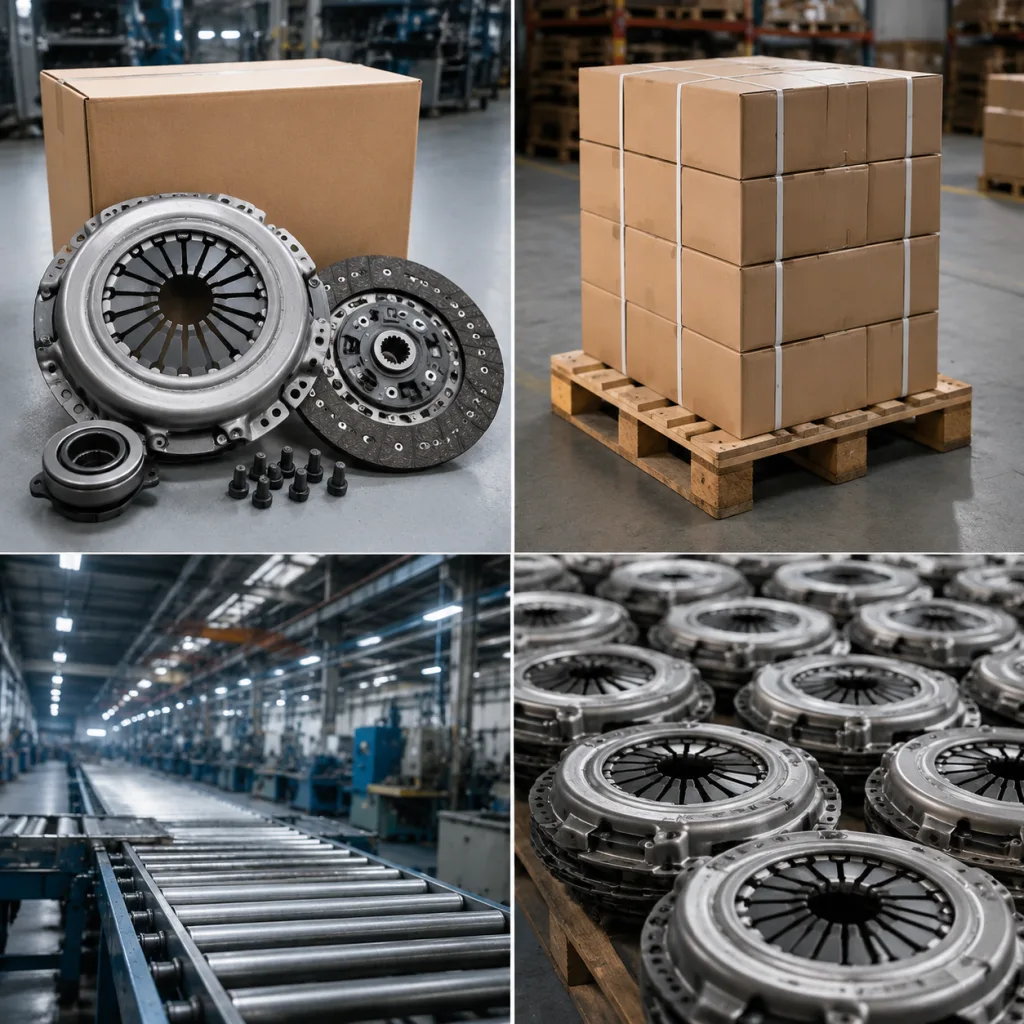
A good clutch kit can be damaged before it reaches the installer. Replacement clutch kits are heavy, impact-sensitive, and exposed to corrosion risk during ocean freight and warehouse storage. Export packaging should protect the pressure plate surface, release bearing, and driven disc hub from shock, abrasion, and moisture. Inner boxes should prevent component-to-component movement. Master cartons should be specified for stacking strength, pallet stability, and barcode readability after handling.
For export programs, define the route and handling assumptions. Should the carton survive 0.8-1.0 m handling drops? Will pallets be mixed? Is the shipment exposed to 30-60 days of sea freight and warehouse dwell time? These answers affect carton grade, separators, desiccants, VCI paper, and pallet pattern.
Operational comparison points for B2B buyers include:
Packing format: neutral, Driventus branded, or customer private label
Label content: customer part number, barcode, country of origin, production batch, and production date
Carton validation: consolidated container loading, mixed-pallet handling, compression, and drop resistance
Mixed-SKU pallet rules: protection of lighter or more fragile kits under heavier assemblies
MOQ structure: per SKU, per shipment, and per packaging version
Repeat-order timing after tooling, artwork, and data approval
Corrosion control: desiccants, VCI anti-corrosion papers, PE sleeves, hub protectors, or pressure-plate separators according to route and storage period
MOQ and price logic should be agreed before RFQs are compared. A low-volume SKU may carry a higher unit price because facing material, diaphragm springs, machined castings, bearings, and printed cartons are purchased in batch quantities. Separate the cost drivers into component MOQ, assembly MOQ, packaging MOQ, and shipment MOQ.
As a planning model, a supplier may be able to assemble 100-200 kits for a validation order using neutral packaging. A private-label carton run may require 300-500 cartons per SKU or a mixed artwork program. Repeat orders are often planned around 30-45 days after component availability. New or modified SKUs may require 60-90 days when tooling, sample approval, artwork, and performance checks are included. Final timing depends on confirmed specifications, inspection requirements, and seasonal capacity.
Batch consistency matters more than one strong pre-shipment sample. Request control plans showing how clamp load, disc runout, spline profile, rivet height, facing thickness, cover lift, and release bearing rotation are checked during normal production. Define how deviations are quarantined, reworked, or rejected before shipment. For private-label projects or application expansion, Driventus can support custom manufacturing based on buyer drawings, samples, structured performance requirements, annual volumes, and packaging specifications.
Audit Q-and-A: Questions That Expose Weak Suppliers
A supplier approval process for clutch kit Volvo aftermarket replacement lines should combine engineering review, commercial review, logistics checks, and aftersales controls. Instead of treating the checklist as paperwork, use it as an audit conversation. Weak suppliers usually fail when asked for method, frequency, evidence, and change-control rules.
Q: Are the certifications relevant to the product being supplied? Check that IATF 16949:2016 and ISO 9001:2015 certificates are current and relevant to production, machining, assembly, or final inspection activities.
Q: Is the fitment matrix specific enough to prevent catalogue errors? Applications should be separated by engine, transmission, production period, release system, flywheel type, engine output, and market restrictions.
Q: What sample evidence is available? Request disc dimensions, spline profile, clamp load, release-load curve, runout, release bearing checks, corrosion protection, and balance results.
Q: What material compliance is documented? Require an asbestos-free declaration, REACH (EC) No 1907/2006 support for EU supply, and a friction material specification with change-control rules.
Q: Can each box be traced back to production and inspection records? The batch code should connect to production date, component lots, inspection records, operator or line record, and packaging version.
Q: How are warranty claims investigated? Agree on evidence requirements, including installation photos, mileage, operating conditions, flywheel condition, release system condition, and returned-part inspection.
Q: Is packaging treated as part of quality control? Confirm export carton strength, corrosion protection, barcode accuracy, pallet pattern, label durability, and packing list format.
Q: What changes require approval? Require written notification and buyer approval before changes to friction material, bearing supplier, spring specification, casting source, machining process, heat treatment, grease, plating, or packaging design.
Q: Do the commercial terms match the launch plan? Review MOQ per SKU, MOQ per packaging version, tooling or artwork charges, sample cost, payment terms, repeat-order lead time, and price validity period.
Q: What launch controls are used on the first shipment? Agree on inspection level, retained sample quantity, claim response time, and corrective-action format such as 8D where recurring failures appear.
A reliable sourcing decision should not depend only on unit price. A small saving per kit can disappear with one labour claim, repeated returns, or emergency air freight caused by a catalogue error. Minor variation in cover height, release load, friction behaviour, or hub machining can become a repeat problem for repair chains and distributors. Qualify the kit as a controlled assembly, monitor early shipments closely, and keep inspection and claim data tied to each production batch.
Frequently asked questions
Verify the application range, flywheel type, disc diameter, spline specification, cover clamp load, release bearing compatibility, release travel, and kit contents. Request inspection reports, compliance documents, fitment notes, and structured catalogue data rather than relying only on images or generic cross-references.
Yes. Driventus can support neutral, Driventus branded, or customer private-label packaging depending on MOQ, artwork approval, barcode requirements, carton specification, and market compliance needs. Export carton strength, corrosion protection, batch coding, and label layout should be agreed before production.
No. Cross-references are used to identify fitment and interchange. Driventus is an independent aftermarket manufacturer; brand names are referenced for fitment only. No vehicle manufacturer approval or endorsement is implied.
If you are building a Volvo clutch kit replacement range, share your target applications, annual volumes, fitment data, MOQ expectations, and packaging requirements. Driventus can review the application coverage and supply options when you [request a quote](/contact.html).