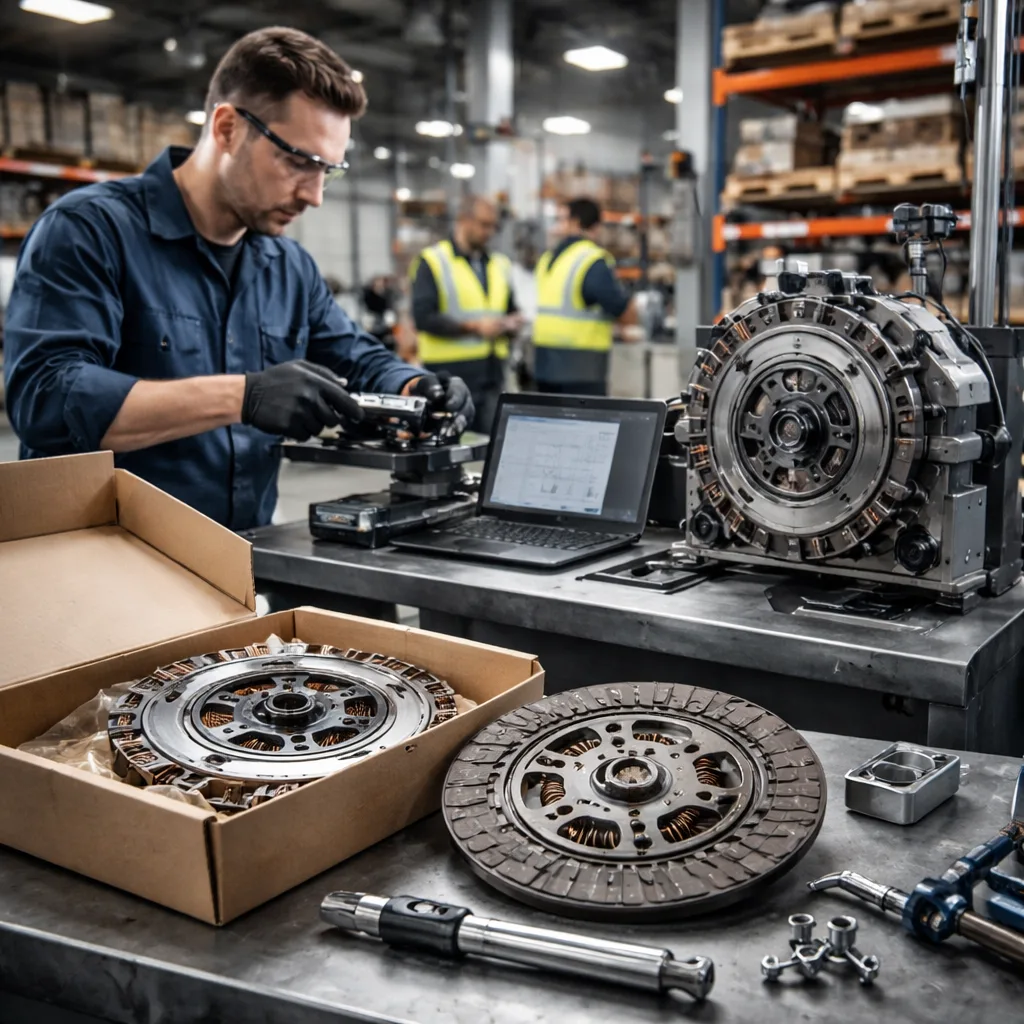
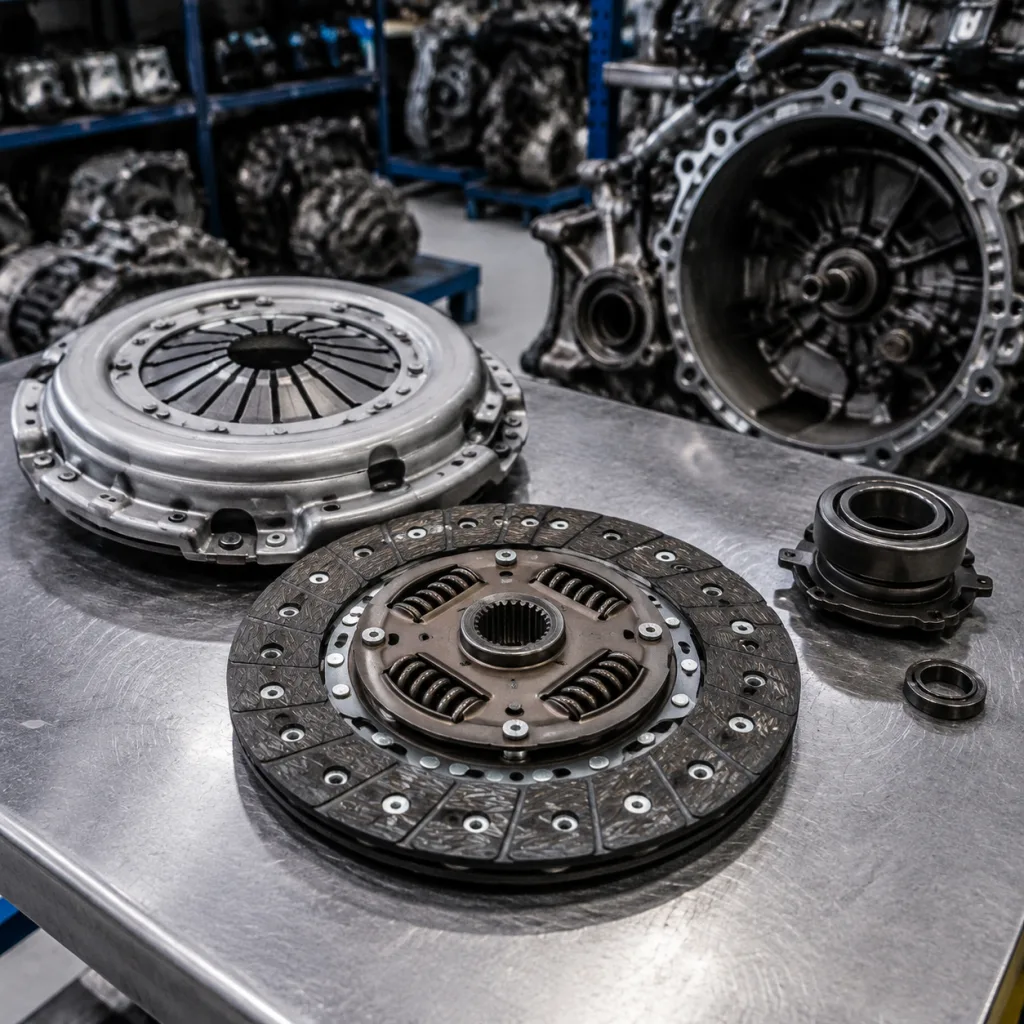
For procurement teams sourcing a clutch kit Subaru OE equivalent, the key question is not branding. It is whether the replacement matches OE fit, clamp load, spline count, hub height, release geometry, and pedal feel within defined tolerance. That requires more than a part-number match. Buyers should confirm flywheel contact diameter, disc hub geometry, release bearing type, and the full kit build: cover assembly, driven plate, release bearing, and alignment hardware where specified. Driventus is an independent aftermarket manufacturer; brand names are referenced for fitment only.
For Subaru applications, OE-equivalent sourcing usually means matching the original specification for the engine and transmission family, then validating against service dimensions and bench test data. Driventus manufactures clutch components under IATF 16949:2016 and ISO 9001:2015 controls, with export experience across aftermarket and OEM supply channels. If your team is comparing suppliers, the practical test is simple: can the kit be installed without modification, meet the intended torque capacity, and pass durability expectations in line with the vehicle duty cycle? Buyers should also set commercial gates early: sample approval, target MOQ, acceptable unit price bands, and production lead time by order size.
What OE equivalent means for Subaru clutch kits
For buyers, OE equivalent means the clutch kit reproduces the functional and dimensional requirements of the original design, without claiming manufacturer approval. In practice, that includes:
Disc outer diameter within ±0.5 mm of OE nominal
Spline count and spline major/minor diameter matching OE interface
Hub offset and torsional damper layout within ±0.3 mm on stack height-critical features
Cover assembly bolt pattern and overall installed height within ±0.5 mm unless the OEM drawing specifies tighter control
Diaphragm spring force and clamp load within the stated program window, commonly ±8% to ±10% depending on application
Release bearing type, width, and contact face geometry matching the OE release system
Friction material grade and thermal stability suitable for the intended duty cycle, typically organic facing for light-duty OE-style comfort and reinforced facing for higher thermal load
A supplier should be able to state whether the replacement matches the OE reference by application, such as OE `06A107065`-style cross-reference format when a customer provides a specific number. For Subaru programmes, the same external fit can still differ by transmission code, engine displacement, flywheel type, and release mechanism. That is why OE-equivalent sourcing must be validated by drawing, sample, and test report, not by marketing language. For a buyer, the minimum acceptable process is: confirm VIN or application data, verify measured dimensions on the removed part, receive an approved sample, then release the production lot only after fitment and pedal-effort confirmation.
Key specifications to verify before purchase
Use a dimensional checklist before placing a PO. For clutch kits, the most common mismatch points are small but costly. The buyer should request actual measured values, not just catalog descriptions.
Check item
What to confirm
Typical buyer tolerance
Why it matters
Disc diameter
Match OE nominal diameter
±0.5 mm on nominal size; verify full friction OD
Affects torque capacity and contact area
Spline count
Same number and profile
Zero deviation allowed
Prevents transmission fit issues
Hub protrusion
Match OE stack height
±0.3 mm unless OE drawing states tighter control
Avoids release problems
Cover bolt circle
Same pattern and pilot fit
Hole pattern must match exactly; pilot concentricity within ±0.2 mm preferred
Ensures correct mounting
Release bearing
Same type and face profile
Same bearing family and contact width
Prevents noise and premature wear
Friction lining
Material and wear rating
Match material class and thickness within ±0.2 mm
Impacts heat resistance and feel
Spring finger height
Same installed height
±0.5 mm target after assembly
Affects pedal travel and disengagement
Torque capacity
Meet application requirement
Minimum 10% margin above OE duty need
Avoids slip under load
</tr></thead><tbody> </tbody></table>If a customer requests a direct replacement, Driventus can supply dimensional drawings, key measurements, and sample inspection data for approval. For fleet and distributor accounts, this reduces returns caused by late fitment discovery. A practical procurement rule is to require a first-article sample, a measured report against the OE reference, and packaging verification before the first mass shipment. That simple gate catches most interchange failures before stock is committed.
Validation testing that matters to procurement teams
A replacement clutch should be assessed using repeatable mechanical and durability checks, not only visual inspection. Relevant references include IATF 16949:2016, ISO 9001:2015, and material compliance under REACH (EC) No 1907/2006 where applicable.
Typical validation points include:
Static clamp load measurement at specified compressed height
Rotational balance inspection on the assembled cover and disc
Rivet security and lining bond strength after thermal conditioning
Hub spring endurance and torsional hysteresis over repeated load cycles
Heat fade and recovery performance after sustained slip events
Engagement smoothness after thermal cycling and cool-down
Release load and pedal-effort consistency across repeated actuations
For higher-duty applications, buyers may also ask for vehicle-level road simulation or dyno testing aligned to customer duty cycles. A useful commercial requirement is to define pass/fail numbers in advance: for example, clamp load must stay within the agreed range, balance should remain within the supplier’s stated limit, and no abnormal vibration, chatter, or slip should appear after endurance cycling. If your programme includes harsh stop-start use, towing, or hill-load operation, ask for evidence that the kit was checked under elevated thermal load rather than only bench-assembled. When comparing suppliers, request the test method, sample size, and acceptance criteria together, because a result without the test condition is not actionable.
How to compare suppliers on commercial terms
Replacement sourcing is not only technical. It is also a supply-risk exercise. Compare suppliers on documentation, lead time, traceability, and packaging consistency.
Driventus supports B2B buyers through our catalog, quality system, and custom manufacturing options. Those pages are useful starting points when you need to align product selection with inspection requirements and private-label programmes.
Consider these points in each quote:
MOQ by application and kit type
Sample lead time versus mass production lead time
Unit price at 100, 300, 500, and 1,000-piece breaks
Carton labelling and barcoding requirements
Batch traceability and lot control
Export packaging for sea and air freight
Document pack: COA, inspection report, material declaration, and if requested, PPAP-style support
For import managers, a supplier that can hold drawing revision control and consistent kit contents usually creates fewer warehouse and workshop complaints than one that only lists a part number. Commercially, a sensible quoting model is to separate one-time engineering/sample charges from recurring part price, then confirm whether the price includes inner box, master carton, desiccant, corrosion protection, and palletisation. Lead-time logic should also be explicit: stocked standard kits may ship in days, built-to-order common applications often require 3–6 weeks, and custom packaging or private-label programmes can add another 1–2 weeks depending on artwork approval and labeling complexity. MOQ should be tied to production method: small-batch sampling may start at 1–10 sets, standard aftermarket runs often land in the 50–200 set range, and private-label or export cartons may require higher order thresholds to stay cost-effective.
Fitment risks on Subaru platforms
Subaru fitment is sensitive to engine and transmission variation. Two vehicles that look similar can use different disc diameters, release bearings, or flywheel depths. That is especially common across model years and regional trims.
To reduce errors:
Confirm engine code and transmission code
Verify whether the flywheel is single-mass or dual-mass
Check whether the release system is hydraulic or cable-operated
Confirm if the kit is for standard duty or upgraded torque use
Cross-check the old part against the replacement before dispatch
Measure old disc OD, spline count, hub offset, and cover height before approval
Confirm slave-cylinder travel and release-bearing face contact if the system is hydraulic
If your team manages multi-location repair chains, the safest process is to record the removed part dimensions and compare them with incoming stock before installation. That is faster than handling a comeback after the car is already in the bay. A buyer-facing control point is to require the service team to send photos of the old clutch, the transmission input spline, and the flywheel face before final release of the order. That gives procurement a practical last check when catalog data alone is not enough.
Where Driventus fits in your sourcing process
Driventus supplies clutch kits and related powertrain parts for aftermarket distributors, OEM and Tier-1 channels, and multi-site repair networks. Our manufacturing base in Taizhou, Zhejiang supports integrated production control across machining, assembly, and inspection.
When a buyer needs a Subaru replacement programme, we can support:
Application matching against customer OE references
Sample approval and dimensional comparison
Private label or packaging customisation
Long-term supply planning for repeat SKUs
Commercial quotation by MOQ, target annual volume, and region-specific packing needs
Driventus is an independent aftermarket manufacturer; brand names are referenced for fitment only. For teams building a broader powertrain range, our engine components page can also help align clutch sourcing with adjacent categories such as flywheels, seals, and related service parts. A buyer can usually move faster when the RFQ includes the OE number, vehicle model year, transmission code, required annual volume, target landed cost, and acceptable lead-time window. With those inputs, sourcing can be evaluated on technical match and commercial feasibility at the same time.
Frequently asked questions
It matches the original application’s dimensions, spline interface, cover geometry, and functional performance within the allowed tolerance. A true OE-equivalent replacement should install without modification and meet the intended torque and durability needs.
Yes. Engine code, transmission code, flywheel type, and regional trim can change the required kit. Always verify by VIN, removed sample, or measured dimensions before ordering.
Ask for dimensional data, inspection records, material compliance details, and batch traceability. For B2B supply, certifications such as IATF 16949:2016 and ISO 9001:2015 add useful process control context. It also helps to request sample approval records, test method summaries, and packing specifications before releasing volume orders.
If you need a Subaru-fit clutch programme or a cross-reference review, send your application data, target volume, and required lead time to request a quote.