When buyers search for a cylinder liner Peugeot OEM supplier, they usually need more than a price. They need a stable casting route, controlled machining, traceable metallurgy, and a supplier that can validate cross-references before purchase orders are released. For Peugeot diesel and petrol engine families alike, the liner must match bore size, flange height, wall thickness, protrusion, surface finish, and assembly method. Small deviations can affect compression, coolant sealing, ring wear, and head-gasket life. Driventus is an independent aftermarket manufacturer; brand names are referenced for fitment only. We supply engine and powertrain parts from Taizhou, Zhejiang, with IATF 16949:2016 and ISO 9001:2015 systems in place for B2B procurement. This article explains what to verify when sourcing Peugeot cylinder liners, how we support OEM-style buying workflows, and where factory documentation matters most.
Start with fitment, not price
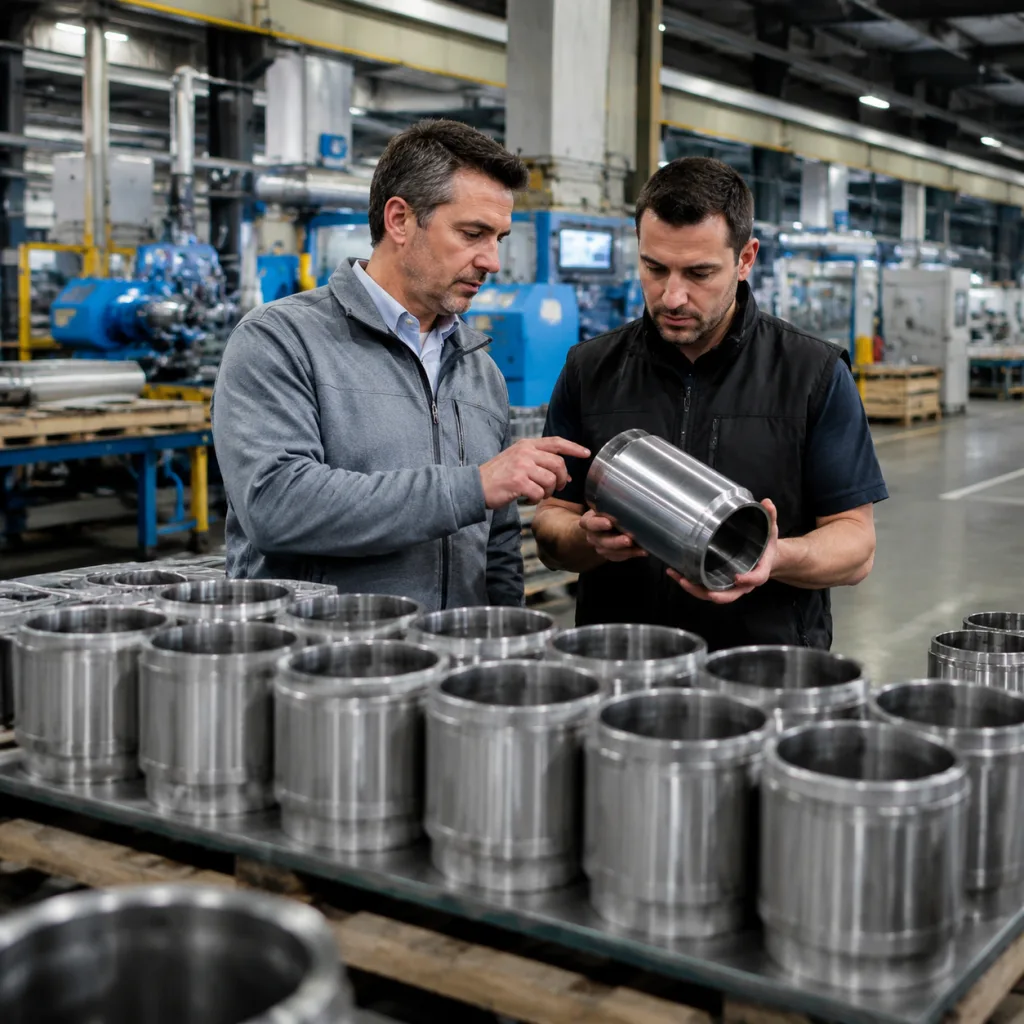
When evaluating a cylinder liner Peugeot OEM supplier, the first decision is whether the part actually matches the engine family. Price only matters after fitment is locked down.
Before you send an RFQ, confirm:
Engine code and OE cross-reference, if available
Liner type: dry liner, wet liner, or repair sleeve
Nominal bore and any oversize requirement
Flange diameter, flange thickness, and protrusion target
Overall length, seating depth, and deck relationship
Material route, heat treatment, and surface finish
Packaging and traceability format
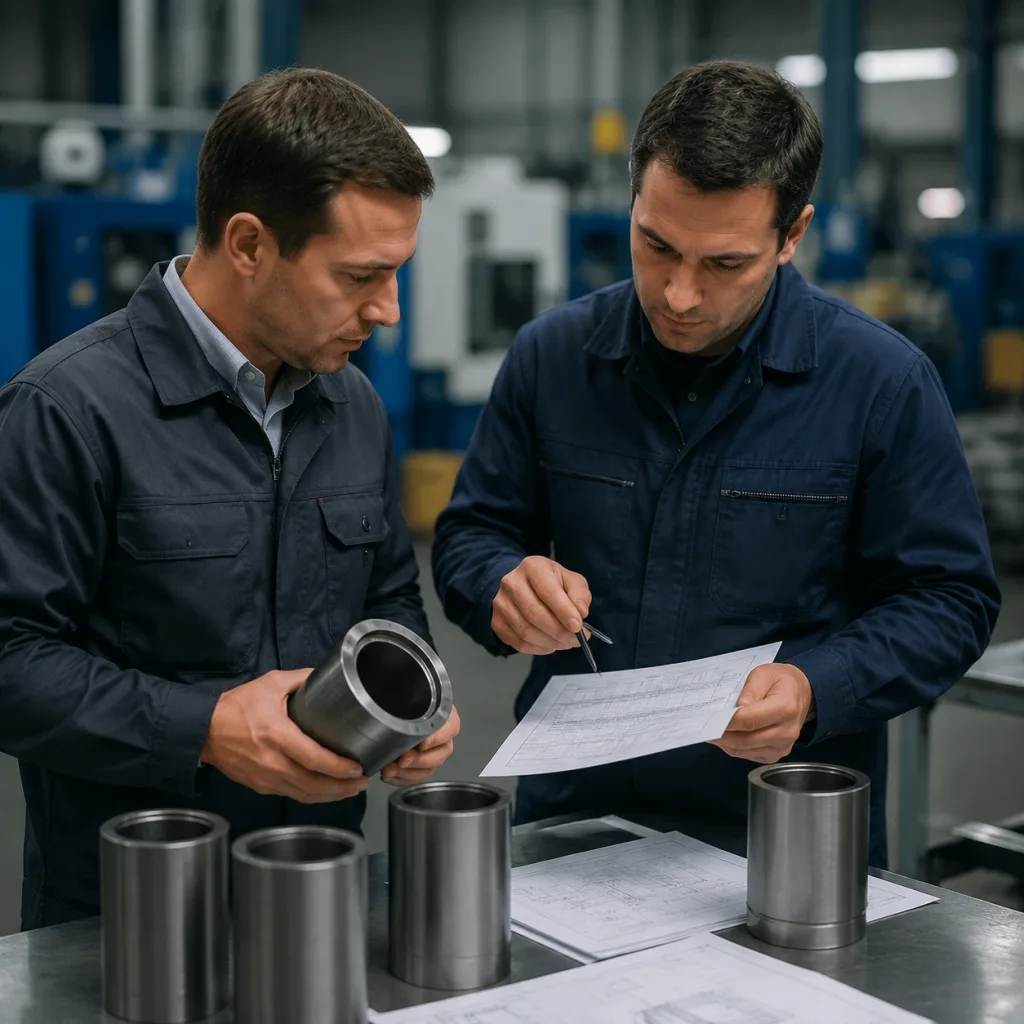
This sequence matters because Peugeot programmes often vary by model year, plant, and emissions spec. A catalogue match on paper can still fail at assembly if the liner sits too high, too low, or outside the intended bore finish. We prefer to validate against a sample, drawing, or measured set rather than rely on a part description alone.
Where liner specs fail in practice
Most sourcing problems are not dramatic. They come from one dimension drifting just enough to cause trouble later.
Common failure modes include:
Bore size that is correct nominally but inconsistent across lots
Ovality or taper that disrupts ring seating
Flange height variation that changes deck sealing load
Wall thickness that is adequate on paper but weak at the stress point
Surface finish that is too rough for ring break-in or too smooth for oil retention
Mixing references that look similar but belong to different engine versions
Control item
Typical procurement target
Bore diameter
Match OE nominal within agreed tolerance, commonly ±0.01 mm to ±0.03 mm depending on engine family
Ovality and taper
Hold within 0.01 mm to 0.02 mm unless the drawing requires tighter limits
Flange height
Control within 0.02 mm to maintain deck sealing and gasket load
Wall thickness
Verify against press-fit or coolant-pressure margin; often checked at 3 or more points per liner
Hardness
Defined per material route; cast-iron liners are commonly specified around 180–240 HB, subject to drawing
Surface finish
Plateau-honed surface typically targeted around Ra 0.2–0.6 μm for ring seating and oil retention
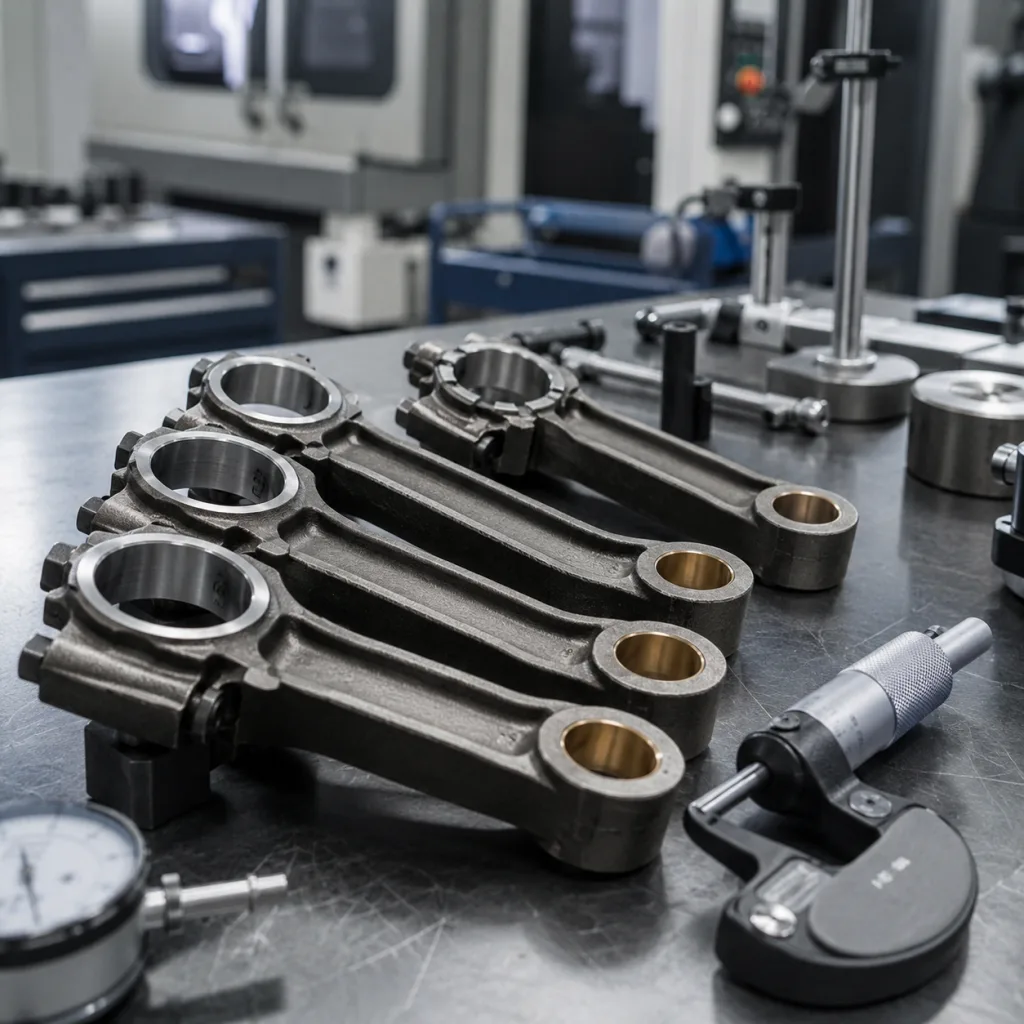
</tr></thead><tbody> </tbody></table>If drawings are unavailable, the safest route is an approved sample plus a measurement report. That gives both sides one reference point for first-article approval and reduces arguments about tolerances later.
What documentation actually changes the outcome
Certification helps, but only when it is tied to process evidence. A supplier can claim capability; the paperwork shows whether the system is repeatable.
For procurement teams, the most useful documents are:
Process flow and control plan
Gauge calibration records
Batch traceability method
First-article and lot-release inspection records
Non-conformance handling procedure
Change-notification rules for material, tooling, or surface-process updates
Driventus operates under IATF 16949:2016 and ISO 9001:2015. That matters because it supports serial-order consistency, complaint handling, and revision control. For buyers who audit suppliers, the quality file should line up with the actual liner in hand. If it does not, the audit is not really complete.
Our quality system summary outlines the control points we use on engine parts, including the checkpoints that matter most for repeat orders.
How to build a clean RFQ flow
A short RFQ is not always a strong RFQ. The best sourcing packages reduce back-and-forth by stating exactly what has to be quoted and verified.
Use this sequence: 1. Identify the engine code and reference number. 2. Confirm whether the part is stock, sample-only, or custom. 3. Send the drawing, sample, or measured dimensions. 4. State the required tolerance, finish, and packaging rules. 5. Ask for MOQ, lead time, and inspection method in writing. 6. Approve first articles before releasing volume.
That approach works because it separates technical uncertainty from commercial negotiation. A buyer should not argue over price until the supplier has accepted the measurement basis. For repeat programmes, we normally treat sample lots, pilot lots, and production lots as separate stages, each with its own approval point. That keeps fitment issues out of full-volume orders.
If the liner is part of a broader engine programme, our catalog and engine components pages help buyers map adjacent parts before they consolidate a shipment.
When custom supply is the better route
Not every Peugeot application can be solved with an off-the-shelf reference. The better answer may be a custom liner built from a sample or drawing.
Typical custom requests include:
Dimensional replication from a sample part
Bore or flange adjustment within safe engineering limits
Alternative coating, finish, or packaging format
Customer-specific marking and carton labels
Consolidated kits for distributor or workshop channels
The approval path should stay disciplined: confirm the critical dimensions, verify material route, quote MOQ and lead time, run first articles, then release a pilot lot after fitment and surface checks. For OE-style replacement work, buyers often want assembly clearance, ring contact behaviour, and sealing performance validated under their own test method. That is normal. It is also the fastest way to avoid expensive rework later.
Our custom manufacturing page explains how we handle drawings, samples, and validation when a standard reference is not enough.
Compare suppliers on evidence, not claims
Once the spec is clear, supplier comparison becomes simpler. The goal is to compare proof, not marketing language.
A useful comparison checklist:
Exact engine family and OE-style cross-reference handling
Dimensional inspection data attached to the quote
Named quality system and audit trail
MOQ and lead time stated in writing
Private-label packing and export documentation support
Clear disclosure that the supplier is an independent aftermarket manufacturer
Response speed matters too, but completeness matters more. A supplier that answers quickly and still leaves out tolerances, packing rules, or inspection data usually creates delay later. Buyers can shorten quotation cycles by giving annual volume, first-order quantity, target tolerances, and packaging expectations from the start.
Driventus is an independent aftermarket manufacturer; brand names are referenced for fitment only. That distinction helps keep procurement files clean and prevents confusion between aftermarket supply and OE endorsement.
If you need pricing, drawing review, or sample evaluation, the fastest route is to request a quote.
Frequently asked questions
Yes. We can quote from a drawing, a measured sample, or an OE cross-reference if you have one. We then confirm dimensions, material route, and packaging before production, and we can define the inspection method and tolerances with the buyer before tooling starts.
Yes. Buyers can request inspection records, traceability details, and quality system information aligned with IATF 16949:2016 and ISO 9001:2015. Typical audit packs can also include first-article data, gauge status, and lot-release records for serial orders.
Yes. We support customer marking, carton labelling, and consolidated packing for distributors and importers. Custom manufacturing is available where the specification is defined, and MOQ, price, and lead time are quoted according to the amount of engineering change and the order volume.
If you are qualifying a new source for Peugeot cylinder liners, send your drawing, sample, or cross-reference and we will review it with you. [request a quote](/contact.html)