Connecting Rod for Buick Regal Replacement: OE Fitment Checks
A connecting rod for Buick Regal replacement is not a simple catalog match. Buyers need the right engine code, center distance, bore geometry, bolt spec, and mass class before release. Miss one variable and the engine may leave the line with bearing stress, noise, or balance issues that only show up after assembly. Driventus supplies engine components for B2B replacement programs and supports dimensional verification against OE samples, drawings, and worn parts. Driventus is an independent aftermarket manufacturer; brand names are referenced for fitment only. For procurement teams, the real job is to confirm the application, validate the metallurgy, and lock down inspection criteria before shipment approval. That cuts returns and keeps rebuild output stable.
Start with the fitment gate, not the part number
Before ordering, treat the Buick Regal as a family of applications rather than a single vehicle line. The same nameplate can cover different engines, years, and market calibrations, which means the connecting rod spec can shift even when the car badge does not.
Confirm these items first:
Engine code, displacement, and model year
OE cross-reference or supersession number, if available
Center-to-center length and the required tolerance band
Big-end bore diameter, width, and roundness
Small-end bore or pin fit, including pin diameter and clearance or interference target
Rod bolt size, thread pitch, under-head length, torque value, and whether torque-to-yield hardware is used
Rod mass and whether the set must be matched within a defined gram window
Surface finish, shot-peen status, and heat-treatment record
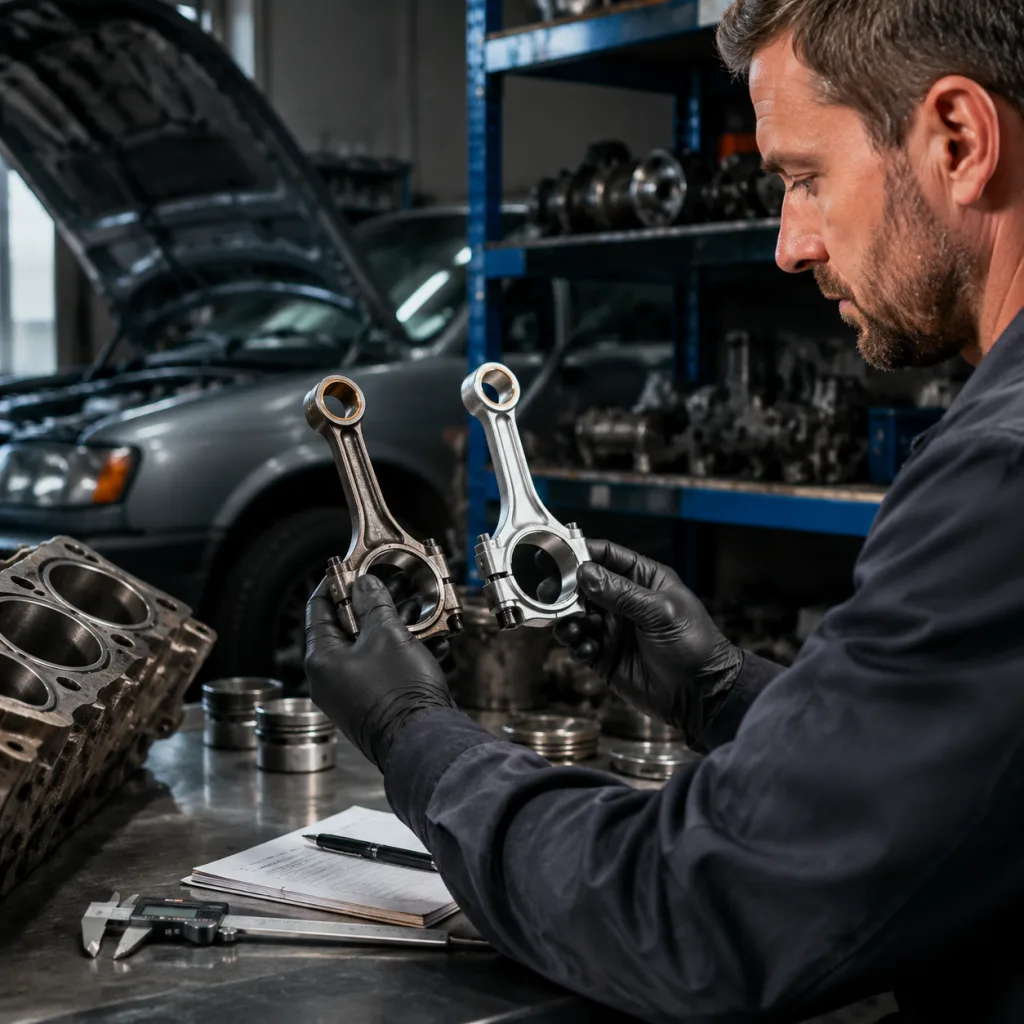
If the original rod is damaged, measure the undamaged companion part or compare against the engine build sheet. Visual similarity is not enough. For a clean release, ask for a measured sample, a drawing, or both before you approve production.
Why matching dimensions beats matching appearance
A rod can look right and still fail in service. Wrong bore geometry, clamp load, or mass class can create a problem that only appears after assembly, when the cost to fix it is already high.
Check item
What it affects
Buyer risk if wrong
Center distance
Compression height and piston position
Piston contact, compression loss, or timing mismatch
Big-end bore
Bearing crush and oil clearance
Bearing wear, hot spots, or seizure
Big-end width
Side clearance and crankshaft alignment
Rod rubbing or oil starvation
Small-end fit
Pin retention and noise
Wrist-pin scuffing or audible knock
Rod weight
Balance across cylinders
Vibration and uneven load
Bolt specification
Clamp load under cyclic stress
Cap separation or stretched bolts
Beam straightness
Side loading at speed
Cylinder wall wear and fatigue cracking
</tr></thead><tbody> </tbody></table>The safest buying model uses the OE nominal value as the baseline, then checks production tolerance against a dimensional report. For critical orders, request PPAP-style dimensional data, first-article inspection, and traceability to heat lot and batch number. Many buyers also require 100% checked critical dimensions, Cpk targets above 1.33 on major bore features, and lot signoff before mass shipment.
Spec deep-dive: what the rod has to survive
A connecting rod for Buick Regal replacement has to do more than fit the engine once. It has to survive heat cycling, cyclic load, and repeated RPM swings without drifting out of spec.
Typical validation checkpoints include:
Chemical composition verification against the specified alloy range
Hardness verification, often within an application-specific band such as HRC 28–36
Shot-peen coverage, where specified, with documented intensity and coverage records
Magnetic particle or crack detection on sampled lots
Big-end roundness, perpendicularity, and bore size checks
Rod bolt torque-angle, proof-load, or elongation testing
Dynamic balancing against the target mass class
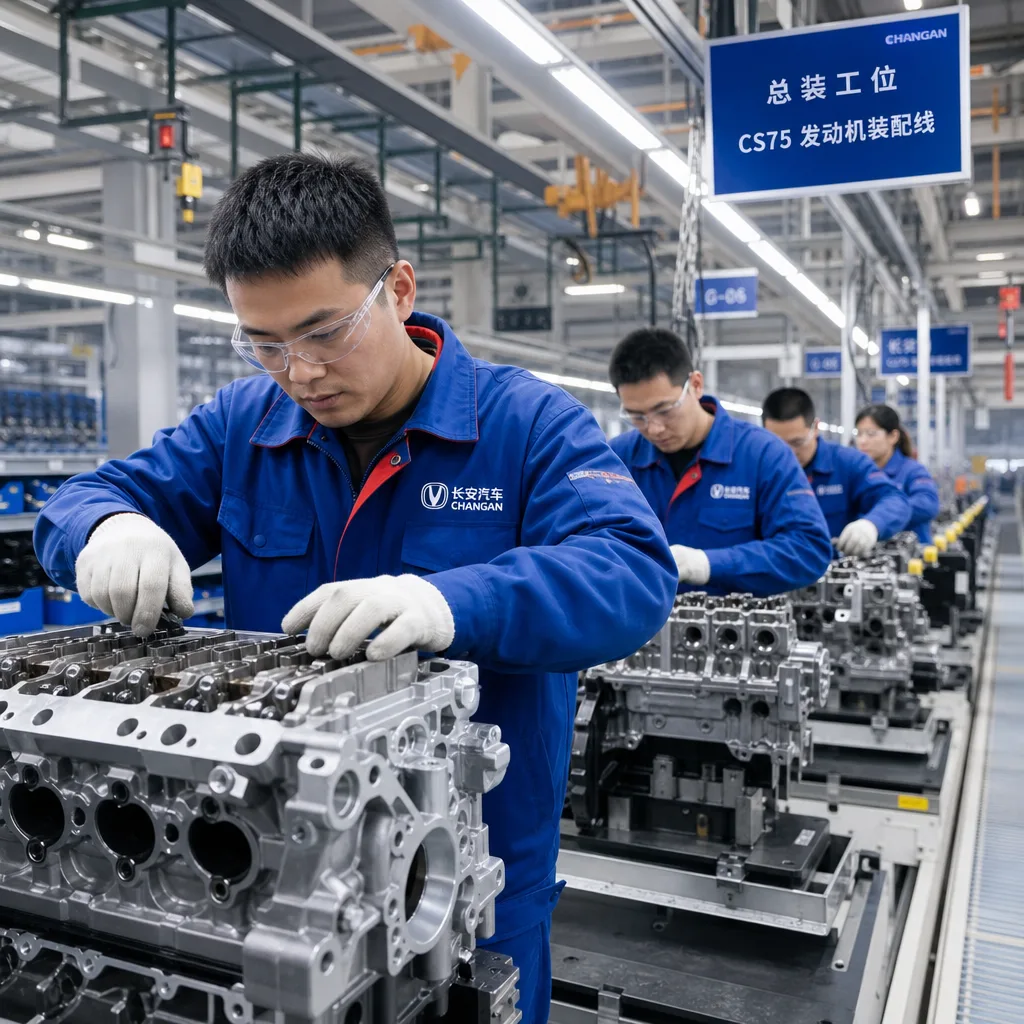
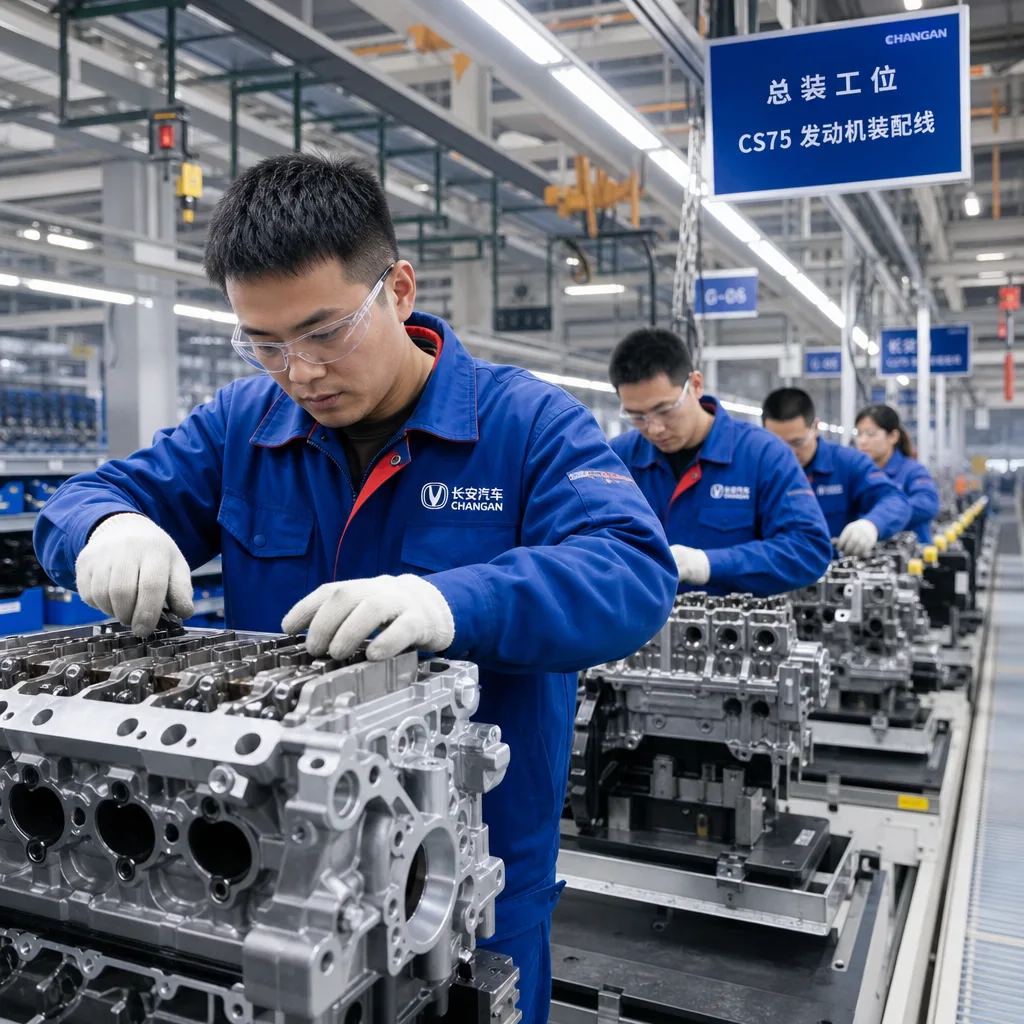
Driventus uses controlled forging and machining processes suitable for replacement supply chains. Depending on the program, the rod may use forged steel or another validated metallurgy defined by the engine application. For buyers, the important point is not only that the rod fits, but that it holds up under repeated thermal and mechanical cycling. Ask for the inspection method, sample size, and acceptance criteria up front so you can compare suppliers on the same basis.
Compare suppliers on evidence, not promises
Price-only sourcing hides risk. A low unit price can be erased by rework, sorting, warranty claims, or delayed release at the warehouse and rebuild shop.
Compare suppliers on these points:
Dimensional inspection reports tied to a batch number
Material certificates and heat-treatment records
Packaging that protects machined surfaces during export
Sampling plan and AQL method for lot release
Stable lead time for repeat orders
Ability to support custom manufacturing when an OE number is obsolete
MOQ that matches your reorder pattern, whether 50, 200, or 500 pieces per part number
Clear tiered pricing for sample, pilot, and production runs
In quote review, ask for landed cost logic, not unit price alone. A lower quoted piece price can be offset by a higher MOQ, longer lead time, or added sorting cost if the supplier cannot hold tolerance. If your program includes multiple engine variants, ask for family-level cataloging rather than single-part quotes. That makes cross-reference control easier and reduces mis-ships. Buyers can review our catalog and the broader engine components range before submitting part details.
Where replacement programs usually fail
Most problems do not come from the rod itself. They come from a weak handoff between the vehicle record, the measurement set, and the purchase order.
Common failure modes include:
Ordering by Buick Regal nameplate alone instead of engine code
Copying an OE number without checking supersessions
Ignoring rod bolt spec changes between engine revisions
Mixing matched-weight and non-matched-weight sets
Approving parts without a dimensional report
Skipping roundness or straightness checks on critical bores
Accepting unclear packaging that risks machined-surface damage
If the program supports remanufacturing, worn parts can be useful reference data, but they are not a substitute for specification control. A bent or heat-stressed sample may show what failed, not what should be bought. That is why release criteria should tie back to the target engine build, not only to the sample in hand.
What compliance teams will ask for
Replacement engine parts for export markets should be reviewed against the compliance framework required by the destination country and the end customer.
Relevant references may include:
IATF 16949:2016 for automotive quality management
ISO 9001:2015 for general quality system control
REACH (EC) No 1907/2006 for chemical substance compliance in the EU
Material declaration requirements used by OEM and Tier-1 buyers
RoHS declarations where requested by the buyer or market channel
If a customer asks for custom dimensions or a superseded OE match, Driventus can support custom manufacturing after sample review and specification confirmation. For quote readiness, we typically ask buyers to confirm target annual volume, required first delivery date, preferred packing format, and any special labeling or serialization rules. Our quality system page outlines how production control, inspection, and traceability are managed. Driventus is an independent aftermarket manufacturer; brand names are referenced for fitment only.
Frequently asked questions
Yes, when the OE reference is provided and the engine application is confirmed. We verify dimensional equivalence, then match the part to the correct replacement specification before quotation. If the OE number has been superseded, we will check the updated cross-reference and confirm the critical dimensions before release.
Engine code, model year, OE reference if available, sample photos, required quantity, target annual usage, and any tolerance or packaging requirements. A drawing or measured sample helps shorten confirmation time and lets us confirm MOQ, unit price, and lead time more accurately.
Yes. If the OE part is unavailable or the application needs a revised material or finish, we can review drawings and samples for custom manufacturing after specification confirmation. For custom work, please share the target tolerance band, finish requirement, test standard, and expected order size so we can quote tooling, sample, and production separately.
If you need sourcing support for a Buick Regal application, send the engine details and target quantity through our contact page. We will review fitment, confirm the specification, align MOQ and lead-time options, and prepare a quote at /contact.html