Clutch Kit Opel OE Equivalent: B2B Sourcing Checklist
A clutch kit Opel OE equivalent programme needs more than a matching vehicle name in a catalogue. For distributors, repair chains and importers, the replacement kit must align with the application, torque requirement, spline interface, release system, flywheel type and expected service life, while avoiding any claim of vehicle manufacturer approval. Buyers also need stable packaging, traceable batches and documentation that can withstand a warranty review. This guide sets out a practical sourcing framework for Opel and Vauxhall replacement clutch kits, covering dimensional checks, validation evidence, material controls and supplier audit points. It is intended for procurement teams comparing independent aftermarket supply options across Europe, the UK, North America, Australia and Brazil. Driventus manufactures engine and powertrain components in Taizhou, Zhejiang, under IATF 16949:2016 and ISO 9001:2015 systems. Driventus is an independent aftermarket manufacturer; Opel, Vauxhall and other brand names are referenced for fitment identification only.
Define OE Equivalence Before Price Negotiation
For replacement clutch kits, “OE equivalent” should be defined in measurable engineering and catalogue terms before price is discussed. Application lists are useful, but they are not a substitute for confirming the interfaces that control installation, pedal feel, release behaviour and durability.
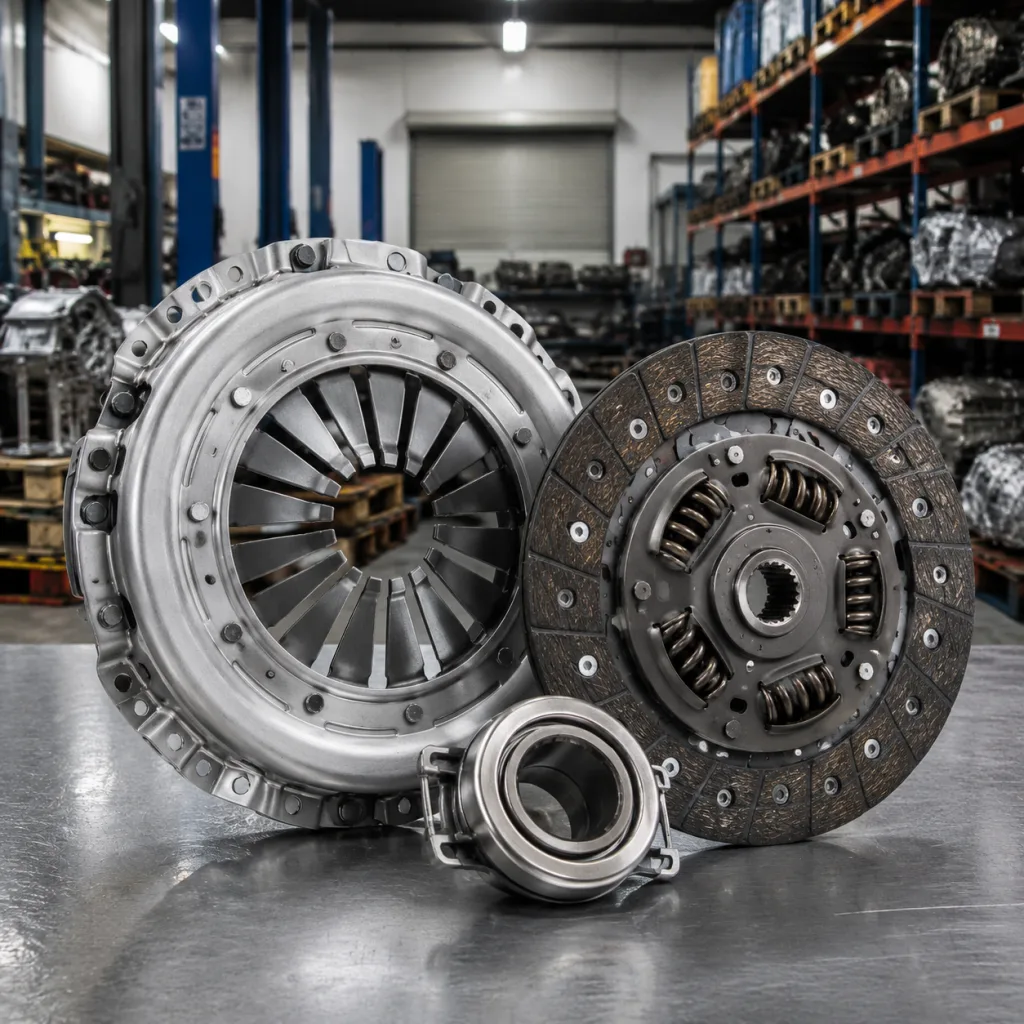
A standard Opel or Vauxhall passenger-car kit may include the clutch cover, driven plate, release bearing or concentric slave cylinder, alignment tool and installation notes. The exact bill of materials depends on platform, engine code, gearbox family, flywheel type and production date.
Key fitment data to request:
Cover assembly outside diameter, bolt-hole pattern and dowel location
Driven plate outside diameter and friction facing thickness
Hub spline count, spline major diameter and hub offset
Clamp load range and release load curve
Release bearing type, travel range and contact geometry
Flywheel compatibility: single-mass or dual-mass
Engine displacement, gearbox code and vehicle production date range
Packaging label with buyer SKU, application range and batch code
Where procurement teams use OE references, they should treat them as fitment cross-reference identifiers, not as proof of vehicle manufacturer endorsement. If an application list includes an OE-style number, the supplier should explain the dimensional or catalogue basis for the interchange and identify any excluded variants.
Dimensional and Material Requirements for Replacement Kits
A clutch kit must fit the working envelope of the original installation. Small deviations in cover height, diaphragm spring profile, plate thickness or hub offset can lead to incomplete disengagement, pedal vibration, release bearing overload, difficult gear changes or accelerated synchroniser wear.
Parameter
Buyer verification point
Typical risk if uncontrolled
Driven plate diameter
Match application drawing and sample
Slip, judder or interference
Hub spline
Count, pitch and engagement length
Gearbox input shaft damage
Cover clamp load
Controlled test value, not visual estimate
Slip or heavy pedal effort
Release travel
Bearing or CSC travel matched to cover
Drag, noise or hydraulic failure
Facing material
Friction coefficient and wear stability
Judder, glazing or short life
Balance
Assembly balance after riveting
NVH complaint at engine speed
</tr></thead><tbody> </tbody></table>Material selection should be documented at part-family level. Passenger-car friction facings commonly use non-asbestos organic formulations, with controls for resin content, fibre distribution, burst strength, wear rate and fade behaviour. Pressure plates and cover stampings also need stable metallurgy and heat treatment because thermal distortion can change clamp load and release characteristics.
For EU-bound programmes, buyers should request material declarations aligned with REACH (EC) No 1907/2006. If the same clutch kit range is sold across multiple markets, documentation should also support local substance restrictions, packaging rules and customs requirements. Driventus can align part documentation through our catalog and application data review during sourcing.
Validation Tests That Support an OE-Equivalent Claim
An independent aftermarket clutch kit should be validated against fit, function, durability and installation risk. Procurement teams should ask which checks are performed on the exact part family being quoted, rather than accepting test summaries from a different clutch range.
Relevant validation evidence may include:
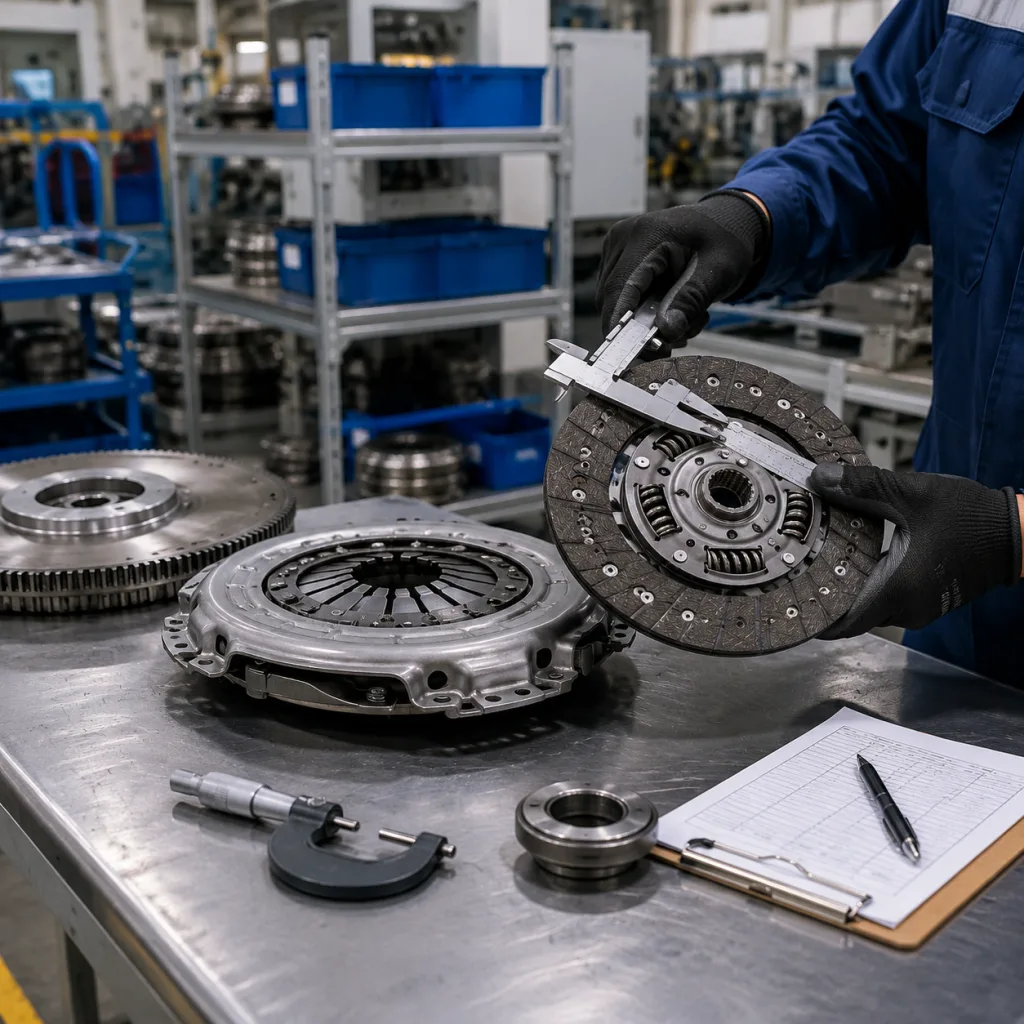
Dimensional inspection reports for cover, plate and release components
Clamp load and release load curve testing on production samples
Friction coefficient stability testing at different temperatures
Burst testing for driven plates and facings
Endurance cycling for diaphragm spring fatigue
Hot-spot and thermal distortion review after repeated engagement cycles
Release bearing noise, sealing and rotational durability checks
Vehicle or rig-based engagement assessment for judder, drag and pedal feel
There is no single public standard that defines every passenger-car clutch kit requirement for every application. Buyers should therefore request a supplier control plan, inspection criteria and test-method summary under an audited management system. IATF 16949:2016 is relevant because it requires automotive process control, traceability, risk analysis and corrective action disciplines. ISO 9001:2015 supports broader quality management consistency.
Driventus applies inspection and process controls through its quality system. Test plans can be agreed by SKU family, annual volume, warranty exposure and target market.
Application Data and Cross-Reference Control
Application accuracy is a major warranty driver in replacement clutch programmes. Opel and Vauxhall models may share engines or platforms while using different gearbox variants, release systems, clutch diameters or flywheel designs. A vehicle model name alone is rarely enough for catalogue approval.
Minimum data fields for catalogue release
A distributor or repair-chain buyer should request application data in a structured format:
Make and fitment brand reference for identification only
Model, platform and production year range
Engine code, displacement and fuel type
Gearbox code or gearbox family
Clutch diameter and spline specification
Flywheel type and release system type
Supersession history and excluded variants
Buyer SKU, EAN or internal cross-reference
Cross-reference discipline
Cross-references should be managed conservatively. When a supplier describes a clutch kit as an equivalent replacement, the claim should be supported by measured samples, drawings, application testing, catalogue validation or a controlled interchange review. Expanding coverage without engineering confirmation can increase returns, labour claims and installer complaints.
For private-label programmes, Driventus can support custom manufacturing covering packaging, labelling, inspection plans and controlled application data. This does not imply approval by Opel, Vauxhall, Stellantis or any vehicle manufacturer.
Supplier Audit Points for Importers and Chains
A low initial unit price can be outweighed by returns, labour claims, slow corrective action and catalogue corrections. For replacement clutch sourcing, procurement teams should audit whether the supplier can hold repeatable geometry, clamp load and friction performance across production batches.
Commercial and technical checkpoints:
Certification: IATF 16949:2016 and ISO 9001:2015 certificates within scope
Traceability: batch code on product, box and inspection record
Incoming control: steel, castings, friction material and bearing checks
Process control: riveting, cover assembly, spring load and balancing records
Final inspection: dimensional, functional and visual criteria by SKU
Packaging: corrosion protection, drop resistance and barcode accuracy
Warranty process: sample retention, 8D reporting and corrective action timing
Compliance: REACH (EC) No 1907/2006 documentation for relevant materials
Supply terms: MOQ, lead time, Incoterms, carton specification and pallet loading
For EU and UK aftermarket distributors, documentation quality is often as important as the physical kit. Import files should include product description, country of origin, HS code confirmation, packing list format and any market-specific compliance statements. For North America, Australia and Brazil, buyers should also confirm local labelling, customs and packaging requirements before launch.
How Driventus Supports Opel Replacement Programmes
Driventus supplies clutch kits and other powertrain components to B2B buyers in more than 60 countries from Taizhou, Zhejiang. For a clutch kit Opel OE equivalent programme, the practical objective is controlled interchangeability: matching the required dimensions, release function, materials and catalogue data without making brand approval claims.
A typical sourcing workflow includes:
1. Buyer shares target SKUs, application list, annual demand and packaging requirements. 2. Driventus reviews fitment data, sample references and interchange risks. 3. Engineering confirms dimensions, spline details, cover load and release components. 4. Quotation includes MOQ, lead time, packing method and documentation scope. 5. Samples are inspected and, where agreed, tested before bulk order release. 6. Production batches are labelled and traceable for distributor or chain warranty control.
This approach is suitable for aftermarket distributors building a European clutch range, wholesalers adding Opel and Vauxhall coverage, and repair chains consolidating replacement suppliers. Buyers can use request a quote to share SKU lists, target markets and expected annual volume.
Frequently asked questions
It means the independent aftermarket kit is designed to match the relevant fitment, dimensions and function of the original application. It does not mean approval or endorsement by Opel, Vauxhall, Stellantis or any vehicle manufacturer. Buyers should verify plate diameter, spline count, cover load, release system, flywheel type and application data.
Yes. Driventus can support B2B private-label programmes with agreed packaging, labels, batch traceability and inspection documentation. Application data, target markets and technical requirements should be confirmed before quotation and sampling.
Request IATF 16949:2016 and ISO 9001:2015 certificates, dimensional reports, relevant material declarations, packaging specifications, batch traceability method and warranty response process. For EU supply, ask about REACH (EC) No 1907/2006 material documentation.
If you are comparing clutch kit Opel OE equivalent supply options, share your SKU list, target market and annual volume. Driventus can review fitment and documentation requirements through /contact.html