A clutch kit Mitsubishi replacement programme carries more risk than simply matching a disc, cover, and release bearing to a catalogue line. For distributors, repair chains, and importers, the real cost of a poor match is repeat labour, warranty handling, inconsistent pedal feel, and confused application data across markets. Mitsubishi coverage can include passenger cars, pickups, SUVs, vans, and light commercial platforms, commonly spanning 180–300 mm disc diameters, 20–26 spline inputs, mechanical or hydraulic release systems, and different cover load curves even within the same model name. This guide gives procurement teams concrete checks to apply before approving an aftermarket source: OE-equivalent dimensions, functional validation, batch inspection, packaging control, traceability, MOQ logic, and lead-time planning. Driventus is an independent aftermarket manufacturer; vehicle brand names are referenced only to identify fitment.
Replacement scope and application control
Application control is the first major risk point in a clutch kit Mitsubishi replacement line. The same vehicle name may cover different engine codes, gearbox families, model years, drive layouts, and regional specifications. Buyers should avoid approving a kit from a model name or catalogue title alone. A controlled bill of material should connect each reference to disc diameter, spline specification, cover type, release bearing design, and any pilot bearing, bush, or alignment tool supplied with the kit.
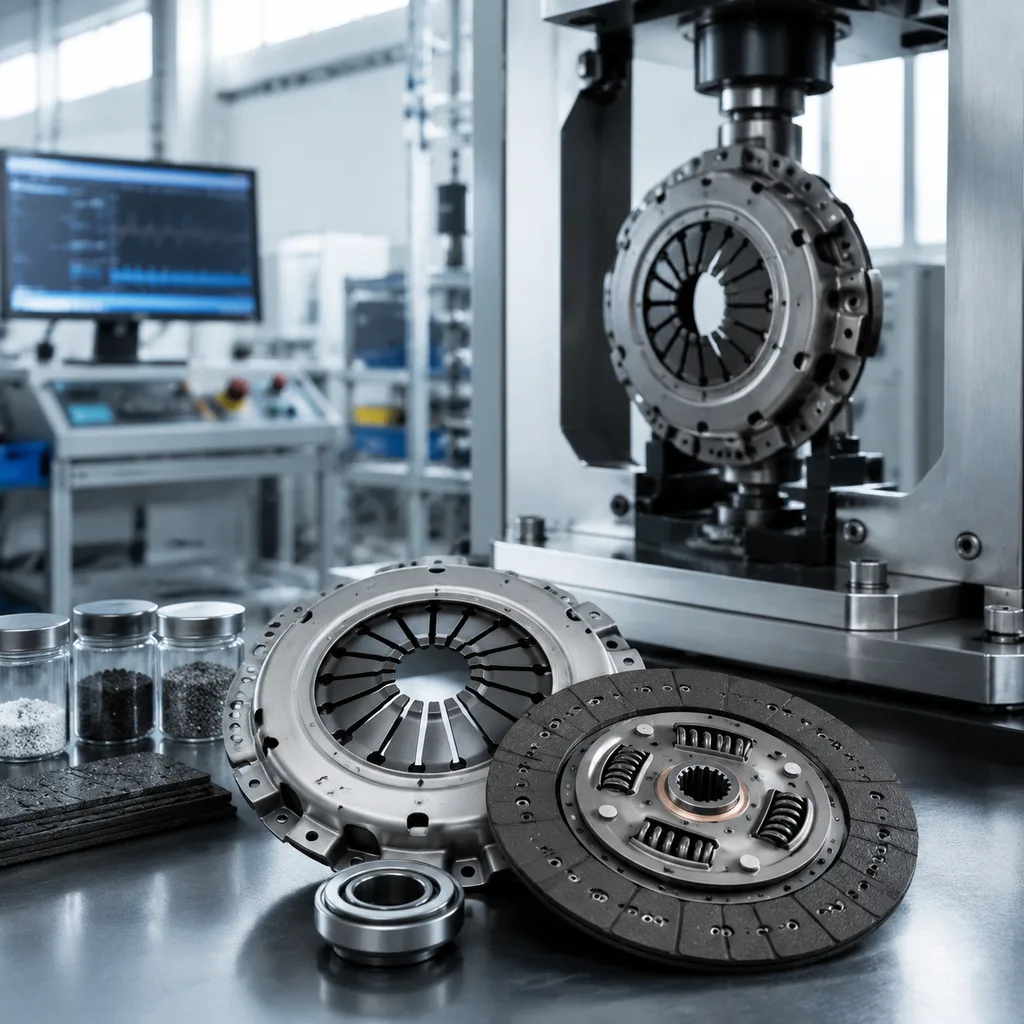
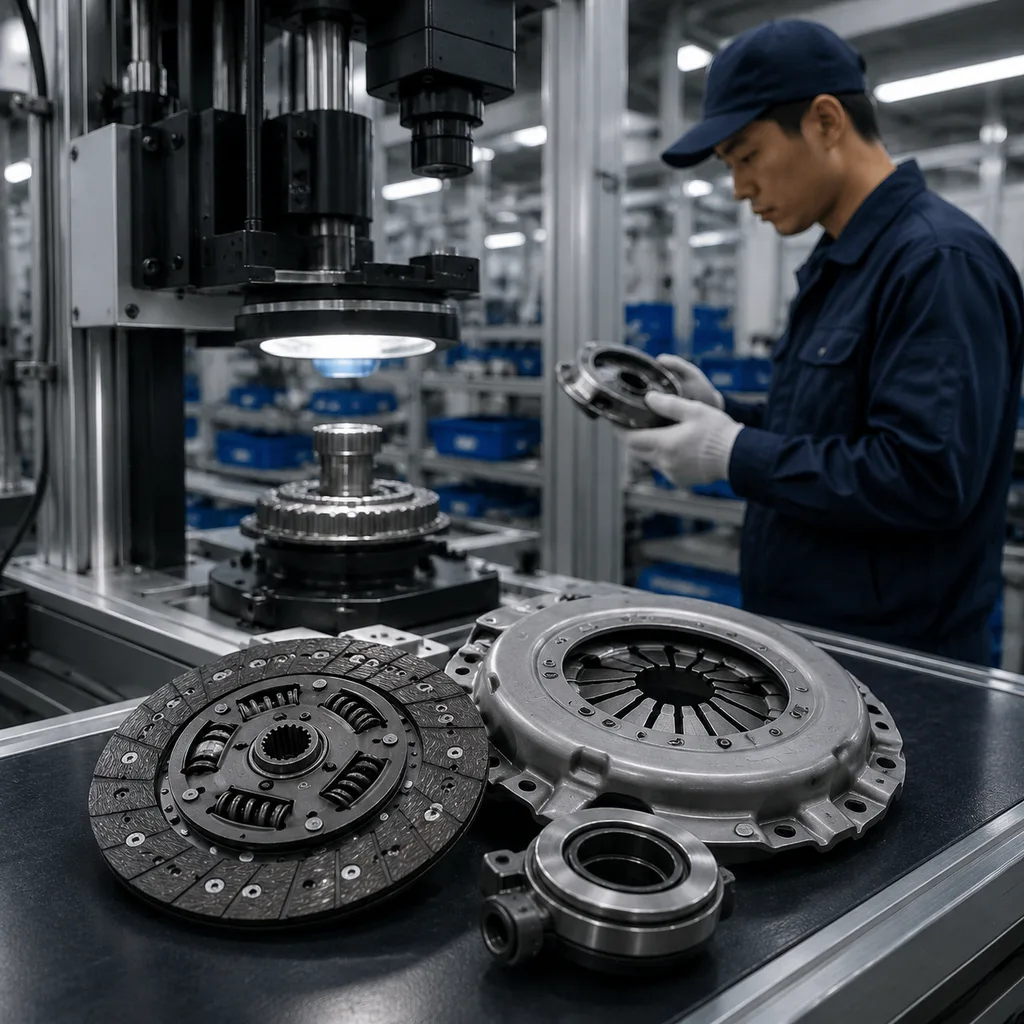
Typical kit contents include:
Clutch disc with matched friction facings and hub damper specification
Pressure plate or clutch cover assembly
Release bearing, mechanical type or hydraulic concentric slave cylinder where applicable
Pilot bearing or bush where required by application
Alignment tool or installation accessories where specified by the customer
Batch-coded carton label and application reference
For each SKU, the buyer’s sourcing file should state the fitment logic in measurable terms: disc OD, facing thickness, spline count, spline major/minor diameter, hub offset direction, cover bolt PCD, dowel positions, release bearing ID/OD/height, and installed height for clamp-load testing. A typical approval sheet should also define interchange numbers, market restrictions, carton language, and whether the kit is sold as 2-piece, 3-piece, or 4-piece.
Driventus supports catalogue matching through buyer-supplied OE part-number cross-references, using formats such as OE 06A… or OE 11251… for reference control only. If buyer data includes vehicle manufacturer or aftermarket brand names, they are treated as fitment identifiers and do not imply approval, sponsorship, or endorsement.
OE-equivalent dimensions to verify before approval
Dimensional equivalence should be checked against a retained master sample, approved drawing, or customer-provided specification before a clutch kit is released for production. The critical checks go beyond disc diameter. Spline geometry, hub offset, cover height, release bearing contact diameter, and clamp load window all influence engagement quality, release margin, and service life.
Check point
Practical target for quotation/approval
Typical procurement evidence
Disc outside diameter
Nominal size, usually controlled within ±0.30–0.50 mm
Vernier/CMM report and master sample comparison
Disc total thickness
New thickness and compressed thickness; often ±0.20 mm
Thickness report at 4–8 points
Spline count and major/minor diameter
Exact tooth count, gauge fit with no binding
Go/no-go gauge result and sample fit check
Hub offset/runout
Offset direction and value; face runout commonly ≤0.50 mm
Section drawing and assembly trial
Cover bolt pattern and dowel position
PCD, hole diameter, dowel size, angular position
Coordinate inspection and flywheel fixture check
Cover installed height
Defined test height for clamp-load measurement
Bench test set-up record
Release bearing height/contact face
Bearing height, ID, OD, face radius/diameter
Bearing dimensional and noise report
Clamp load and lift curve
Load window and lift at specified travel
Functional test curve from test bench
</tr></thead><tbody> </tbody></table>Small dimensional deviations can become expensive because clutch replacement is labour-intensive and difficult to diagnose after installation. For example, an incorrect hub offset can contact the flywheel bolts; a release bearing 1.0–1.5 mm outside the required height can reduce release margin; and a spline that passes visual inspection but fails gauge fit may cause hard pedal or non-release.
Buyers should request batch-level pre-shipment inspection data rather than relying only on an initial sample report. For repeat orders, agreed control dimensions can be written into the inspection plan under the supplier’s quality system, with tolerance, measurement method, sampling size, and inspection frequency clearly defined. For mixed containers, the packing list should link each SKU to batch number, inspection report number, production date, and carton quantity.
Materials, friction performance, and validation testing
Although clutch kits are wear components, replacement parts still need defined torque capacity, thermal stability, durability, and noise performance. Friction facings should deliver a stable coefficient during normal temperature cycling rather than only passing a static visual inspection. Hub springs must resist fatigue, rattle, and loss of damping. Diaphragm springs should maintain clamp load after repeated engagement cycles, and release bearings must rotate smoothly under load without early grease loss.
Relevant management and compliance frameworks for a qualified supply programme include IATF 16949:2016 and ISO 9001:2015 for automotive quality management. Material declarations may also be required under REACH (EC) No 1907/2006 for products imported into the European Union. These frameworks do not replace part-level validation, but they help confirm that process discipline, record keeping, and corrective action systems are in place.
Common validation requirements include:
Static clamp load measurement at specified installed height, with load window agreed per application
Cover lift curve and release travel verification, including finger height variation control
Burst speed testing for clutch disc safety margin, typically above maximum engine speed with safety factor agreed by buyer
Thermal cycling and fade recovery assessment after repeated engagements
Torsional damper durability testing for spring wear, pocket deformation, and noise
Release bearing noise, rotation torque, temperature rise, and grease retention checks
Dynamic balance of disc and cover where required for NVH-sensitive or higher-speed applications
Salt spray or coating checks for exposed metal components when specified
For approval, a practical buyer package can include an initial sample inspection report, material or friction facing declaration, clamp-load curve, release curve, burst or spin test result, bearing noise record, and packaging drop-test result. High-load pickup and light commercial references should not automatically use the same validation assumptions as passenger car references; higher vehicle mass, towing use, and stop-start urban duty can require stronger facings, different damper tuning, or a higher clamp-load specification.
Driventus can manufacture to buyer drawings, samples, or agreed aftermarket specifications through custom manufacturing. The validation plan is normally adjusted by vehicle segment, expected load, destination market, and customer warranty requirements.
Sourcing checklist for Mitsubishi clutch kit replacement lines
A replacement range for Mitsubishi applications should be sourced as a programme, not as a group of isolated stock-keeping units. Importers and wholesalers need consistent product data, packaging logic, approval evidence, and production repeatability across the full range. This is especially important when high-runner passenger car items are purchased together with lower-volume pickup, SUV, or van applications.
Before placing a production order, confirm the following:
Application list by market, including model year, engine, gearbox, and drive layout
Kit contents: 2-piece, 3-piece, 4-piece, and whether hydraulic release units are included or sold separately
Disc diameter, spline count, hub offset, cover bolt pattern, release bearing size, and pilot bearing requirement for each SKU
Friction material type and any restricted substance declarations required by market
Sample approval process, including bench report and fitment trial if available
Batch traceability from raw material, friction facing lot, spring lot, bearing lot, and final assembly
Carton label format, barcode type, private-label artwork, neutral packing requirement, and country-of-origin marking
Palletisation, moisture protection, corner protection, and sea-freight packaging method
Warranty return analysis procedure, photo evidence requirements, and response time
MOQ, target price, lead time, and rolling forecast review process
Commercially, buyers should separate catalogue breadth from launch quantity. High-runner references can justify tooling, dedicated packaging, and larger batch production; slow movers may need shared components, longer lead time, or consolidated production windows. As a planning rule, quote requests are clearer when they show expected annual volume, first-order quantity, reorder quantity, target EXW/FOB price level, packaging type, and destination port. MOQ is normally affected by friction facing batch size, cover stamping or casting availability, bearing sourcing, carton printing, and whether the label is neutral or private brand.
Buyers can review related product families in our catalog, then separate high-runner applications from slow-moving references before finalising the order plan. That approach reduces inventory risk, improves forecast accuracy, and helps the factory schedule shared components more efficiently. For multi-location repair chains, consistent kit structure is also important because technicians expect the same contents, installation sequence, and engagement behaviour across branches.
Factory process controls that reduce warranty exposure
Clutch warranty claims are often reported as slipping, judder, noise, hard pedal, vibration, or incomplete disengagement. Some failures are linked to installation conditions, including oil contamination, flywheel wear, misalignment, incorrect torque procedure, or poor bleeding of a hydraulic release system. Even where installation is a factor, the supplier still has to control the product characteristics that affect repeatability from one batch to the next.
Important factory controls include incoming steel and casting verification, friction facing batch checks, rivet height control, diaphragm spring heat treatment validation, dynamic balance checks, and final assembly inspection. Release bearings need separate attention because grease quality, seal performance, raceway finish, and contact-face geometry directly affect noise, pedal feel, and service life.
A practical control plan should define process points and numbers, not only general inspection. Examples include steel hardness and thickness verification at incoming inspection; friction facing thickness, density, and visual defect checks by lot; rivet head height and staking force control during disc assembly; cover finger height and parallelism checks after assembly; clamp load and lift testing at the specified installed height; and bearing rotation/noise checks before kitting. Packaging control should include correct pairing of disc, cover, bearing, pilot parts, instruction sheet, and label scan confirmation to prevent mixed-kit claims.
For B2B buyers, useful factory evidence includes control plans, process flow diagrams, production part approval records where applicable, calibration records, and batch inspection reports. A supplier operating under IATF 16949:2016 and ISO 9001:2015 should be able to explain how nonconforming parts are contained, how measuring equipment is verified, and how corrective actions are confirmed before the next shipment.
Driventus manufactures engine and powertrain components in Taizhou, Zhejiang, and exports to more than 60 countries. For clutch kit programmes, procurement discussions should cover both technical approval and commercial execution, including packaging durability, lead time, documentation language, label data, and after-sales feedback loops.
When to refresh the replacement range
A clutch kit Mitsubishi replacement range should be reviewed at least once a year, and sooner when a market shows high warranty claims, repeated fitment enquiries, or new application demand. Catalogue gaps often appear when importers expand pickup, SUV, or light commercial coverage without checking gearbox variation. At the same time, obsolete or slow-moving references can remain in stock while faster-moving regional applications are under-supplied.
A practical range review should compare sales volume, return rate, fitment enquiries, vehicle parc data, and confirmed application coverage by market. Useful triggers include warranty rate above the buyer’s internal threshold, repeated questions about spline or bearing differences, ageing stock over 12 months, repeated emergency air shipments, or new demand from fleets and repair chains. The result may be a narrower but more reliable SKU list, with stronger technical coverage for the vehicles that matter most to the distributor’s customers.
For private-label buyers, the same review is a good time to update carton artwork, label translations, barcode structure, installation notes, and any market-specific compliance statements. It is also the right point to review MOQ and lead-time logic: combine slow movers into quarterly or semi-annual production batches, keep high runners on rolling forecasts, and confirm whether printed cartons need extra artwork approval time. Standard repeat production is generally easier to schedule when forecasts are shared 8–12 weeks ahead, while new references requiring sample development, validation, and packaging approval need a longer project window.
Where a buyer has existing samples or competitor references, Driventus can review dimensions, kit composition, and validation requirements before quotation. Procurement teams should provide target annual volume, destination market, packaging requirements, preferred label format, target price level, first-order quantity, and any mandatory compliance documents when they request a quote.
Frequently asked questions
Provide vehicle application data, engine and gearbox details, kit contents, annual volume, first-order quantity, destination market, and any available sample, drawing, or OE reference format. Include disc diameter, spline count, release bearing type, packaging, barcode, target price level, and private-label requirements.
Sometimes, but only when the disc diameter, spline, hub offset, cover geometry, release bearing, installed height, and clamp-load requirements match. Vehicle model names alone are not enough to confirm interchangeability.
No. Driventus is an independent aftermarket manufacturer; brand names are referenced for fitment only. Products are supplied to agreed aftermarket specifications, buyer drawings, or validated sample requirements.
If you are reviewing a clutch kit Mitsubishi replacement programme, Driventus can compare samples, drawings, application data, MOQ, target price, packaging, and lead-time requirements before production discussion. Send your requirements to /contact.html