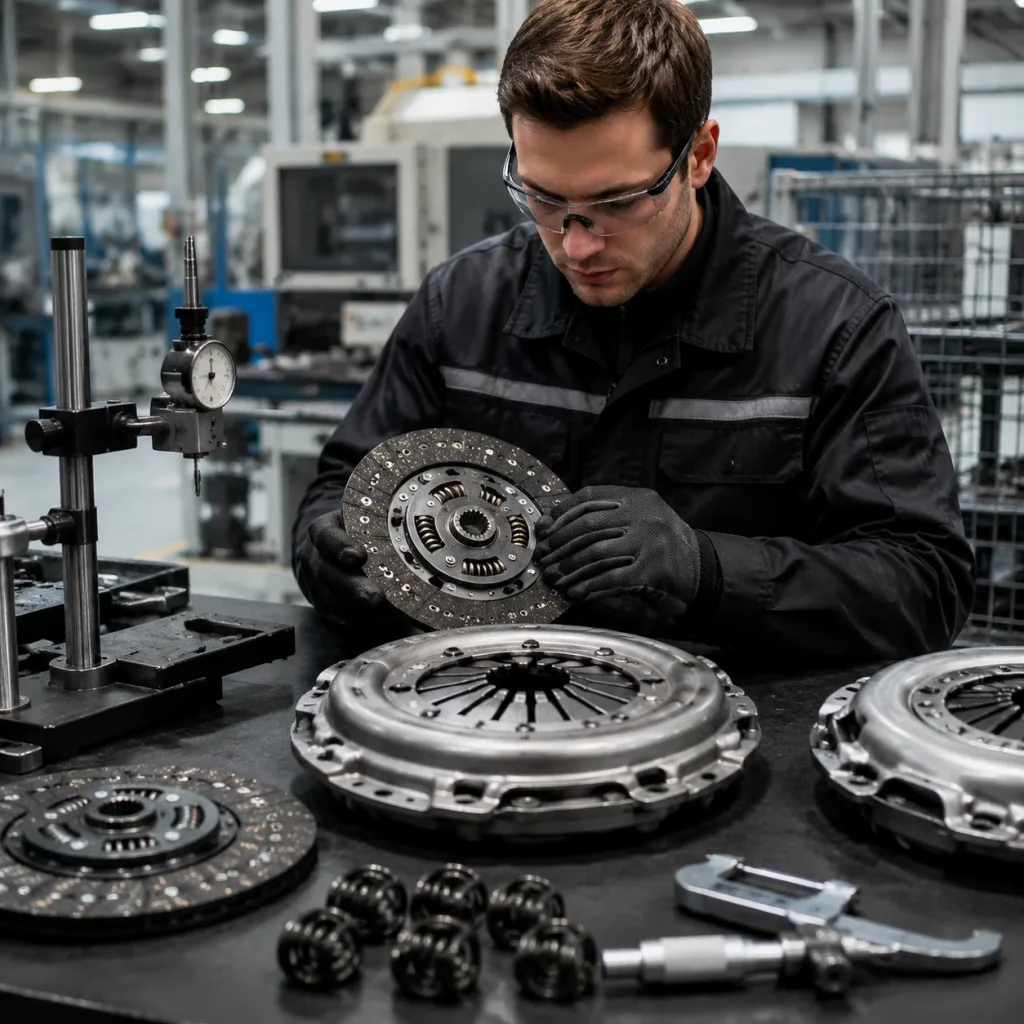
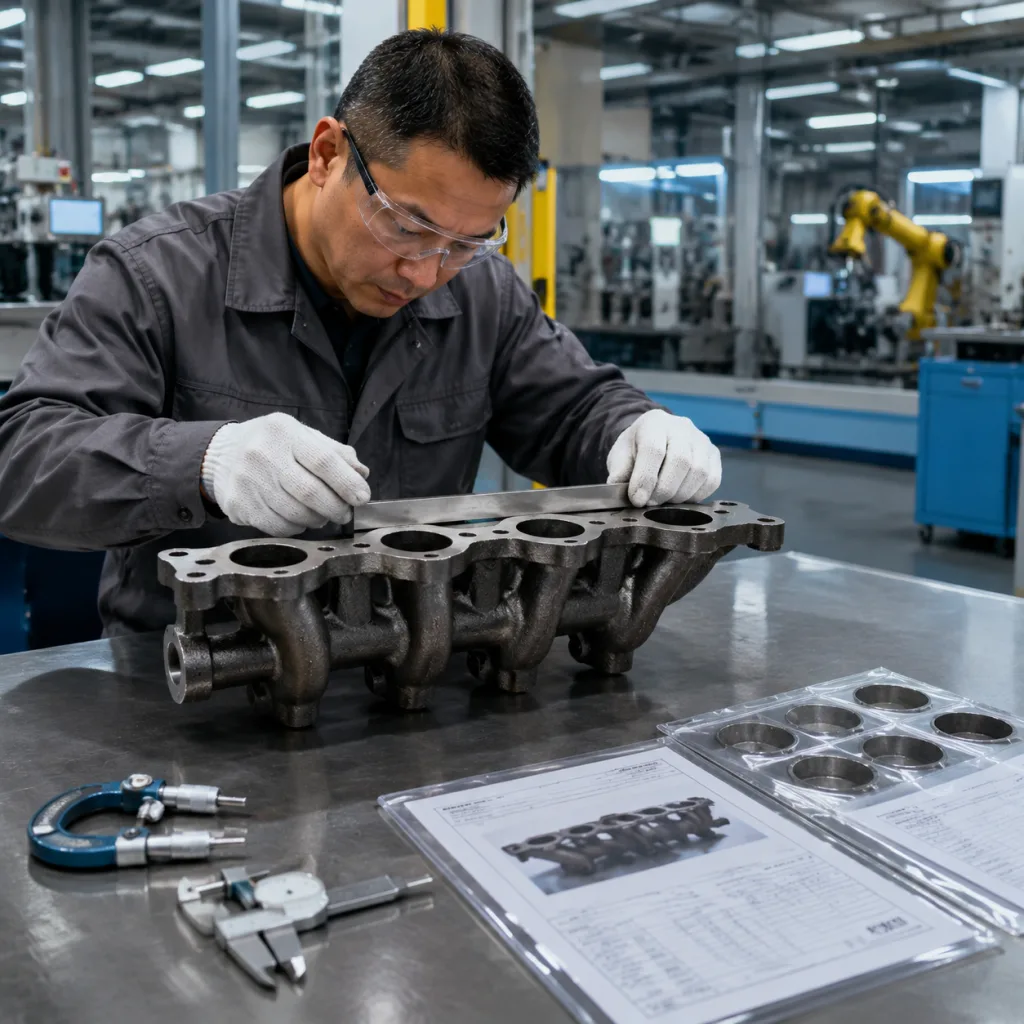
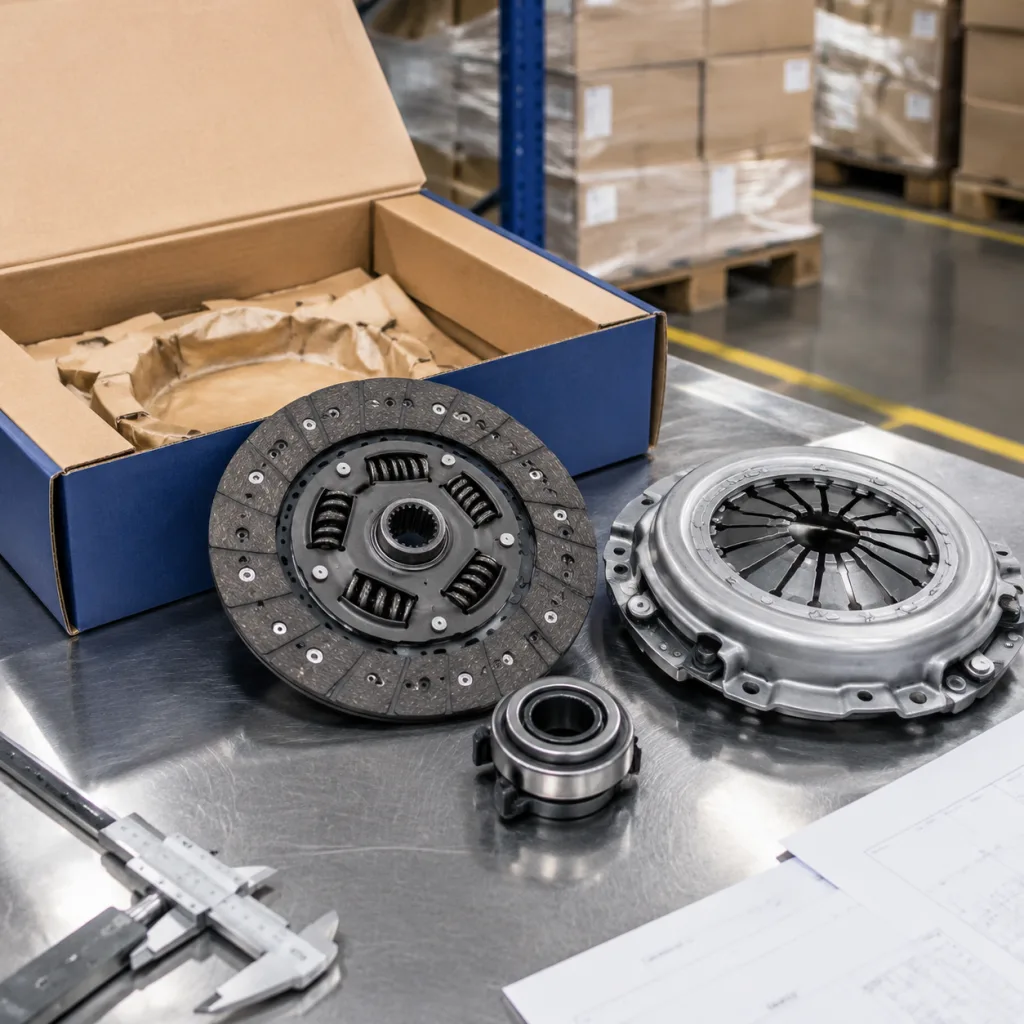
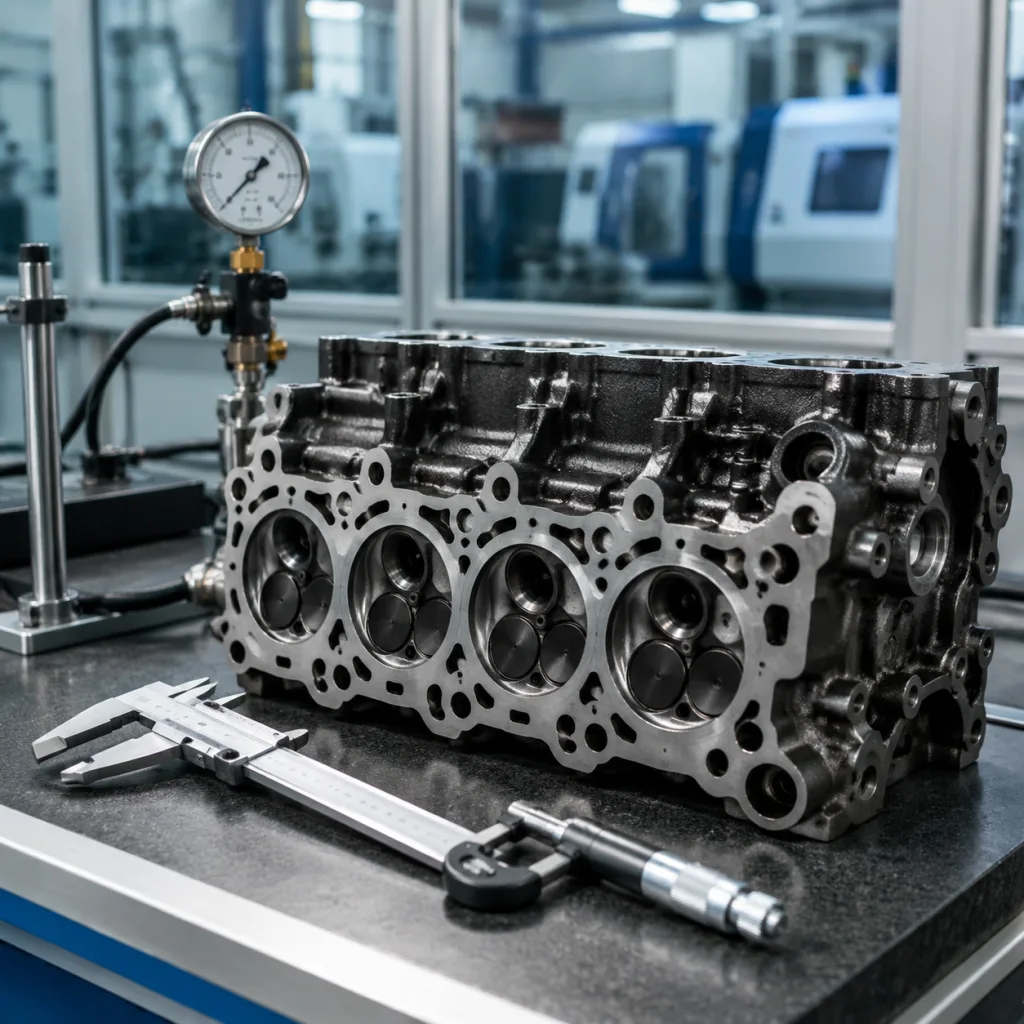
Procurement teams searching for a clutch kit Mercedes-Benz OEM supplier need more than a catalogue match. They need controlled dimensions, stable materials, traceable batches, and repeatable lead times. For fleet repair, wholesale distribution, and private-label programs, the core questions stay the same: can the supplier hold OE-equivalent fitment, what inspection data is available, and how quickly can production scale after approval? Driventus supplies clutch kits as an independent aftermarket manufacturer from Taizhou, Zhejiang, with exports to 60+ countries and documented quality control under IATF 16949:2016 and ISO 9001:2015. Brand names are referenced for fitment only. This article explains what buyers should verify before placing an order, including packaging, material specification, test coverage, and the commercial terms that matter in cross-border sourcing.
Start with the failure modes, not the price
A clutch kit Mercedes-Benz OEM supplier should be evaluated by how well it prevents the problems that usually trigger returns: poor release, chatter, judder, noise, and premature wear. Price matters, but only after the application is pinned down. For Mercedes-Benz programs, the first question is whether the supplier can match the exact vehicle platform, engine code, transmission family, and flywheel style.
Minimum procurement checks
OE cross-reference confirmed to the exact engine and transmission family, not only model series
Disc outer diameter verified to within ±0.2 mm of the approved reference sample
Hub spline count, spline major diameter, and hub offset matched to the application drawing
Cover clamp load, release travel, and installed height documented with test values
Friction material family identified by compound type and hardness range
Rivet head height, plate runout, and balance recorded for each lot
Batch code, carton code, and packing list traceability available for every shipment
If the program requires private label or regional packaging, confirm artwork proof, carton dimensions, barcode format, and pack quantity before tooling approval. That avoids sample-stage rework and prevents launch delays when the first shipment is ready to move.
What the spec sheet must prove
For B2B sourcing, certification only matters when it supports the actual control points in production. Driventus operates under IATF 16949:2016 and ISO 9001:2015, which supports process control, corrective-action discipline, and repeatable inspection records for buyers who need audit-ready supply.
Capability
What buyers should ask for
Typical acceptance target
Why it matters
Incoming inspection
Material certificates, hardness data, bearing checks
100% lot identification; hardness within the approved spec window
Reduces variation before assembly
In-process control
Torque, runout, rivet, and balance records
Torque recorded to the set point; runout commonly held within 0.15 mm TIR on critical faces
Supports stable clutch engagement
Final inspection
Visual, dimensional, and packaging sign-off
AQL or 100% checks defined by program risk
Lowers claim risk at receipt
Traceability
Lot code and production date
One lot code per production batch
Speeds containment if issues appear
Export readiness
Packing list, HS support, carton labeling
Carton marks and carton count aligned to order sheet
Helps customs and warehouse intake
</tr></thead><tbody> </tbody></table>Buyers comparing suppliers should request the same document set from every candidate, then rank them by data completeness, response time, and consistency across repeats rather than by claims alone.
How to verify fitment before you buy
Mercedes-Benz clutch kits are not interchangeable by marketing name alone. A correct order starts with the application code, transmission type, flywheel design, and the exact OE reference where available. Where a listing includes an OE number, use it as a cross-reference only; for example, OE 06A107065 or other application-specific references supplied by the buyer.
Validation should cover the dimensions and functional values that affect release quality and durability:
Disc outer diameter and thickness, typically checked against a reference tolerance of ±0.2 mm for diameter and ±0.1 mm for thickness on controlled programs
Hub spline profile and tooth count
Cover bolt pattern and PCD
Installed height and release bearing contact face
Runout and friction face flatness, often targeted within 0.10 mm TIR on the friction face for higher-risk applications
Spring damper travel and damping consistency
Clamp force at the specified installed height
For replacement programs, dimensional match is more important than broad compatibility statements. A sample should be checked against vehicle build data and, where practical, bench-tested for release effort and pedal feel before mass purchase. For higher-volume launch work, buyers should also request one retained master sample, one dimensional report per lot, and approval against a signed reference sheet before release.
When MOQ and lead time become the real constraint
Sourcing teams usually face three constraints: forecast accuracy, minimum order quantity, and replenishment timing. A supplier that can build to stock for common applications and build to order for slower lines gives buyers more flexibility across regions.
Typical commercial points to clarify:
MOQ by part number, not by mixed family; for private-label programs, a common opening MOQ is 200-500 kits per SKU depending on packaging and tooling needs
Sample lead time versus production lead time; samples are often 7-15 days, while normal production is commonly 25-45 days after approval, depending on material availability and order size
Carton pack quantity and pallet configuration; ask for carton dimensions, gross weight, and pallet count before booking freight
Incoterms, especially for the EU, UK, US, Canada, Australia, and Brazil
Spare-rate policy for freight damage or shortage claims; many buyers negotiate 1-2% spare parts or a defined claim window at shipment release
Price breaks by volume tier; request unit pricing at 1x MOQ, 3x MOQ, and a container-load forecast so you can compare landed cost, not only ex-works price
For multi-location repair chains, stable replenishment is often worth more than a small unit-price reduction. For distributors, ask whether the factory can support staggered release schedules, label customization, and container loading plans that reduce warehouse handling. If your annual demand is uncertain, it is better to negotiate a lower first order with a locked reorder price band than to overbuy inventory on the first shipment.
What quality control should look like in practice
A robust clutch kit program should include controlled testing before shipment and documented inspection after assembly. Buyers should ask whether the supplier can provide:
Dimensional inspection reports for critical parts, including diameter, runout, and flatness values
Surface finish checks on mating faces, especially where the flywheel interface is sensitive to chatter
Friction material verification and rivet retention checks, with pass/fail criteria documented
Release and clamp function confirmation under the target installed height
Packaging integrity inspection for long-haul export
Salt-spray, heat, and wear testing where the target market or vehicle duty cycle justifies it
When a program targets hot-climate or high-mileage markets, it is reasonable to ask for evidence of thermal stability, fade resistance, and wear consistency. Published standards may be used as test references where relevant, including SAE J2527 for durability-related exposure testing and REACH (EC) No 1907/2006 for restricted-substance compliance in the EU. If a customer requires program-specific validation, Driventus can align testing plans through custom manufacturing and document requirements in the quotation stage. Buyers should also ask how nonconformities are handled: containment response within 24 hours, root-cause summary within 5 working days, and corrective-action timing before the next release lot.
A simple order sequence that cuts risk
The safest procurement sequence is simple and repeatable.
1. Confirm vehicle application, transmission, flywheel design, OE reference, and annual volume. 2. Request dimensional sheets, material spec, inspection criteria, and packing data. 3. Review sample units against fitment, release effort, clamp feel, and runout requirements. 4. Approve label, carton, barcode, pallet, and spare-parts policy. 5. Lock the forecast, MOQ, target lead time, and price tier in writing. 6. Release production with inspection criteria, traceability rules, and claim procedure documented.
Buyers can review our catalog and the related quality system before requesting a formal offer. If your program includes multiple engine or powertrain lines, the broader engine components range may help consolidate sourcing under one supplier. For tendering or launch planning, request a quote with the application list, annual volume, target market, preferred Incoterm, and packaging requirements so the quotation can reflect actual landed cost and timing.
Frequently asked questions
Yes. Driventus supplies clutch kits for B2B aftermarket use across export markets, with fitment based on application data and OE cross-reference where provided by the buyer.
Ask for dimensional data, material details, inspection records, packing specification, and traceability information. For regulated markets, ask for REACH-related declarations where applicable, plus sample approval records and lot traceability.
Yes. Custom packaging, labeling, carton dimensions, and program-specific documentation can be arranged through our OEM service process after fitment, MOQ, and commercial details are confirmed.
If you are building a sourcing list or comparing suppliers for a new program, send the application details, target volume, packaging requirements, and required commercial terms through /contact.html.