A clutch kit for Jeep applications is a service-critical assembly, not a simple box on a shelf. For distributors, repair chains, and importers, the sourcing question is whether the kit will bolt up, release cleanly, hold torque, and behave the same way in batch three as it did in the approved sample.
Most aftermarket kits include a clutch cover assembly, driven plate, release bearing or concentric slave cylinder where used, pilot bearing or bushing, and alignment tool. Some programmes also require flywheel bolts, cover bolts, or a solid-flywheel conversion option for vehicles originally equipped with a dual-mass flywheel.
This guide looks at how to evaluate a clutch kit Jeep aftermarket replacement from a buyer’s point of view: what must match, where failures start, which tolerances matter, how to approve samples, and how MOQ, lead time, packaging, and documentation affect landed risk. Driventus is an independent aftermarket manufacturer; Jeep and other brand names are referenced for fitment identification only, with no vehicle manufacturer approval or endorsement implied.
Decision framework: what must match before a Jeep kit is worth quoting
Start with interchangeability. If the kit does not match the original installation envelope, price, MOQ, and carton design are irrelevant. Small differences in release height, spline engagement, cover indexing, or stack height can create installation delays, drag, judder, or warranty claims.
Use these points as the first pass before requesting a formal quote:
Clutch disc outside diameter: common light-vehicle sizes often sit in the 215–280 mm range, but the exact OD should be verified against a drawing, OE sample, or approved reference part. Procurement drawings should state OD tolerance, typically ±0.3–0.5 mm where application data supports it.
Hub spline count and major diameter: the hub must match the gearbox input shaft with a controlled sliding fit. Specify spline count, major and minor diameter, effective spline length, and go/no-go gauge inspection rather than relying only on catalogue wording.
Disc thickness under clamp load: compressed thickness affects release travel, engagement point, and drag risk. Define new-disc compressed thickness and allowable variation, commonly within ±0.2–0.3 mm for repeat production.
Cover assembly bolt circle and locating dowels: wrong pitch circle diameter, dowel diameter, or indexing can block installation or create runout. Bolt-hole position should normally be controlled by fixture inspection.
Diaphragm spring height: this sets release bearing position, pedal effort, and release reserve. Installed finger height should be checked at a specified cover mounting height, not measured loose on a bench.
Friction material grade: the compound must suit torque, vehicle weight, towing use, axle ratio, and heat duty. Diesel and off-road applications may need higher fade resistance and damper capacity.
Release bearing interface: mechanical fork systems, external slave cylinders, hydraulic release bearings, and concentric slave cylinders require different contact radii, heights, seals, and connection formats.
Pilot bearing or bushing specification: inner diameter, outer diameter, width, material, grease, and chamfer must suit the crankshaft and input shaft arrangement.
Cross-reference control deserves the same attention as the parts themselves. Buyers should maintain fitment tables by engine code, transmission type, production year, drivetrain, regional market, flywheel type, and OE-format reference where supplied by the customer, such as OE 06A… or OE 11251… style identifiers. Driventus can support fitment mapping through our catalog, but the final application list should be checked against the buyer’s market data, VIN-derived samples, and return-history records.
Validation plan: prove dimensions, torque capacity, and release behavior
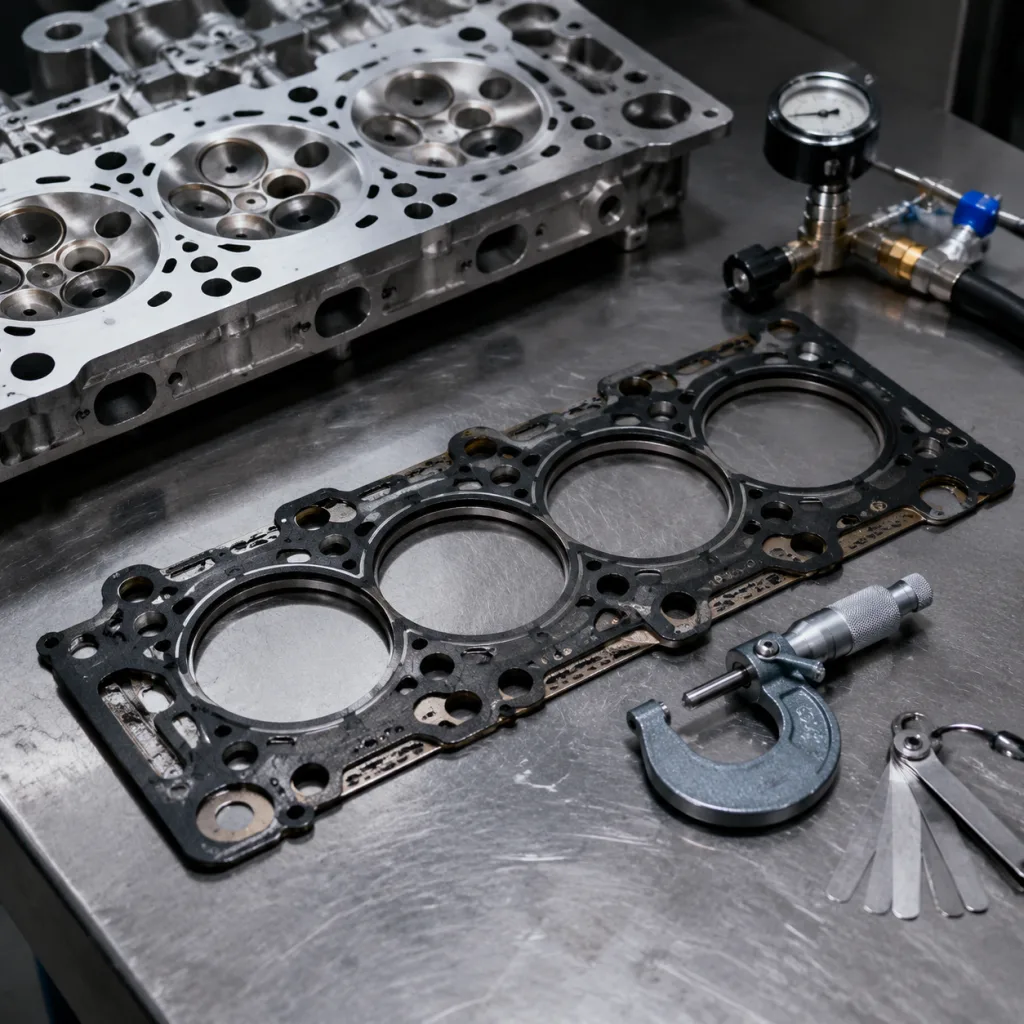
A clutch kit Jeep aftermarket replacement programme should not be approved from catalogue photos. Dimensional inspection confirms fit. Functional testing confirms whether the assembly can hold torque, release cleanly, and keep acceptable behaviour after repeated operation.
Validation item
Typical check method
Buyer-ready acceptance logic
Disc diameter and compressed thickness
Vernier, micrometer, load fixture
OD and thickness matched to drawing; typical OD tolerance ±0.3–0.5 mm and thickness variation ±0.2–0.3 mm
Spline profile
Go/no-go gauge or mating shaft gauge
100% smooth sliding fit on pilot batches; no tight spots, burrs, or excess backlash
Cover clamp load
Static load test at specified installed height
Target set by application torque; production samples normally held within an agreed load band such as ±8–10%
Release load curve
Compression test of diaphragm spring
Pedal effort and release point controlled against approved sample curve
Disc runout
Dial indicator after assembly
Low runout to reduce drag and judder; buyers often specify a maximum near 0.5–0.8 mm depending on disc size
Parallelism and cover height
Dedicated clutch fixture
Installed height and finger-height spread controlled to protect release reserve
Burst resistance
High-speed rotational test where required
Safety margin above engine redline; test speed should be agreed by SKU and market regulation
Dynamic balance
Balancing equipment where specified
Applied to sensitive or higher-speed assemblies to reduce NVH complaints
</tr></thead><tbody> </tbody></table>Do not apply one generic tolerance sheet across every Jeep-related SKU. A heavy 4x4 used for towing or off-road service may need a different compound, damper spring package, and clamp-load target from a lighter petrol variant used mostly in urban driving. Diesel applications can also transmit higher torsional loads into the damper system than comparable petrol engines.
A practical approval sequence is simple: measure 1–2 reference samples or drawings, produce 3–5 first-article kits for dimensional and functional confirmation, then run a pilot batch of 50–200 kits where the SKU is new or high-risk. When samples are available, Driventus measures the original part, identifies critical-to-function characteristics, and confirms dimensions before pilot production.
For higher-volume programmes, agree the inspection report format before production starts. Specify AQL level, retained-sample rules, and whether clamp load, finger height, spline fit, and bearing rotation are checked per lot or by statistical sampling.
Spec deep-dive: construction choices that change field performance
A purchase specification should describe the assembly, not just the vehicle model name. That is how buyers prevent quote ambiguity across regions and keep repeat shipments aligned with the approved sample.
Lock these items in the purchase file:
Friction facing: organic, reinforced organic, or another approved compound selected for torque capacity, drivability, fade resistance, and service environment. After approval, lock the compound code, facing thickness, and supplier source.
Facing bonding and riveting: control rivet diameter, rivet material, head height, setting pressure, and rivet-hole condition. Loose rivets, cracked facings, and exposed rivet heads are field-failure risks.
Cushion segment design: wave height and segment count influence engagement smoothness, heat distribution, and take-up feel. They should match the approved sample.
Damper spring rate and window design: spring count, wire diameter, free length, and stop design should be recorded. The damper must suit engine torsional vibration and protect the gearbox from shock loading.
Hub material and heat treatment: spline durability depends on wear resistance and long-term engagement with the input shaft. Where heat treatment is used, require hardness range and case-depth data.
Cover stamping material and thickness: cover stiffness affects clamp-load stability and distortion resistance. Material grade and sheet thickness should not change without written approval.
Diaphragm spring process: material grade, heat treatment, shot peening where specified, and load-curve control all influence release feel and service life.
Rivets, straps, and fasteners: define shear strength, fatigue resistance, thread class, coating, and corrosion protection.
Bearing grease and seal type: bearing specification controls storage life, operating temperature, contamination resistance, and noise performance. Request bearing supplier, grease temperature range, and rotation-noise criteria.
Surface protection: phosphate, e-coat, paint, oiling, VCI bag, or other anti-corrosion treatment should match sea freight, bonded warehouse, and humid-climate storage. Many buyers require no red rust after 48–96 hours of neutral salt spray for coated steel parts, depending on specification.
For EU and UK markets, buyers often request material declarations aligned with REACH (EC) No 1907/2006 and may need additional declarations for restricted substances, packaging, or customer-specific compliance files. Driventus operates under IATF 16949:2016 and ISO 9001:2015. These standards support process discipline, traceability, corrective action, and control plans, but they do not replace application-level fitment and performance testing.
Failure modes: where Jeep replacement programmes usually go wrong
Jeep applications can span petrol and diesel engines, several manual gearbox families, 4x4 duty cycles, and market-specific production years. Risk rises when one catalogue line is expected to cover too many variants. A broad description such as “Jeep clutch kit” is not a purchase specification.
Common mismatch causes
Same model name but different gearbox input shaft spline, including spline count, pilot diameter, or effective spline length.
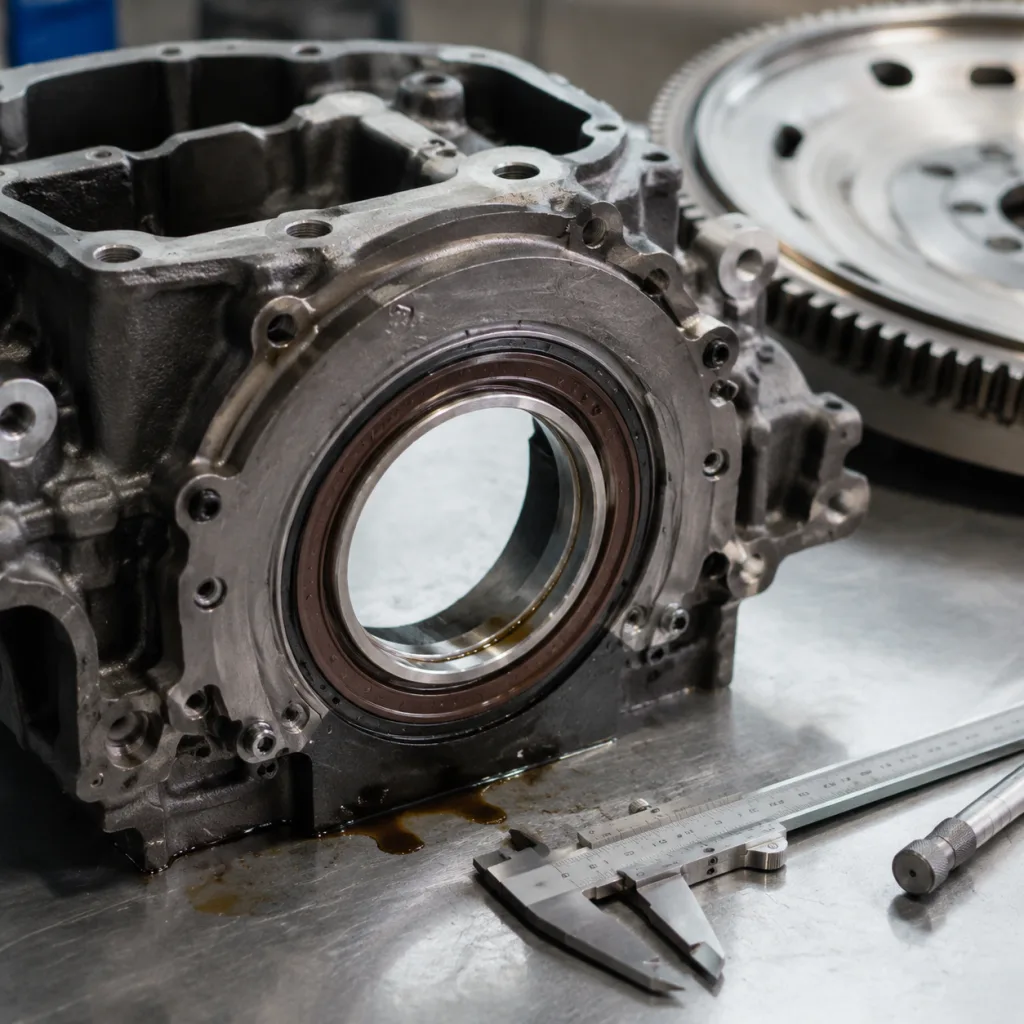
Different flywheel type, including solid flywheel and dual-mass flywheel layouts. Solid-flywheel conversion kits must be sold and labelled separately from like-for-like DMF replacement kits.
Release bearing height variation between mechanical fork systems and hydraulic release systems. A 2–4 mm bearing-height difference can shift the engagement point or prevent clean release.
Pressure plate bolt pattern or dowel changes between engine families. Pitch circle diameter, dowel position, and cover offset must be checked together.
Disc offset differences that affect flywheel or cover clearance. If installation direction matters, mark the hub side clearly.
Pilot bearing differences between engine and transmission combinations, including needle bearing versus bronze bushing formats.
Local production variations in Latin America, North America, Europe, Australia, or other regional markets.
Model-year changeovers that are not clearly separated in catalogue data, especially where registration year differs from production date.
Checks before purchase order release
Before confirming a programme, request 2D drawings, controlled inspection sheets, or approved sample reports for the clutch cover, disc, and release component. A sample-to-drawing comparison is strongly recommended when the part family has high return cost, wide regional variation, or a history of catalogue disputes.
Repair chains should also standardise kit contents by SKU. Missing pilot bearings, inconsistent alignment tools, unclear bearing selection, and mixed fastener packs create workshop downtime. The label should show part number, batch code, application range, quantity, country of origin, distributor-required barcode format, and any internal warehouse reference needed for scan-based picking.
For mixed-SKU export cartons, specify inner-box dimensions, gross weight limits, pallet height, carton drop-test expectations, barcode symbology such as EAN-13 or Code 128, and whether a QR code links to installation notes or catalogue data.
Documentation Q&A: what importers need when claims appear
A clutch kit can be returned for slip, judder, drag, noise, premature bearing wear, spline damage, release difficulty, or incorrect application selection. Documentation helps separate product defects from installation errors, worn vehicle components, contaminated friction surfaces, hydraulic faults, and catalogue misapplication.
What documents should be available for a B2B clutch kit programme?
Driventus can provide documentation such as:
Certificate references for IATF 16949:2016 and ISO 9001:2015.
Incoming material inspection records for steel, friction material, bearings, springs, rivets, and bought-in components.
In-process control plans for stamping, machining, riveting, heat treatment, balancing, bearing assembly, surface treatment, and final packing.
Batch traceability by production lot, operator or line record where applicable, friction-material batch, bearing batch, packaging date, and pallet number.
Sample approval records and retained samples for repeat orders, normally kept by part number and revision level.
Packaging inspection records for label accuracy, carton strength, component protection, barcode scanability, and mixed-SKU packing list accuracy.
Corrective action reports for validated quality claims, including root-cause analysis, containment steps, reinspection method, and prevention plan.
What should a claim file include?
At minimum: part number, batch code, vehicle model, engine, gearbox, mileage at installation, mileage at failure, photos of the installed and removed parts, flywheel condition, hydraulic or cable-system condition, and confirmation of whether the returned kit is available for inspection. Agree in advance which claims require physical return, which can be closed by photo evidence, and how labour-claim exposure is handled.
Where does supplier qualification fit?
Buyers can review our quality system when building supplier audit files. For customer-specific packaging, regional fitment extensions, private-label requirements, or modified friction characteristics, Driventus also supports custom manufacturing based on drawings, samples, or validated technical requirements.
Commercial comparison: price, MOQ, lead time, and sourcing risk
A clutch kit Jeep aftermarket replacement line should be judged on landed cost, fill rate, warranty exposure, catalogue accuracy, and specification stability. The cheapest unit price can become the expensive option if the kit causes fitment disputes, repeat labour claims, poor workshop confidence, or inventory that cannot be matched confidently to the right vehicle.
Use this sourcing checklist before award:
Confirm application range by engine, transmission, production year, drivetrain, market, flywheel type, and release system.
Require component-level drawings, inspection data, or approved sample records for all kit parts.
Define packaging configuration for wholesale storage, e-commerce fulfilment, and workshop handling.
Check minimum order quantity by SKU and by consolidated shipment. Practical MOQs are often 50–200 kits per SKU for established items and higher for new tooling, private-label packaging, or low-volume bearings.
Confirm pilot batch timing, sample approval process, and lead time before full container orders. First-article development may take 30–60 days after samples or drawings are confirmed; repeat production is commonly planned around 30–45 days depending on material availability and order mix.
Agree claim evidence requirements, including photos, mileage, installation report, vehicle details, batch code, and returned sample rules.
Confirm whether the supplier can maintain stable friction material, bearing, spring, and stamping sources across repeat batches.
Review export experience for your market, including labelling, customs documentation, palletisation, fumigation or non-wood packing requirements, and mixed-SKU shipment control.
Establish revision control so that any material, bearing, packaging, or dimensional change is communicated before shipment.
Analyse price by BOM and risk, not only by the quoted kit number. The main unit-cost drivers are friction material grade, bearing type, diaphragm spring material and heat treatment, cover stamping weight, machining and balancing time, corrosion protection, kit accessories, carton specification, order volume, and exchange-rate or steel-price movement.
For quote comparison, ask suppliers to separate tooling or sample charges, production unit price, private-label carton cost, inland freight, export packing, and Incoterms such as FOB or CIF. Driventus manufactures engine and powertrain components in Taizhou, Zhejiang, and exports to more than 60 countries. For clutch kits, the practical objective is controlled repeatability: OE-equivalent dimensions, verified release and torque function, consistent kit contents, and traceable production.
Frequently asked questions
Confirm disc diameter, spline count and gauge fit, cover bolt pattern, release bearing type and height, flywheel type, pilot bearing specification, and application range by engine, gearbox, model year, drivetrain, and market. Request inspection data or samples for high-volume or high-risk SKUs before bulk ordering.
Yes. Driventus can measure supplied samples, prepare drawings, confirm key dimensions, and develop production controls for agreed specifications. Validation requirements, tolerances, sample approval criteria, packaging, MOQ, and pilot-batch timing should be confirmed before mass production.
Driventus is an independent aftermarket manufacturer. Jeep and other brand names are referenced for fitment identification only. We do not claim approval, sponsorship, or endorsement by any vehicle manufacturer.
If you are evaluating Jeep clutch kit sourcing for distribution or workshop networks, send your application list, target annual volume, sample or OE reference data, tolerance expectations, packaging requirements, and preferred Incoterms. You can [request a quote](/contact.html).