Clutch Kit Honda OE Equivalent: What Buyers Should Verify
Buyers searching for a clutch kit Honda OE equivalent usually want one thing: a replacement that fits, engages correctly, and holds up under normal service life without unnecessary rework. For procurement teams, that means checking more than the vehicle application. You need to verify clutch cover clamp load, disc spline count, friction material, release travel, and flywheel contact pattern against the OE baseline. Driventus is an independent aftermarket manufacturer; brand names are referenced for fitment only.
For Honda applications, the lowest-risk approach is to treat OE equivalence as a technical claim that must be proven by dimension, material, and validation data. That is especially important when sourcing for distributors, repair chains, or regional warehouses that need consistent returns performance. This article explains what to compare, which standards matter, and how to separate a true replacement part from a part that only fits loosely.
What OE equivalent should mean for a clutch kit
For procurement, OE equivalent should mean dimensional compatibility, functional parity, and acceptable durability under the same operating envelope. It does not mean manufacturer endorsement, and it does not mean every component is identical to the original supplier part.
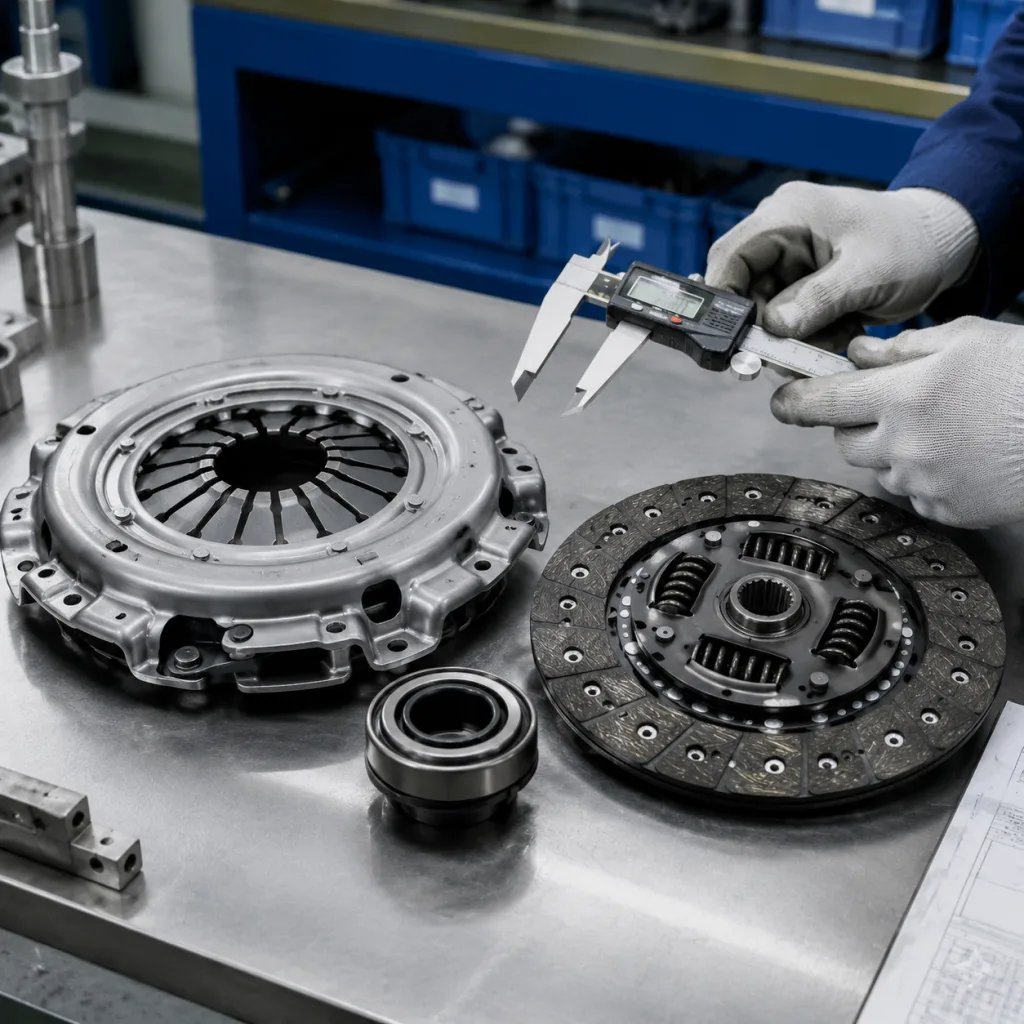
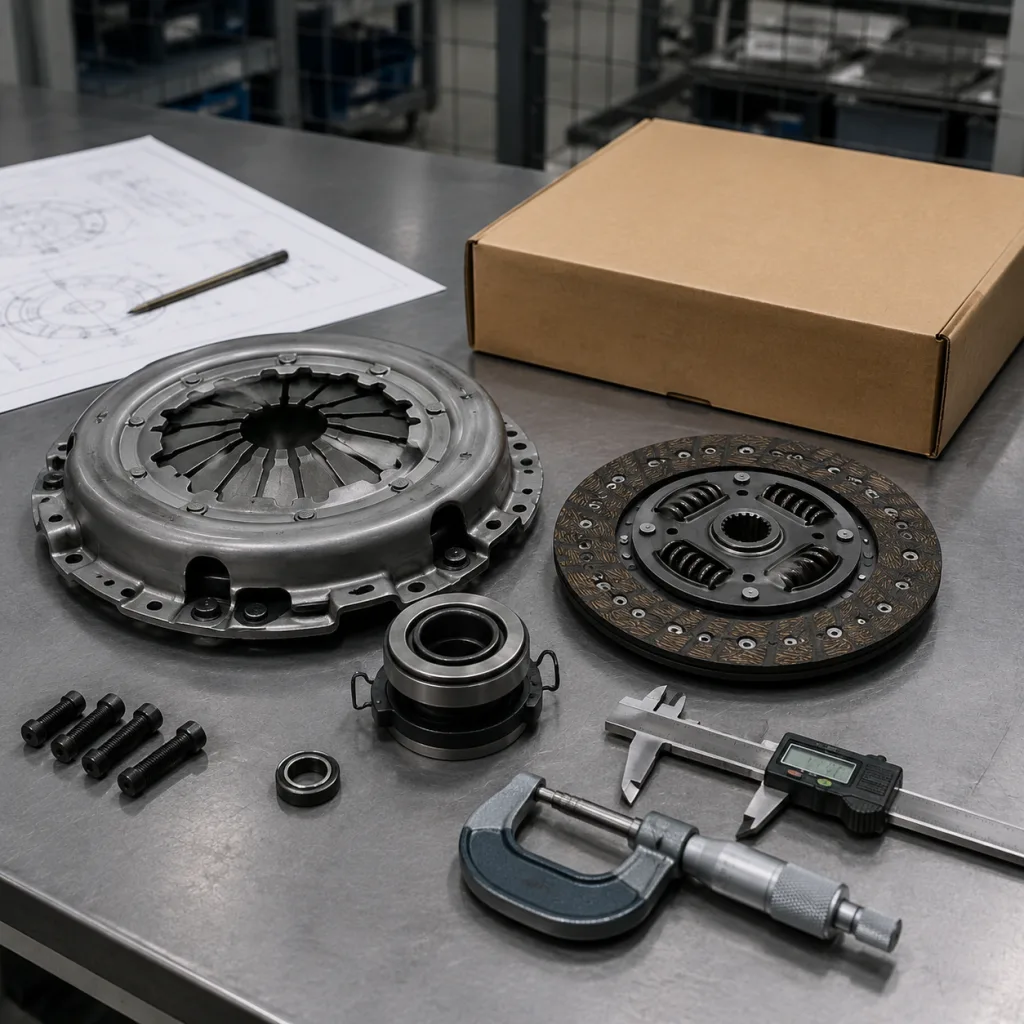
A clutch kit for Honda applications should match the vehicle’s release system and torque capacity at the assembly level. That usually includes the clutch disc, pressure plate, release bearing, and, where applicable, alignment or installation hardware.
Key checks for OE equivalence:
Disc outer diameter, hub offset, and spline count
Pressure plate bolt circle, cover height, and diaphragm geometry
Release bearing ID/OD and contact face profile
Clamp load and torque transfer capability
Friction material formulation and thermal resistance
Pedal feel and release travel after installation
Dimensions and materials to verify
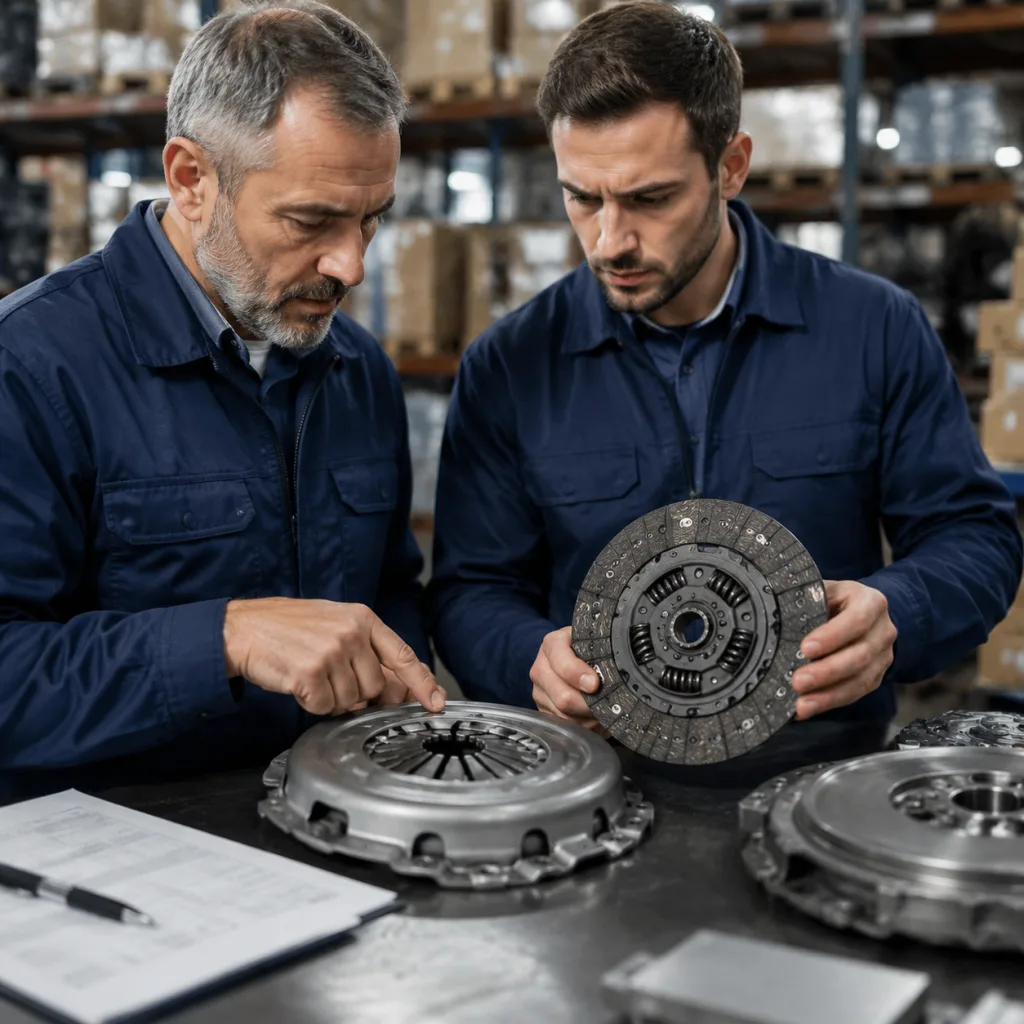
The fastest way to prevent fitment disputes is to compare the replacement sample against the OE part and the vehicle service data. If you already source by OE code, ask for a cross-reference with the exact application range, for example OE 22300- or OE 22000-series references only when the catalogue already provides them.
Parameter
What to confirm
Why it matters
Disc diameter
Match to OE nominal size
Affects torque capacity and pedal feel
Spline count
Same count and pitch
Prevents hub mismatch on input shaft
Hub height
Match OE stack height
Protects release clearance and engagement point
Clamp load
Verified by test report
Determines slip margin under load
Friction material
Organic, ceramic, or reinforced organic
Affects heat resistance and drivability
Bearing type
Standard, self-adjusting, or hydraulic interface
Ensures proper release action
</tr></thead><tbody> </tbody></table>For repeatable sourcing, require measured data from production samples, not just a catalogue claim. Dimensional variation should be controlled to the tolerances agreed in the drawing pack, and the supplier should be able to show incoming inspection records for the critical components.
Validation tests that support replacement decisions
A replacement clutch kit should be validated against practical performance, not only against a fitment list. Good suppliers will provide test evidence aligned with recognised methods and internal control plans.
Relevant standards and references include IATF 16949:2016 and ISO 9001:2015 for process control, and material or durability references where applicable. For environmental and chemical compliance, ask for REACH (EC) No 1907/2006 declarations.
Common validation checks:
Static clamp load verification
Disc runout and facing parallelism
Release bearing noise and smoothness test
Thermal fade and recovery evaluation
Torque capacity under controlled slip conditions
Installation fit check on a representative engine and transmission combination
If the part will be sold into multiple markets, request the test method, sample size, and pass/fail criteria. A single approval sample is not enough for B2B sourcing decisions.
Why Honda applications need careful cross-referencing
Honda platforms often share families of transmissions, but that does not mean every clutch assembly is interchangeable. Small differences in spline length, pressure plate height, or flywheel contact surface can create noise, chatter, or incomplete release.
This is where OE part-number cross-referencing matters. Buyers should request the exact engine and transmission pairing, model year window, and any supersessions. A correct replacement should be matched by the full application record, not by model name alone.
Driventus supplies clutch kits for aftermarket channels and fleet repair programmes. We can support cross-reference review, sample comparison, and packaging alignment for warehouse systems. If your programme also includes related powertrain lines, see our catalog and engine components for adjacent product families.
What to ask a supplier before placing an order
Procurement teams reduce risk when the technical request is specific. Ask for the following before committing to volume:
OE reference list and application coverage
Dimensional drawing for each kit component
Material specification for friction facing and cover assembly
Clamp load and torque test data
PPAP-style sample package or equivalent first article data
Certificate of conformance, REACH declaration, and traceability records
Packaging and label format for receiving inspection
If the project needs a non-standard stack height, upgraded friction material, or market-specific packaging, custom manufacturing can be used to align the kit to your specification. For quality documentation and process controls, review our quality system.
Frequently asked questions
No. OE equivalent means the replacement is designed to match fit, function, and key dimensions. It does not mean vehicle manufacturer approval or endorsement. Driventus is an independent aftermarket manufacturer; brand names are referenced for fitment only.
Ask for dimensional drawings, spline details, clamp load results, friction material specification, and a fitment cross-reference list. For production sourcing, also request traceability and process-control documents under IATF 16949:2016 or ISO 9001:2015.
Only if the OE reference, transmission interface, and stack dimensions match across the listed applications. Shared platform names are not enough. Always verify the exact engine, gearbox, and model-year range before buying.
If you need a technical cross-reference or production quote, send your OE number and application details through our contact form: [request a quote](/contact.html).