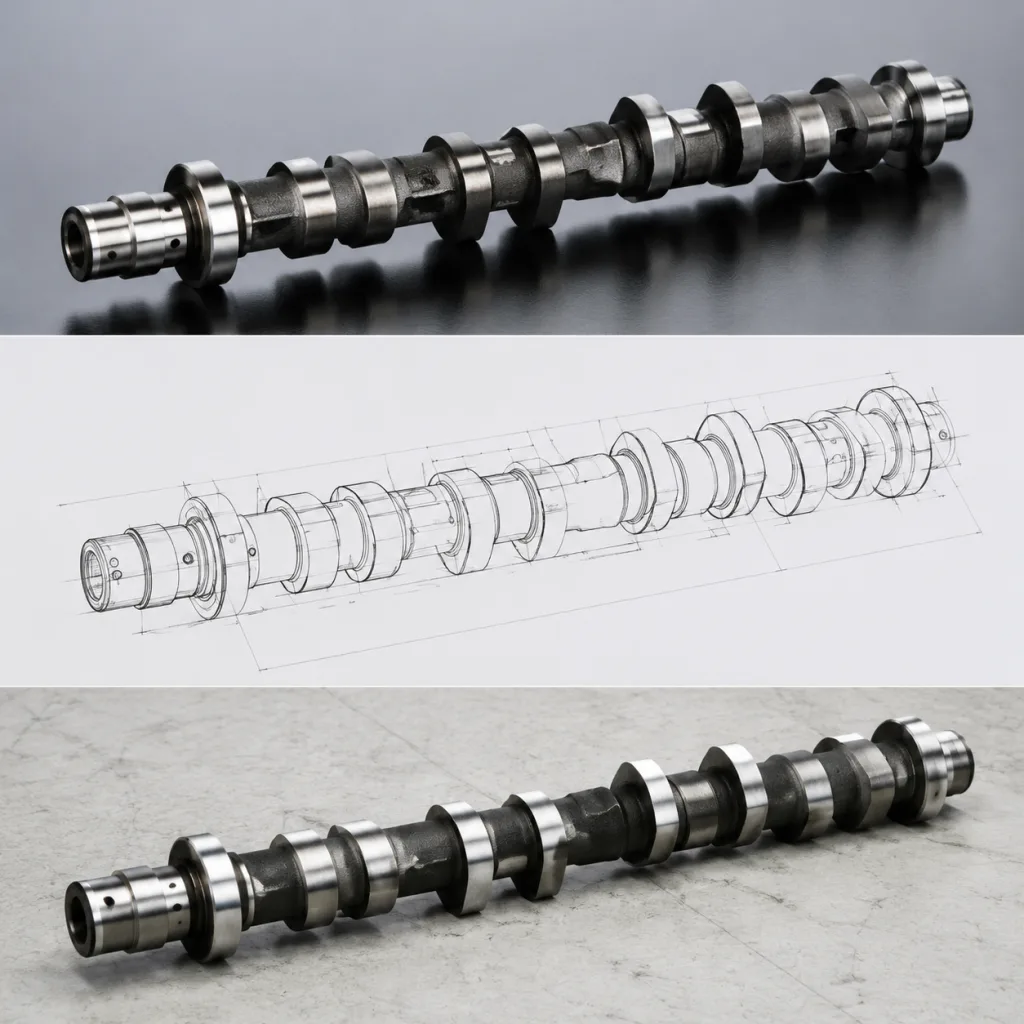
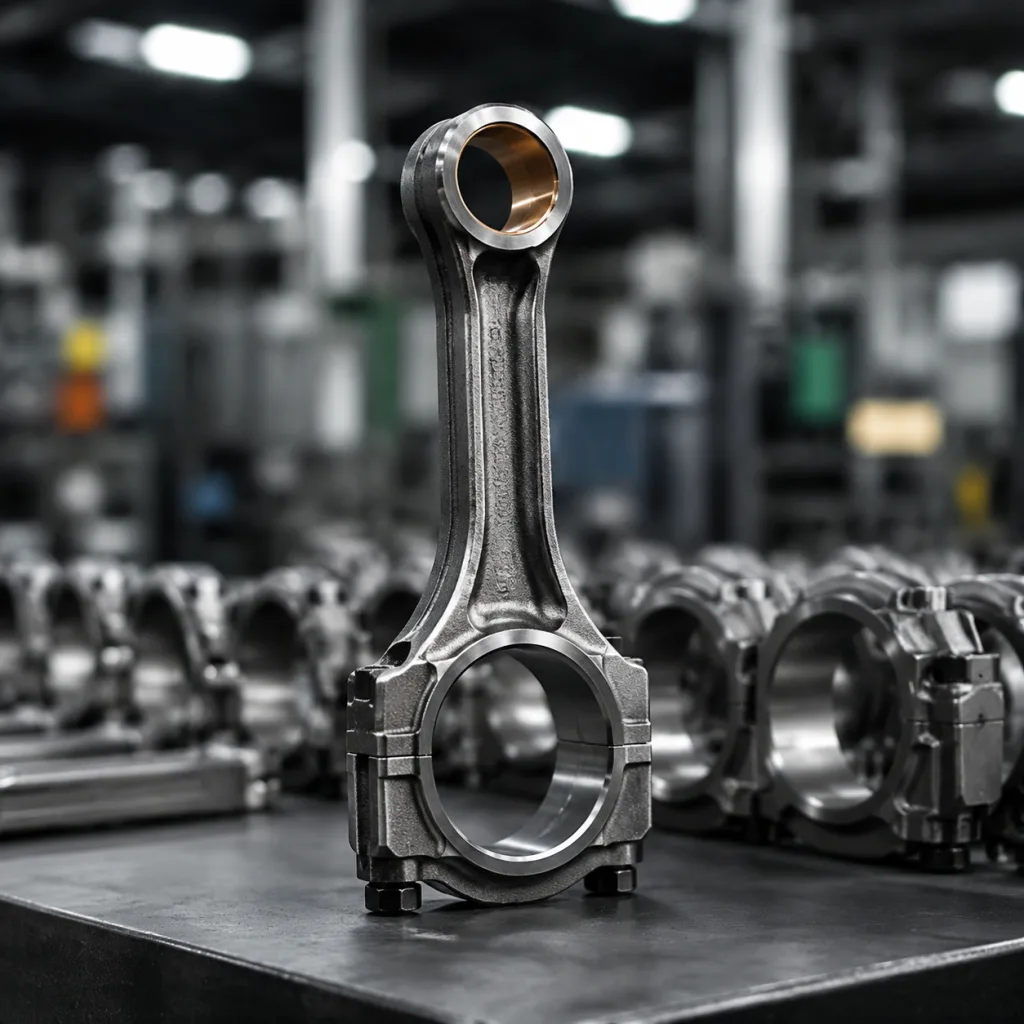
Camshaft for Hyundai i30 Aftermarket Replacement Guide
A camshaft for Hyundai i30 aftermarket replacement has to clear three hurdles: fitment, timing, and durability. In practice, that means matching the OE sample or drawing on journal diameter, overall length, drive-end geometry, lobe lift, base-circle diameter, and any VVT or trigger features before you place volume orders. Driventus supplies camshaft components for B2B buyers who need dimensional consistency, repeatable heat treatment, and documented inspection. Driventus is an independent aftermarket manufacturer; brand names are referenced for fitment only. For buyers in the EU, UK, US, Canada, Australia, and Brazil, the real benchmark is controlled production under IATF 16949:2016 and ISO 9001:2015, plus material compliance where required by REACH (EC) No 1907/2006. If you are sourcing for a workshop network, distributor, or private-label programme, the right brief also defines tolerance bands, order quantity logic, lead time, and the documents required at receipt. The sections below move from decision criteria to failure modes, validation, and when custom manufacturing makes more sense.
Start with the decision criteria, not the part number
For an aftermarket camshaft, the part number is only the starting point. The sourcing decision should answer whether the replacement will fit, time correctly, and survive the intended duty cycle.
Check these first:
Base circle, lobe lift, and lobe separation angle
Journal diameter, bearing surface finish, and concentricity
Overall length, thrust face position, and drive-end geometry
Sensor trigger features, VVT interfaces, and keyway timing marks
Surface hardness, case depth, and lobe-to-journal transition quality after heat treatment
A camshaft that looks correct but is off by a few tenths of a millimetre can create valve timing error, noise, and accelerated wear. Many buyers set a journal diameter tolerance around ±0.01 mm to ±0.02 mm, runout within 0.03 mm to 0.05 mm TIR, and lobe lift within ±0.02 mm to ±0.05 mm, but those numbers should be confirmed against the drawing or sample for the exact Hyundai i30 engine family. For high-volume supply, require first-article inspection, batch traceability, and packaging controls that prevent corrosion and impact damage.
Where replacements usually fail in the field
Most returns are not caused by obvious breakage. They come from small specification mismatches that show up only after installation.
</tr></thead><tbody> </tbody></table>For network buyers, the simplest control is to compare the incoming sample with the removed part and the engine code record before approval. Ask for mixed-batch traceability only if the programme needs it, but always require one lot number per heat batch and one outer carton label showing OE cross-reference, engine code, and revision status. That keeps warranty support cleaner when applications overlap.
Compare the sample, drawing, and supplier claim
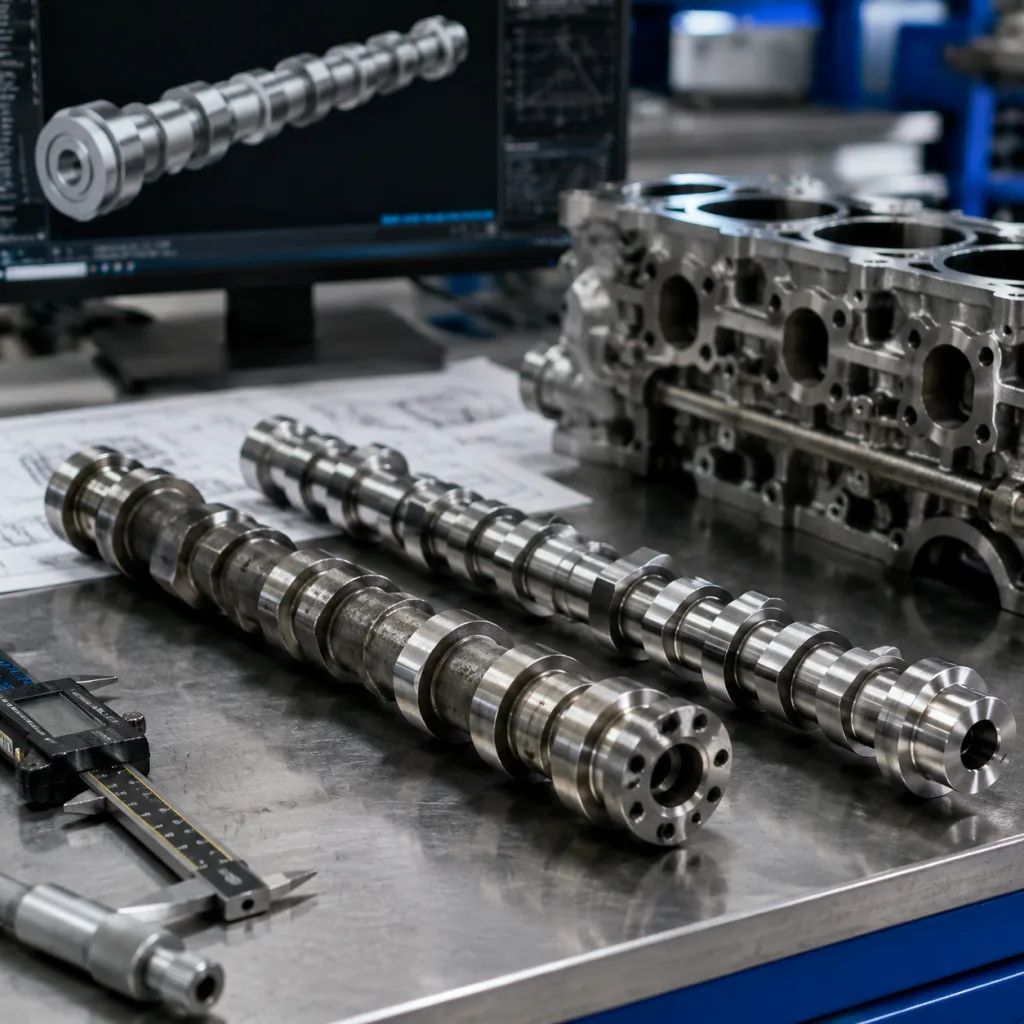
A practical sourcing workflow is to compare three things side by side: the removed camshaft, the supplier’s drawing or data sheet, and the production sample. If all three agree on the critical dimensions, the risk drops fast.
Use this order of checks:
1. Confirm the engine code and OE reference against the vehicle record. 2. Measure journal diameters, overall length, and drive-end geometry. 3. Verify lobe lift, lobe timing, and trigger features. 4. Review material, hardness, and heat-treatment evidence. 5. Inspect packaging, surface condition, and identification labels.
This is also where quotation quality matters. If the supplier cannot state MOQ, pilot quantity, lead time, and revision control, the program is not ready for volume release. A strong commercial brief should state whether the order is for stock replacement, workshop distribution, or private label, because each use case changes packaging, labeling, and acceptance criteria.
Validation steps before you release volume
Replacement camshafts should be validated before they enter a programme. The goal is not only dimensional fit, but repeatable behavior under load.
Typical validation checks include:
100% visual inspection for cracks, burrs, and surface defects
CMM or dedicated gauge measurement of critical dimensions
Runout and concentricity verification
Rockwell hardness or equivalent hardness control where specified
Metallurgical confirmation of material and heat treatment process
Fitment trial on the target cylinder head or a validated fixture
For durability, buyers often request salt spray screening, oil-compatibility checks, and endurance cycling aligned to internal quality plans. A common acceptance package includes first-article inspection, dimensional report, hardness report, material certificate, and photo records for the packed goods. If the application is sensitive to cam wear or timing drift, ask for a control plan and sample retention record as part of the release file. A pilot run of 5 to 20 pieces is often enough to prove fitment, torque behavior, and contact pattern before a production lot is approved.
When custom manufacturing beats cross-referencing
Custom work is usually the better route when the OE reference is no longer cleanly available. That happens when a part is discontinued, superseded, or split across multiple engine revisions.
Use custom manufacturing when:
The original camshaft is discontinued or backordered
The engine family has multiple timing revisions
You need private-label packaging or controlled branding
The target hardness, coating, or finish is not available in stock
You want to consolidate several aftermarket references into one verified part
A custom project should start with a drawing, a measured sample, or a reverse-engineered spec sheet that states the critical dimensions, allowable tolerances, and inspection method. Buyers should also define whether the camshaft must be made from chilled cast iron, forged steel, or a specified alloy, plus any nitriding, induction hardening, phosphate coating, or anti-rust oil requirement. This route is most efficient when the buyer can commit to a forecast, because tooling, validation, and setup costs need to be amortized across the programme. Our custom manufacturing page explains how Driventus handles drawing review, sample approval, and production control for B2B accounts.
How Driventus fits into a B2B sourcing plan
Driventus supplies camshafts and related engine components from Taizhou, Zhejiang to more than 60 countries. Buyers can review our catalog, quality system documentation, and engine components before opening a sourcing project.
For procurement teams, the commercial logic is straightforward:
Stable manufacturing for repeat orders
Dimensional control against OE sample or drawing
Batch traceability for warehouse and workshop distribution
Export packaging suitable for sea and air freight
Technical support for fitment confirmation before shipment
MOQ and lead-time clarity before production release
A practical sourcing model is sample approval, pilot order, then volume release. Standard stock items usually move faster; custom or semi-custom camshafts take longer because of tool verification, heat-treatment scheduling, and inspection hold points. As a working guide, lead times can range from about 7 to 15 days for in-stock or standard catalog supply, 20 to 35 days for pilot orders, and 30 to 45+ days for customized production depending on volume, finish, and testing requirements. Buyers should also define whether price is quoted EXW, FOB, or CIF, because packaging, inland freight, and export documentation can materially change landed cost. If you need OE cross-reference support such as OE 06A107065 or a verified sample check, use the contact route below before committing to production.
Frequently asked questions
Match engine code, OE reference, journal dimensions, drive end, lobe profile, and acceptable tolerances against the removed part or OEM data. If VVT is used, confirm the phaser interface, oil-feed passages, and trigger features as well.
Ask for IATF 16949:2016 and ISO 9001:2015 evidence, material certificates, inspection reports, dimensional results, and batch traceability. For regulated markets, check REACH (EC) No 1907/2006 alignment where applicable.
Yes. Driventus supports custom manufacturing for approved drawings, samples, and packaging requirements. Start with the target application, required tolerance bands, MOQ, and lead-time target, then request a quote.
If you need fitment confirmation, a sample check, MOQ/lead-time guidance, or a B2B quotation for volume supply, contact Driventus here: /contact.html