Connecting Rod Isuzu OEM Supplier: Sourcing Guide
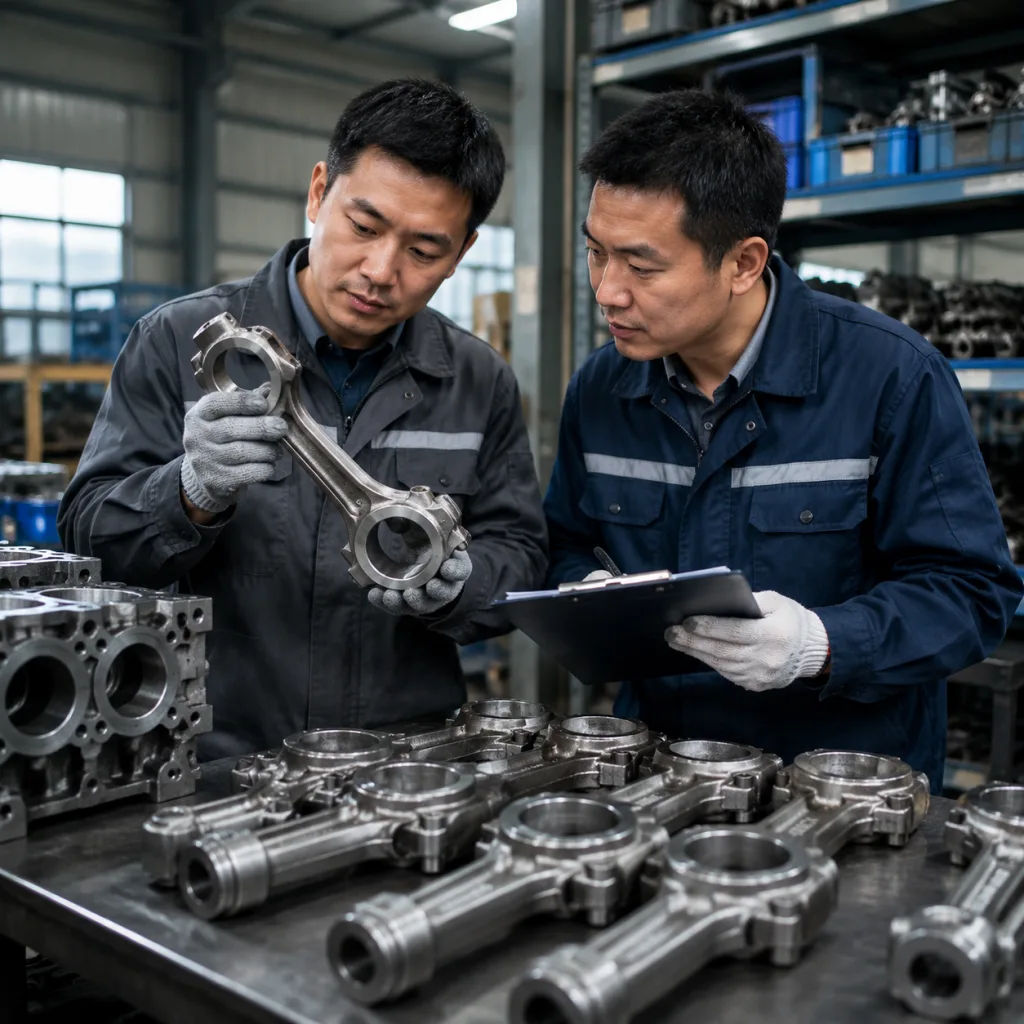
Buying a connecting rod for Isuzu applications is a sourcing decision, not a part lookup. The first question is not price; it is whether the rod matches the engine family, tolerance stack, and rebuild intent. A good connecting rod Isuzu OEM supplier should prove fitment, control variation, and support repeat orders without making each lot a new qualification exercise. For fleet parts, remanufacturing, and export distribution, the checks are consistent: material specification, machining repeatability, traceability, packaging, and audit-ready documentation. Driventus is an independent aftermarket manufacturer; brand names are referenced for fitment only. We supply engine and powertrain components from Taizhou, Zhejiang, with IATF 16949:2016 and ISO 9001:2015 systems in place, and we support B2B buyers in the EU, UK, US, Canada, Australia, and Brazil. If you are comparing suppliers for an Isuzu rod program, start with fitment data, then confirm process control, lead time, MOQ, and documentation.
What must be true before you quote
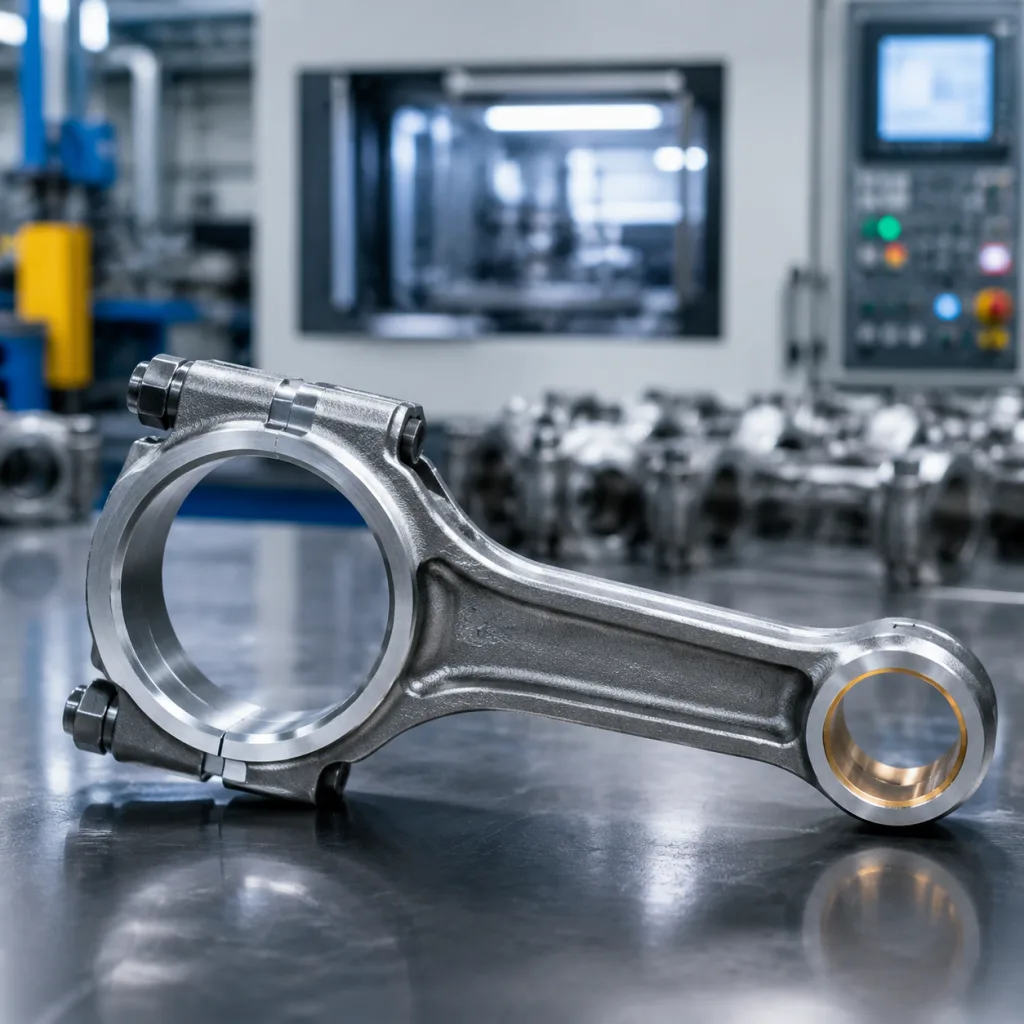
A connecting rod sourcing decision should begin with fitment and process control, not price. For Isuzu applications, buyers usually verify OE code mapping, engine family, centre-to-centre length, big-end bore, small-end bore, rod bolt specification, and balance weight. If the drawing revision is wrong, the quote is only useful as a distraction.
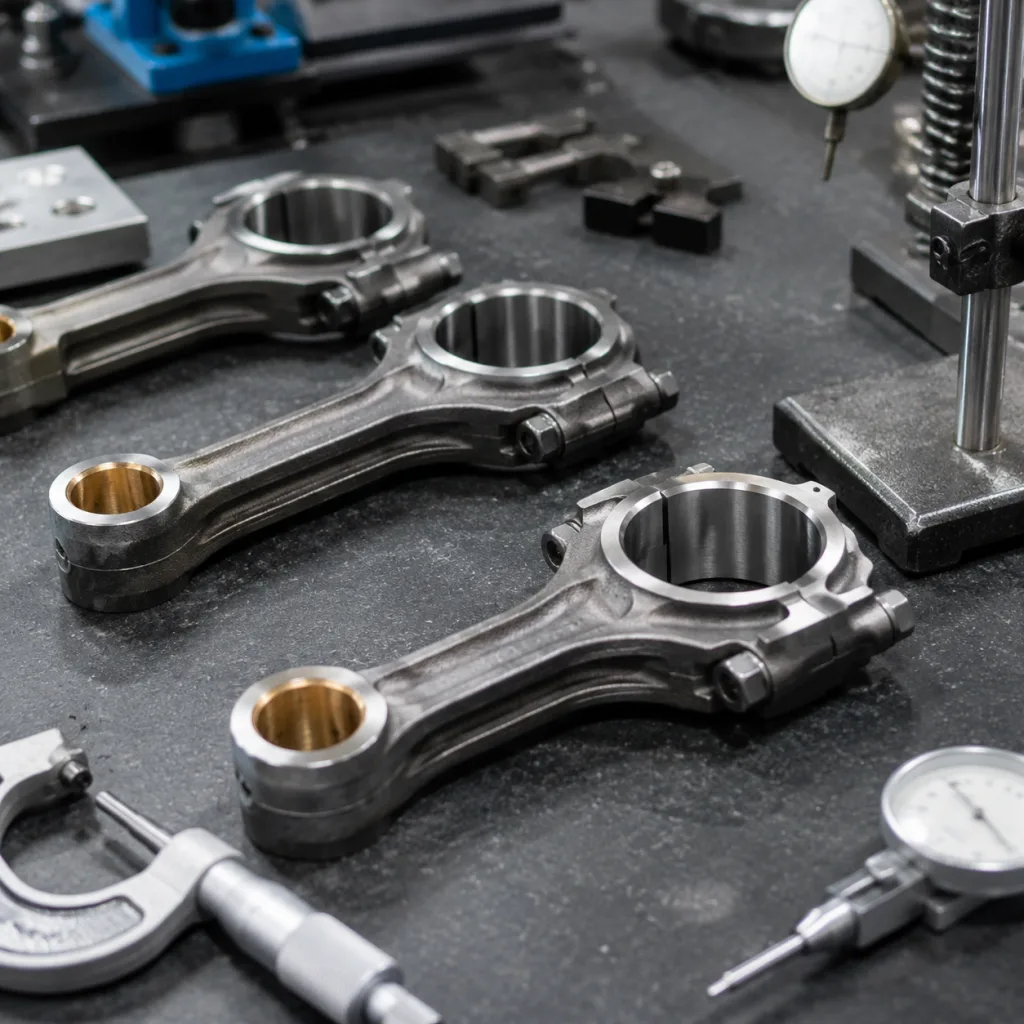
A 0.02 mm bore shift or a 1.0–2.0 g weight difference can change installation behavior and balancing work on rebuild programs. That is why procurement teams should ask for the exact drawing revision and inspection basis before they compare suppliers. If the rod is for an aftermarket range, confirm whether the part is forged steel, powder metal, or fracture-split, and whether the supplier can provide batch traceability.
Core checks before approval
- OE cross-reference and engine code
- Centre-to-centre length and bore diameters
- Big-end bore tolerance and roundness control
- Small-end bore tolerance and pin fit method
- Rod bolt grade, torque method, and stretch spec
- Weight control and pair-matching rules
- Surface finish on big-end and small-end bores
- Packaging, rust protection, and label traceability
For procurement teams, the supplier should provide drawings, inspection reports, and a clear change-control process. A useful RFQ package includes the drawing number, revision level, target annual volume, acceptable weight spread, and any rebuild shop requirements such as oversized bushings or pin-fit class. If those documents are missing, the sourcing risk is high.
Where certification helps, and where it does not
Certification does not replace part validation, but it sets the floor. A connecting rod Isuzu OEM supplier should operate under a documented quality system, with incoming material checks, in-process inspection, final dimensional control, and lot traceability. Driventus maintains IATF 16949:2016 and ISO 9001:2015 systems, which support repeatable production and audit readiness.
That said, certification alone does not prove the rod is correct for your program. Buyers still need to verify hardness, geometry, surface finish, and traceability against the actual application. For EU-bound supply, requests often include REACH (EC) No 1907/2006 declarations for chemical substances and coatings. If the application is tied to emissions-sensitive engine calibration work, purchasers may also ask for supporting documentation aligned to ECE R-83, where relevant to the vehicle programme. For durability screening, common buyer references include SAE J2527 for corrosion or weathering-related test planning when coatings or surface treatments are involved.
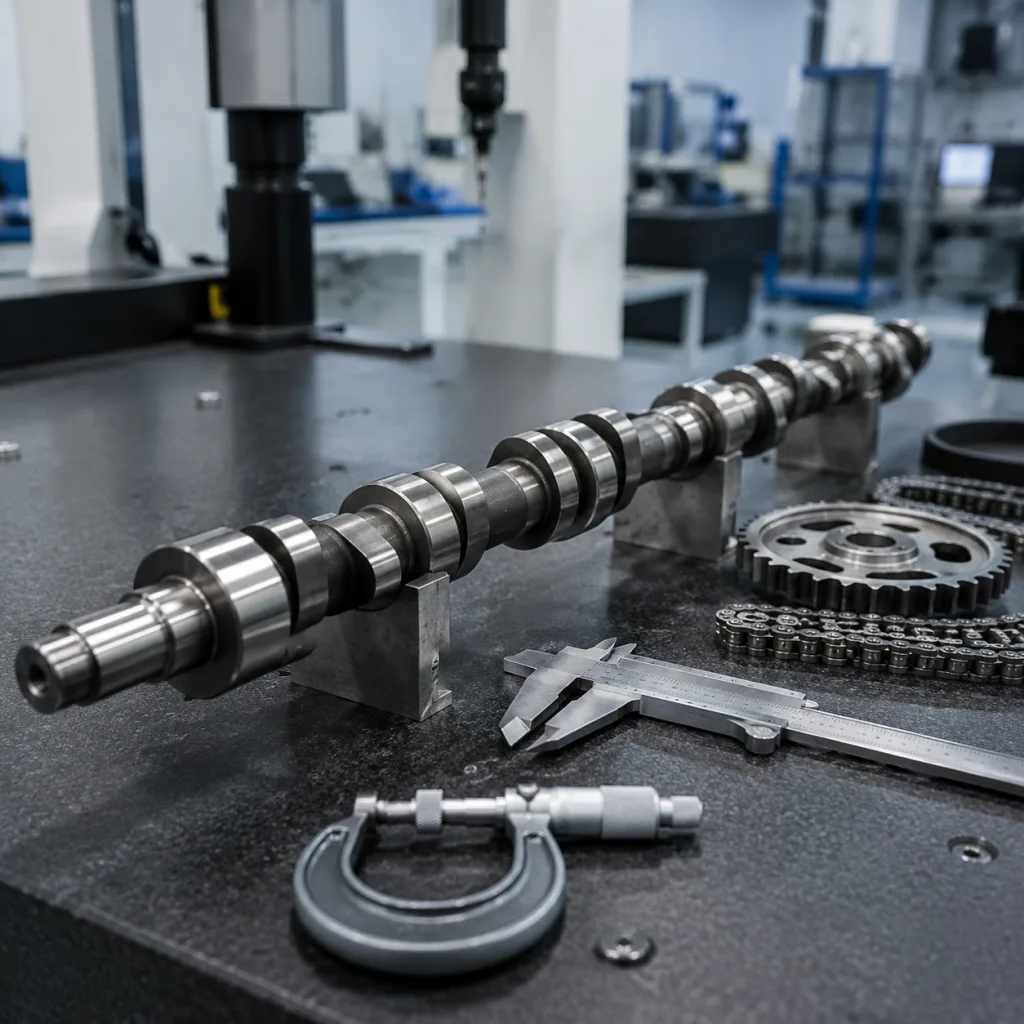
A buyer-ready file should also define acceptance criteria for material hardness, dimensional variation, and surface integrity. For example, a program may specify hardness at HRC 28–34, bore roundness within 0.01 mm, and visual defect limits for scoring, burrs, or discoloration. Driventus is an independent aftermarket manufacturer; brand names are referenced for fitment only. That distinction matters in procurement files, especially when an audit requires clear separation from OEM endorsement claims.
What a usable specification pack looks like
When RFQs are issued for a connecting rod program, technical completeness speeds up quoting and reduces sampling errors. The exact values depend on the engine code, but the supplier should be able to quote against a controlled specification pack. Buyers should ask for the nominal dimension set plus tolerance bands, because pricing and yield depend on how tight the machining window is.
| Item | Typical buyer requirement |
|---|---|
| Material | Forged steel or application-specific alloy, with heat number traceability |
| Length | OE-matched centre-to-centre dimension, commonly held within ±0.05 mm to drawing |
| Big-end bore | Controlled to drawing and honing spec, often within 0.01–0.02 mm roundness control |
| Small-end bore | Controlled to pin fit requirement, typically verified against piston pin class |
| Rod bolt | Specified grade, torque, and stretch method, with lot traceability |
| Weight | Matching tolerance by engine set, often 1.0–3.0 g depending on program |
| Surface protection | Anti-rust oil, VCI bag, or custom packaging |
| Traceability | Batch number, heat number, carton label, and inspection record |
| Comparison point | What good looks like |
|---|---|
| Dimensional control | Routine gauging with documented inspection records and key-characteristic limits |
| Material control | Heat traceability, incoming verification, and retained sample policy |
| Documentation | Drawing, COA, packing list, traceability sheet, and compliance files |
| Audit support | Factory visit readiness and process-flow visibility |
| Responsiveness | Clear quotation, sample, and change-management timeline |
| Service scope | Aftermarket, OEM, and export packaging support |